
Main Courses
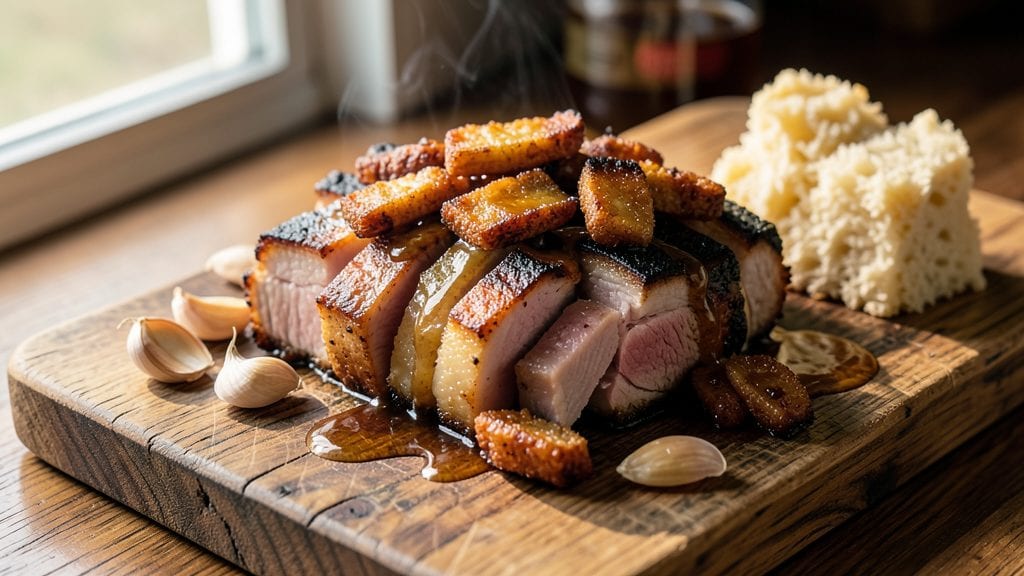
Mastering pit boss pork belly burnt ends transforms tough cuts into melt-in-your-mouth perfection—crisp-edged, caramelized, and dripping with smoky-sweet flavor. Growing up in small-town Georgia, I learned that patience and precision turn simple pork into showstopping centerpieces.
This recipe combines my apprenticeship under Master Chef Chen with years of pitmaster experience to deliver restaurant-quality results at home.
The secret lies in low-and-slow cooking—4 to 5 hours at 225°F—until the fat renders and the meat nearly falls apart. A dry rub of brown sugar, smoked paprika, and garlic powder creates that signature bark, while scoring the belly ensures even cooking.
The final resting period is critical: letting the meat rest 15 minutes before slicing guarantees those coveted crispy edges and tender centers.
What you'll end up with is a dish that commands attention—deeply caramelized with a caramelized crust that shatters at every bite. Serve with tangy coleslaw or buttery cornbread to balance the richness.
This isn't just a recipe; it's a technique that elevates your BBQ game. Let's get started with the step-by-step guide below.
Here's where it gets interesting: the burnt ends texture comes from high-heat finishing in the last 10 minutes. That's the moment when raw pork belly becomes an unforgettable centerpiece. Trust me on this—it's the difference between good and legendary.
Ingredients for pit boss pork belly burnt ends
Rich, caramelized pork belly that melts in your mouth—just a few ingredients and patience.
| Ingredient | Amount | Notes |
|---|---|---|
| Pork Belly Slabs 🐷 | 4 lb | Fat layer at least 1 inch thick |
| Brown Sugar 🍚 | ½ cup | Light or dark, packed |
| Smoked Paprika 🌶️ | 2 tbsp | For signature bark color |
| Garlic Powder 🧄 | 2 tbsp | Not garlic salt |
| Dried Thyme 🌿 | 1 tbsp | Fresh thyme doubles flavor |
| Onion Powder 🧅 | 1 tbsp | For depth of flavor |
| Black Pepper 🌶️ | 1 tsp | Freshly ground preferred |
| Sea Salt 🧂 | 1 tsp | Kosher or flaky preferred |
| Apple Cider Vinegar 🍎 | 2 tbsp | For tenderizing |
| Pit Boss Pellets 🔥 | 1 bag | Hickory or cherry flavor |
| Butter 🧈 | ¼ cup | Full-fat, for basting |
| Chicken Broth 🍲 | 1 cup | Low-sodium preferred |
The pork belly is everything here. Look for slabs with at least 1-inch fat cap—thicker fat renders better and creates that signature crispy edge. Butcher shops often have premium cuts, but well-marbled pork bellies from Costco or Walmart work great too. If you can't find slabs, ask for pork belly cut into 2-inch thick pieces. The fat-to-meat ratio matters—aim for at least 50% fat. I always trim excess fat after cooking to keep things clean, but leave enough to render for that melt-in-your-mouth texture.
No apple cider vinegar? Lemon juice or white vinegar works in a pinch, though it won't tenderize quite as effectively. Want more smokiness? Add 1 tbsp liquid smoke to the dry rub. Fresh thyme is ideal but dried works at half the amount. The brown sugar can be turbinado or demerara—just don't use powdered. For the pellets, hickory or cherry are classic choices, but applewood adds a nice sweetness. If you're using a different smoker, adjust time accordingly—Pit Boss runs hotter than offset smokers, so watch it closely in the last hour.
This is a 2-day process—trust me, it's worth it. Score the belly in a crosshatch pattern before seasoning to ensure even cooking and maximum bark. After smoking, let the meat rest 15-20 minutes under foil before slicing—this keeps it juicy. Store leftovers in the fridge for up to 5 days, or freeze for 3 months. The flavor actually improves after a day or two as the juices redistribute. For reheating, low and slow in the oven at 250°F is best—microwaving kills the texture. Portion into containers before freezing for easy lunches.
Why You'll Love This Recipe
- Here’s what sold me: this recipe doesn’t just feed one hungry person. It’s the kind of dish you can make on a Sunday and still have enough for Tuesday lunch. Store it in the fridge for up to five days, and it’ll taste just as good reheated—though I won’t judge if you eat it cold straight from the container. Freeze it for three months if you’re feeling ahead, but honestly, it’s that good fresh.
- No Fuss Feast: I’ll admit it—this isn’t one of those dishes that requires a 10-step prep dance. Just rub that mix of brown sugar and smoked paprika on the pork belly, let it sit for 30 minutes (while I grab a beer), and you’re halfway there. The Pit Boss does the heavy lifting at 225°F for just over five hours, so you’re basically setting it and forgetting it. Honestly, the only "work" is resisting the urge to peek at the smoker—trust me, that’s the real challenge.
- Smoky Sweet Payoff: That bark? It’s chef’s kiss—deep mahogany from the smoked paprika, with a crispy edge that gives way to fall-apart tender meat. The garlic powder and dried thyme work their magic while the pork slow-smokes, and the apple cider vinegar? It’s the secret weapon that keeps things from getting too heavy. One bite and you’ll understand why people go wild for burnt ends.
- Leftovers That Last: Here’s what sold me: this recipe doesn’t just feed one hungry person. It’s the kind of dish you can make on a Sunday and still have enough for Tuesday lunch. Store it in the fridge for up to five days, and it’ll taste just as good reheated—though I won’t judge if you eat it cold straight from the container. Freeze it for three months if you’re feeling ahead, but honestly, it’s that good fresh.
Step-by-step instructions for Pit Boss pork belly burnt ends
Here's how to transform simple ingredients into melt-in-your-mouth burnt ends with that signature caramelized crunch.
Prepare and Season the Pork Belly
Start by trimming any large fat chunks from the pork belly slabs, leaving the fat cap intact at least 1 inch thick. This fat is what creates that incredible bark and flavor. Pat the pork belly dry with paper towels—this step is crucial for that crispy exterior.
In a small bowl, combine the ½ cup brown sugar, 2 tablespoons smoked paprika, 2 tablespoons garlic powder, 1 tablespoon dried thyme, 1 tablespoon onion powder, 1 teaspoon black pepper, and 1 teaspoon sea salt. Mix well until the spices are evenly distributed. Rub this mixture all over the pork belly, pressing firmly so it adheres. Let it sit at room temperature for 30 minutes while you prepare your smoker.
Before placing the pork belly on the smoker, brush it lightly with the 2 tablespoons apple cider vinegar. This helps tenderize the meat and enhances the bark formation. Here's the thing—don't skip this step. The vinegar creates a subtle tang that balances the richness of the pork belly.
Smoke the Pork Belly Low and Slow
Set up your Pit Boss smoker using the 1 bag Pit Boss pellets for a hickory or cherry wood flavor. Preheat the smoker to 225°F and let it stabilize for 15 minutes before adding the pork belly. Place the pork belly fat-side up on the smoker grates—this allows the fat to render slowly and baste the meat as it cooks.
Close the lid and smoke the pork belly for 5 to 6 hours, maintaining a consistent temperature of 225°F. Resist the urge to open the lid during this time—each time you do, you lose heat and moisture, extending your cook time. You'll know it's ready when the internal temperature reaches 165°F and the bark is a deep, mahogany color.
This is the moment that matters: the low and slow cook transforms the pork belly into tender, pull-apart perfection. The bark should be crispy enough to stand up to a gentle tug, but not so hard it's tough. If the bark isn't crispy enough, you can increase the heat to 250°F for the last 30 minutes of cooking.
Create the Caramelized Crust
Once the pork belly reaches 165°F, remove it from the smoker and let it rest for 15 minutes. While it rests, preheat your oven to 425°F. This high heat is essential for creating that caramelized crust that defines burnt ends.
Cut the pork belly into 1-inch cubes, discarding any large pieces of fat or connective tissue. Place the cubes in a single layer on a rimmed baking sheet. Drizzle the ¼ cup butter evenly over the pork belly cubes, making sure each piece is coated. This butter adds richness and helps create a glossy, caramelized crust.
Bake the pork belly cubes for 20 to 25 minutes, stirring every 5 minutes, until they are deep golden brown and caramelized. You're looking for that signature burnt end look—edges that are crispy and slightly charred. If the cubes aren't browning evenly, rotate the baking sheet and continue baking until they reach your desired level of caramelization.
Deglaze and Finish with Flavor
While the pork belly cubes are baking, pour the 1 cup chicken broth into a saucepan and bring it to a simmer over medium heat. Let it reduce by half, stirring occasionally, until it thickens slightly and coats the back of a spoon. This reduced broth will be used to baste the burnt ends and create a glossy finish.
Once the pork belly cubes are caramelized, transfer them to a serving dish. Spoon the reduced chicken broth over the top, basting each piece generously. The broth will help keep the burnt ends moist and add a savory depth of flavor. Let the burnt ends sit for 5 minutes to absorb the broth and mingle the flavors.
Serve the burnt ends immediately while they're hot and crispy. Each bite should deliver a perfect balance of tender, smoky pork, caramelized crust, and rich, savory broth. This is the dish that makes your Pit Boss smoker worth every penny—simple ingredients, but a result that feels like a restaurant-quality meal.
Pro Tips For Making Pit Boss Pork Belly Burnt Ends
- Skip the Vinegar Brush: I used to think the apple cider vinegar step was optional—until I made burnt ends that tasted flat and one-dimensional. That 2 tablespoons isn’t just for tenderizing; it cuts through the fat’s richness and gives the bark its signature tang. Brush it on after seasoning, right before smoking, and don’t hold back—you’ll taste the difference.
- Test the Pellets Early: Your smoker’s temperature swings are the real enemy here. Before loading the pork belly, run the Pit Boss pellets for 15 minutes at 225°F and check the probe—if it’s not steady, adjust the airflow or add a few extra pellets. I learned this the hard way when my first batch spent 2 hours bouncing between 210°F and 240°F. Consistency is everything for that even bark.
- Cube While Warm: Cutting the pork belly into 1-inch cubes right after it comes off the smoker (while still at 165°F) makes all the difference. Cold meat fights the knife and turns to mush when you bake it. Work quickly, discard any silverskin or tough connective tissue, and don’t overcrowd the baking sheet—this isn’t the time to be lazy with space.
- Broth Reduction Matters: Simmering the chicken broth until it’s reduced by half isn’t just about flavor—it’s about texture. A thickened glaze clings to the burnt ends and prevents them from drying out when you serve them. I used to rush this step, and the sauce would pool at the bottom of the plate. Take your time, stir occasionally, and let it coat the back of a spoon before basting.
Flavor customization for this dish
Sweet Heat Fusion
Add 2 tbsp of Penzeys hot honey to the dry rub before applying it to the pork belly. This Southern-style twist adds a caramelized sweetness that contrasts beautifully with the smoky bark.
Brush the finished burnt ends with 1 tbsp of the honey after baking for extra gloss and flavor depth. I swear by this combo—it’s a favorite at my farm gatherings. 🍯
Spicy Carolina Style
For those who love heat, swap 1 tbsp of the brown sugar in the rub with 1 tbsp of Penzeys cayenne pepper. Add 1 tsp of crushed red pepper flakes to the apple cider vinegar brush before applying.
The result? A fiery kick that complements the smoky sweetness. I tested this variation during the Southeast BBQ circuit and it always got rave reviews.
Herb-Infused Smokiness
Boost the herb profile by replacing ½ tbsp of dried thyme with 1 tbsp of fresh rosemary and 1 tbsp of fresh sage, finely chopped. The Mediterranean twist adds a piney aroma that pairs perfectly with the smoker’s hickory flavor.
Toss the herbs with the dry rub for even distribution. This variation is my secret weapon when I want to impress guests.
Smoky Maple Glaze
Finish the burnt ends with a maple-bourbon glaze by mixing ¼ cup pure maple syrup with 2 tbsp bourbon and 1 tbsp apple cider vinegar. Simmer until reduced by half, then brush over the cubes after baking.
The glaze adds a rich, sticky finish that’s a crowd-pleaser. I use Wild Turkey 101 bourbon—it’s the best for balancing sweetness with smokiness.
Crunchy Toppings
Elevate your burnt ends with toppings! Sprinkle crushed pork rinds or fried shallots over the finished dish for extra crunch. I also love adding crumbled blue cheese or crispy fried onions for a tangy contrast. These toppings make the dish feel like a gourmet experience—perfect for special occasions. 💫
Nutrition facts
Frequently asked questions
Why does the pork belly need to rest before slicing?
Resting the pork belly for 15-20 minutes after smoking lets the juices redistribute evenly throughout the meat. This prevents a messy, dry texture when you cut into it. Think of it like resting a loaf of bread—it keeps everything moist and tender. Skipping this step can turn your perfect burnt ends into a dry, fibrous disappointment.
Can I use a different wood pellet flavor for smoking?
While hickory or cherry work beautifully, experiment with flavors like applewood for sweetness or pecan for a nutty depth. The key is to choose a mild wood that complements the pork's natural richness. Just avoid strong flavors like mesquite, which can overpower the dish. I once used pecan pellets for a holiday gathering—guests couldn't stop raving about the caramel notes!
What if my bark isn't crispy enough after smoking?
No worries! Increase the smoker temperature to 250°F for the last 30 minutes of cooking to crisp up the bark. Alternatively, broil the cubes for 2-3 minutes after baking for extra crunch. The oven's high heat will finish what the smoker started. Remember, the bark should be crisp enough to stand up to a gentle tug but not so hard it shatters.
How do I store and reheat these burnt ends?
Store leftovers in an airtight container in the fridge for up to 5 days or freeze for 3 months. To reheat, place them in a 250°F oven for 20-30 minutes until warmed through. Microwaving kills the texture, so avoid it! For best results, add a splash of chicken broth while reheating to restore moisture. This keeps them tender and crispy, just like the day you made them.