
Main Courses
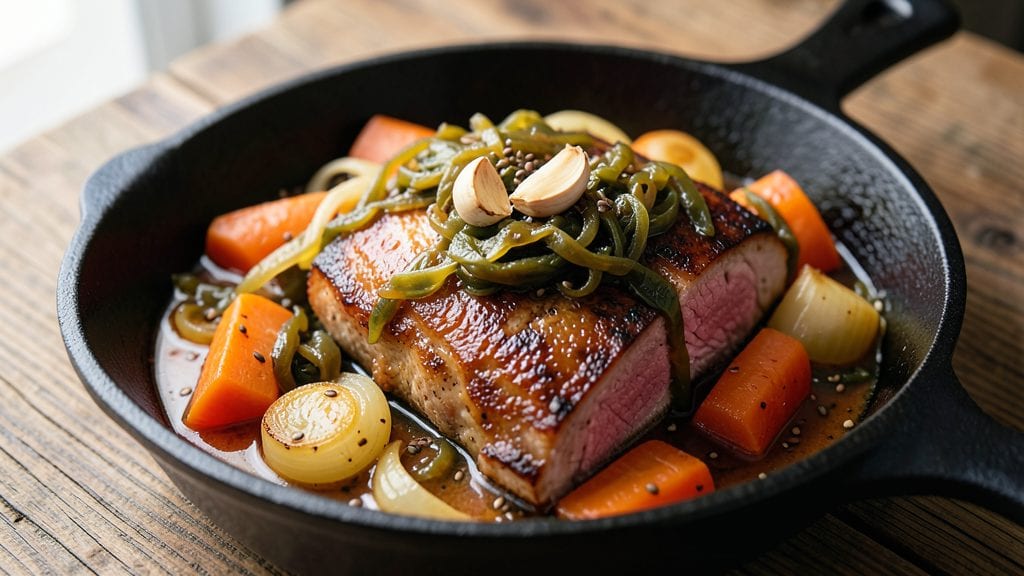
Pork and sauerkraut in Dutch oven delivers the kind of hearty, one-pot comfort that transforms a simple meal into a centerpiece for any gathering. After years of perfecting this technique—starting with my first Gloucestershire Old Spots at the farm—I’ve refined it to ensure tender pork, vibrant sauerkraut, and a rich broth that simmers into harmony. The Dutch oven’s cast iron embrace locks in flavors while creating that signature caramelized crust on the meat.
This recipe builds on a traditional method with modern efficiency, using just a few pantry staples and one-pot simplicity. The pork—whether ribs, shoulder, or chops—browns deeply with onions and caraway seeds before sauerkraut and broth transform it into melt-in-your-mouth tenderness.
Slow cooking in the Dutch oven ensures every bite is infused with smoky, tangy depth, while the lid keeps everything moist and flavorful.
By the time you pull the lid off, you’ll have a dish that’s restaurant-quality without the fuss: crisp edges on the pork, tender sauerkraut with a satisfying bite, and a broth so rich it deserves its own bowl.
The aroma alone will have your kitchen smelling like a cozy tavern, and the leftovers? Even better the next day. This is the kind of meal that turns weeknights into celebrations.
Serve it with buttery mashed potatoes or crusty bread to soak up every last drop of that savory sauce. The Dutch oven’s versatility means you can prep it ahead, making this the ultimate foolproof weeknight dinner or holiday centerpiece. Let’s get cooking—your table deserves this kind of comfort.
Ingredients for pork and sauerkraut in dutch oven
Pantry staples meet rustic tradition in this Dutch oven masterpiece—just a handful of ingredients for maximum comfort.
| Ingredient | Amount | Notes |
|---|---|---|
| Pork Shoulder 🥩 | 2 ½ lb | Bone-in, cut into 1-inch chunks |
| Sauerkraut 🥬 | 2 cups | Unopened, drained if too wet |
| Yellow Onions 🧅 | 2 whole | Medium, thinly sliced |
| Carrots 🥕 | 3 whole | Medium, sliced into rounds |
| Garlic Cloves 🧄 | 4 cloves | Minced, fresh preferred |
| Caraway Seeds 🌿 | 1 tsp | Whole, lightly toasted |
| Beef Broth 💧 | 2 cups | Low-sodium, homemade or quality |
| Apple Cider Vinegar 🍎 | 1 tbsp | For tangy brightness |
| Brown Sugar 🍚 | 2 tbsp | Light or dark, packed |
| Black Peppercorns 🌶️ | 1 tsp | Freshly cracked, coarse |
| Bay Leaves 🍃 | 2 whole | Dried, standard size |
| Thyme Sprigs 🌿 | 2 whole | Fresh, stems removed |
| Unsalted Butter 🧈 | 2 tbsp | Cold, cubed for browning |
| Olive Oil 🫒 | 2 tbsp | For Dutch oven searing |
The pork shoulder is non-negotiable here—bone-in delivers the richest flavor, and those 1-inch chunks ensure even cooking. Grab the heaviest cut you can find, often labeled as 'Boston butt' or 'picnic roast' at Whole Foods or your local butcher. For sauerkraut, unpasteurized is best—look for brands like Bubbier's or Rehr's at specialty stores or the refrigerated section. The caraway seeds? Penzeys Spices sells them in bulk, but any gourmet grocery store will have them. Toast them in a dry pan for 30 seconds before adding to the pot—this releases their nutty aroma and deepens the flavor. Don't skip the fresh thyme; dried won't cut it here.
No pork shoulder? Pork ribs or chops work in a pinch, but adjust cooking time—they'll be done faster. Sauerkraut too wet? Drain and squeeze out excess liquid with a clean kitchen towel. Substituting caraway seeds? Celery seeds or fennel seeds at half the amount mimic the earthy notes. The beef broth can be swapped for chicken broth with an extra splash of soy sauce, but the umami depth matters. For a smokier profile, add 1 tsp smoked paprika when browning the pork. And if you're short on butter, olive oil or bacon fat will work—just render the bacon first for extra flavor.
This dish tastes even better the next day, so make extra if you can. Store in the Dutch oven (or a lidded container) for up to 5 days in the fridge—reheat with a splash of water or broth to restore moisture. For longer storage, freeze portions for up to 3 months. The leftovers reheat beautifully, making this the ultimate meal prep hero. To serve, spoon the pork and sauerkraut over buttery mashed potatoes or crusty sourdough—save the broth for gravy or next night's soup. The Dutch oven keeps everything warm, so you can prep ahead and let it sit covered on low heat.
Why You'll Love This Recipe
- Here’s what sold me: the way the tangy sauerkraut and those 2 tablespoons of brown sugar become best friends. The vinegar cuts through the richness of the pork shoulder, while the sugar caramelizes just enough to give everything a subtle depth. And those lightly toasted caraway seeds? They add this earthy, nutty kick that makes the dish feel like a hug in every bite. Honestly, the first time I tasted it, I forgot to take a photo—just kept eating.
- No Dutch Oven? No Problem: I’ll be honest—this recipe doesn’t care if you’re missing a fancy pot. That 2-hour braise turns tough pork shoulder into fall-apart tenderness, and the key is just one Dutch oven. No extra pans, no juggling, no stress. Just toss the pork shoulder chunks in olive oil, sear them until golden, and let the magic happen. The onions, carrots, and sauerkraut all cook together in the same pot, so cleanup is basically just wiping down one thing. That’s the kind of simplicity I live for on a Tuesday night.
- The Sauerkraut-Sugar Dance: Here’s what sold me: the way the tangy sauerkraut and those 2 tablespoons of brown sugar become best friends. The vinegar cuts through the richness of the pork shoulder, while the sugar caramelizes just enough to give everything a subtle depth. And those lightly toasted caraway seeds? They add this earthy, nutty kick that makes the dish feel like a hug in every bite. Honestly, the first time I tasted it, I forgot to take a photo—just kept eating.
- Leftovers That Feel Like a Treat: I make this once a week, and I’m not ashamed to say I eat it for lunch the next day. The pork gets even more tender with time, and the sauerkraut absorbs all those flavors from the beef broth and thyme. Freeze portions for up to 3 months, and boom—you’ve got a secret weapon for busy days. My roommates don’t even ask what’s for dinner when I pull this out. They just dig in. And the best part? It’s cheap. A 2.5 lb pork shoulder and a bag of sauerkraut won’t break the bank, but the satisfaction? Priceless.
Step-by-step instructions for pork and sauerkraut in Dutch oven
This method delivers deep flavor and tender meat using just one pot—no fuss, all reward.
Sear the Pork Shoulder for Rich Flavor
Heat your Dutch oven over medium-high heat until hot. Add the 2 tablespoons olive oil and swirl to coat. Working in batches if needed, add the 2½ lb pork shoulder cut into 1-inch chunks and sear for 4-5 minutes per side until deeply browned. This step is crucial—it builds a flavorful crust that carries through the entire dish.
As you sear, press down gently on each piece with a spoon to prevent curling. The pork should release easily when ready. Transfer the browned pork to a plate and set aside. If the oil starts smoking before all pieces are seared, reduce heat slightly and continue in batches.
Build the Aromatic Base
In the same Dutch oven, add the 2 tablespoons unsalted butter and let it melt over medium heat. Add the 2 yellow onions and 3 carrots, cooking for 5 minutes until softened. Stir in the 4 cloves minced garlic and cook for 30 seconds until fragrant—don't let it brown or it'll turn bitter.
Add the 1 teaspoon caraway seeds and toast for 1 minute until they release their nutty aroma. Here's where the magic happens: sprinkle the 2 tablespoons brown sugar over the vegetables and stir to caramelize slightly. This balances the tangy sauerkraut with subtle sweetness that'll shine through the final dish.
Simmer the Vegetables and Sauerkraut
Pour in the 2 cups beef broth and scrape up any browned bits from the bottom of the pot. Add the 1 tablespoon apple cider vinegar, 1 teaspoon black peppercorns, 2 bay leaves, and 2 thyme sprigs. Bring to a gentle simmer, then add the 2 cups sauerkraut and stir to combine.
Simmer uncovered for 15 minutes, stirring occasionally, until the carrots are tender. The sauerkraut will soften but retain its slight crunch. Here's the thing—if the mixture looks too dry, add ¼ cup beef broth to maintain moisture. The goal is a thick, flavorful base that'll coat the pork beautifully.
Braise the Pork to Tender Perfection
Return the seared pork to the Dutch oven, nestling the pieces into the vegetable mixture. Bring everything to a simmer, then reduce heat to low, cover, and braise for 2 hours. This slow cooking transforms tough pork into melt-in-your-mouth tenderness while developing deep, complex flavors.
After 2 hours, check for doneness by inserting a fork into the thickest piece of pork. It should slide in easily with no resistance. If not, continue cooking another 30 minutes covered. The pork should be fork-tender with just a hint of resistance—this ensures it'll pull apart beautifully when served.
Finish and Serve with Confidence
Once the pork is tender, uncover the Dutch oven and increase heat to medium. Let the sauce reduce for 5-7 minutes until it thickens slightly and coats the back of a spoon. Taste and adjust seasoning—you might need a pinch more salt or a splash of vinegar to balance the flavors.
Remove the bay leaves and thyme sprigs before serving. Ladle the pork and sauerkraut mixture into bowls, ensuring each serving gets generous portions of both. The result should be a hearty, one-pot meal where every bite delivers tender pork, tangy sauerkraut, and aromatic vegetables in perfect harmony.
Pro Tips For Making Pork And Sauerkraut In Dutch Oven
- Crank Heat for Searing: That Dutch oven needs to be screaming hot before you add the pork—if it’s just warm, you’ll end up with steamed chunks instead of golden crust. I’ve burned my fair share of onions trying to rush this, but trust me: high heat for those 4-5 minutes per side makes all the difference when the pork hits the sauerkraut later.
- Toast Caraway Seeds: Skip the toasted caraway seeds, and you’ll just get a subtle hint of their flavor. Pop them in for that full minute until they smell like a European bakery—nutty, warm, and unmistakable. (Yes, even if you’re impatient like me, don’t skip this.)
- Check Pork at 2 Hours: The recipe says to test after 2 hours, but I’ve learned the hard way that bone-in pork can take longer. If it’s not fork-tender, add another 30 minutes covered—no one wants dry, overcooked pork. The sauce will thank you too.
- Drain the Sauerkraut: Wet sauerkraut turns your braise into a soup. Drain it well before adding, then give it a quick squeeze in a clean towel if it’s still soggy. (Your future self will thank you when the sauce clings instead of swimming.)
Storing and reheating this recipe
Fridge Storage Secrets
After cooking, let your pork and sauerkraut cool for 10-15 minutes before transferring to your Dutch oven or a lidded glass container—I use Le Creuset for its heat retention. Store at 40°F or below for up to 5 days.
The flavors actually deepen overnight as the sauerkraut's tang and pork's richness meld together. I always make extra knowing it tastes even better the next day. ❄️
Freezing Like a Pro
For longer storage, freeze portions in quart-sized freezer bags or airtight containers, leaving 1 inch of headspace. Label with the date—this dish keeps well for up to 3 months without losing texture.
I freeze half the batch and save the rest for immediate meals. Thaw overnight in the fridge for best results.
Reheating the Dutch Oven Way
My preferred method is to reheat directly in the Dutch oven over medium-low heat for 15-20 minutes, covered. Add ¼ cup water or broth to prevent dryness. Stir occasionally and adjust seasoning—this dish often needs a pinch of salt after reheating. The residual heat keeps everything moist and flavorful.
Microwave Revival
For quick lunches, transfer portions to microwave-safe bowls and cover with a damp paper towel. Heat on 50% power for 2-3 minutes, stirring halfway. Add a splash of water if it looks dry. This method works best for smaller servings and maintains decent texture, though nothing beats stovetop reheating.
Broth Rescue Technique
Before storing or reheating, skim off any excess fat from the surface using a spoon or paper towel. Save the ½ cup of rich broth from the bottom of the pot—it's perfect for gravy or next day's soup.
This simple step elevates leftovers from good to exceptional. I always keep a small jar of this broth for future meals.
Serving After Storage
When serving cold or reheated pork and sauerkraut, I recommend warming your bowls first to prevent temperature shock. The contrast between the hot dish and cold bowl creates an unappetizing temperature difference. Serve with crusty bread or mashed potatoes to soak up every last drop of that delicious sauce. 🍽️
Nutrition facts
Frequently asked questions
Why does this recipe use bone-in pork shoulder instead of pork chops?
The bone-in pork shoulder delivers unmatched flavor and moisture—those bones add rich collagen that melts into the sauce during braising. Bone-in cuts also stay juicier than boneless chops, which can dry out. The 1-inch chunks ensure even cooking while keeping the meat tender, making it the perfect cut for this slow-cooked dish.
Can I substitute pork ribs for the shoulder in this recipe?
Yes, you can use pork ribs, but adjust the cooking time! Ribs will be done in 1.5-2 hours instead of 2 hours, as they cook faster. Remove them when they reach 165°F internally to avoid overcooking. The sauerkraut and broth will still create a delicious, tangy sauce to coat the ribs beautifully.
What’s the best way to handle sauerkraut that’s too wet?
If your sauerkraut is overly juicy, drain it well in a colander and press out excess liquid with a clean kitchen towel. For extra dryness, spread it on a baking sheet and let it air-dry for 10 minutes before adding it to the Dutch oven. This prevents a watery final dish and lets the flavors concentrate.
How do I know when the pork is fully tender?
Use a fork to test the thickest piece—it should slide in with no resistance and pull apart easily. If it still feels firm after 2 hours, cook it another 30 minutes covered. The pork is done when it shreds like pulled pork but retains a slight bite. This ensures it’s fork-tender without being mushy.
Can I make this recipe ahead and freeze it?
Let it cool completely, then store in quart-sized freezer bags or airtight containers for up to 3 months. Thaw overnight in the fridge before reheating. The flavors actually deepen over time, making it perfect for meal prep. Just add a splash of broth when reheating to restore moisture.