
Appetizers
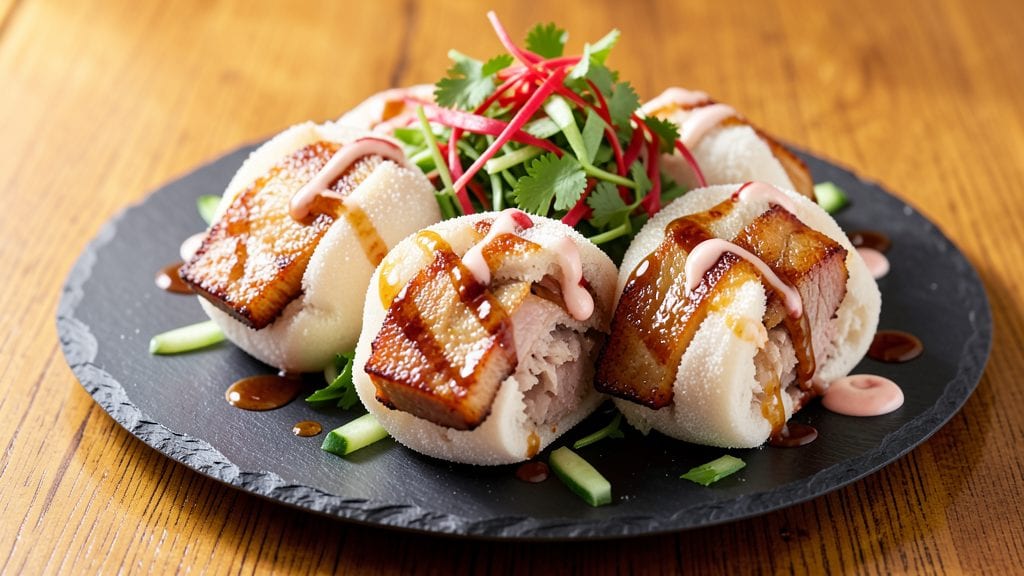
Creating pork belly bao buns transforms a simple appetizer into a showstopping dish where tender, pillowy buns cradle layers of crispy pork belly, hoisin glaze, and pickled vegetables. This recipe bridges traditional Chinese techniques with approachable home cooking—perfect for anyone eager to impress without mastering advanced skills.
The secret lies in balancing fermentation for soft buns and precise roasting for pork that’s crispy on the outside yet succulent within.
I developed this method after years of experimenting with Asian-inspired dishes, and it’s now my go-to for gatherings. The bao dough requires only a few ingredients and a 24-hour rise, while the pork belly roasts low and slow until the fat renders into golden, crackling perfection.
No special equipment is needed—just a steamer, a sharp knife, and patience for the flavors to develop.
What you’ll end up with is a dish that’s equal parts restaurant-worthy and comforting: steamed buns that stay soft even after filling, crispy pork belly slices that shatter at every bite, and a bright contrast of tangy pickled vegetables cutting through the richness.
The hoisin glaze ties everything together with its sweet-savory depth, making each bao bun a little taste of Shanghai at your table.
Serve these bao buns as an appetizer or light lunch, and don’t forget to save some for leftovers—they reheat beautifully. The recipe scales easily, so double the dough and pork for a crowd. Ready to master this dish? Let’s get started.
Ingredients for pork belly bao buns
A few quality ingredients transform into restaurant-style bao buns with crispy pork belly filling.
| Ingredient | Amount | Notes |
|---|---|---|
| Pork Belly 🥓 | 2 lb | Skin-on, fatty cuts preferred |
| All-Purpose Flour 🌾 | 3 cups | Bread flour for chewier texture |
| Instant Yeast 🍞 | ¼ tsp | Active dry works too |
| Granulated Sugar 🍚 | ½ tsp | For yeast activation |
| Unsalted Butter 🧈 | ¼ cup | Cold, cubed for dough |
| Whole Milk 🥛 | ½ cup | Room temperature preferred |
| Hoisin Sauce 🍜 | ¼ cup | Store-bought or homemade |
| Rice Vinegar 🍶 | ¼ cup | For pickled vegetables |
| Granulated Sugar 🍚 | ½ cup | For pickling solution |
| Carrots 🥕 | 1 whole | Julienned for pickled veggies |
| Green Onions 🧅 | 4 whole | Thinly sliced for pickled veggies |
| Diamond Crystal Kosher Salt 🧂 | 1 ½ tsp | For dough and pickling |
| Vegetable Oil 🫒 | 1 tbsp | For greasing steamer |
| Sesame Seeds 🌰 | 1 tbsp | Toasted for garnish |
The pork belly is non-negotiable—look for thick-cut, fatty pieces with a marbled texture at specialty butchers or Asian markets like H Mart or 99 Ranch. A 2-pound cut yields enough for filling with crispy edges. For the dough, King Arthur bread flour delivers the chewier texture, but all-purpose works in a pinch. Instant yeast ensures consistent activation, though active dry requires proofing time. The unsalted butter should be cold to prevent over-developing the gluten during the 24-hour fermentation—this is where the buns get their signature pillowy texture.
No hoisin sauce? A mix of soy sauce, honey, and a pinch of five-spice powder works in a bind. For the pickled vegetables, rice vinegar should be seasoned (not unseasoned)—Kikkoman is reliable. Substitute daikon radish for carrots if you prefer a milder crunch. The green onions can be swapped for shallots if you dislike the grassy note. For the dough, milk powder can replace milk if you're avoiding dairy, though the texture will be slightly drier. The sesame seeds? Toast them in a dry pan for 30 seconds—they pack more flavor when fresh.
Store the uncooked dough in an airtight container in the fridge for up to 48 hours, allowing it to ferment slowly. The pork belly keeps raw for 3 days in the fridge or 6 months frozen. Once steamed, bao buns reheat beautifully—microwave 20 seconds or steam for 3 minutes to restore softness. The pickled vegetables last 5 days in the fridge, though they’ll soften after 2 days. For a crowd, double the dough and pork, but ensure your steamer has enough capacity—bamboo steamers work best for even heat distribution.
Why You'll Love This Recipe
- No Steamer? No Problem: I’ve made these buns with just a colander over a pot—no fancy equipment needed. The dough’s elasticity from the 8-minute knead with cold butter makes it forgiving, even if you’re new to steaming.
- Crispy Meets Creamy Magic: That pork belly, scored and rendered until golden, gives off serious flavor when paired with the slightly tangy pickled carrots and green onions. The hoisin sauce ties it all together—like a perfect hug for your taste buds.
- Weeknight Crowd-Pleaser: Six buns feed four people, and they’re done in under an hour. My kids devour them straight from the steamer, no fuss—just warm, pillowy dough and that addictive pork filling.
- Budget-Friendly Luxury: Two pounds of pork belly might sound pricey, but it stretches so far. The dough only needs basic pantry staples like flour and yeast, and the pickled veggies use up carrots and green onions you already have. Worth every penny for that first bite.
Step-by-step instructions for pork belly bao buns
This method delivers pillowy bao buns with a crispy pork belly filling—every bite balances softness and texture.
Prepare the Pork Belly Filling
Cut the 2 lb pork belly into ½-inch thick slices, leaving the skin intact. Score the fat in a diamond pattern to render evenly. In a heavy skillet, cook the slices over medium heat for 12-15 minutes per side until the fat is golden and crispy, and the meat reaches 145°F internally. Remove from heat and let rest for 10 minutes before slicing into ¼-inch strips—this ensures clean cuts and maximum crispiness when reassembled.
While the pork rests, prepare the pickled vegetables by julienning 1 carrot and thinly slicing 4 green onions. In a bowl, combine them with ½ cup granulated sugar, ¼ cup rice vinegar, and 1½ tsp diamond crystal kosher salt. Let sit for 15 minutes to soften and develop flavor. Drain before using to avoid excess moisture in the buns.
Make the Bao Bun Dough
In a stand mixer, combine 3 cups all-purpose flour, ½ tsp granulated sugar, and ¼ tsp instant yeast. Mix on low speed until combined, then add ½ cup whole milk and ¼ cup unsalted butter (cold and cubed). Knead for 8-10 minutes until the dough is smooth and elastic, forming a windowpane when stretched. If too sticky, add 1 tbsp flour at a time.
Shape the dough into a ball, cover with plastic wrap, and let rise at 75°F for 1 hour or until doubled in size. Here’s the thing—don’t skip this step. Proper fermentation develops gluten structure, which is critical for those signature bao buns that spring back when bitten. Poke the dough gently; if it springs back slowly, it’s ready.
Assemble and Steam the Buns
Grease a steamer basket with 1 tbsp vegetable oil to prevent sticking. Divide the risen dough into 6 equal portions (about 4 oz each) and roll each into a 6-inch circle, keeping the edges slightly thicker. Place a ¼-inch thick slice of the crispy pork belly in the center of each circle, then add ¼ cup hoisin sauce and 1 tbsp pickled vegetables. Fold the dough over the filling, sealing the edges tightly to trap steam.
Steam the buns over boiling water for 12-15 minutes until they’re plump and golden at the seams. Avoid overcrowding the steamer—leave ½-inch space between buns for even heat distribution. Transfer to a wire rack to cool slightly before serving. The contrast of crispy pork belly and soft, pillowy dough is what makes these buns irresistible.
Finish and Serve
Just before serving, toast 1 tbsp sesame seeds in a dry skillet over medium heat for 1-2 minutes until fragrant. Sprinkle them generously over the steamed buns for added texture and aroma. Serve warm, with extra hoisin sauce or pickled vegetables on the side. The filling should be crispy yet tender, with a glossy sheen from the steaming process.
Real talk: These buns are best enjoyed immediately, but you can reheat them in a steamer for 3-4 minutes if needed. The pork belly’s crispiness diminishes slightly with reheating, so plan to serve fresh for the full experience.
Pro Tips For Making Pork Belly Bao Buns
- Score the Fat Deep: That diamond pattern on the pork belly isn’t just decoration—it’s the difference between crispy, crackling fat and greasy, sad slices. Use a sharp knife and cut all the way through the skin and fat layers, about ½-inch apart. I used to half-ass this step, and my pork belly always ended up chewy instead of shatteringly crisp.
- Cold Butter Wins: Toss those cubes of unsalted butter straight from the fridge into the dough—no melting allowed. Cold butter creates pockets of fat that render during steaming, giving your bao buns that melt-in-your-mouth richness. I learned this the hard way after kneading with room-temperature butter and ending up with dense, flavorless dough.
- Don’t Rush the Rest: Those 10 minutes you want to skip while the pork belly rests? Don’t. Let it sit under foil or tented with aluminum foil—this lets the juices redistribute so your slices stay tender, not stringy. I’ve sliced pork belly too soon, and the filling turns out dry and tough every time.
- Space Them Out: Overcrowding the steamer is how you end up with soggy, uneven buns. Leave at least ½-inch between each bao when steaming—this ensures steam circulates properly and every bun gets that perfect plump, golden seal. Trust me, your future self will curse you if you ignore this.
Best sauces and condiments for this pork belly bao buns
Hoisin Sauce Magic
I swear by Lee Kum Kee hoisin sauce for these bao buns—it’s the perfect balance of sweet, savory, and umami. A ¼ cup spread over the pork belly slices before folding into the dough creates that signature glossy sheen and sticky texture.
If you’re in a pinch, mix 2 tbsp soy sauce, 1 tbsp honey, and ½ tsp five-spice powder for a homemade version that still delivers depth. 🍜
Pickled Vegetable Contrast
The bright, tangy crunch of pickled vegetables cuts through the richness of the pork belly beautifully. I like to use a mix of carrots and green onions—the sweetness of the carrots balances the sharpness of the onions.
For extra zing, add ½ tsp chili flakes to the pickling solution. Drain well before using to avoid soggy buns. This simple step elevates the dish from good to unforgettable.
Chili Crisp Glaze
For a spicy kick, drizzle 1-2 tbsp chili crisp (like Sichuan Pepper Crisp) over the finished buns. It adds a fiery, numbing heat that pairs perfectly with the pork belly’s richness.
I like to toss a spoonful into the hoisin sauce while steaming the buns for an infused flavor. If you’re sensitive to spice, start with just ½ tbsp and adjust to taste.
Sesame Oil Finish
A light drizzle of sesame oil over the steamed buns adds an aromatic touch that ties everything together. I use 1 tsp right before serving—just swirl it around the plate for an elegant finish.
For extra flavor, toast the sesame seeds in the oil for 30 seconds before drizzling. This simple step makes the buns feel like a restaurant treat.
Sweet Chili Dipping Sauce
For a crowd-pleasing option, set out a bowl of sweet chili sauce (like Sriracha or homemade with vinegar, sugar, and chili). The tangy, sweet heat is perfect for dipping and adds another layer of flavor.
I like to mix 2 tbsp sweet chili sauce with 1 tbsp hoisin for a double-dip experience that guests will love. 🌶️
Nutrition facts
Frequently asked questions
Why does the pork belly need to rest after cooking?
Letting the pork belly rest for 10 minutes after cooking ensures the juices redistribute evenly. This step prevents the filling from becoming dry and helps you slice it cleanly into ¼-inch strips—key for that perfect crispy texture when folded into the buns. Skipping this can make your buns soggy inside!
Can I make the bao bun dough ahead of time?
Store the uncooked dough in an airtight container in the fridge for up to 48 hours, letting it ferment slowly. This actually improves flavor and texture—just plan to let it rise again for 1 hour at 75°F before shaping. The dough will be slightly stickier after cold storage, so add a little flour when kneading.
How do I prevent the steamed buns from sticking to the steamer?
Greasing the steamer basket with 1 tbsp vegetable oil before adding the buns creates a protective barrier. For extra insurance, line the steamer with parchment paper or use a bamboo steamer—both prevent sticking while ensuring even heat distribution. Never overcrowd the buns; leave ½-inch space between them for perfect results.
What if my dough doesn’t rise enough?
If your dough doesn’t double in size after 1 hour, place it in a warm spot (like a turned-off oven with the light on) for another 30 minutes. Warmth and patience are key—don’t rush it! If the dough still doesn’t rise, check your yeast for freshness or try adding ¼ tsp more instant yeast to the dough. Cold kitchens are the usual culprit.