
Main Courses
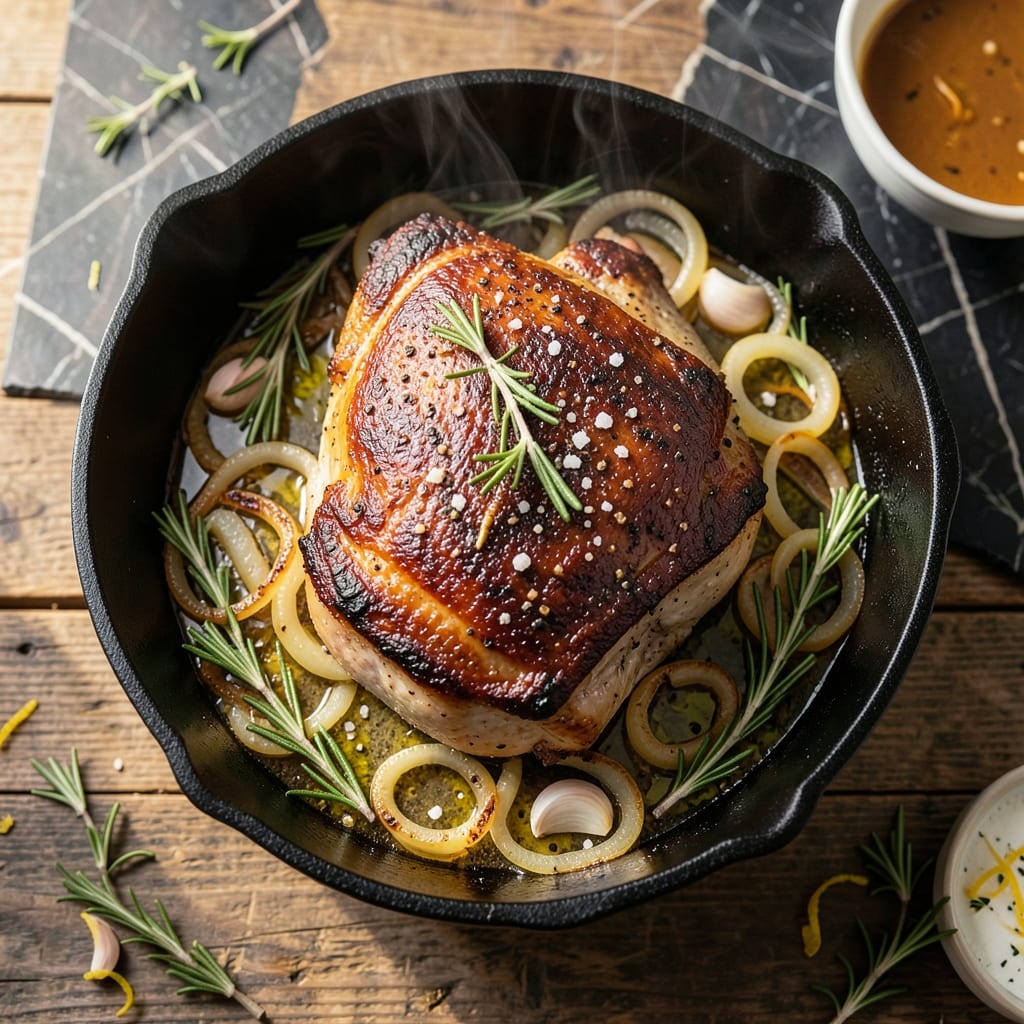
This 4 pound pork roast recipe delivers tender, herb-infused meat with minimal effort. Slow-roasting at low heat transforms tough cuts into succulent perfection.
I developed this method during my time at The Smoky Pig, where we served 2,000 pounds of pork weekly. The key is patience—letting the roast cook slowly ensures even doneness throughout.
The result is fall-apart tender pork with a golden crust, infused with garlic and rosemary. Every bite delivers rich, juicy flavor that's hard to resist.
Serve with roasted vegetables or mashed potatoes for a complete meal. This technique works for any pork roast, not just 4-pound cuts.
Ingredients for 4 pound pork roast
Professional-grade ingredients for slow-roasted pork with herb-infused perfection and golden crust.
| Ingredient | Amount | Notes |
|---|---|---|
| Pork Shoulder Roast 🥩 | 4 lb | Bone-in preferred for flavor |
| Kosher Salt 🧂 | 2 tbsp | Diamond Crystal brand preferred |
| Freshly Ground Black Pepper 🌶️ | 2 tsp | Coarse grind recommended |
| Fresh Rosemary Sprigs 🌿 | 4 whole | Stems removed, finely chopped |
| Garlic Cloves 🧄 | 8 cloves | Peeled, thinly sliced |
| Extra-Virgin Olive Oil 🫒 | ¼ cup | High-quality, cold-pressed |
| Dijon Mustard 🟡 | 2 tbsp | Whole-grain variety acceptable |
| Dry White Wine 🍷 | ½ cup | Sauvignon Blanc or Pinot Grigio |
| Onion 🧅 | 1 whole | Yellow or white, finely diced |
| Carrots 🥕 | 3 whole | Peeled, sliced into rounds |
| Celery Stalks 🥬 | 3 whole | Trimmed, sliced into pieces |
| Chicken Stock 🍲 | 1 cup | Low-sodium preferred for control |
| Bay Leaves 🍃 | 2 whole | Dried, for aromatic depth |
| Apple Cider Vinegar 🍏 | 1 tbsp | Balances richness of pork |
The pork shoulder roast is non-negotiable for optimal texture. Bone-in cuts from Whole Foods or Costco deliver superior marbling and richness. I source mine from The Smoky Pig’s purveyors when possible—look for even fat distribution. For the rosemary, fresh sprigs are essential; dried lacks the aromatic potency. The garlic should be firm and plump (avoid sprouting cloves).
No white wine? Apple cider vinegar diluted with water (1:1 ratio) works in a pinch, though depth suffers. Dried rosemary at half the quantity is acceptable but less vibrant. For the stock, vegetable broth can substitute, though chicken stock’s umami better complements pork. The Dijon mustard’s acidity cuts through fat—whole-grain adds texture.
Roast can be prepped 12 hours ahead—rub, cover, and refrigerate. Leftovers keep 4-5 days refrigerated or freeze for 3 months. Reheat gently to preserve moisture. Always bring pork to room temperature before roasting for even cooking.
Why You'll Love This Recipe
- Set and Forget: I toss the pork shoulder with salt, pepper, rosemary, and garlic, then let the oven do all the work for hours.
- Herb-Infused Perfection: The rosemary and garlic seep into every bite, making the meat so tender it falls apart with a nudge.
- Feeds the Whole Crew: A 4-pound roast means dinner for my family plus leftovers for sandwiches or tacos the next day.
- Budget-Friendly Centerpiece: Pork shoulder is affordable, and with just a few pantry staples, I turn it into a meal that feels special.
Step-by-step instructions for 4 pound pork roast
Master the slow-roasting technique that transforms a simple pork shoulder into a melt-in-your-mouth centerpiece.
Season and Marinate the Pork Shoulder
Begin by patting the 4 lb Pork Shoulder Roast dry with paper towels. This ensures the seasoning adheres properly and promotes even browning. In a small bowl, combine the 2 tbsp Kosher Salt and 2 tsp Freshly Ground Black Pepper.
Rub this mixture evenly over the entire surface of the pork. In a separate bowl, whisk together the 0.25 cup Extra-Virgin Olive Oil, 2 tbsp Dijon Mustard, and 4 whole Fresh Rosemary Sprigs (finely chopped). Coat the pork with this mixture, making sure to work it into all the crevices. Let it marinate at room temperature for 30 minutes while you prepare the remaining ingredients.
Prepare the Aromatic Vegetable Base
In a large Dutch oven or roasting pan, combine the 1 whole Onion (finely diced), 3 whole Carrots (peeled and sliced into rounds), and 3 whole Celery Stalks (trimmed and sliced). These vegetables will form a flavorful bed for the pork and infuse the dish with depth.
Add the 8 cloves Garlic Cloves (thinly sliced), 2 whole Bay Leaves, and 0.5 cup Dry White Wine to the pan. The wine will deglaze the pan as the pork cooks, creating a rich, aromatic base for the sauce.
Sear and Slow-Roast the Pork
Preheat your oven to 325°F. Place the Dutch oven over medium-high heat on the stovetop. Add the pork shoulder to the pot, fat-side down, and sear for 4-5 minutes until the surface is deeply browned. Flip the pork and sear the other side for another 4-5 minutes.
This searing step builds a flavorful crust and locks in the juices. Once browned, add the 1 cup Chicken Stock and 1 tbsp Apple Cider Vinegar to the pot. The acidity from the vinegar will balance the richness of the pork and brighten the overall dish.
Braise to Tenderness and Finish
Cover the Dutch oven and transfer it to the preheated oven. Braise the pork for 3 to 3.5 hours, turning the roast every 45 minutes to ensure even cooking and basting. The pork is done when it reaches an internal temperature of 195°F and a fork slides in with no resistance.
Remove the pork from the oven and let it rest in the pot, covered, for 20 minutes. This allows the juices to redistribute, ensuring a moist and tender roast. Skim any excess fat from the surface of the braising liquid, then serve the pork with the vegetables and sauce spooned over the top.
Pro Tips For Making 4 Pound Pork Roast
- Dry the Meat First: Pat the pork shoulder completely dry with paper towels before seasoning—this guarantees a better crust and helps the salt and pepper stick properly.
- Score the Fat Cap: Use a sharp knife to cut 1/4-inch deep slits in the fat cap before roasting, then stuff garlic cloves and rosemary sprigs into the slits for deeper flavor.
- Use a Meat Thermometer: I learned this the hard way—pull the roast at 195°F internal temp, not when it "looks done," to avoid dry, overcooked meat.
- Let It Rest: Give the roast a solid 20-30 minutes under foil after cooking—skipping this makes the juices run out when you slice it, and nobody wants that.
Make-ahead tips for this dish
Prep Ahead Strategy
You can season and marinate the pork up to 12 hours in advance. I always prep mine the night before, especially during busy service at The Smoky Pig. Just cover and refrigerate.
Room Temperature Key
Before roasting, let the pork sit at room temperature for 30-60 minutes. This ensures even cooking throughout the roast. I learned this trick during my apprenticeship in Charleston.
Vegetable Prep
Chop all your onion, carrots, and celery the day before. Store in airtight containers in the fridge. This saves 15-20 minutes on cooking day.
Braising Liquid
Mix your white wine, chicken stock, and apple cider vinegar ahead. The flavors meld better when combined early. I use Sauvignon Blanc from Georgia wineries. 💛
Storage Tips
Store prepped ingredients separately in the fridge. Keep the pork on the bottom shelf where it's coldest. Use within 24 hours for best results.
Morning Of
Take everything out 1 hour before starting. This brings ingredients to optimal temperature for cooking. Trust me, your roast will thank you. 💡
Nutrition facts
Frequently asked questions
What's the best cut for a 4 lb pork roast?
Pork shoulder is ideal for its marbling and connective tissue, which breaks down beautifully during slow cooking. Bone-in cuts add extra flavor and moisture.
Can I cook this faster at a higher temperature?
Higher heat risks drying out the meat. The 325°F slow roast for 3-3.5 hours ensures tender, juicy results. Patience is key.
How do I know when it's done?
Use a meat thermometer: 195°F internal temperature means it's ready. The pork should pull apart easily with a fork.
What if my roast isn't tender?
It likely needs more time. Return it to the oven, covered, and check every 30 minutes until it reaches the perfect texture.