
Main Courses
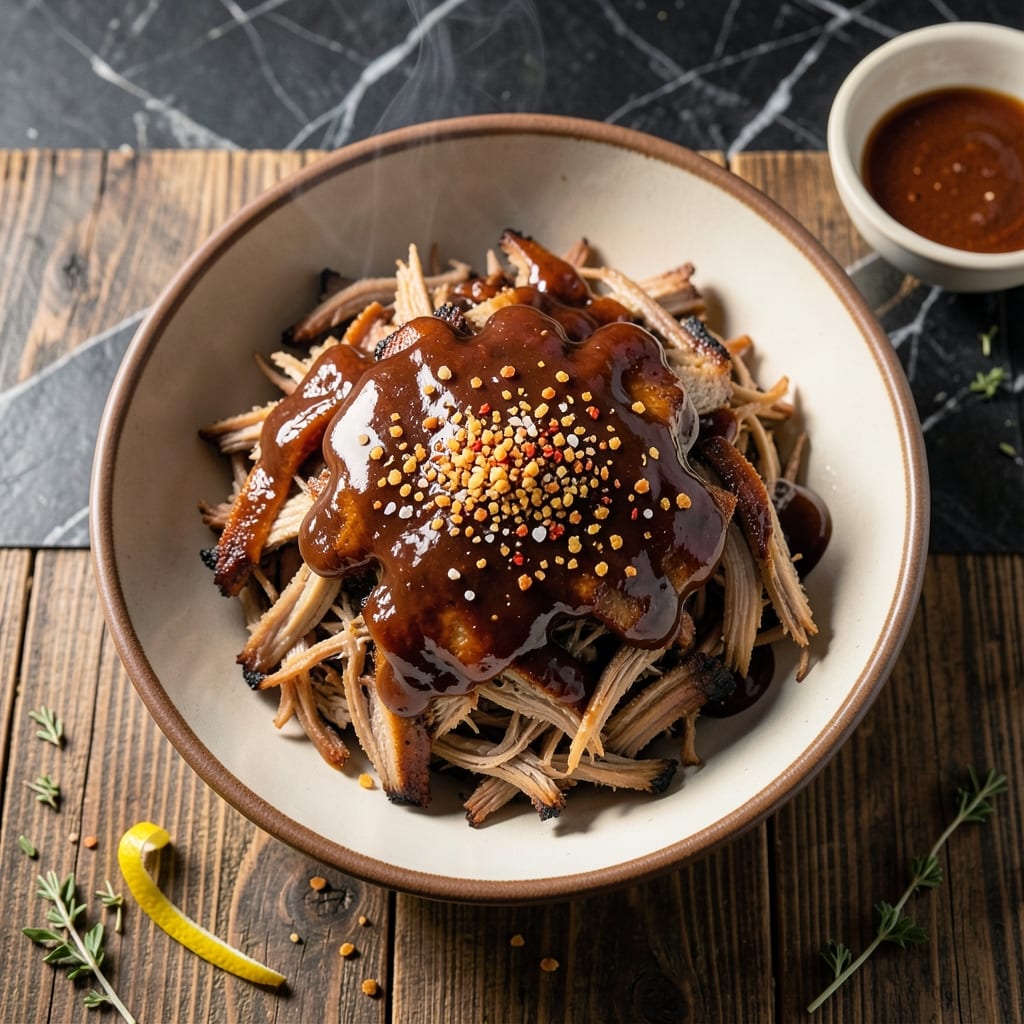
This 4 Rivers pulled pork recipe delivers the slow-smoked BBQ perfection that made the chain famous. After years on the Southeast BBQ circuit, I've refined this method to capture that signature tenderness and bark.
What sets this apart is the 12-hour smoke at 225°F, using a simple but precise rub that lets the pork shine. The low temperature breaks down the collagen slowly, creating that fall-apart texture.
You'll end up with moist, flavorful pulled pork that holds its shape when shredded but melts in your mouth. The bark develops a deep mahogany color with just the right amount of chew.
Serve on soft buns with tangy vinegar sauce for the authentic 4 Rivers experience. This technique works as well in a home smoker as it does in a competition pit.
Ingredients for 4 rivers pulled pork
A bold rub, quality pork, and twelve hours of low smoke make this legendary.
| Ingredient | Amount | Notes |
|---|---|---|
| Pork Shoulder 🥩 | 8 lb | Bone-in, skin-on preferred |
| Brown Sugar 🧈 | ½ cup | Light or dark variety |
| Paprika 🌶️ | 2 tbsp | Sweet or smoked variety |
| Garlic Powder 🧄 | 1 tbsp | Not garlic salt |
| Onion Powder 🧅 | 1 tbsp | Fresh ground preferred |
| Kosher Salt 🧂 | 1 tbsp | Diamond Crystal preferred |
| Black Pepper 🌶️ | 1 tbsp | Freshly ground preferred |
| Cayenne Pepper 🔥 | ½ tsp | Adjust for heat preference |
| Yellow Mustard 🟡 | ¼ cup | For binder in rub |
| Apple Cider Vinegar 🍏 | ½ cup | For spritzing during smoke |
| Wood Chunks 🪵 | 4 pieces | Hickory or applewood preferred |
| BBQ Sauce 🍯 | 2 cups | For serving, optional |
| Hamburger Buns 🍞 | 12 pieces | Soft, for serving |
The pork shoulder is non-negotiable—bone-in, skin-on gives you the best bark and moisture. Look for a cut with good marbling at Costco or your local butcher (they’ll often have whole shoulders you can break down). 8 pounds feeds a crowd, but you can scale down to 4-5 for a smaller group. Avoid pre-trimmed cuts; the fat cap protects the meat during that long smoke.
No hickory? Applewood or pecan work great—just avoid mesquite, which can overpower. Out of yellow mustard? Dijon in a pinch, but it adds a sharper bite. If you can’t find Diamond Crystal kosher salt, Morton’s works too (just reduce by 25% since it’s denser). The apple cider vinegar spritz keeps the surface moist—don’t skip it (worth the extra minute).
Pulled pork tastes even better the next day. Store in the fridge for up to 4 days or freeze for 3 months. Reheat gently with a splash of broth or apple juice to keep it moist. The wood chunks? Keep them dry in a sealed container—indefinitely.
Why You'll Love This Recipe
- Set and Forget: I toss the pork shoulder with brown sugar and spices in the morning, and the slow cooker does the rest.
- Smoky Sweet Balance: The brown sugar caramelizes with the paprika for that deep, sticky-sweet crust I crave.
- Feeds a Crowd: One pork shoulder stretches into sandwiches, tacos, or nachos for a whole weekend of meals.
- Leftovers for Days: Honestly, it tastes even better reheated, and I love having it ready for quick lunches.
Step-by-step instructions for pulled pork
Master the technique and you'll achieve tender, smoky pulled pork that falls apart with ease.
Prepare the Pork Shoulder with Dry Rub
Start with the 8 lb pork shoulder and pat it completely dry. This ensures the rub adheres properly and creates a better bark. In a bowl, combine the 0.5 cup brown sugar, 2 tbsp paprika, 1 tbsp garlic powder, 1 tbsp onion powder, 1 tbsp kosher salt, 1 tbsp black pepper, and 0.5 tsp cayenne pepper.
Rub the 0.25 cup yellow mustard all over the pork shoulder first—this acts as a binder. Then generously apply the dry rub mixture, pressing it into the meat so it sticks. Let the seasoned pork sit at room temperature for 30-45 minutes while you prepare the smoker.
Set Up the Smoker for Low and Slow Cooking
Preheat your smoker to 225°F using the 4 pieces wood chunks. Hickory or applewood works best for that classic BBQ flavor. Maintain a steady temperature—this is crucial for even cooking. Place a water pan in the smoker to help keep the environment moist throughout the long cook.
Once the smoker is up to temperature and producing thin, blue smoke, place the pork shoulder directly on the grates, fat-side up. The fat will render down and baste the meat as it cooks. Close the lid and resist the urge to peek for at least the first 2 hours.
Smoke and Spritz for Moisture
Smoke the pork undisturbed for 6-8 hours. Every 2 hours, spritz the pork with the 0.5 cup apple cider vinegar to keep the surface moist and help build the bark. I use a spray bottle for even coverage.
The pork is ready for the next step when the internal temperature reaches 165-170°F. At this point, you'll notice the bark has darkened and the meat has taken on a deep, smoky color. This is also when you'll hit the stall, where the temperature stops rising temporarily.
Wrap and Finish Cooking
Once the stall begins, wrap the pork shoulder tightly in pink butcher paper. This helps power through the stall while keeping the bark intact. Return it to the smoker and continue cooking until the internal temperature reaches 200-205°F.
This final stage usually takes another 2-4 hours, depending on the size of your pork shoulder. You'll know it's done when a probe slides into the thickest part of the meat with no resistance, like butter. The total cook time will be approximately 10-12 hours.
Rest, Shred, and Serve
Remove the pork from the smoker and let it rest, wrapped, in a warm cooler or oven set to 170°F for at least 1 hour. This resting period allows the juices to redistribute, ensuring moist, flavorful meat.
Unwrap the pork and shred it using two forks or meat claws, discarding any large fat chunks. Mix in up to 2 cups BBQ sauce if desired, though the meat is flavorful enough to serve as-is. Pile the pulled pork onto the 12 pieces hamburger buns and serve immediately.
Pro Tips For Making 4 Rivers Pulled Pork
- Low and Slow Wins: Cook that pork shoulder at 225°F for at least 8 hours—any hotter and the brown sugar rub will burn before the meat gets tender. I learned this the hard way after my first two attempts came out dry.
- Rub It Overnight: Mix the brown sugar, paprika, garlic powder, and onion powder into the pork the night before. The flavors sink in deeper, and the salt in the spices has time to work its magic.
- Don’t Rush the Rest: After pulling, let the pork sit in its juices for 15-20 minutes before serving. Skipping this makes the meat lose moisture, and all that brown sugar flavor ends up on the cutting board.
- Double the Rub: Sounds like overkill, but use twice as much spice mix as you think—pork shoulder can handle it, and the bark (that crispy outside) is what makes this recipe stand out.
Essential equipment for this recipe
Quality Smoker Options
For that authentic 4 Rivers flavor, you need consistent 225°F heat. I swear by my Traeger Pro 780 pellet smoker for its precise temperature control. A Weber Smokey Mountain is a great budget-friendly alternative that still delivers professional results.
Thermometer Essentials
Never trust built-in smoker thermometers. I use a ThermoWorks Smoke dual-probe system to monitor both the smoker and pork temps simultaneously. The internal temperature probe is crucial for knowing exactly when your pork hits 200-205°F. 🌡️
Fuel and Smoke Tools
For fuel, I recommend Lump charcoal like Jealous Devil for clean, hot burns. Add 4 pieces of dry hickory or applewood chunks for that perfect smoke flavor. A good chimney starter gets your coals ready without lighter fluid.
Resting Equipment
After smoking, rest your pork in a coolers—I use a Yeti Tundra 45. Wrap the pork in towels inside the cooler to maintain temperature for 1-2 hours while the juices redistribute. This step makes all the difference in texture. 💡
Shredding Tools
Invest in quality meat claws—the Bear Paws brand works great. For serving, warm your 12 hamburger buns on the smoker for 1-2 minutes just before assembling. Two forks work in a pinch, but claws give you better control.
Nutrition facts
Frequently asked questions
Can I use a different cut of pork?
Stick with pork shoulder for the best results. The high fat content and connective tissue break down beautifully during the 10-12 hour smoke at 225°F. Pork loin lacks the marbling needed for tender pulled pork.
How do I know when it's done?
Use a probe thermometer—the meat is ready at 200-205°F internally. It should slide in like butter. The bark will be dark mahogany, and the shoulder will feel loose when picked up.
Why wrap in butcher paper instead of foil?
Butcher paper lets the meat breathe, preserving the bark while powering through the stall. Foil steams the pork, softening the crust. For that authentic texture, paper is the way to go.
Can I speed up the cooking time?
Avoid higher temps—it dries out the meat. The low and slow method at 225°F is key for breaking down collagen without toughening the pork. Patience pays off in tenderness.