
Main Courses
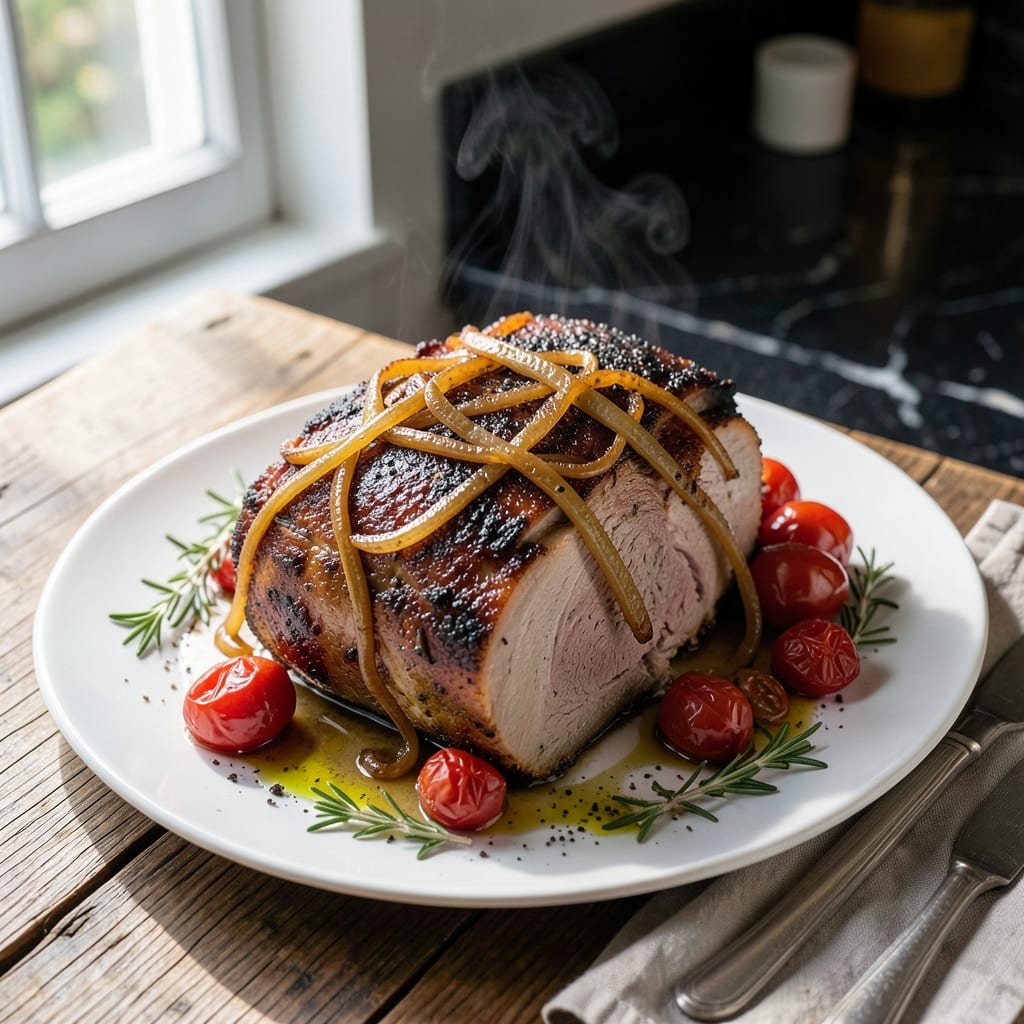
This 6 hour pork roast recipe delivers the fall-off-the-bone tenderness that made my Charleston mentor famous.
Slow-roasting at 275°F transforms tough cuts into buttery, succulent meat with a caramelized crust. I learned this method preparing 2,000 pounds weekly at The Smoky Pig, where timing and temperature are everything.
The low heat breaks down collagen gradually, ensuring every bite melts. A simple dry rub enhances the pork's natural richness without overpowering it.
Perfect for Sunday suppers or feeding a crowd, this technique guarantees restaurant-quality results in your home kitchen.
Ingredients for 6 hour pork roast
A simple dry rub and slow roast transform pork shoulder into restaurant-quality perfection.
| Ingredient | Amount | Notes |
|---|---|---|
| Pork Shoulder Roast 🐖 | 4 lb | Bone-in, skin-on preferred for flavor |
| Kosher Salt 🧂 | 2 tbsp | Diamond Crystal brand preferred |
| Coarse Black Pepper 🌶️ | 1 tbsp | Freshly ground for best results |
| Brown Sugar 🍚 | ½ cup | Light or dark variety |
| Smoked Paprika 🌶️ | 1 tbsp | Sweet or hot variety acceptable |
| Garlic Powder 🧄 | 1 tbsp | Not garlic salt substitute |
| Onion Powder 🧅 | 1 tbsp | Freshly ground if possible |
| Dried Thyme 🍃 | 1 tsp | Rubbed between fingers to release oils |
| Dried Rosemary 🌿 | 1 tsp | Crushed before measuring |
| Olive Oil 🫒 | 2 tbsp | Extra-virgin for richness |
| Apple Cider Vinegar 🍏 | ¼ cup | For balancing sweetness |
| Yellow Onion 🧅 | 1 whole | Large, quartered for roasting |
| Carrots 🥕 | 3 whole | Peeled, cut into thick chunks |
| Celery Stalks 🌿 | 3 whole | Cut into 2-inch pieces |
Pork shoulder is non-negotiable here—bone-in, skin-on delivers the best texture and flavor. Costco and Sam’s Club are excellent sources for large cuts at good prices. Look for well-marbled meat with a thick fat cap; this ensures the roast stays moist during the long cook. For the dry rub, Diamond Crystal kosher salt is the standard in professional kitchens due to its consistent texture and purity.
No smoked paprika? Regular paprika with a pinch of cayenne works in a pinch. Fresh garlic can replace the powder at a ratio of 1 clove per 1/4 tsp powder, but the dry version distributes more evenly in the rub. Brown sugar can be swapped for white if needed, though it lacks the molasses depth. For the vinegar, white vinegar is acceptable, but apple cider adds a subtle fruitiness that complements the pork.
The roast can be prepped 12 hours ahead—apply the rub and refrigerate uncovered to dry the surface for better browning. Leftovers keep 4-5 days refrigerated or 3 months frozen. Reheat gently in a covered dish with a splash of liquid to prevent drying out.
Why You'll Love This Recipe
- Set It and Forget: Honestly, I just rub the pork with salt, pepper, brown sugar, and smoked paprika, then let the slow cooker do its magic for 6 hours.
- Fallback Flavor: The brown sugar caramelizes with the paprika into this sticky, smoky crust that makes every bite ridiculous.
- Crowd Pleaser: I've served this at Sunday dinner and potlucks alike—even the picky eaters go back for seconds.
- Leftovers for Days: One pork shoulder feeds my family for a solid three meals, and the pulled pork only gets better overnight.
Step-by-step instructions for 6 hour pork roast
Here's the method that guarantees perfectly tender results every time.
Prepare and Season the Pork Shoulder
Pat the 4 lb Pork Shoulder Roast dry with paper towels to ensure a good sear. This removes excess moisture that would otherwise steam the meat instead of browning it. Place the roast on a clean work surface.
In a small bowl, combine the 2 tbsp Kosher Salt, 1 tbsp Coarse Black Pepper, 0.5 cup Brown Sugar, 1 tbsp Smoked Paprika, 1 tbsp Garlic Powder, 1 tbsp Onion Powder, 1 tsp Dried Thyme, and 1 tsp Dried Rosemary. Rub this mixture evenly over all surfaces of the pork, pressing it in firmly so it adheres well. This creates a flavorful crust that will caramelize during cooking.
Sear the Roast for Depth of Flavor
Heat the 2 tbsp Olive Oil in a large Dutch oven over medium-high heat until shimmering. Add the seasoned pork shoulder and sear for 3-4 minutes per side until deeply browned. You're looking for a rich, dark crust that signals the Maillard reaction has occurred.
Don't rush this step—proper browning develops complex flavors that will infuse the entire roast as it slow-cooks. Once all sides are seared, transfer the pork to a plate temporarily. The fond (browned bits) left in the pot will dissolve into the braising liquid, adding incredible depth to your sauce.
Build the Braising Liquid and Vegetables
In the same Dutch oven, add the 1 whole Yellow Onion, 3 whole Carrots, and 3 whole Celery Stalks. Cook for 4-5 minutes until the vegetables begin to soften and brown slightly. This builds another layer of flavor before the long cook.
Pour in the 0.25 cup Apple Cider Vinegar and deglaze the pot, scraping up all the browned bits from the bottom with a wooden spoon. The vinegar will balance the sweetness of the brown sugar in your rub. Return the pork shoulder to the pot along with any accumulated juices.
Slow-Roast to Fall-Off-The-Bone Tenderness
Cover the Dutch oven with its lid and transfer to a preheated 300°F oven. Cook for 5-6 hours, turning the roast every 90 minutes to ensure even cooking and prevent the bottom from drying out. The low and slow method breaks down the connective tissue in the pork shoulder.
You'll know it's done when the internal temperature reaches 195-200°F and a fork inserted into the meat twists easily with no resistance. The pork should be so tender that it nearly falls apart when you try to lift it. The vegetables will have softened into the braising liquid, creating a rich, flavorful sauce.
Rest and Serve
Carefully transfer the pork shoulder to a cutting board and tent loosely with foil. Let it rest for 15-20 minutes before shredding or slicing. This allows the juices to redistribute throughout the meat, ensuring every bite is moist and flavorful.
Skimming excess fat from the braising liquid and reducing it slightly on the stovetop will give you a beautiful sauce to serve alongside the pork. The meat should pull apart effortlessly with a fork, delivering the promised fall-off-the-bone tenderness in every serving.
Pro Tips For Making 6 Hour Pork Roast
- Start with dry meat: Pat the pork shoulder thoroughly with paper towels before seasoning—I learned this the hard way after my first roast came out steamed instead of seared.
- Salt aggressively overnight: Use 1 tablespoon of kosher salt per pound and let it sit uncovered in the fridge for 12 hours; the crust forms better and the flavor penetrates deep.
- Skip the foil early: Resist the urge to cover it for the first 3 hours; the brown sugar and paprika need that dry heat to caramelize into a proper bark.
- Rest before pulling: After 6 hours, let it rest under a tented foil for at least 30 minutes—my grandmother swore by this, and she was right: it keeps the juices from flooding the cutting board.
Perfect pairings for 6 hour pork roast
Southern-Style Sides
I always serve this with buttermilk biscuits from my Charleston days—they soak up that rich braising liquid beautifully. My recipe uses 2 cups White Lily flour for that authentic Southern texture. A side of collard greens slow-cooked with smoked turkey neck adds the perfect bitter counterpoint. 💛
Fresh Accompaniments
For brightness, I love a shaved cabbage slaw with apple cider vinegar dressing—toss 4 cups thinly sliced cabbage with ¼ cup vinegar and 1 tbsp sugar. The acidity cuts through the pork's richness while the crunch provides texture contrast.
Comfort Food Classics
Creamy mac and cheese is a crowd-pleaser that pairs wonderfully with the smoky-sweet pork. I use sharp cheddar and Gruyère for depth. For a lighter option, roasted sweet potatoes with brown sugar glaze complement the pork's caramelized crust.
Beverage Pairings
A cold Sweet Tea is my go-to—it's the drink of the Southeast BBQ circuit. For beer lovers, a Brown Ale like SweetWater Georgia Brown from Atlanta has the malt backbone to stand up to the rich pork. 🍺
Bread Options
Cornbread with honey butter is another winner—its sweetness mirrors the brown sugar in the rub. I bake mine in my vintage cast iron skillet for that perfect crispy edge. For a lighter bread, ciabatta toasts up nicely for sandwiches the next day.
Nutrition facts
Frequently asked questions
Can I use a different cut of pork?
Pork shoulder is ideal for its fat and connective tissue, but pork butt works too. Avoid lean cuts like tenderloin—they'll dry out during the long cook. The fat content is what makes this recipe work so well.
Why does it need 6 hours?
The long, slow cook at 300°F breaks down collagen into gelatin, creating that signature tenderness. Rushing it at higher heat would make the meat tough. This method guarantees fall-apart results every time.
How do I know when it's done?
Check for an internal temperature of 195-200°F and test with a fork. If it twists easily and shreds without resistance, it's perfect. The meat should nearly fall apart when lifted.
Can I make this in a slow cooker?
Yes! Sear the meat first, then cook on low for 8-10 hours. The texture will be slightly different but still delicious. Add the vegetables halfway through to prevent them from turning to mush.