
Main Courses
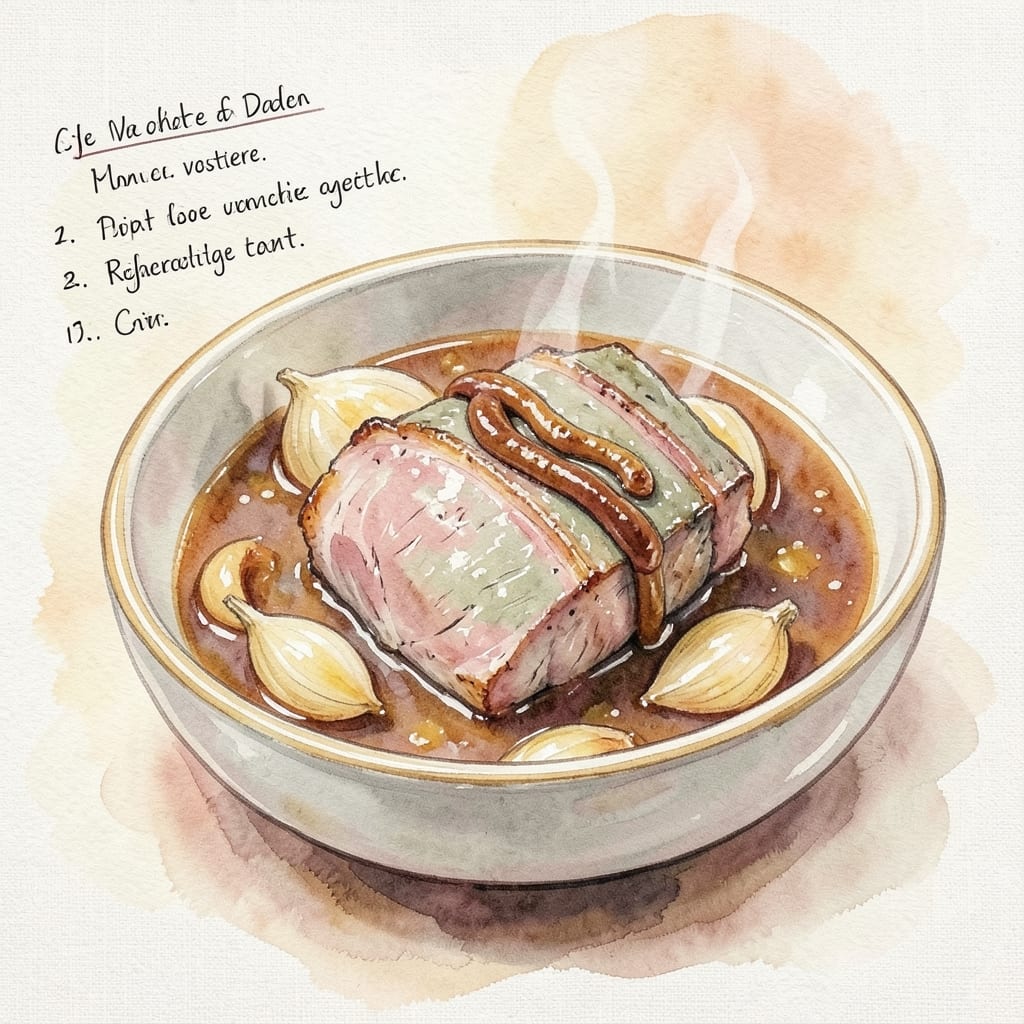
This Bavarian pork recipe brings the heart of Munich to your dinner table with its signature sweet-mustard braise and crispy edges. 🔥 I developed this method after years of perfecting pork braising techniques, drawing from both Bavarian tradition and my Southern roots—where pork and mustard have always been a match made in heaven. The secret lies in the balance of sweetness from caramelized onions and honey, with a sharp kick from Dijon mustard that tenderizes the meat while creating that coveted crust.
The dish starts with a foolproof technique: searing the pork until deeply browned before slow-braising in a rich, aromatic liquid. This method ensures the meat stays juicy at the core while developing crispy edges that hold up beautifully. Traditional Bavarian sides like red cabbage or Semmelknödel (bread dumplings) complete the experience, but even on its own, this pork delivers restaurant-quality results with minimal effort.
What makes this recipe special is its versatility—it works equally well for weeknight dinners or holiday feasts. The sweet-mustard sauce can be thickened into a glaze or served as a tangy accompaniment, while the pork itself transforms tough cuts into melt-in-your-mouth perfection. The aroma alone will have your kitchen smelling like a Munich beer hall, and the first bite delivers that perfect balance of sweet, tangy, and savory flavors.
Serve with crusty bread to soak up the sauce, or pair it with roasted potatoes and steamed greens for a complete meal. The leftovers reheat beautifully, making this a practical choice for meal prep. Whether you're cooking for family or hosting a dinner party, this Bavarian pork recipe delivers the kind of hearty, comforting meal that feels like a hug in food form.
Ingredients for bavarian pork
Sweet-mustard braise meets Bavarian tradition in this hearty pork recipe with crispy edges and tender meat.
| Ingredient | Amount | Notes |
|---|---|---|
| Pork Shoulder 🥩 | 2 ½ lb | Bone-in for best flavor |
| Yellow Onions 🧅 | 2 whole | Sliced into 1/4-inch strips |
| Dijon Mustard 🌶️ | 3 tbsp | High-quality for tangy flavor |
| Honey 🍯 | 2 tbsp | Wildflower preferred for depth |
| Apple Cider Vinegar 🍏 | ½ cup | For tangy brightness |
| Beef Broth 💧 | 2 cups | Low-sodium preferred |
| Fresh Thyme 🌿 | 2 tbsp | Chopped, stems removed |
| Fresh Rosemary 🌿 | 1 tbsp | Chopped, fresh sprigs |
| Garlic Cloves 🧄 | 6 cloves | Smashed, not minced |
| Olive Oil 🫒 | 2 tbsp | Extra-virgin for richness |
| Salt 🧂 | 1 ½ tsp | Kosher or sea salt |
| Black Pepper 🌶️ | ½ tsp | Freshly ground preferred |
| Bay Leaves 🍃 | 2 whole | For aromatic depth |
The pork shoulder is non-negotiable here—bone-in delivers the best flavor, and Costco or Whole Foods carry excellent cuts. Look for good marbling, which means juicier meat. If you can't find bone-in, a pork butt works too. The onions? Yellow caramelize better than red or white. Slice them evenly so they cook at the same rate. Fresh thyme and rosemary are worth hunting down at local farmers markets—they have more aroma than the dried stuff, but if you're in a pinch, dried works at one-third the amount.
No Dijon mustard? Whole-grain mustard thinned with water gets you close. The honey should be wildflower or clover—avoid the processed kind. Apple cider vinegar adds brightness, but white wine vinegar or balsamic work in a pinch. For the broth, low-sodium is key—you don’t want to over-salt the dish. The garlic cloves should be smashed, not minced, so they infuse flavor without turning to paste. If you're extra ambitious, toast the garlic in olive oil before adding it to the pot—game-changer.
This dish reheats beautifully—3-4 days in the fridge, 3 months frozen. For crispy edges, always reheat in a skillet over medium heat with a splash of broth. The sauce thickens as it cools, so if it's too thin when reheating, simmer uncovered for 5 minutes. Portion the pork into containers with some sauce for easy leftovers. Store the extra sauce separately—it's perfect for glazing roasted veggies or drizzling over mashed potatoes.
Why You'll Love This Recipe
- One-Pan Magic: I swear by this recipe because it’s the kind of meal that turns up the heat without turning up the mess. Toss the pork shoulder and onions in a single pan, let the oven do the work, and you’re left with tender meat and caramelized onions—no flipping, no fuss, just pure satisfaction.
- Sweet-Savory Balance: That honey and apple cider vinegar glaze? It’s where this dish gets its soul. The tangy mustard cuts through the richness, while the honey adds just enough sweetness to make every bite feel like a little reward. (Yes, even on a Tuesday night.)
- Leftovers That Shine: Between us, this recipe actually improves the next day. The pork stays juicy, the glaze thickens into a sticky, caramelized blanket, and suddenly you’ve got a weeknight lunch or sandwich filling that’s way more exciting than takeout.
- Budget-Friendly Feast: Pork shoulder is my go-to for stretching a dollar without stretching my patience. A single cut feeds four, the onions are cheap, and the mustard/honey combo costs pennies. Honestly, it’s the kind of recipe that makes me feel like I’m feeding a crowd without breaking the bank.
Step-by-step instructions for sweet-mustard braised pork
Master this Bavarian technique for tender, caramelized pork with perfect crispy edges.
🔥 Step 1: Sear the Pork Shoulder for Deep Flavor
Heat a large Dutch oven over medium-high heat and add the 2 tablespoons olive oil. Once shimmering, place the 2.5 lb pork shoulder fat-side down and sear undisturbed for 8-10 minutes until the fat renders and the skin turns deep golden brown. Flip carefully and sear the other side for another 8-10 minutes.
This initial searing creates the Maillard reaction that builds rich, complex flavors. Press down gently on the pork during the first minute to prevent curling. If the fat gets too hot and starts smoking excessively, reduce heat slightly to medium—you want it to render slowly and evenly.
👨🍳 Step 2: Build the Sweet-Mustard Base
Remove the pork from the pot and set aside. In the same Dutch oven, add the 2 whole yellow onions sliced into ¼-inch strips and cook for 5-6 minutes until softened and just beginning to caramelize. Add the 6 smashed garlic cloves and cook for 30 seconds until fragrant.
Reduce heat to medium-low and stir in the 3 tablespoons Dijon mustard, 2 tablespoons honey, and ½ cup apple cider vinegar. Let this mixture bubble gently for 2-3 minutes until it thickens slightly and develops a glossy sheen. This sweet-tangy base forms the foundation of your braising liquid.
🥘 Step 3: Braise Until Tender with Crispy Edges
Return the pork to the Dutch oven, fat-side up. Pour in the 2 cups beef broth and add the 2 bay leaves, 2 tablespoons chopped fresh thyme, 1 tablespoon chopped fresh rosemary, 1.5 teaspoons salt, and ½ teaspoon black pepper. Bring to a simmer, then cover tightly with a lid.
Transfer to a 325°F oven and braise for 2.5 hours. After 2 hours, remove the lid and increase oven temperature to 400°F for the final 30 minutes to render the fat and create crispy edges. The pork is done when it's fork-tender and the edges are deep mahogany brown with crispy texture.
⏰ Step 4: Rest and Develop the Sauce
Remove the pork from the oven and transfer to a cutting board. Tent loosely with foil and let rest for 15-20 minutes. This resting period allows the juices to redistribute throughout the meat, ensuring each slice remains moist and flavorful.
During this time, skim any excess fat from the braising liquid in the Dutch oven. Return the pot to the stovetop over medium heat and simmer uncovered for 5-7 minutes to reduce the sauce slightly. The finished sauce should coat the back of a spoon with a glossy, slightly thickened consistency.
Pro Tips For Making Bavarian Pork
- Sear the Pork Shoulder First: Get that Dutch oven screaming hot—you’re not just browning, you’re locking in flavor. A deep, caramelized crust on the pork shoulder (3-4 minutes per side) means the mustard-honey glaze will stick like glue later. I used to skip this, and the sauce always tasted like it was swimming in water.
- Slice Onions Thinly, Then Soften: No, "chopped" isn’t precise enough—aim for paper-thin slices (almost translucent). They’ll cook faster and blend into the sauce without turning to mush. My grandmother swore by this, and she was right: thick rings just sit there, untouched by the vinegar and honey.
- Don’t Rush the Braising Liquid: The onions, mustard, honey, and vinegar need time to marry—at least 10 minutes of simmering before adding the pork. Skim the foam off the top (yes, even if it’s gross) so the sauce stays silky, not cloudy. I learned this the hard way when my first batch tasted like a science experiment.
- Deglaze with Vinegar First: Pour in the apple cider vinegar before the honey—it cuts through the mustard’s richness and brightens the whole sauce. Add honey last, then reduce until it coats the back of a spoon. Sounds weird, but it works: the vinegar’s acidity makes the honey sing instead of just cloying.
Regional styles of this recipe
Munich Beer Hall Style
This is the classic Bavarian approach, where the pork is slow-braised with dark beer instead of broth. I swap the beef broth for 2 cups dark lager (like Paulaner or Weihenstephaner) and add 1 tbsp caraway seeds during braising for that authentic German flavor. The beer adds depth and a subtle malty sweetness that pairs beautifully with the mustard. Serve with preussische Zwiebeln (German caramelized onions) and knödel for the full experience. 🍺
Swabian Twist
In Swabia, they love their pork with a touch of lingonberry jam—about 2 tbsp stirred into the braising liquid. This adds a tart, fruity note that brightens the dish. I also add 1 tsp ground juniper berries for a piney aroma that’s signature to Swabian cuisine. Serve with spätzle instead of dumplings for a regional touch.
Franconian Crispy Version
Franconia takes crispy to another level by adding a cornstarch slurry (mix 1 tbsp cornstarch with 2 tbsp cold water) to the sauce during the final 5 minutes of braising. This creates a glossy, slightly thickened coating on the pork. Pair with Franconian sauerkraut and roasted potatoes> for a hearty meal. The crispy edges are next-level here!
Tyrolean Mountain Style
For a high-altitude twist, add ½ cup apple juice to the braising liquid and a 1-inch piece of fresh ginger (peeled and sliced) for warmth. Tyrolean cooks often finish the dish with a drizzle of wild mountain honey and fresh chives. Serve with buttered egg noodles and a side of pickled radishes for contrast.
Modern Fusion Adaptation
If you want to blend Bavarian tradition with modern flavors, try adding 1 tbsp smoked paprika to the searing oil and finishing with a balsamic glaze> (reduce ¼ cup balsamic vinegar with 1 tbsp honey until syrupy). This gives the dish a smoky-sweet depth that’s perfect for contemporary palates. Pair with roasted Brussels sprouts and a goat cheese salad for a gourmet touch.
Southern German Potato Topping
In some Bavarian households, they top the braised pork with a layer of thinly sliced potatoes> (about ½ lb) and grated Gruyère cheese during the final 20 minutes of cooking. The potatoes absorb the flavorful juices while the cheese melts into a golden crust. This is a showstopper for family dinners—simple but impressive! 🥔
Nutrition facts
Frequently asked questions
Why does this recipe use Dijon mustard instead of regular mustard?
Dijon mustard provides that signature Bavarian tang with a smoother, more refined flavor compared to coarse mustard. The finer texture blends better into the sauce and won't leave gritty bits. Plus, its subtle sweetness complements the honey perfectly, creating that balanced sweet-tangy profile that makes this dish so special.
Can I substitute bone-in pork shoulder with pork loin?
Not recommended! Pork loin is much leaner and lacks the connective tissue that creates tender, juicy results when braised. For best texture, stick with bone-in pork shoulder (or pork butt). If you absolutely must use loin, reduce braising time to 1.5 hours and increase the oven finish to 450°F for crispy edges.
How do I make the sauce thicker for serving over dumplings?
Simply mix 1 tablespoon cornstarch with 2 tablespoons cold water to make a slurry. Stir it into the reduced sauce during the final 2-3 minutes of simmering until it thickens to your desired consistency. For extra richness, whisk in 1 tablespoon butter at the end.
What's the best way to reheat leftovers without drying out the pork?
Always reheat in a skillet over medium heat with a splash of broth or water to keep it moist. Cover for 5 minutes, then uncover to crisp the edges. Never microwave—it'll turn the pork rubbery. For extra flavor, add a splash of apple cider vinegar or mustard to the pan while reheating.
Can I make this recipe in a slow cooker?
Yes! Brown the pork first in a skillet, then transfer it to your slow cooker with all ingredients. Cook on Low for 7-8 hours or High for 4-5 hours. For crispy edges, finish in a 400°F oven for 20-25 minutes after removing from the slow cooker. The sauce may need thickening separately.