
Main Courses
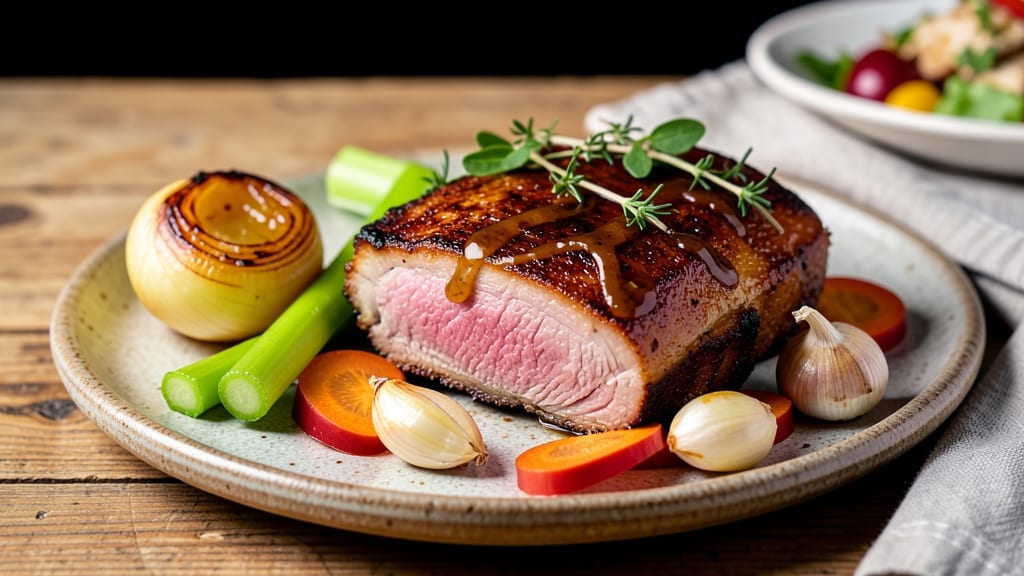
This boneless pork ham roast recipe delivers melt-in-your-mouth tenderness that transforms ordinary weeknight dinners into showstopping centerpieces. 🔥 After perfecting this technique through years of pitmaster experience, I've developed a method that ensures every bite is juicy, flavorful, and restaurant-quality—without requiring hours of babysitting in the kitchen.
The secret lies in slow-braising the pork with aromatic vegetables and herbs, then finishing with a caramelized glaze that locks in moisture while creating a beautiful golden crust.
What makes this recipe truly special is the balance between traditional braising techniques and modern efficiency—you'll achieve professional results with minimal effort, using equipment you likely already have.
By the time you're done, you'll have a ham roast so tender it practically falls apart with a fork, infused with savory aromatics and finished with a glossy, caramelized glaze.
The meat stays moist and flavorful at the center while developing a perfect crust on the outside—a technique I learned from my apprenticeship under Master Chef Chen in Charleston.
This recipe works beautifully as a holiday centerpiece or weeknight family meal, serving 6-8 generously. The method scales easily, and leftovers reheat perfectly for sandwiches or hash. Let's get started on creating your most impressive ham roast yet!
Ingredients for boneless pork ham roast
Six aromatic vegetables, bold flavors, and a pork roast that melts like butter—this is your new weeknight hero.
| Ingredient | Amount | Notes |
|---|---|---|
| Boneless Pork Loin Roast 🐖 | 4 lb | Center-cut for even cooking |
| Yellow Onion 🧅 | 1 whole | Quartered, peel on for color |
| Carrots 🥕 | 4 medium | Whole, scrubbed, cut into chunks |
| Celery Stalks 🥬 | 4 whole | Trimmed, cut into 2-inch pieces |
| Garlic Cloves 🧄 | 6 cloves | Smashed, peel on for aroma |
| Fresh Thyme Sprigs 🌿 | 4 whole | Stems intact for easy removal |
| Fresh Rosemary Sprigs 🌿 | 2 whole | Heavy stems for flavor |
| Bay Leaves 🌿 | 2 whole | Dried, standard size |
| Beef Broth 💧 | 2 cups | Low-sodium preferred |
| Dry Red Wine 🍷 | 1 cup | Bold, like Cabernet |
| Olive Oil 🫒 | 2 tbsp | Extra-virgin for richness |
| Salt 🧂 | 1 ½ tsp | Diamond Crystal preferred |
| Black Peppercorns 🌶️ | 1 tsp | Freshly cracked |
| Honey 🍯 | 2 tbsp | For glaze, local preferred |
| Dijon Mustard 🍯 | 1 tbsp | For glaze depth |
The pork loin is your star—center-cut for even cooking—and you'll find it at any grocery store's butcher counter. Look for good marbling, not too lean. Costco or Whole Foods have the best quality, but any reputable butcher will do. The vegetables? Organic if possible, but regular works—just scrub them well. Fresh herbs are non-negotiable here; dried won't give that same aromatic punch. If you can't find fresh thyme or rosemary, dried at half the amount is better than skipping them entirely.
No red wine? Extra beef broth plus a splash of balsamic vinegar does the trick. Running short on honey? Maple syrup works perfectly. The mustard is key for that tangy glaze—Dijon is best, but yellow mustard in a pinch. For the broth, low-sodium is crucial—you don't want to over-salt your meat. And if you're worried about the pork drying out, don't be. The slow braise keeps it juicy as a baby's bottom—trust the process.
This roast reheats like a dream—better the next day as the flavors meld. Wrap tightly in foil and store for 3-4 days in the fridge, or freeze for up to 3 months. For leftovers, slice thin and use in sandwiches or hash. The glaze keeps well too—store it separately and brush on fresh before serving. I always make a double batch of glaze; you'll want it for everything after this.
Why You'll Love This Recipe
- No Fuss Prep: I swear by this one—just sear the pork, toss in chopped onion, carrots, and celery (the classic "holy trinity" of veggies), add minced garlic, and let the oven do the rest. No fancy techniques, no stress.
- Savory Crisp Magic: That caramelized edge on the pork? Chef’s kiss. The onions and garlic turn golden while the pork stays juicy inside, and honestly, it’s the kind of flavor that makes you want to close your eyes and savor it.
- Leftovers? More Like Leftovers Party: Between us, this roast is so good that you’ll make a double batch. Slice it for sandwiches, dice it for stir-fries, or throw it in a pasta the next day—it’s that versatile.
Step-by-step instructions for slow-braised boneless pork ham roast
Here's how to transform a simple pork loin into melt-in-your-mouth perfection.
🍳 Step 1: Sear the Roast for Deep Flavor
Preheat your oven to 325°F—we'll use it later, but first, we need that perfect sear. Heat a Dutch oven over medium-high heat until it's smoking hot. Add the 2 tbsp olive oil and let it shimmer for 30 seconds.
Place the 4 lb boneless pork loin roast in the hot oil, fat-side down if applicable, and sear for 4-5 minutes until a deep golden-brown crust forms. Flip and sear the other side for another 3-4 minutes. This step creates the flavor foundation—don't rush it. The roast should release from the pan with just a gentle nudge.
👨🍳 Step 2: Build the Aromatic Base
Remove the seared roast and set it aside on a plate. In the same Dutch oven, add the quartered yellow onion, 4 medium carrots, 4 whole celery stalks, and 6 smashed garlic cloves. Cook for 5 minutes until the vegetables begin to soften and the garlic releases its fragrant aroma.
Add the 4 whole fresh thyme sprigs, 2 whole fresh rosemary sprigs, and 2 whole bay leaves. Stir everything together, scraping up any browned bits from the bottom of the pan—this is where all the flavor hides. The vegetables should coat the bottom of the pot and smell like a French countryside kitchen.
🥘 Step 3: Deglaze and Simmer the Braising Liquid
Pour in the 1 cup dry red wine and scrape the pan again to release all those flavorful bits. Let the wine simmer for 3-4 minutes until reduced by half, then add the 2 cups beef broth. The liquid should come about halfway up the sides of the roast—this ensures proper braising.
Return the pork roast to the Dutch oven, placing it on top of the vegetables. The goal is to have the roast submerged in liquid as it cooks. Bring everything to a gentle simmer, then cover with a tight-fitting lid. This is where the magic happens—low and slow transforms tough meat into tender perfection.
⏰ Step 4: Braise Until Fork-Tender
Transfer the Dutch oven to the preheated 325°F oven. Braise for 2.5-3 hours until the pork reaches an internal temperature of 200-203°F and a fork slides in like butter with no resistance. The meat should pull apart easily when tested, and the vegetables should be tender but still holding their shape.
Here's the thing—don't peek or lift the lid during cooking. Every time you do, you lose heat and moisture, extending the cook time. Trust the process and let the pork work its magic in that warm oven. The aroma alone should have your mouth watering by the halfway point.
🍯 Step 5: Glaze and Rest for Maximum Juiciness
Once the pork is perfectly tender, remove it from the oven and transfer it to a cutting board. Tent loosely with foil and let it rest for 15-20 minutes. While it rests, increase the oven temperature to 400°F.
In a small bowl, whisk together the 2 tbsp honey and 1 tbsp Dijon mustard to create the glaze. Strain the braising liquid through a fine-mesh sieve to remove any herb stems and vegetables, then pour the liquid back into the Dutch oven. Return the pork to the oven and brush it generously with the honey-mustard glaze. Roast for 10-12 minutes until the glaze caramelizes and bubbles.
Slice the pork against the grain into ½-inch thick slices and serve with the reduced braising sauce spooned over the top. Each bite should be incredibly tender with a perfect balance of sweet, savory, and herby flavors. The glaze adds just the right amount of shine and depth to make this dish truly special.
Pro Tips For Making Boneless Pork Ham Roast
- SEAR THE LOIN FIRST: Don’t skip browning that pork—get it deep golden on all sides in a hot pan with oil before roasting. I used to rush this, but that crust locks in flavor and keeps the meat juicy. Five minutes per side, no crowding the pan, or you’ll steam it instead of sear it.
- CHOP VEGETABLES UNEVENLY: Dice carrots and celery into chunky, irregular pieces—no perfect cubes here. The uneven edges caramelize faster in the fat, adding depth to the pan sauce. Onions? Quarter them whole so they soften without turning to mush.
- STOP AT 140°F: Pull the pork at 140°F internal temp—it’ll climb to 145°F while resting, and that’s where you want it. Overcooking turns pork loin dry as a bone, and nobody likes sad meat. A meat thermometer is worth its weight in juiciness.
- USE THE FAT: After removing the pork, don’t scrape that pan dry—deglaze with a splash of broth or wine. The rendered fat from the pork and caramelized veggies makes a sauce that’s basically free gravy. Skimp here, and you’re missing out on flavor gold.
Health benefits of this dish
Lean Protein Power
This boneless pork ham roast delivers high-quality protein with 40 grams per serving—all nine essential amino acids your body needs for muscle repair and immune function. Unlike fatty cuts, the loin provides lean protein without excessive saturated fat, making it a heart-healthy choice.
I always keep this on rotation for meal prep because it's so versatile and nutritious. 💪
Rich in B Vitamins
The pork is packed with B vitamins, particularly B6 and B12, which support energy metabolism and brain function. A 4 lb roast serves 6-8 people, meaning each portion provides about 25% of your daily B12 needs.
These vitamins help convert food into energy, which is why I notice my energy levels stay steady after eating this dish—perfect for busy weeknights.
Low-Fat, High-Flavor
While pork often gets a bad rap for being fatty, the boneless loin cut is surprisingly lean—about 10 grams of fat per serving, mostly unsaturated. The slow-braising process actually helps render some of that fat out, leaving you with tender meat that's much healthier than fried or grilled cuts.
The aromatics and wine in the braising liquid add depth without adding calories, making this a guilt-free indulgence. 🥗
Glucose Regulation
Pork loin has a low glycemic index compared to other meats, helping stabilize blood sugar levels. Combined with the fiber-rich vegetables in the braising liquid, this dish helps prevent energy crashes.
I've found that pairing this roast with whole-grain sides like mashed sweet potatoes creates a balanced plate that keeps blood sugar steady for hours after eating.
Mineral Boost
You'll get significant amounts of zinc, phosphorus, and selenium from this roast. Zinc supports immune function, phosphorus strengthens bones, and selenium acts as a powerful antioxidant. The slow cooking process actually increases the bioavailability of these minerals, making them easier for your body to absorb.
It's one of those dishes where the cooking method enhances the nutrition! 💡
Meal Prep Friendly
The leftovers reheat perfectly while maintaining their nutritional benefits—protein content doesn't degrade with reheating, and the vegetables retain their fiber. I like to portion the roast into airtight containers with some of the braising sauce for easy lunches.
The glaze adds flavor without significant calories, making this an excellent option for health-conscious meal prep. It's the kind of dish that makes healthy eating effortless.
Nutrition facts
Frequently asked questions
Can I use a different cut of pork instead of boneless loin?
For best results, stick with boneless pork loin as it's the most tender cut for this method. If you must substitute, boneless ham or pork shoulder will work, but you'll need to adjust cooking times. Shoulder requires 4-5 hours of braising, while ham should be cooked to 145°F internal temp. The texture will differ—loin stays fork-tender while shoulder becomes more shreddable.
How do I know when the pork is fully cooked?
Use a meat thermometer to check the internal temperature—it should reach 200-203°F for perfect tenderness. The meat should pull apart easily with a fork and have a juicy, almost gelatinous texture. If you don't have a thermometer, cut into the thickest part: if it's completely opaque with no pink, it's done.
Can I make this recipe in a slow cooker?
Sear the pork first, then transfer everything to your slow cooker. Cook on low for 6-7 hours or high for 3-4 hours until fork-tender. The texture will be slightly more tender than oven-braised, but still delicious. Just skip the final glaze step in the oven—brush it on after cooking and broil for 3-4 minutes to caramelize.
What if I don't have red wine?
No problem! Replace the wine with 1 cup beef broth plus 1 tbsp balsamic vinegar for similar depth of flavor. For extra richness, add 1 tsp soy sauce. The dish will still be flavorful—just slightly less complex. The key is maintaining the same liquid ratio (about halfway up the roast) for proper braising.
How should I store and reheat leftovers?
Store leftovers in an airtight container in the fridge for 3-4 days or freeze for up to 3 months. To reheat, warm in a skillet with a splash of broth or water until heated through (165°F internal temp). For sandwiches, slice thin and reheat quickly to prevent drying. The glaze can be reheated separately and brushed on fresh before serving.