
Main Courses
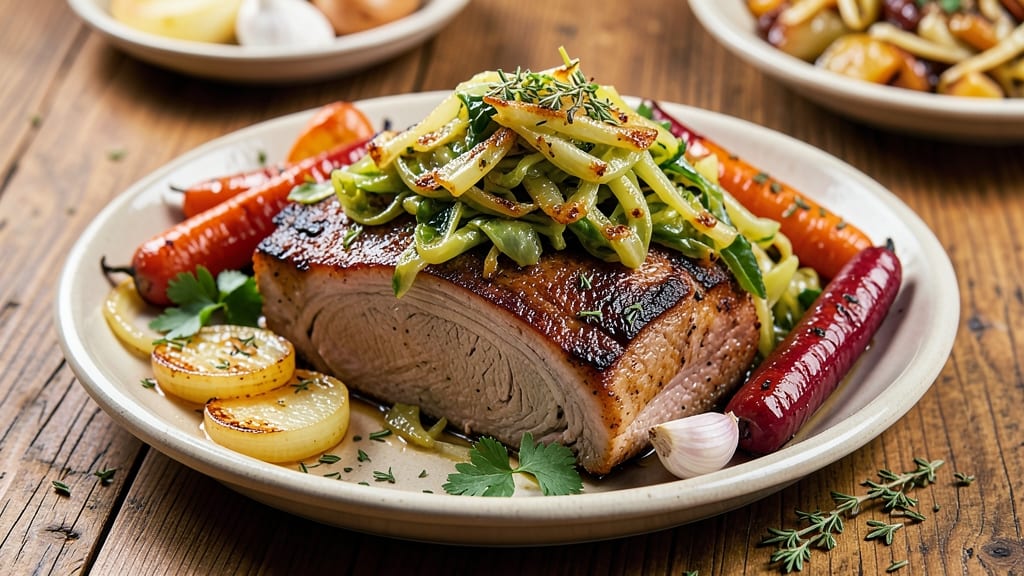
This boneless pork loin roast and sauerkraut recipe delivers the hearty comfort of German Sunday dinners with minimal effort. 🔥 After years of perfecting pork roasts for family gatherings, I’ve simplified the process—juicy, tender pork meets tangy sauerkraut in one pan, ready in under two hours.
The secret? A dry rub that locks in moisture while creating a crispy exterior, paired with sauerkraut caramelized just enough to balance its sharpness.
What sets this recipe apart is the balance of tradition and convenience. While I still prefer the deep flavor of a brined pork loin, I’ve included a quick-salt method for busy weeknights.
The sauerkraut isn’t just a side—it’s the star, with onions and spices that transform it into a rich, slightly sweet topping. This dish is perfect for feeding a crowd or enjoying a satisfying solo meal, especially when paired with mashed potatoes or crusty bread.
The result is a restaurant-quality roast with a golden crust and moist interior, served alongside sauerkraut that’s tender and flavorful—not too sour, not too bland. The aroma alone will have everyone at the table anticipating dinner.
Whether you’re hosting a family dinner or treating yourself to a special meal, this recipe delivers comfort with professional precision.
For those short on time, I’ve included a slow-cooker adaptation that yields equally tender pork with hands-off convenience. The key is patience—letting the pork rest after roasting ensures every slice stays juicy.
This is the kind of dish that tastes even better the next day, making it ideal for meal prep or leftovers.
Ingredients for boneless pork loin roast and sauerkraut
Pantry staples plus a few German market finds for this one-pan wonder.
| Ingredient | Amount | Notes |
|---|---|---|
| Boneless Pork Loin Roast 🥓 | 3 lb | Center-cut, 1.5-inch thick |
| Sauerkraut 🥬 | 2 cups | Unopened jar, drained |
| Yellow Onion 🧅 | 1 whole | Large, thinly sliced |
| Carrots | 3 medium | Scrubbed, cut into matchsticks |
| Garlic Cloves 🧄 | 4 cloves | Minced, fresh preferred |
| Dried Thyme 🌿 | 1 tbsp | Or 1 tbsp fresh thyme |
| Ground Black Pepper 🌶️ | 1 ½ tsp | Freshly cracked |
| Kosher Salt 🧂 | 1 ½ tsp | Plus extra for brining |
| Olive Oil 🫒 | 2 tbsp | For searing |
| Apple Cider Vinegar 🍎 | 1 tbsp | For sauerkraut balance |
| Brown Sugar 🍚 | 1 tbsp | Light or dark |
| Fresh Rosemary 🌿 | 1 sprig | For garnish |
| Crusty Bread 🍞 | 6 slices | For serving |
The pork loin is your star—center-cut and 1.5-inch thick for perfect doneness. Trader Joe's and Whole Foods carry great cuts, but any butcher can trim it for you. Look for good marbling but not too much fat. The sauerkraut should be unopened and jarred—the tangy kind with visible brine. If you can't find it, sub with green cabbage fermented 1 week (but it won't be as flavorful). For the dry rub, Diamond Crystal kosher salt is ideal, but any kosher salt works. The carrots? Baby carrots are fine, but scrubbing regular ones gives better texture.
No sauerkraut? Substitute with 2 cups chopped green cabbage + 1 tsp caraway seeds (toast them first for deeper flavor). Short on thyme? Dried oregano at half the amount works in a pinch. The apple cider vinegar is key—Bragg's is my go-to, but any raw apple cider vinegar does. Want more caramelized flavor? Add 1 tbsp honey to the sauerkraut mix. The pork can be prepped ahead—pat it dry and rub with spices up to 12 hours early, then refrigerate uncovered. The crusty bread? Baguette slices from the bakery section toast perfectly for serving.
Pork rests beautifully—20 minutes at room temp after roasting keeps it juicy. Sauerkraut reheats well—3-4 minutes in a skillet with the pork juices. Leftovers? 5 days in the fridge or 3 months frozen. I always double the sauerkraut mix—it's amazing on sandwiches the next day. The pork slices thinly for pork schnitzel or tacos later in the week. Store the dry rub in a small jar for future roasts—it keeps for 6 months.
Why You'll Love This Recipe
- One-Pan Magic: I swear by this recipe when I’m too tired to scrub pots—just toss the pork, sauerkraut, onions, and carrots on a sheet pan, add a splash of broth, and let the oven do the work. The garlic and thyme cling to everything, so you end up with flavor without the fuss.
- Tangy-Sweet Crunch: That sauerkraut isn’t just a side—it’s the star. The sharpness cuts through the pork’s richness while the caramelized onions and roasted carrots add a sweetness that makes every bite ridiculously good. Honestly, I’ve never met a pork dish that balanced it better.
- Weeknight to Holiday: This recipe works for lazy Tuesdays and when my in-laws show up unannounced. The pork stays juicy even when sliced thin, so I can serve it as a main or stuff it into sandwiches later. (Yes, even on a Tuesday night.)
- Leftovers That Don’t Suck: Most pork roasts turn dry after reheating, but this one? The sauerkraut keeps it moist, and the roasted veggies add texture. I make double portions because it’s my go-to for lunches—just warm it up, and it’s like dinner all over again. Budget-friendly? Absolutely.
Step-by-step instructions for pork loin roast with sauerkraut
Here's how to make this hearty German-inspired dish with tender pork and tangy sauerkraut.
🔥 Step 1: Sear the Pork Loin for Maximum Flavor
Heat a large Dutch oven over medium-high heat and add the 2 tablespoons olive oil. Once shimmering, place the 3 lb boneless pork loin roast fat-side down and sear for 4-5 minutes until a deep golden crust forms. Flip and sear the other side for another 3-4 minutes—this creates that irresistible caramelized exterior while keeping the inside juicy.
I press down gently on the roast during the first minute of searing to prevent curling. If it sticks, don't panic—just add a splash of water and scrape up those browned bits (they're pure flavor). Remove the pork and set it aside on a plate.
🍳 Step 2: Build the Sauerkraut Base
In the same Dutch oven, add the 1 whole yellow onion and 3 medium carrots (cut into matchsticks). Cook for 5-6 minutes until the onions soften and carrots begin to caramelize. Add the 4 cloves minced garlic and cook for 30 seconds until fragrant—this prevents bitter garlic flavor.
Stir in the 2 cups sauerkraut, 1 tablespoon apple cider vinegar, 1 tablespoon brown sugar, 1 tablespoon dried thyme, 1.5 teaspoons ground black pepper, and 1.5 teaspoons kosher salt. The sauerkraut will release liquid as it warms up—this creates a tangy, slightly sweet base for the roast.
🥘 Step 3: Braise the Pork to Perfection
Return the pork loin to the Dutch oven, spooning some of that sauerkraut mixture over the top. Pour in just enough water to come about halfway up the pork—about 1 cup. Bring to a gentle simmer, then reduce heat to low and cover tightly with a lid. Braise for 1 hour and 15 minutes until the pork reaches 145°F internally and is fork-tender.
Here's the thing—don't peek under the lid during cooking. Every time you lift it, you lose heat and steam, which can make the pork tough. Instead, trust the thermometer. The pork should pull apart easily when tested with a fork, and the juices should run clear.
⏰ Step 4: Rest and Garnish for Serving
Remove the pork from the Dutch oven and transfer it to a cutting board. Tent loosely with foil and let it rest for 10-15 minutes—this allows the juices to redistribute so every slice stays moist. Meanwhile, stir the sauerkraut mixture one last time and adjust seasoning if needed.
Before serving, add the 1 sprig fresh rosemary to the sauerkraut and warm through for 1 minute. Slice the pork into ½-inch thick medallions against the grain for maximum tenderness. Serve the pork over the sauerkraut with 6 slices crusty bread on the side for soaking up every last bit of that tangy, herby sauce.
Pro Tips For Making Boneless Pork Loin Roast And Sauerkraut
- Dry the Pork First: Pat that pork loin thoroughly with paper towels before seasoning—wet skin steams instead of browns. I learned this the hard way after slathering salt on a damp roast and ending up with sad, pale edges. Five minutes of drying makes all the difference for a crispy crust.
- Sear On High Heat: Crank your pan to medium-high and walk away—don’t fiddle. The pork needs 3-4 minutes per side until deep golden brown, or you’ll end up with mushy, gray meat. I used to rush this, and the roast always tasted undercooked no matter the internal temp.
- Drain and Rinse Kraut: Dump the sauerkraut into a colander and rinse it well—the brine dilutes flavors and makes the dish watery. I skip this sometimes when I’m lazy, but the texture and taste are noticeably better when it’s drained. Pat it dry too if you’re feeling extra.
- Roast with Carrots First: Toss the chopped carrots and onions in oil, salt, and pepper, then spread them on the roasting pan before adding the pork. They’ll caramelize into sweet, sticky bits that cling to the meat instead of steaming into mush. My grandmother swore by this, and she was right.
Make-ahead tips for this recipe
Prep Ahead
Pat the 3 lb pork loin dry with paper towels and apply the dry rub (1.5 tsp kosher salt, 1.5 tsp black pepper, 1 tbsp thyme) up to 12 hours ahead. Store uncovered in the fridge—this helps develop a better crust.
I like to prep the sauerkraut mix separately: Sauté 1 onion and 3 carrots in 1 tbsp olive oil for 10 minutes, then cool and store in an airtight container. This shortcut saves 20 minutes on cooking day. 💡
Slow Cooker Shortcut
For a hands-off approach, sear the pork as directed, then transfer it to a 6-quart slow cooker with 1 cup water, the sauerkraut mix, and all spices. Cook on low for 6-8 hours or high for 4-5 hours until the pork reaches 145°F.
The slow cooker keeps the pork incredibly tender with minimal effort. Just add fresh rosemary at the end for brightness.
Sauerkraut Make-Ahead
Double the sauerkraut recipe and store the cooked mixture in a glass storage container for up to 5 days in the fridge. Reheat gently in a skillet with a splash of water to prevent drying out.
I often make an extra batch because it’s perfect for sandwiches or as a topping for roasted potatoes. The flavors deepen overnight, making it even more complex. ✨
Pork Resting Hack
After removing the pork from the Dutch oven, place it on a rimmed baking sheet and transfer to the fridge to rest for 30 minutes before slicing. This cold resting trick (instead of room temp) works wonders for large roasts—it keeps the meat juicy and makes slicing easier.
I swear by this method for crowd-pleasing results. The sauerkraut can stay warm in the oven at 200°F while the pork rests.
Freezer-Friendly
Both the pork and sauerkraut freeze beautifully. Wrap the cooked pork in plastic wrap and foil, then store for up to 3 months. Thaw overnight in the fridge before reheating. The sauerkraut freezes well too—portion into 1-cup servings in freezer bags.
To reheat, thaw in the fridge overnight, then warm through in a skillet with a splash of water. The texture stays great after freezing. 🥶
Leftovers Reinvented
Turn leftover pork into pork pot pie by mixing shredded pork with the sauerkraut, adding ½ cup cream, and topping with puff pastry. Or make pork and sauerkraut tacos with warm corn tortillas and a dollop of sour cream.
The possibilities are endless—I’ve even used leftover pork in a creamy pork and sauerkraut soup with potatoes and bay leaves. 🌟
Nutrition facts
Frequently asked questions
Can I use a bone-in pork loin instead of boneless?
Yes, but you'll need to adjust the cooking time and method. Bone-in pork takes longer to cook through—plan for 20-25 minutes extra at 325°F after searing. The bone adds flavor but requires more careful temperature monitoring to avoid overcooking the exterior. For best results, remove the bone after cooking and slice between the natural separations.
How do I make the sauerkraut less sour?
Balance the acidity with natural sweetness! Add an extra 1-2 tablespoons brown sugar or 1 tablespoon honey to the sauerkraut while cooking. For extra depth, stir in 1 teaspoon caraway seeds (toasted first) or a pinch of cinnamon. The apple cider vinegar also helps mellow the tang—reduce it to ½ tablespoon if your sauerkraut is very sharp.
What temperature should the pork reach?
The USDA-recommended safe temperature is 145°F for pork loin. Use a meat thermometer inserted into the thickest part—it should read 145°F before resting. For extra tenderness, pull it at 140°F and let it rest 15 minutes—the internal temperature will rise to 145°F while resting. Never eat pork below 145°F.
Can I substitute sauerkraut with something else?
For a quick swap, use 2 cups chopped green cabbage sautéed with 1 teaspoon caraway seeds and 1 tablespoon apple cider vinegar. Or try 2 cups braised red cabbage (simmered with onions, vinegar, and sugar). Both work well but won't match sauerkraut's fermented depth. If you love tangy sides, pickled red onions or quick-pickled jalapeños add great contrast.
Why did my pork turn out dry?
Overcooking or skipping the rest is usually the culprit. Pork dries out when cooked past 145°F or sliced too soon. Always rest the roast 10-15 minutes before slicing—this lets juices redistribute. For extra moisture, baste the pork every 20 minutes with its own juices during braising. A 1.5-inch thick roast is ideal—thinner cuts cook faster and dry out more easily.