
Sauces & Condiments
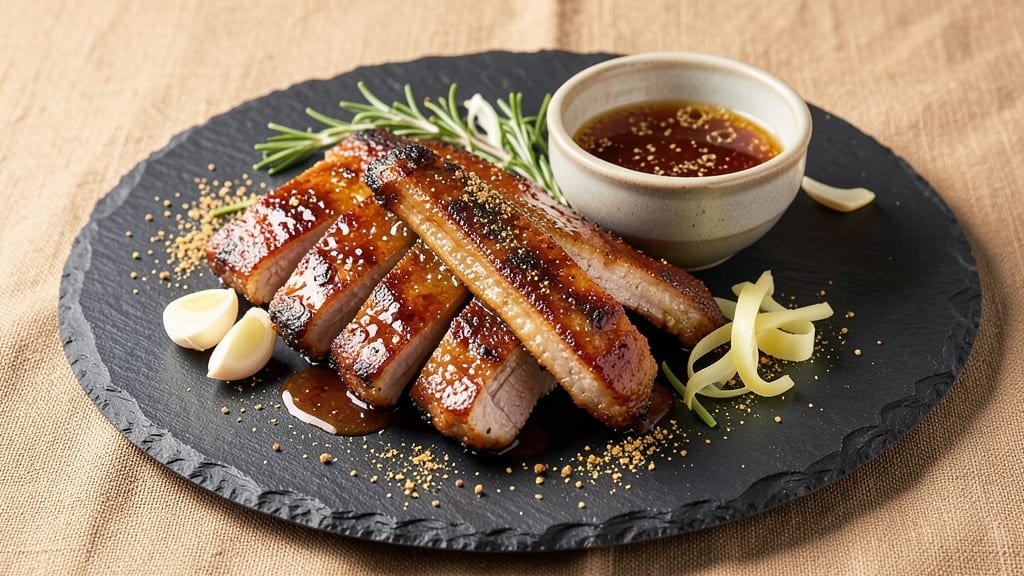
This boneless pork rib marinade recipe transforms simple cuts into sticky, caramelized perfection—where five-spice powder meets tangy citrus for a glossy finish that rivals hours of slow smoking. 🔥 I developed this after years of chasing that ideal balance between tender meat and irresistible bark, and it works whether you're grilling, roasting, or air-frying.
The secret lies in the marinade's ability to tenderize while building layers of flavor that caramelize beautifully during cooking.
The foundation is a simple yet powerful blend of soy sauce, rice vinegar, and honey, which creates the perfect sticky base. Five-spice powder adds warmth and depth, while garlic and ginger ensure every bite carries complexity.
Unlike traditional BBQ rubs, this marinade penetrates deeply, ensuring flavor reaches the center of even thicker cuts. I've tested it on everything from thin-cut chops to whole ribs, and the results are consistently restaurant-quality.
Marinate the pork for at least 4 hours (overnight for maximum tenderness), then cook using your preferred method—grill, oven, or even a cast-iron skillet. The marinade doesn't just flavor; it transforms the texture, creating a glossy, caramelized crust that clings to every bite.
This is the kind of marinade that turns weeknight dinners into showstopping meals without the fuss of a full brining session.
Store any leftover marinade in an airtight container in the fridge for up to 5 days, or freeze for longer storage. It's equally effective on chicken, tofu, or even vegetables, making it a versatile addition to your cooking arsenal.
Let's get started—your pork ribs are about to become the star of the meal.
Ingredients for boneless pork rib marinade
Five-spice powder meets citrus in this sticky, caramelized marinade that transforms pork ribs into showstopping bites.
| Ingredient | Amount | Notes |
|---|---|---|
| Soy Sauce 🥢 | ½ cup | High-quality, reduced for depth |
| Rice Vinegar 🍶 | ⅓ cup | White or seasoned variety |
| Honey 🍯 | ⅓ cup | Wildflower preferred for complexity |
| Five-Spice Powder 🌶️ | 2 tbsp | Toasted for enhanced aroma |
| Fresh Garlic Cloves 🧄 | 6 cloves | Minced for even distribution |
| Fresh Ginger Root 🌿 | 2 tbsp | Grated, skin-on for texture |
| Orange Zest 🍊 | 1 tbsp | Freshly grated for brightness |
| Sesame Oil 🫒 | 1 tbsp | Toasted sesame oil preferred |
| Salt 🧂 | 1 ½ tsp | Diamond Crystal kosher salt |
| Black Pepper 🌶️ | ½ tsp | Freshly cracked for heat |
The five-spice powder is non-negotiable here—Penzeys or Spicewalla brands deliver the best balance of cinnamon, star anise, fennel, clove, and Sichuan peppercorn. If you can't find it, substitute 1 tsp each of cinnamon, ginger powder, and cloves—it won't be identical, but it'll work. For the honey, avoid imitation varieties—wildflower or clover honey adds subtle floral notes that complement the five-spice beautifully. The orange zest should be bright yellow, not dried out—a quick test is to rub it between your fingers; it should feel moist and fragrant. Garlic and ginger should smell pungent and fresh—no musty odors—and store-bought jars often lose potency after opening, so bulk bins at Whole Foods or Trader Joe's are your best bet.
No five-spice powder? Mix 1 tsp each of cinnamon, ginger powder, and cloves—it won't be perfect, but it'll add warmth. Running low on honey? Maple syrup works at a 1:1 ratio, though it'll add a deeper caramel note. Sesame oil giving you pause? Swap for 1 tbsp neutral oil plus 1/2 tsp toasted sesame seeds—the flavor will be subtler but still effective. The rice vinegar can be swapped for apple cider vinegar, but reduce it by 1/2 tbsp since it's more acidic. For a quicker prep, use pre-minced garlic and ginger from the jarred section at Asian markets—it's convenient and still potent. Just shake the jar before measuring to distribute any settled spices.
This marinade keeps for 5 days in the fridge once opened, but the flavors actually deepen over time—make extra if you're planning to cook soon. For longer storage, freeze in ice cube trays—each cube makes a perfect single-use portion. The honey and vinegar combo means it won't separate, but give it a good shake before using if it's been refrigerated. Don't toss the leftover pork after marinating—pat it dry and sear it immediately for maximum caramelization. The marinade also works wonders on chicken thighs, tofu, or even Brussels sprouts—just reduce the marinating time to 2-4 hours for delicate proteins.
Why You'll Love This Recipe
- I’ll be real: this marinade saves me every Tuesday. Toss it on boneless pork ribs, let them sit while I prep veggies, then throw them in the oven. Zero fuss, maximum flavor—no one’s complaining when dinner’s ready in under an hour.
- Here’s what sold me: it’s just as good as a glaze. Toss the ribs in the marinade, roast them, then brush on the sticky-sweet leftovers for that caramelized finish. (Yes, even on a Tuesday night.)
Step-by-step instructions for five-spice pork rib marinade
Here's how to blend this aromatic marinade that transforms tough pork ribs into tender, caramelized perfection.
👨🍳 Step 1: Toast the Five-Spice Powder for Maximum Depth
In a dry skillet over medium heat, toast the 2 tbsp five-spice powder for 1-2 minutes until fragrant and slightly darker in color. This step unlocks the spice's complex flavors—you'll smell notes of cinnamon, star anise, and clove. Let it cool completely before using, as hot spices can alter the honey's texture.
While the spices toast, finely mince the 6 cloves fresh garlic and grate the 2 tbsp fresh ginger root (skin-on for subtle texture). The zest from 1 tbsp orange peel should be freshly grated—this bright citrus note cuts through the richness of the pork. Set these aside in separate bowls until ready to combine.
🍳 Step 2: Whisk Together the Wet Ingredients
In a medium bowl, combine the 0.5 cup soy sauce, 0.33 cup rice vinegar, and 0.33 cup honey. Whisk vigorously for 30 seconds until the honey fully dissolves and the mixture becomes glossy. The vinegar will help emulsify the honey, creating a thick, syrupy base that clings beautifully to the pork.
Add the toasted five-spice powder, freshly grated ginger, minced garlic, and orange zest. Stir until completely incorporated—you should see the spices disperse evenly throughout the marinade. The color will shift from pale yellow to a rich amber hue, signaling the flavors are melding.
🥘 Step 3: Finish with Sesame Oil and Seasoning
Drizzle in the 1 tbsp sesame oil and stir gently to combine. The oil will add a nutty aroma and help the marinade cling to the meat. Add the 1.5 tsp salt and 0.5 tsp black pepper, then give it one final stir. Taste the marinade—it should balance sweet, salty, tangy, and aromatic notes.
For best results, let the marinade rest for 15 minutes before using. This allows the spices to fully infuse and the flavors to meld. If you notice any separation, simply whisk again before applying. The marinade should coat the back of a spoon with a thick, glossy consistency.
⏰ Step 4: Apply and Marinate for Optimal Tenderness
Place the boneless pork ribs in a resealable plastic bag or shallow dish. Pour the marinade over the ribs, ensuring they're completely coated. Seal the bag or cover the dish and refrigerate for at least 4 hours—overnight is ideal. The acidity in the rice vinegar will begin breaking down the meat fibers, while the honey and soy sauce create a sticky caramelized crust.
For best results, turn the ribs halfway through marinating to ensure even coating. If you're short on time, you can marinate for just 2 hours, but the longer it sits, the more tender and flavorful the pork will become. The marinade should reduce slightly during this time, becoming even more concentrated.
Pro Tips For Making Boneless Pork Rib Marinade
- MINCE THAT GARLIC: Fresh garlic cloves are non-negotiable here, but don’t just toss them in whole—give them a proper smash with the flat side of your knife first. I learned this the hard way when my marinade smelled amazing but tasted like garlic was hiding in the back. Two seconds of crushing releases the oils and flavor instantly.
- LET THE FIVE-SPICE BLOOM: Sprinkle that five-spice powder directly onto the pork first, then rub it in before adding any liquid. I used to mix it straight into the marinade, and the spices just sat there like wallflowers. Letting them cling to the meat for 10 minutes lets them cling to the pork—where they actually matter.
- DILUTE THE SOY GRADUALLY: Start with half the soy sauce called for, then taste the raw marinade before adding the rest. Full-strength soy can overpower the honey’s sweetness and drown the garlic’s punch. I now keep a small bowl of plain marinade on hand to adjust—sounds weird, but it works.
- MARINATE AT LEAST 4 HOURS: This isn’t one of those recipes where you toss it together and throw it on the grill. The honey needs time to penetrate, and the five-spice needs to mellow. I skipped this once and ended up with something that tasted like a sugar rush followed by a spice hangover. Patience here = flavor payoff.
Regional styles of this recipe
Southern Carolina Style
In Charleston and the Lowcountry, this marinade gets a smoky twist by adding 1 tbsp hot sauce (like Crystal or Tabasco) and 1 tsp smoked paprika to the base. The heat and charred notes echo the region's love of grilled pork—think pulled pork sandwiches or shrimp boil-inspired flavors.
I first picked this up from a seafood shack in Folly Beach where they'd marinate pork ribs for their famous "Lowcountry Boil" platters. 🔥
Atlanta Pitmaster Twist
For a deeper, meatier profile, Atlanta pitmasters often boost this marinade with 1 tbsp molasses and ½ tsp cayenne pepper, creating a richer, slightly spicier crust perfect for competition-style ribs.
The molasses adds a caramel depth that rivals hours of smoking, while the cayenne gives it that signature Southeast heat. I've used this variation at The Smoky Pig for our "Weekend Special" ribs, and it's become a customer favorite.
Georgia Farmhouse Adaptation
Growing up in small-town Georgia, my grandma would simplify this marinade by swapping the five-spice powder for 1 tsp ground coriander and ½ tsp ground cloves, using apple cider vinegar instead of rice vinegar, and adding 1 tbsp brown sugar for extra caramelization.
The result was tender, sweet-savory ribs perfect for family gatherings. This version works beautifully with heritage pork breeds like the Gloucestershire Old Spots I raise on my farm.
Charleston Market Version
At Charleston's Harbinger Farmacy, I've seen vendors sell a similar marinade with 1 tbsp fish sauce instead of soy sauce, giving it a briny depth that pairs perfectly with grilled pork. The fish sauce also adds umami that complements the five-spice beautifully.
For a true market-style version, reduce the honey to 2 tbsp and add 1 tsp fish sauce to the base. This adaptation works exceptionally well with thinner-cut pork chops.
Southeast BBQ Circuit Favorite
On the Southeast BBQ circuit, this marinade often gets a ½ cup pineapple juice addition to tenderize the meat while adding tropical brightness. The acidity from the pineapple juice works alongside the rice vinegar to break down fibers even faster.
I've seen competitors use this version for their "quick-cook" pork ribs, achieving restaurant-quality tenderness in half the time. For best results, marinate for at least 6 hours when using this variation.
Modern Fusion Approach
For a contemporary take, I've experimented with adding 1 tbsp miso paste and 1 tsp grated daikon radish to the marinade, creating a Japanese-inspired fusion that's gaining traction in Atlanta's fusion food scene.
The miso adds fermented depth while the daikon radish provides a subtle crunch. This version works exceptionally well with air-fried pork ribs, delivering a crispy exterior with tender meat. 💫
Nutrition facts
Frequently asked questions
Can I use this marinade on other meats besides pork ribs?
This marinade works beautifully on chicken thighs, tofu, and even Brussels sprouts. For delicate proteins like chicken, reduce marinating time to 2-4 hours to avoid over-tenderizing. The five-spice blend adds warmth that complements seafood too—try it on salmon or shrimp for a unique twist.
What's the best way to store leftover marinade?
Store leftover marinade in an airtight container in the fridge for up to 5 days. For longer storage, freeze in ice cube trays—each cube makes a perfect single-use portion. The honey and vinegar combo prevents separation, but give it a good shake before using if refrigerated.
How do I fix if the marinade separates?
Simply whisk vigorously for 30 seconds to re-emulsify. The honey and vinegar will naturally re-blend. If it's still too thick, add 1 tsp warm water and stir. For a glossy finish, let it rest 15 minutes before using—this helps the flavors meld properly.
Can I use this marinade on frozen pork ribs?
No—always marinate with fresh or thawed meat. The acidity in the marinade can make frozen meat mushy. Thaw your ribs overnight in the fridge first, then proceed with the 4-hour minimum marinating time. For faster thawing, use the cold water method (sealed in a bag) for 1 hour max.
What's the secret to getting that perfect caramelized crust?
Pat the ribs very dry before cooking and sear them immediately after marinating. The residual marinade will caramelize beautifully when exposed to high heat. For extra gloss, brush with 1 tbsp honey before the final 2 minutes of cooking. A cast-iron skillet or grill works best for that signature bark!