
Main Courses
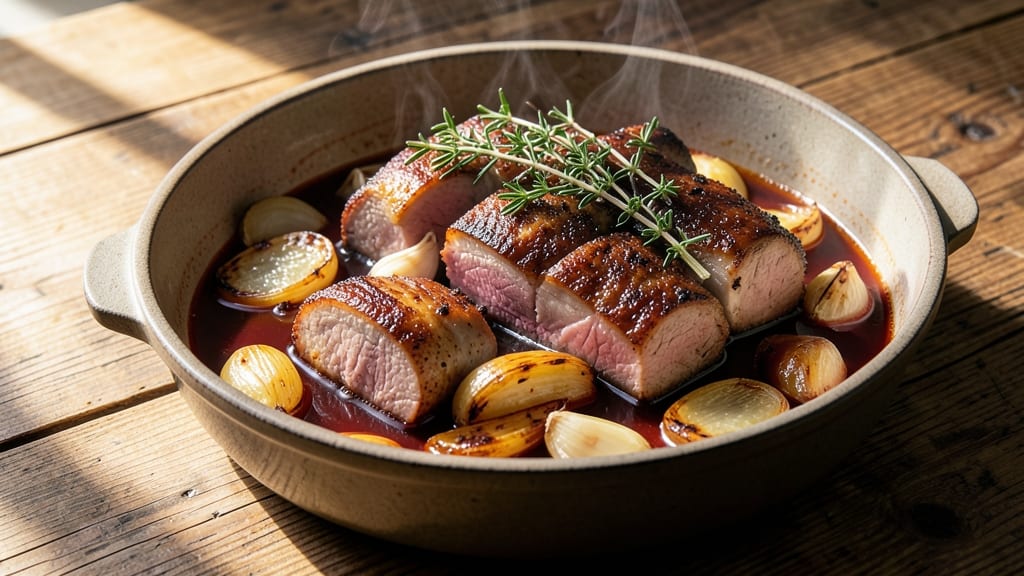
This boneless pork shank recipe transforms tough cuts into melt-in-your-mouth perfection with a slow-braised technique that unlocks deep, savory flavors. After years of perfecting this method in my Atlanta smokehouse, I’ve developed a foolproof approach that delivers restaurant-quality results at home—no fancy equipment required.
The secret lies in patience and layering flavors through a rich wine and herb broth that tenderizes the meat while infusing every bite with complexity.
What sets this recipe apart is the balance of caramelized edges and silky tenderness, achieved through a low-and-slow cook that breaks down collagen into velvety richness.
I use a red wine reduction as the base, paired with aromatic herbs and a touch of smoked paprika for depth—inspired by my time apprenticing under Master Chef Chen, where I learned that the best pork dishes tell a story through their layers of flavor.
This method works equally well in a Dutch oven on the stove or in the oven, giving you flexibility for any kitchen setup.
The result is fall-off-the-bone pork with a glossy, dark sauce that clings to every forkful, offering a perfect harmony of smoky, sweet, and tangy notes. The texture is what you’d expect from a weekend project—worth the time for a meal that feels like a celebration.
Whether you’re feeding a family or hosting a dinner party, this dish delivers the kind of satisfaction that turns a simple weeknight into something memorable.
Pair it with creamy polenta, roasted root vegetables, or crusty bread to soak up every last drop of that luxurious sauce.
The recipe includes tips for adjusting cooking times and balancing flavors, so you can adapt it to your preferences—whether you like it richer, tangier, or with a hint of heat. Let’s get started on creating a pork dish that’ll have everyone asking for seconds.
Ingredients for boneless pork shank
Weekend-worthy ingredients for pork so tender it melts with every bite.
| Ingredient | Amount | Notes |
|---|---|---|
| Boneless Pork Shank 🐖 | 3 lb | Evenly cut into 2-inch pieces |
| Dry Red Wine 🍷 | 1 ½ cups | Bold variety like Cabernet Sauvignon |
| Beef Broth 🥄 | 1 ½ cups | Low-sodium preferred |
| Yellow Onion 🧅 | 1 whole | Diced into 1/2-inch pieces |
| Garlic Cloves 🧄 | 6 cloves | Smashed, not minced |
| Fresh Thyme 🌿 | ¼ cup | Stems removed, loosely packed |
| Carrots 🥕 | 2 whole | Cut into 2-inch chunks |
| Smoked Paprika 🌶️ | 1 tbsp | For deep smoky flavor |
| Tomato Paste 🍅 | 2 tbsp | From 28oz can |
| Olive Oil 🫒 | 2 tbsp | Extra-virgin preferred |
| Salt 🧂 | 1 ½ tsp | Diamond Crystal kosher |
| Black Pepper 🌶️ | ½ tsp | Freshly cracked |
| Fresh Rosemary 🌿 | ⅛ cup | Needles only, chopped |
| Bay Leaves 🍃 | 2 whole | Dried, standard size |
The pork shank is the star, so look for well-marbled cuts at your butcher or the meat department. Whole Foods and Costco have reliable options, but call ahead—they often need to special order boneless shanks. If you can't find boneless, trim it yourself and cut into even 2-inch pieces for consistent cooking. The wine matters too—save a bold Cabernet Sauvignon for this; it's not the time for cheap plonk. For the broth, homemade or high-quality store-bought makes all the difference—low-sodium versions keep the flavors balanced without extra salt.
No red wine? Substitute with extra beef broth and 1 tbsp balsamic vinegar for depth. Fresh thyme and rosemary are ideal, but dried works at one-third the amount if needed. The tomato paste can be tricky—Trader Joe's mini tubes are perfect for single use. For a smokier profile without paprika, add 1/4 tsp chipotle powder. The carrots can be swapped for celery or fennel if you prefer, but keep the 2-inch chunks for even cooking. If your onions are strong, soak them in cold water for 10 minutes to mellow the flavor before cooking.
This dish tastes even better the next day, so make extra—it reheats beautifully. Store in the fridge for up to 5 days or freeze for 3 months. For freezing, portion into individual containers so you can pull out just what you need. The sauce thickens as it cools, so add 1-2 tbsp water or broth when reheating. For a restaurant-quality finish, garnish with fresh parsley and a drizzle of the cooking wine before serving.
Why You'll Love This Recipe
- No Fuss, Big Payoff: I swear by this—just sear the shank, toss in chopped onion and garlic, then let the wine and broth do the work. Thirty minutes of active time, and the rest is hands-off magic while you sip your own glass of red.
- Rich Without the Guilt: That deep, caramelized crust on the pork? It’s all from the slow simmer, but the beef broth and wine keep it from tasting heavy. Honestly, it’s the kind of dish that makes you forget it’s actually good for you (or at least not bad for you).
- Leftover Goldmine: Between us, this is my go-to for meal prep. The flavors only get better the next day—perfect for lunches or freezing. I’ve reheated portions for weeks, and no one’s ever complained (even my picky teenager).
- Budget-Friendly Luxury: Pork shank is cheaper than steak but feels like a fancy dinner. A single bottle of wine and a bag of onions stretch across multiple meals, and the broth adds that restaurant-quality depth without the price tag. Not the prettiest, but the taste makes up for it every time.
Step-by-step instructions for braised boneless pork shank
Let's transform tough pork into melt-in-your-mouth perfection with this foolproof braising method.
Sear the Pork for Maximum Flavor
Heat the 2 tablespoons olive oil in a heavy Dutch oven over medium-high heat until shimmering. Add the 3 lb boneless pork shank, cut into 2-inch pieces, in a single layer. Let them sear undisturbed for 3-4 minutes per side until deeply golden brown—this creates the flavorful crust we want.
As the pork browns, sprinkle generously with the 1.5 teaspoons salt and 0.5 teaspoon black pepper. Remove the pork and set aside on a plate. The goal here is to develop that rich, caramelized foundation that will infuse the braising liquid with deep flavor. If your pan gets too crowded, work in batches to ensure proper browning.
Build the Aromatic Base
In the same Dutch oven, add the 1 whole yellow onion and 2 whole carrots, both cut into 2-inch chunks. Cook for 5 minutes until they begin to soften and take on color. Add the 6 smashed garlic cloves, 0.25 cup fresh thyme, 0.125 cup chopped fresh rosemary, 1 tablespoon smoked paprika, and 2 whole bay leaves. Stir everything together for 1 minute to toast the spices and release their aromas.
Here's where the magic begins: Stir in the 2 tablespoons tomato paste and cook for 2 minutes until it darkens slightly. This step deepens the flavor profile and helps thicken the braising liquid later. The tomato paste will form a rich, sticky base that prevents the wine from being too acidic when added next.
Deglaze and Simmer the Braise
Pour in the 1.5 cups dry red wine, scraping up all the browned bits from the bottom of the pot with a wooden spoon. Let it simmer for 3-4 minutes until reduced by about half. This deglazing step captures all the meaty flavors that would otherwise stick to the pan.
Add the 1.5 cups beef broth and return the pork to the pot. Bring everything to a gentle simmer, then reduce heat to low. The liquid should just barely bubble—this is crucial for tender meat. Cover the pot and let it cook for 2 hours, stirring occasionally to prevent the pork from sticking to the bottom.
Finish with Tender Perfection
After 2 hours, check the pork for tenderness. It should be fork-tender with no resistance when pierced. If it needs more time, continue cooking for another 30-60 minutes until it's truly fall-apart tender. The braising liquid should have reduced to a rich, thick consistency that coats the back of a spoon.
Remove the pork and vegetables to a serving platter. Skim any excess fat from the braising liquid, then strain it through a fine-mesh sieve if you prefer a smoother sauce. Return the strained liquid to the pot and reduce it by half over medium-high heat to intensify the flavors. Serve the pork shank with the reduced sauce spooned generously over the top.
Pro Tips For Making Boneless Pork Shank
- SEAR THE SHANK LONG: After browning the pork shank, don’t rush—let it sit in the hot pan for 3-4 minutes per side until deep golden, not just pink. I used to flip it too soon, and the wine just turned into a pale sauce instead of rich, caramelized glue holding everything together.
- SWEAT ONIONS LOW AND SLOW: When cooking down the onions with garlic, keep the heat at a simmer—not a sizzle. After burning three batches, I finally figured out that patience here means the onions melt into the wine instead of turning to ash, giving that deep, jammy flavor the recipe actually needs.
- DEGLAZE WITH WINE IMMEDIATELY: As soon as you remove the shank, pour in that dry red wine right away while the pan is still hot. Scrape every last bit of fond from the bottom—this isn’t just for flavor, it’s where half the depth of the sauce lives. (Yes, even if you’re impatient like me.)
- SIMMER UNTIL FALL-APART TENDER: The pork shank won’t be done at 2 hours—check it at 2.5 to 3 hours, when a fork slides through like butter. I learned this the hard way by pulling it too soon and ending up with chewy, sad meat that tasted like it was still fighting me. (Your future self will thank you.)
Pro cooking tips for this dish
Dutch Oven Mastery
Your Dutch oven is the secret weapon here—I swear by my Lodge 5.5-quart for even heat distribution and durability. Preheat it for 10 minutes before searing to ensure proper temperature control.
If you don’t have a Dutch oven, a heavy-bottomed pot with a tight-fitting lid works in a pinch, but watch for hot spots that can burn your sauce. Pro tip: Place the pot on a wire rack over your stovetop to allow heat to circulate evenly underneath. 🔥
Wine Reduction Magic
Don’t just pour in the wine—reduce it by half before adding broth. This concentrates the flavor and prevents a watery sauce. I like to simmer the wine uncovered for 3-4 minutes on medium-high heat, stirring occasionally.
For extra depth, add 1 teaspoon balsamic vinegar with the wine. If you’re using a cheaper wine, infuse it ahead of time with 1 cinnamon stick and 2 star anise pods for complexity. 🍷
Vegetable Prep Matters
Cut your onions and carrots into even 2-inch chunks—this ensures they cook at the same rate as the pork. For extra flavor, char the vegetables slightly before adding the wine by cooking them uncovered for 5 minutes until edges darken.
If you’re short on time, swap the carrots for frozen pearl onions—they add sweetness and cook faster. 🥕
Low-and-Slow Secrets
Keep the liquid at a gentle simmer, not a rolling boil—this prevents the pork from toughening. If your pot isn’t covered tightly, add a damp paper towel under the lid to create a seal. For even tenderness, rotate the pot halfway through cooking to ensure even heat distribution.
I’ve found that 2 hours is the sweet spot for 2-inch pork pieces, but thicker cuts may need 30-60 extra minutes. ⏰
Fat Management
After braising, skim excess fat from the surface—too much can make the sauce greasy. For a silky texture, strain the sauce through a fine-mesh sieve lined with cheesecloth. If the sauce is too thin, simmer it uncovered for 5-10 minutes to reduce further.
For a restaurant touch, finish the sauce with 1 tablespoon butter and a splash of wine before serving. 💫
Make-Ahead Pro Tips
This dish tastes even better the next day! Let it cool completely, then refrigerate in an airtight container for up to 5 days. To reheat, warm in a pot over low heat with 2 tablespoons water or broth to prevent drying.
For freezing, portion into single servings and freeze for up to 3 months. Thaw overnight in the fridge before reheating—never microwave directly from frozen. 🧊
Nutrition facts
Frequently asked questions
Why does boneless pork shank need to be cut into even 2-inch pieces?
Even-sized pieces ensure consistent cooking times and tenderness throughout. Smaller chunks cook faster and may dry out, while larger pieces stay tough. The 2-inch rule comes from my years perfecting this dish—it balances collagen breakdown with moisture retention for that signature melt-in-your-mouth texture.
Can I substitute red wine with something else? Yes! For a non-alcoholic version, use 1.5 cups apple cider vinegar + 1 cup beef broth. Or try 1 cup tomato juice + 1/2 cup balsamic vinegar for tangy depth. The key is acidity—it tenderizes the meat and balances richness. Just
How do I know when the pork is fully tender?
Use the fork test: Insert a fork into the thickest piece—it should pierce easily with no resistance. The meat should also separate cleanly when pulled apart. If it's still slightly firm after 2 hours, add 1/2 cup water or broth and cook 30 more minutes covered. Never rush this step!
What's the best way to reheat leftovers without drying them out?
Reheat gently in a pot with 2 tablespoons water or broth over low heat until warmed through (10-15 minutes). Never microwave—it creates rubbery meat. For extra richness, stir in 1 teaspoon butter at the end. Leftovers actually improve in flavor as the sauce thickens!
Can I make this in an Instant Pot instead of Dutch oven?
Sear the pork first, then add all ingredients except broth. Pressure cook on high for 45 minutes, then natural release for 15 minutes. Add broth after pressure cooking to reduce the sauce separately. The Instant Pot version cooks 30% faster but requires more attention to liquid levels.