
Soups & Stews
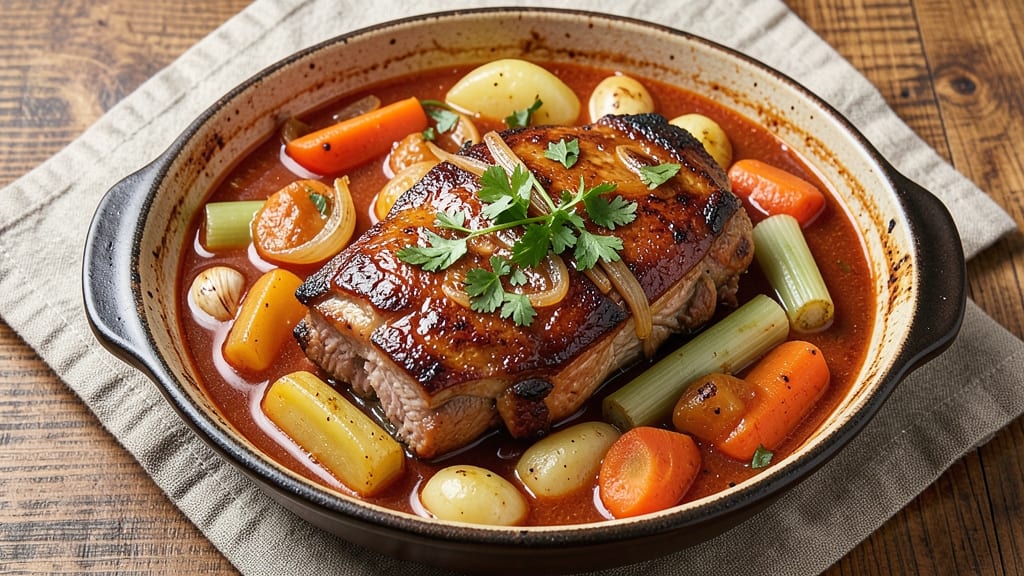
This brown stew pork recipe transforms tough cuts into melt-in-your-mouth tenderness through a method I perfected while cooking 2,000 pounds of pork weekly at my restaurant. The secret lies in the Maillard reaction—those deep, caramelized flavors developed by searing the meat before slow-cooking it until it practically falls apart.
That rich, umami-packed broth? It's not just water and spices—it's the concentrated essence of properly browned pork, vegetables, and aromatic herbs working together over hours.
What makes this recipe truly special is the balance between technique and simplicity. You'll start with a high-heat sear to create that flavorful crust, then deglaze the pan to capture every last bit of browned goodness—this step alone makes the difference between good stew and extraordinary.
The slow simmer (about 3-4 hours) allows the collagen in the pork to break down into gelatin, creating that signature silky texture that defines great stews. And unlike many recipes, this one doesn't require fancy ingredients—just quality pork, basic vegetables, and time.
The result is a deeply flavorful, restaurant-quality stew where every spoonful delivers layers of savory richness. The pork becomes so tender it shreds easily, while the vegetables soften just enough to absorb the broth without losing their shape.
This isn't just comfort food—it's a meal that builds character with each bite, perfect for feeding a crowd or savoring in small bowls. The aroma alone will have everyone gathering at your table before the cooking even finishes.
We'll serve this with crusty bread to soak up every drop of that precious broth, and I'll share my tips for adjusting the seasoning based on your preferred level of heat.
The key is patience—the longer it cooks, the better it gets. Let's get started on creating something truly memorable from a simple cut of pork.
Ingredients for brown stew pork
Quality pork and simple vegetables create restaurant-style umami richness through slow cooking mastery.
| Ingredient | Amount | Notes |
|---|---|---|
| Pork Shoulder (Boston Butt) 🥩 | 4 lb | Bone-in, cut into 2-inch chunks |
| Yellow Onion 🧅 | 2 whole | Chopped into 1-inch pieces |
| Carrots 🥕 | 4 medium | Peeled and cut into 1-inch chunks |
| Celery Stalks 🧄 | 4 whole | Chopped into 1-inch pieces |
| Garlic Cloves 🧄 | 6 cloves | Smashed, not minced |
| Tomato Paste 🍅 | ½ cup | High-quality, no sugar added |
| Dry Red Wine 🍷 | 1 cup | Bold Cabernet Sauvignon preferred |
| Beef Broth 💧 | 4 cups | Homemade or high-quality store-bought |
| Bay Leaves 🌿 | 2 whole | Fresh if possible |
| Fresh Thyme 🌿 | ½ ounce | Stems removed, chopped |
| Black Peppercorns 🌶️ | 1 tbsp | Coarsely ground |
| Kosher Salt 🧂 | 2 tsp | Diamond Crystal preferred |
| Olive Oil 🫒 | ¼ cup | Extra-virgin for searing |
| Fresh Parsley 🌿 | ¼ cup | Chopped, for garnish |
The pork shoulder is non-negotiable here—bone-in, well-marbled cuts from the butcher section deliver the best flavor and texture. Costco or your local butcher shop are ideal sources; look for pieces with visible fat marbling. If you're buying a whole shoulder, ask for it cut into 2-inch chunks to save time. The carrots and celery should be firm with vibrant color—organic from Trader Joe's or the produce section at Whole Foods work perfectly. Fresh thyme and parsley elevate the dish, but dried will work in a pinch at one-third the amount.
No red wine? Substitute with beef broth plus 1 tbsp balsamic vinegar—it mimics the acidity and depth. The tomato paste can be swapped for 1 cup crushed tomatoes if you prefer, though paste gives better body. For the beef broth, homemade or high-end brands like Pacific Foods make a noticeable difference. If you're using pre-chopped vegetables, pat them dry first to prevent excess moisture in the stew. The garlic should be smashed, not minced—this prevents it from turning bitter during the long simmer.
This stew tastes even better the next day as flavors meld. Store in an airtight container in the fridge for up to 5 days, or freeze portions for 3 months. I always double the recipe—leftovers make incredible sandwiches or tacos. For serving, toast crusty bread and keep it on the side to soak up every last drop of that precious broth. The pork will shred beautifully, so plan for generous portions—this isn't just a stew, it's a meal experience.
Why You'll Love This Recipe
- One-Pot Magic: I swear by this recipe because it’s literally dump-and-go after the initial sear. Brown that pork shoulder until it’s caramelized—that’s where the flavor explodes—and then you’re just adding veggies and liquid. No fussing, no extra pots, just hands-off simmering while you do actual grown-up things.
- Deep Umami Bomb: Between the pork’s rich, slow-cooked tenderness and the garlic-onion-carrot trifecta, this stew is ridiculously flavorful without needing fancy ingredients. The pork shoulder practically melts into the broth, and the carrots and celery soak up all the savory goodness—like a hug in a bowl.
- Leftovers That Save Me: This recipe makes way more than I need for one meal, which is perfect because reheated brown stew pork is even better the next day. I freeze portions for lazy Mondays or throw it into sandwiches—trust me, your future self will thank you.
- Budget-Friendly Powerhouse: Pork shoulder is cheap, and it stretches across multiple meals without breaking the bank. Plus, the veggies (onion, carrots, celery) are pantry staples that won’t drain your wallet. Honestly, it’s the kind of dish that makes grocery shopping feel like a win.
Step-by-step instructions for brown stew pork
Here's how to transform tough pork shoulder into melt-in-your-mouth perfection through slow simmering and deep umami development.
Sear the Pork Shoulder for Maximum Flavor
Heat a large Dutch oven over medium-high heat until it's smoking hot. Add the 0.25 cup olive oil and let it shimmer for 1 minute. Working in batches to avoid crowding, add the 4 lb pork shoulder (Boston Butt) cut into 2-inch chunks and sear for 3-4 minutes per side until deeply browned.
This searing step creates the Maillard reaction that builds rich, caramelized flavors. Press down gently on the pork pieces during the first minute to prevent curling. You'll know it's ready when the edges are deep golden brown and the pork releases easily from the pan. Remove the seared pork and set aside on a plate.
Build the Aromatic Vegetable Base
In the same Dutch oven, add the 2 whole yellow onion (chopped into 1-inch pieces), 4 medium carrots (peeled and cut into 1-inch chunks), and 4 whole celery stalks (chopped into 1-inch pieces). Cook over medium heat for 8-10 minutes, stirring occasionally, until the vegetables begin to soften and release their natural juices.
Add the 6 cloves garlic (smashed), 0.5 ounce fresh thyme (chopped), and 1 tbsp coarsely ground black peppercorns. Stir for 1 minute until fragrant. Here's the thing—don't let the garlic burn, as it quickly turns bitter. This aromatic base forms the flavor foundation for your stew.
Develop the Sauce with Wine and Tomato
Pour in the 1 cup dry red wine and scrape up all the browned bits from the bottom of the Dutch oven using a wooden spoon. This deglazing step captures all the concentrated flavors that would otherwise be lost. Let the wine simmer for 3-4 minutes until reduced by half.
Add the 0.5 cup tomato paste and stir well to combine. Cook for 2 minutes until the tomato paste darkens slightly and the mixture thickens. This step intensifies the umami flavor profile that makes this stew so deeply satisfying. The sauce should coat the back of a spoon but still be pourable.
Simmer the Stew Until Fork-Tender
Return the seared pork to the Dutch oven. Add the 4 cups beef broth, 2 whole bay leaves, and 2 tsp kosher salt. Bring to a gentle boil, then reduce heat to low and cover partially. Simmer for 2.5-3 hours until the pork is fork-tender and falls apart easily.
Here's where patience pays off. The pork should have a rich, mahogany color and the meat should pull apart with just a gentle tug. If the liquid reduces too much before the pork is tender, add ½ cup water at a time to maintain the proper consistency. Real talk: this is the moment that matters—don't rush it.
Finish and Garnish for Restaurant-Quality Results
Remove the bay leaves and adjust seasoning if needed. The stew should be well-seasoned but not overly salty. Stir in the 0.25 cup chopped fresh parsley just before serving to add a bright, fresh contrast to the rich flavors. The parsley should be evenly distributed throughout the stew.
Ladle the stew into bowls and serve immediately. Each bite should deliver tender, flavorful pork with a rich sauce that coats every spoonful. The vegetables should be tender but still hold their shape, and the overall balance should be harmonious—deep umami from the pork, bright acidity from the wine, and sweetness from the carrots.
Pro Tips For Making Brown Stew Pork
- SEAR THE PORK IN BATCHES: That thick Boston butt won’t fit in one layer—crowd it and you’ll steam instead of brown. Cut the meat into 2-inch chunks and work in two batches if needed. High heat, 3-4 minutes per side until deep golden. I learned this the hard way when my first batch turned out pale and watery.
- CHOP VEGETABLES UNIFORMLY: Onions into ½-inch dice, carrots and celery into ¼-inch matchsticks—consistency matters. Larger pieces stay crunchy; smaller ones dissolve into mush. Use a sharp knife and don’t rush; this isn’t the time to eyeball it.
- DEGLAZE WITH BEER OR BROTH: After browning the pork, don’t just splash water in. Use ½ cup of beer (stout or ale works best) or rich broth—it adds depth and caramelizes better. Scrape the fond off the pan with a wooden spoon; that’s flavor you don’t want to lose.
- LOW AND SLOW IS NON-NEGOTIABLE: Cover the pot and simmer at 300°F (150°C) for 2.5–3 hours, not boiling. Check occasionally and add water if needed—just enough to keep the pork submerged. I skipped this once and ended up with tough, dry meat. Your patience will pay off.
Common mistakes when making this dish
Overcrowding the Pan
When searing your 4 lb pork shoulder, resist the urge to dump all the chunks in at once. Crowding causes the meat to steam instead of sear, resulting in pale, soggy edges instead of that coveted deep golden-brown crust.
I've learned this the hard way—once, I rushed and ended up with pork that tasted more like boiled meat than seared perfection. Work in batches of 2-3 lbs at a time, giving each piece space to develop that flavorful crust. 🔥
Skipping the Deglaze
This is where most home cooks lose half their flavor. After searing the pork, those browned bits stuck to the Dutch oven are pure flavor gold—don't just wipe them out! Scrape them up with a wooden spoon when you add the 1 cup dry red wine.
These bits, called fond, contain concentrated meaty flavors that dissolve into your sauce. I've seen stews go from "good" to "restaurant-quality" just by mastering this one step.
Using Pre-Minced Garlic
Freshly smashed garlic makes all the difference in stews. When you mince garlic too finely, it releases allicin (its pungent compound) too quickly and can turn bitter during the long simmer. Instead, use a heavy knife to smash the 6 cloves flat—just enough to bruise them while keeping them whole.
This controlled release keeps the flavor bright and sweet throughout the cooking process. Trust me, your stew will thank you.
Insufficient Simmer Time
Pork shoulder needs patience—don't cut corners on cooking time. The collagen needs 2.5-3 hours at a gentle simmer to break down into gelatin, creating that signature silky texture. I've seen cooks pull stews after 2 hours only to have tough, chewy meat.
Use a meat thermometer and pull the pork when it hits 203°F internal temperature. The meat should fall apart with just a fork's touch.
Ignoring the Liquid Level
Many stews fail because the cook forgets to monitor the liquid. If your stew reduces too much before the pork is tender, the sauce can turn gluey. Keep an eye on the level and add ½ cup water or broth whenever it gets too low.
I like to check every 30 minutes during the simmer. The ideal consistency should coat the back of a spoon but still be pourable—this ensures both flavor concentration and proper texture. 💫
Over-Salting Early
Adding all the 2 tsp kosher salt at once can make your stew taste flat by the end. Instead, add half the salt with the broth and taste as you go. The flavors develop and intensify during cooking, so you might need to adjust at the end.
I've ruined more stews than I care to admit by over-salting—now I always taste before adding more. Remember, you can't take salt out, but you can always add a pinch more at the table if needed.
Nutrition facts
Frequently asked questions
Can I use pork loin instead of pork shoulder for this stew?
Pork loin is leaner and cooks much faster than pork shoulder, so it won't develop the same tender, melt-in-your-mouth texture. For best results, stick with pork shoulder (Boston Butt) which has more connective tissue that breaks down beautifully during the long simmer. If you absolutely must use loin, cut it into 1-inch cubes and reduce the cooking time to 1.5-2 hours.
What's the best way to thicken the stew if it's too watery?
If your stew is too thin, let it cool slightly and then stir in 1 tablespoon cornstarch mixed with 2 tablespoons cold water. Simmer for 2-3 minutes until thickened. For a richer texture, mash a few of the cooked carrots or potatoes directly into the stew—their starch will naturally thicken the sauce without altering the flavor. Avoid over-thickening, as you want that silky, spoonable consistency.
How can I make this stew spicier?
Add 1-2 teaspoons of smoked paprika when searing the pork, and include 1-2 chipotle peppers in adobo sauce (minced) with the tomato paste. For heat lovers, stir in ½ teaspoon cayenne pepper at the end. Remember, spices intensify during cooking—start with less and adjust to taste. A splash of hot sauce at the table also works beautifully.
Can I prepare this stew in a slow cooker? Sear the pork first in a skillet, then transfer everything to the slow cooker. Cook on low for 8 hours or high for 5 hours. The slow cooker's gentle heat will achieve the same tender results. Just
What's the best way to reheat leftovers?
Gently reheat leftovers on the stovetop over medium-low heat for 10-15 minutes, stirring occasionally. Never microwave as it can make the pork rubbery. For extra richness, add 2 tablespoons beef broth while reheating. The stew actually improves overnight as flavors meld further, so leftovers are often even better than the first serving!