
Soups & Stews
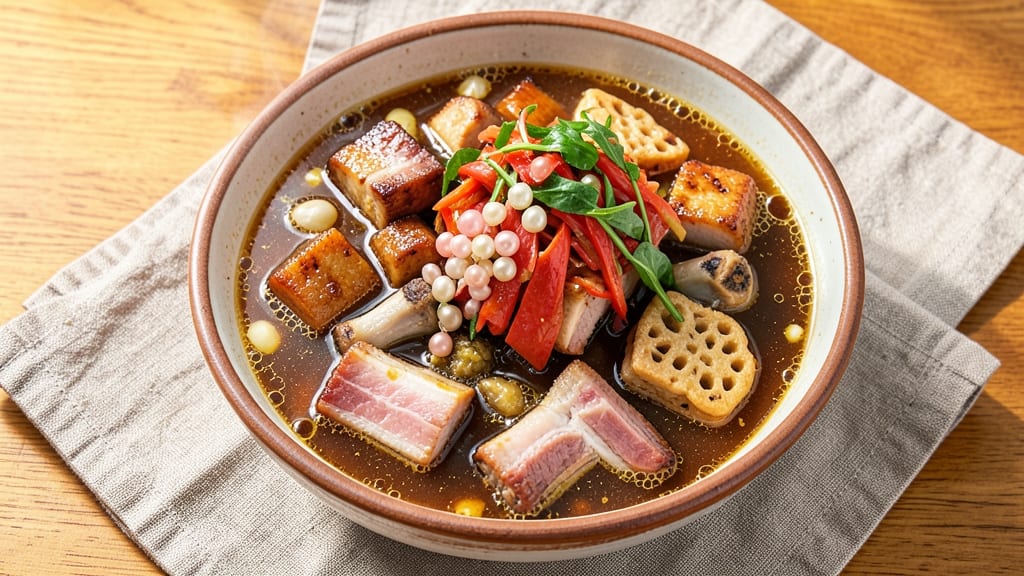
Busan pork soup transforms humble ingredients into a rich, spicy symphony that defines Korean coastal cuisine. I first tasted this dish in Busan's bustling markets, where the aroma of fermented seafood, chili flakes, and simmering pork bones filled the air—an experience that changed how I approach broth-based dishes.
The secret lies in the layered flavors: fermented seafood adds umami depth, while rice cakes and kimchi bring tangy brightness to balance the pork's richness.
This recipe delivers restaurant-quality results with a method rooted in tradition but simplified for home cooks. We'll start with a slow-simmered broth using pork bones and vegetables, then build complexity with fermented seafood and chili flakes.
The pork belly and ribs cook until fall-apart tender, while side dishes like radish and tofu add texture contrast. Every element comes together in a bowl that's both comforting and vibrant.
What makes this soup extraordinary is its harmony of textures and flavors—creamy pork broth, crisp radish slices, chewy rice cakes, and the subtle heat from chili flakes. The fermented seafood (jeotgal) provides that signature Busan funk, while kimchi adds a tangy brightness that cuts through the richness.
This is the kind of dish that feels like a warm embrace on a cold day, with each spoonful offering a new layer of flavor.
The beauty of Busan pork soup lies in its versatility—it's hearty enough for a winter meal but light enough for summer when served with fresh greens. The broth freezes beautifully, making this an ideal make-ahead dish for busy weeks.
Once you taste the difference between this homemade version and store-bought, there's no going back to the instant versions.
Ingredients for busan pork soup
Here's what you'll need to create this rich, spicy Busan pork soup symphony.
| Ingredient | Amount | Notes |
|---|---|---|
| Pork Belly 🥓 | 1 ½ lb | Cut into 2-inch cubes |
| Pork Ribs 🍖 | 1 ½ lb | Cut into 3-inch sections |
| Pork Bones 🦴 | 2 cups | For broth, cut into pieces |
| Dried Rice Cakes 🍚 | ½ cup | Korean-style, sliced |
| Kimchi 🥬 | 1 cup | With juice, chopped |
| Fermented Seafood (Jeotgal) 🦐 | ¼ cup | Shrimp or anchovy style |
| Red Chili Flakes 🌶️ | 2 tbsp | Adjust for heat preference |
| Green Onions 🧅 | ¼ cup | Thinly sliced, for garnish |
| Daikon Radish 🥕 | 1 whole | Julienned, for serving |
| Silken Tofu 🧈 | 1 block | Firm, cut into cubes |
| Garlic Cloves 🧄 | 6 cloves | Minced for broth |
| Ginger 🌿 | 1 inch | Fresh, sliced |
| Soy Sauce 🍶 | ¼ cup | For seasoning |
| Sesame Oil 🫒 | 1 tbsp | For finishing |
| Salt 🧂 | 1 tsp | Kosher or sea salt |
The pork is the heart of this dish. Pork belly and ribs give you that signature fall-apart texture, while the bones create a rich, gelatinous broth. Grab the fattier cuts from Costco or your local Asian market—they'll have the best selection. The jeotgal (fermented seafood) is non-negotiable for that signature Busan funk. H Mart or Korean grocery stores carry it in the refrigerated section, or you can find it online. If you can't find it, a mix of anchovy paste and shrimp paste works in a pinch. For the rice cakes, look for the dried Korean variety—they're chewier than the steamed kind.
No kimchi? Any fermented cabbage works, but the flavor won't be quite the same. Short on fermented seafood? Miso paste or fish sauce at half the amount adds umami depth. The red chili flakes can be swapped for gochugaru (Korean chili powder) if you're going for authenticity. Trader Joe's carries it, or check the international aisle. The daikon radish is key for that crisp texture—if you can't find it, regular radish or even cucumber in a pinch. For the tofu, silken gives the best texture, but regular firm tofu works too if you press it first.
The broth freezes beautifully—make extra and save it for quick weeknight meals. Store the pork and tofu separately in the fridge for 3-4 days, while the broth keeps for 5 days. The rice cakes and kimchi stay fresh for 1 week in their original packaging. To reheat, warm the broth gently and add the pork and tofu last—they'll stay tender if you don't overcook them. Garnish with green onions and a drizzle of sesame oil right before serving.
Why You'll Love This Recipe
- One-Pot Magic: Honestly, this soup practically cooks itself. Toss in the pork belly, ribs, and bones—no fancy cuts needed—and let the broth work its alchemy. The dried rice cakes and kimchi add texture and tang without extra effort, while the bones melt into a rich, savory base that tastes like you simmered for hours.
- Umami Bomb: That first bite? The crispy pork belly meets the tender ribs, all swimming in a broth so deep it’s practically singing. The pork bones give it that unmistakable depth, while the kimchi adds a bright, funky kick that cuts through the richness. It’s the kind of flavor that makes you reach for a second bowl—and then a third.
- Leftovers for Days: Between us, this soup only gets better after a day in the fridge. The flavors meld even more, and the rice cakes soften into little chewy clouds. I’ll make a big batch on Sundays, then reheat portions all week—perfect for lazy mornings or when I’m too tired to cook. (Yes, even on a Tuesday night.)
- Budget-Friendly Feast: Pork bones and belly stretch this recipe into a hearty, filling meal without breaking the bank. A single batch feeds four, and the ingredients—especially when bought in bulk—are way cheaper than takeout. Plus, the leftovers turn into easy lunches or a quick dinner when you’re skimming the pantry for scraps.
Step-by-step instructions for Busan pork soup
This hearty Busan pork soup delivers rich, spicy flavors in every bowl—let's build it the traditional way.
Prepare the Pork and Broth Base
Cut the 1.5 lb pork belly into 2-inch cubes and the 1.5 lb pork ribs into 3-inch sections. In a large pot, combine these with the 2 cups pork bones—this forms the flavorful foundation. Add the 1 cup kimchi (including its juice), 0.25 cup fermented seafood (jeotgal), 6 cloves minced garlic, and 1-inch sliced ginger. Pour in 8 cups water and bring to a boil over high heat.
Once boiling, reduce to a gentle simmer and skim off any foam that rises to the surface for the first 10 minutes. This removes impurities and ensures a clear broth. Let it simmer uncovered for 1.5 hours—you'll know it's ready when the pork is tender and the broth has deepened in color. The pork should pull away from the bone easily, and you'll smell that unmistakable umami richness.
Build the Spicy Rice Cake Broth
While the broth simmers, prepare the 0.5 cup dried rice cakes by slicing them into thin strips. In a separate small pot, toast these in 1 tablespoon sesame oil over medium heat for 3-4 minutes until fragrant and lightly golden. Remove from heat and set aside.
In the same pot, add 2 tablespoons red chili flakes and toast for 30 seconds until aromatic. Pour in 1 cup of the hot broth from your main pot and stir to dissolve the chili. Return this spicy mixture to the main pot and add the toasted rice cakes. Let everything simmer together for an additional 20 minutes—this infuses the broth with that signature Busan spice and chewy texture.
Finish with Tofu and Garnishes
Cut the 1 block silken tofu into 1-inch cubes and gently add them to the simmering soup. They'll cook just enough to warm through without falling apart—about 5 minutes. Season with 0.25 cup soy sauce and 1 teaspoon salt, stirring well to distribute the flavors evenly. Taste and adjust the seasoning, adding more soy sauce if needed for depth or more chili flakes if you want extra heat.
Ladle the soup into bowls and garnish with 0.25 cup thinly sliced green onions and julienned daikon radish. Drizzle with an extra ½ teaspoon sesame oil for that final aromatic touch. Serve immediately with steamed rice—each spoonful should deliver tender pork, spicy rice cakes, and that rich, savory broth working together perfectly.
Pro Tips For Making Busan Pork Soup
- CHAR THE BONES FIRST: I learned this the hard way—skipping this step turns your broth into murky sludge. Roast pork bones at 400°F (200°C) for 20 minutes before simmering to render fat and deepen flavor. Just don’t overcrowd the pan, or you’ll steam them instead of sear them.
- CUT PORK BELLY IN CHUNKS: Thin slices cook unevenly and turn rubbery. Go for 1.5-inch (4cm) cubes—big enough to stay tender but small enough to absorb the broth. If you’re lazy, freeze them 30 minutes first to make slicing easier (yes, even if you’re impatient like me).
- ADD KIMCHI LATE: Tossing it in early makes the soup taste sour before the meat’s ready. Wait until the pork is 80% cooked, then add kimchi and rice cakes together for 10 minutes. This balances the flavors without overpowering the broth.
- USE A PRESSURE COOKER FOR RICE CAKES: Soaking dried rice cakes for hours is a hassle. In a pressure cooker, add them with 2 cups water, seal, and cook for 10 minutes on high pressure. They’ll soften perfectly without turning to mush—no waiting around required.
Make-ahead tips for this dish
Broth Prep Ahead
Make the broth 2 days ahead for maximum flavor development. Simmer the pork bones, kimchi, and fermented seafood for 2 hours instead of 1.5, then strain and store in airtight containers. The longer simmer deepens the umami, and refrigerating it overnight intensifies the flavors.
I like to freeze half the broth in 1-cup portions for quick weeknight meals—just thaw and reheat with fresh pork. 🥣
Pork Pre-Cooking
Pre-cook the pork belly and ribs separately for 1 hour before assembling the soup. Parboil them in water with 1 tbsp soy sauce and ½ tsp salt, then cool and refrigerate.
This step ensures the pork stays tender when reheated later. I also like to marinate the ribs in 1 tbsp sesame oil and 1 tsp grated ginger for extra flavor depth. 🍖
Rice Cake Prep
Toast the dried rice cakes 1 day ahead and store them in an airtight container at room temperature. This prevents them from absorbing moisture and keeps them chewy. For extra convenience, slice them into strips and keep them ready to add directly to the broth when reheating.
Pro tip: Sprinkle with ½ tsp sugar before toasting for a subtle caramelized note. 🍚
Tofu Prep
Press the silken tofu for 30 minutes before cubing it, then store in its liquid in the fridge for up to 3 days. When reheating, add the tofu only in the last 5 minutes to prevent it from turning rubbery.
For a shortcut, buy pre-pressed tofu from the Asian market—it's already ready to use. 🧈
Kimchi Storage
Keep the kimchi in its original airtight container and store it in the fridge for up to 2 weeks. The longer it ferments, the more flavor it develops. When reheating, add ¼ cup fresh kimchi to each bowl of soup for that bright, tangy kick.
I also like to freeze extra kimchi in ice cube trays for easy portioning later. 🥬
Final Assembly
When ready to serve, reheat the broth on low heat for 10-15 minutes—never boil it, or the rice cakes will turn mushy. Add the pre-cooked pork and tofu last, then adjust seasoning with soy sauce or chili flakes.
Garnish with fresh green onions and daikon radish right before serving to keep everything crisp. This assembly takes just 10 minutes—perfect for busy weeknights. ✨
Nutrition facts
Frequently asked questions
What makes Busan pork soup different from regular kimchi jjigae?
Busan pork soup stands out with its layered textures and fermented seafood base—unlike kimchi jjigae, which relies solely on kimchi. The signature elements are rice cakes (for chewiness) and jeotgal (fermented seafood), which add umami depth and a funky, salty note. The broth also simmers longer with pork bones, creating a richer, clearer foundation than kimchi jjigae's thicker, tangier sauce.
Can I substitute the fermented seafood (jeotgal) if I can't find it?
Yes! Mix 1 tablespoon anchovy paste with 1 teaspoon shrimp paste (or ½ teaspoon fish sauce) for a similar umami punch. For a vegetarian option, use 1 tablespoon soy sauce + ½ teaspoon miso paste—it won't be identical but adds depth. Just reduce the soy sauce in the final seasoning by 1 tablespoon to balance flavors.
How do I adjust the spice level for picky eaters?
Start with 1 tablespoon chili flakes instead of 2, and add them to the broth only in the last 10 minutes of simmering. For kids, serve their portion without rice cakes (the chewiest spicy element) and add a dash of sesame oil to mask any heat. Keep extra chili flakes on the table so everyone can adjust to taste.
What's the best way to store leftovers?
Store the broth and pork separately in airtight containers for up to 4 days in the fridge. Reheat the broth gently (never boil) and add the pork and tofu only in the last 5 minutes. The rice cakes will soften if reheated too long—add them fresh when serving. For longer storage, freeze the broth alone (up to 3 months) and thaw overnight in the fridge.
Why does my broth look cloudy instead of clear?
Cloudiness usually means you didn't skim the foam during the initial 10 minutes of boiling. For a clearer broth, strain it through a fine-mesh sieve after simmering, or let it settle and skim off the fat layer before reheating. If using pork bones, simmering 30 minutes longer helps clarify the liquid. Pro tip: Add 1 bay leaf during cooking for extra clarity.