
Main Courses
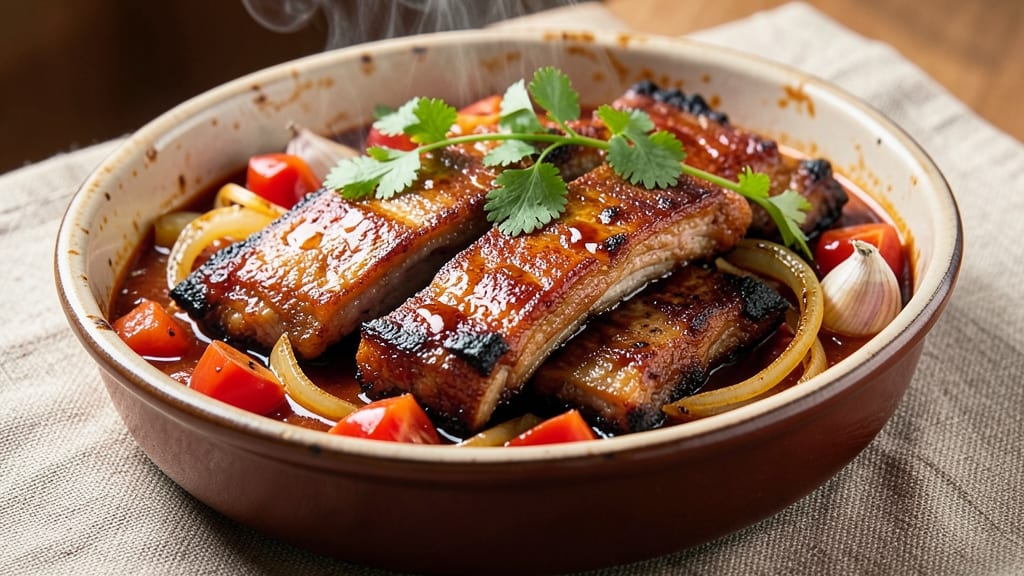
This caldereta pork spare ribs recipe brings the rich, smoky comfort of Filipino home cooking to your kitchen—where tender ribs melt into a deep tomato-pepper sauce that simmers into perfection. 🔥 Growing up in Georgia, I first tasted caldereta at a Filipino restaurant in Atlanta, and it became my go-to for feeding a crowd with minimal fuss.
The secret lies in slow-braising the ribs until they're fork-tender, while the sauce develops layers of sweetness from tomatoes and depth from spices like bay leaves and black peppercorns.
The beauty of this dish is its adaptability—traditional versions use vinegar for tang, but I've adjusted the balance to highlight the ribs' natural richness while keeping the sauce approachable for modern palates. With just one pot to manage, it's a foolproof method that delivers restaurant-quality results without requiring advanced techniques.
The ribs absorb the flavors beautifully, creating a dish that's hearty enough for a family dinner but elegant enough for company.
What you'll end up with is a steaming pot of smoky tomato-braised ribs that smell like home the moment you lift the lid. The sauce clings to each tender piece, offering a perfect harmony of sweet, savory, and just a hint of heat.
Served over steamed rice with a sprinkle of fresh cilantro, it's a meal that feels both comforting and special—exactly what I've been perfecting in my Atlanta kitchen for years.
This recipe scales effortlessly for gatherings, and leftovers reheat beautifully, making it ideal for meal prep. Whether you're recreating a taste of the Philippines or simply craving a satisfying one-pot wonder, this caldereta delivers comfort in every bite.
Let's get started with the full recipe—your taste buds will thank you.
Ingredients for caldereta pork spare ribs
Six ingredients make or break this smoky, tomato-braised comfort dish.
| Ingredient | Amount | Notes |
|---|---|---|
| Pork Spare Ribs 🍖 | 3 lb | Bone-in, cut into 2-inch pieces |
| Tomato Sauce 🍅 | 2 cups | Canned San Marzano preferred |
| Red Wine Vinegar 🍷 | ½ cup | For tangy depth (sub balsamic) |
| Yellow Onion 🧅 | 1 whole | Diced, about 1.5 cups |
| Garlic Cloves 🧄 | 6 cloves | Minced, about 1 tbsp |
| Black Peppercorns 🌶️ | 1 tbsp | Crushed, not ground |
| Bay Leaves 🍃 | 2 whole | Dried, standard size |
| Ground Black Pepper 🌶️ | 1 tsp | Freshly ground preferred |
| Salt 🧂 | 1 ½ tsp | Kosher or sea salt |
| Olive Oil 🫒 | ¼ cup | Extra-virgin for richness |
| Potatoes 🥔 | 1 ½ lb | Russet or Yukon gold, cubed |
| Fresh Cilantro 🌿 | ¼ cup | Chopped, for garnish |
| Green Bell Pepper 🌶️ | 1 whole | Diced, optional for crunch |
| Tomato Paste 🍅 | 2 tbsp | For concentrated flavor |
| Sugar 🍬 | 1 tsp | Balances acidity |
The ribs are everything here—bone-in spare ribs from a butcher shop or grocery store meat counter give the best flavor. I always grab Costco's pork spare ribs when I'm feeding a crowd, but the regular supermarket variety works too. Look for good marbling—those little fat streaks are what make the meat tender. If you can't find spare ribs, baby back ribs will work in a pinch, but trim the membrane first for even cooking. The potatoes? Russets or Yukons hold up best to the long braise, but any starchy variety will do.
No red wine vinegar? Balsamic vinegar or apple cider vinegar both work—just use the same amount. Fresh cilantro wilt fast, so dried cilantro or oregano at half the amount is a good swap. The tomato paste is non-negotiable for that deep umami flavor, but if you're in a hurry, extra tomato sauce (up to 1/2 cup) can replace it. Want more heat? Add a pinch of cayenne or a sliced jalapeño. The green bell pepper is optional but adds a nice fresh crunch at the end—skip it if you're not a fan.
This reheats like a dream—better the next day, honestly. Store leftovers in the fridge for up to 5 days, or freeze for 3 months. I like to portion it into containers with rice so lunches are ready to grab. The sauce thickens as it cools, so add a splash of water or broth when reheating. For a quick shortcut, make a double batch—it's perfect for meal prep and always gets rave reviews when I bring it to potlucks.
Why You'll Love This Recipe
- One-Pan Magic: I swear by this recipe when I need zero cleanup. The ribs simmer right in the same pot with onions and garlic—no chopping boards, no extra dishes. Just toss everything in, let it bubble, and boom. Done.
- Tangy-Sweet Bite: That red wine vinegar cuts through the richness like a dream. It’s not too sharp—just enough to make the tomato sauce sing while the ribs stay impossibly tender. Honestly, the first time I tasted it, I went back for seconds without even thinking.
- Leftovers That Shine: Between us, this dish tastes better the next day. The flavors meld into something deeper, and I’ve reheated portions for lunch without a single complaint. Perfect for meal prep when you’re juggling a million things.
- Budget-Friendly Feast: Pork ribs and pantry staples? This is my go-to when I need to feed a crowd without breaking the bank. A single batch stretches for four meals, and the ingredients won’t make you wince at the register. (Yes, even on a Tuesday night.)
Step-by-step instructions for smoky tomato-braised pork spare ribs
This one-pot wonder delivers deep, smoky comfort with tender ribs and hearty potatoes.
🔥 Step 1: Sear the Ribs for Maximum Flavor
Heat the 0.25 cup olive oil in a large Dutch oven over medium-high heat until shimmering. Pat the 3 lb pork spare ribs completely dry with paper towels—this ensures that perfect crispy crust. Working in batches if needed, add the ribs to the pot in a single layer and sear for 4-5 minutes per side until deeply golden brown.
Don't crowd the pan or you'll steam the meat instead of searing it. I press down gently on the ribs during the first minute to prevent curling, which guarantees even browning. Once all ribs are golden, transfer them to a plate and set aside. You'll know they're ready when they release easily from the pan.
🍳 Step 2: Build the Smoky Tomato Base
In the same Dutch oven, reduce heat to medium and add the diced yellow onion and minced garlic cloves. Cook for 3-4 minutes until the onions soften and become translucent, stirring occasionally. Add the 2 tbsp tomato paste and cook for another 1 minute, stirring constantly to prevent burning.
Here's where the magic happens: Pour in the 2 cups tomato sauce and 0.5 cup red wine vinegar, scraping up any browned bits from the bottom of the pot. Add the 1 tbsp crushed black peppercorns, 2 whole bay leaves, 1.5 tsp salt, and 1 tsp sugar. Stir well and bring to a gentle simmer for 5 minutes to let the flavors meld.
🥘 Step 3: Braise the Ribs and Potatoes Together
Return the seared ribs to the Dutch oven, nestling them into the sauce. Add the 1.5 lb cubed potatoes and diced green bell pepper (if using), then pour in enough water to come about halfway up the ribs—about 2 cups. Bring to a gentle boil, then immediately reduce heat to low and cover with a tight-fitting lid.
Simmer for 1.5 hours, stirring occasionally, until the ribs are fork-tender and the potatoes are easily pierced with a fork. The ribs should pull away from the bone with minimal resistance. If the liquid reduces too much before the ribs are tender, add ½ cup hot water to maintain moisture. This slow cooking transforms tough ribs into melt-in-your-mouth perfection.
⏰ Step 4: Finish with Fresh Herbs and Rest
Remove the lid and increase heat to medium to reduce the sauce slightly for 5-7 minutes, stirring occasionally. The sauce should coat the back of a spoon and develop a glossy sheen. Stir in the 1 tsp ground black pepper and taste—adjust salt if needed, remembering the ribs have already absorbed some seasoning.
Transfer the ribs and potatoes to a serving platter, spooning the rich sauce over the top. Sprinkle with the 0.25 cup chopped fresh cilantro just before serving. Let the dish rest for 5 minutes—this allows the juices to redistribute, ensuring every bite is moist and flavorful. Serve with warm crusty bread to soak up every last drop of that smoky tomato sauce.
Pro Tips For Making Caldereta Pork Spare Ribs
- Brown the Ribs First: The ribs need to hit 350°F (175°C) in the oven, but first, sear them in a hot pan with oil until deep golden—this isn’t just for looks. The crust locks in flavor and keeps them from falling apart later, especially when the vinegar hits. I learned this the hard way after serving mushy ribs to a crowd.
- Slice Onions Thinly: No, not "chopped"—slice those yellow onions paper-thin, almost translucent. They’ll soften faster in the vinegar-tomato mix, and you’ll end up with a sauce that’s silky, not chunky. My grandmother swore by this, and she was right: lazy slicing means a gummy caldereta.
- Simmer, Don’t Boil: Once the ribs are in the sauce, keep it at a gentle simmer—tiny bubbles, occasional swirls. Boiling toughens the meat and makes the sauce watery. I used to rush this, and the ribs turned out chewy. A lid helps, but leave it slightly ajar to let steam escape.
- Deglaze with Vinegar Early: Add the red wine vinegar after the onions and garlic have softened, but before the ribs go in. This cuts through the fat and brightens the sauce without overpowering it later. Skip this step, and your dish tastes dull—trust me, I’ve made that mistake.
Pro cooking tips for this dish
Sear Like a Pro
That initial sear is where all the magic starts—don't rush it. I use a heavy Dutch oven (like my Lodge 5.5-quart) because it retains heat perfectly. Pat those ribs completely dry with paper towels before searing, or you'll end up with steamed ribs instead of crispy ones.
Work in batches if needed, but never crowd the pan—this guarantees a deep golden crust. 🔥
Here's my secret: Press down gently on the ribs with tongs during the first minute of searing. This prevents curling and ensures even browning. You'll know they're ready when they release easily from the pan—no sticking!
If you're using baby back ribs instead of spare ribs, trim the membrane first for even cooking.
Sauce Science
The tomato paste is non-negotiable—it's what gives that deep umami flavor. Cook it for just 1 minute after adding the onions and garlic, stirring constantly. Burnt tomato paste = bitter sauce. I always use San Marzano tomatoes for the sauce because their natural sweetness balances the vinegar perfectly. 🍅
Don't skip the 5-minute simmer before adding the ribs and potatoes. This lets the flavors meld together—especially the crushed black peppercorns and bay leaves. I like to taste the sauce at this stage to adjust seasoning before committing to the long braise.
Braising Perfection
The key to tender ribs is patience—1.5 hours low and slow is non-negotiable. Use a tight-fitting lid to trap steam, which breaks down the collagen in the meat. I check the liquid level every 30 minutes and add ½ cup hot water if it reduces too much.
The ribs should pull away from the bone with minimal resistance when done. 🥘
For even cooking, arrange the ribs in a single layer at first, then nestle them together as they shrink. The potatoes should be submerged halfway—they'll absorb flavor from the braising liquid.
If you're short on time, you can parboil the potatoes first for 5 minutes before adding them to the braise.
Finishing Touches
That final 5-7 minute reduction is what transforms good sauce into great sauce. It develops a glossy sheen and coats the back of a spoon—exactly what you want. I always taste and adjust seasoning here, remembering the ribs have already absorbed some salt during the braise. 💡
Let the dish rest for 5 minutes before serving—this crucial step lets the juices redistribute. The sauce will thicken slightly as it cools, so add a splash of water when reheating if needed.
And always garnish with fresh cilantro just before serving—it brightens up the dish and adds that final pop of color.
Nutrition facts
Frequently asked questions
Can I use baby back ribs instead of spare ribs for this recipe?
Yes, but with one important adjustment! Baby back ribs are more tender and cook faster, so reduce the braising time to 1 hour instead of 1.5 hours. Also trim the membrane from the bone side first—this prevents curling and ensures even cooking. The flavor will be slightly milder, but still delicious.
What if I don't have red wine vinegar? What's the best substitute?
No problem! Use balsamic vinegar or apple cider vinegar in the same amount—they'll add slightly different depth but work beautifully. For extra tang, add a splash of lemon juice at the end. The key is balancing the acidity with the sweetness from the tomatoes and sugar.
How do I know when the ribs are fully cooked?
Ribs are done when they're fork-tender and pull away from the bone with minimal resistance. For spare ribs, they should reach an internal temperature of 195-203°F in the thickest part. If they're not tender after 1.5 hours, add ½ cup hot water and continue braising another 30 minutes. The potatoes should be soft when pierced with a fork too.
Can I make this recipe in a slow cooker instead of a Dutch oven?
Sear the ribs first (this step is crucial), then transfer everything to a 6-quart slow cooker. Cook on low for 6-7 hours or high for 3-4 hours until tender. The sauce will be thinner, so reduce it on the stovetop after cooking. For best results, use the "keep warm" setting for up to 2 hours before serving.
What's the best way to reheat leftovers?
Reheat gently in a skillet with a splash of water or broth over low heat for 5-7 minutes, stirring occasionally. Microwave reheating works too, but the sauce may separate—cover with a damp paper towel first. Leftovers actually taste better the next day as the flavors deepen! Store for up to 5 days in the fridge or 3 months in the freezer.