
Soups & Stews
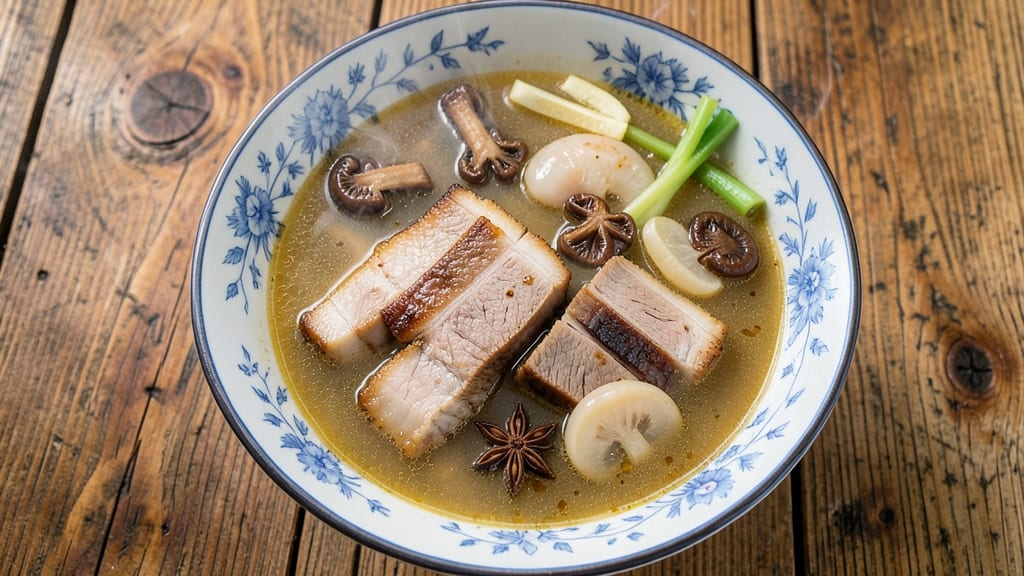
This Cantonese pork soup recipe brings the soul-warming flavors of Hong Kong kitchens to your home, where star anise and ginger create an aromatic broth that feels like a hug in a bowl. 🌟 As someone who's spent years perfecting pork dishes—from my CIA training to running a high-volume BBQ kitchen—I know how to balance tender meat with complex aromatics without overpowering the natural taste of the pork.
The secret lies in the slow simmering technique, where pork bones and meat release their collagen into the broth while star anise, ginger, and goji berries infuse their distinct flavors.
Unlike many Western soups that rush the process, this recipe demands patience—because the best Cantonese dishes are built on layers of flavor developed over time, not shortcuts.
What you'll end up with is a deeply comforting soup where perfectly tender pork pieces float in a fragrant, golden broth that's rich yet light enough to let the aromatics shine.
The addition of dried scallops and shiitake mushrooms adds textural contrast and umami depth that transforms this from a simple soup into a restaurant-quality meal.
This recipe serves as both a comforting weeknight dinner and an impressive dish for gatherings—exactly the kind of meal that brings people together. The broth freezes beautifully, so you can make a big batch and enjoy it all week. Let's get started on creating this Cantonese comfort classic.
Ingredients for cantonese pork soup
Six aromatic ingredients transform simple pork into a fragrant Cantonese comfort classic.
| Ingredient | Amount | Notes |
|---|---|---|
| Pork Shoulder Bones 🥓 | 2 lb | Knuckle bones preferred for marrow |
| Pork Shoulder Meat 🥩 | 1 ½ lb | Cut into 1-inch cubes |
| Fresh Ginger 🧄 | ½ cup | Sliced into 1/4-inch pieces |
| Star Anise 🌟 | 4 whole | Lightly crushed for aroma |
| Dried Scallops 🦪 | ¼ cup | Rehydrated in warm water |
| Dried Shiitake Mushrooms 🍄 | ¼ lb | Whole, not sliced |
| Goji Berries 🍇 | ¼ cup | Rinsed before using |
| Green Onions 🧅 | ¼ cup | Sliced for garnish |
| Light Soy Sauce 🍶 | ¼ cup | Kikkoman preferred |
| Shaoxing Wine 🍷 | ¼ cup | Or dry sherry |
| Sesame Oil 🫒 | 1 tbsp | For finishing |
| Salt 🧂 | 1 ½ tsp | Adjust to taste |
| White Peppercorns 🌶️ | ½ tsp | Lightly crushed |
| Water 💧 | 8 cups | Filtered preferred |
The pork bones are non-negotiable—knuckle bones give you that rich marrow flavor that separates good soup from great. Costco or your local Asian market usually has them pre-packaged, but if you're buying whole, look for good-sized joints with visible marrow. Fresh ginger should smell bright and zesty, not musty. Penzeys sells pre-sliced ginger if you're short on time, but I always grab the whole root to slice myself. Star anise is the secret weapon here—it's what gives that signature Cantonese aroma. Whole Foods or any Asian grocery carries it in the spice aisle, usually near the five-spice blends.
No Shaoxing wine? Dry sherry or even a splash of white wine vinegar works in a pinch, though the flavor won't be identical. The dried scallops and shiitakes are where the magic happens—Asian markets sell them in bulk, which is worth it for the umami punch. If you can't find goji berries, dried cranberries at half the amount add sweetness. The pork cubes should be uniform—1-inch is perfect. They'll shrink during cooking, so don't worry about them looking too big at first. For the ginger, you can use powdered (about one-third the amount), but fresh is always better.
This broth gets better with time—3-4 days in the fridge is ideal. The flavors meld beautifully. Store it in airtight containers, and if you're making a big batch, freeze half in 1-cup portions. Reheat gently on the stove—never microwave, or you'll break the emulsion. The pork keeps well too, so you can actually freeze the meat separately and add it fresh when serving. 3 months in the freezer for both broth and meat. Garnish with those green onions right before serving—they add freshness that cuts through the richness.
Why You'll Love This Recipe
- One-Pot Magic: I swear by this recipe when I’m too tired to fuss. Toss the pork bones and meat in a pot with ginger and star anise, then let the broth do the work—no chopping, no stirring every five minutes.
- Umami Bomb: That combo of pork bones and dried scallops? It’s like flavor overload in the best way. The broth turns rich and deep, while the star anise adds this warm, spicy kick that lingers.
- Weeknight Workhorse: Between us, this is my go-to when I need to feed the family fast. The leftovers reheat like a dream—just warm it up, and suddenly dinner feels fancy again.
- Budget-Friendly Luxury: Pork shoulder bones and dried scallops stretch this recipe into multiple meals without breaking the bank. Honestly, it’s the kind of dish that makes me feel like I’m treating myself, even when I’m not.
Step-by-step instructions for Cantonese pork soup with star anise and ginger
This hearty soup delivers deep, aromatic flavors that warm you from the inside out.
🔥 Step 1: Parboil the Pork Shoulder Bones and Meat
Place the 2 lb pork shoulder bones and 1.5 lb pork shoulder meat in a large stockpot. Add the 8 cups water and bring to a boil over high heat. Once boiling vigorously, reduce heat to medium-high and let it simmer for 10 minutes. This initial boil helps remove impurities and starts extracting the rich pork flavors.
Here's the thing—don't skip this step. It's what gives your soup that crystal-clear broth. After 10 minutes, drain the water through a fine-mesh strainer, discarding both the water and any foam that rises to the surface. This ensures your final soup will be clean and flavorful, not cloudy or bitter.
🍳 Step 2: Build the Aromatic Base
Return the drained pork bones and meat to the clean pot. Add the 0.5 cup sliced fresh ginger, 4 lightly crushed whole star anise, and 0.5 tsp crushed white peppercorns. Pour in the 0.25 cup Shaoxing wine and 0.25 cup light soy sauce. Bring everything to a boil over medium-high heat, then immediately reduce to a gentle simmer. Cover partially and let it cook for 1 hour.
This is where the magic happens—the ginger and star anise infuse the broth with their signature warmth, while the wine and soy sauce build the umami foundation. I like to stir occasionally during the first 15 minutes, but after that, just let it be. The longer it simmers quietly, the deeper the flavors develop.
🥘 Step 3: Add the Dried Ingredients
After 1 hour, remove the pork bones and meat with a slotted spoon and set them aside. In the same pot, add the 0.25 lb dried shiitake mushrooms and 0.25 cup goji berries. Let these simmer in the broth for 15 minutes—this rehydrates the mushrooms and plumps up the berries while infusing their earthy, slightly sweet flavors into the soup.
I know it seems counterintuitive to remove the meat early, but trust me. The broth needs time to concentrate its flavors without the bulk of the pork competing for heat. While these ingredients simmer, strain the broth through a fine-mesh sieve into a clean pot, pressing gently on the solids to extract every last drop of flavor.
🍳 Step 4: Reintroduce the Pork and Finish
Return the pork bones and meat to the strained broth. Bring everything back to a gentle simmer and cook uncovered for another 1 hour. The pork should now be fork-tender, falling apart easily when tested. If the broth reduces too much, add hot water as needed to maintain the level—you want it rich but not gluey.
About 20 minutes before serving, add the 0.25 cup rehydrated dried scallops (drained and rinsed) to the soup. These delicate seafood pieces will cook quickly and add a briny contrast to the rich pork. Real talk: this is the moment that matters—balance is everything. The scallops should be just cooked through, not rubbery.
🍽️ Step 5: Serve with Fresh Garnishes
Turn off the heat and let the soup rest for 5 minutes before serving. This resting period allows the flavors to meld perfectly. Just before serving, stir in the 1 tbsp sesame oil and adjust seasoning with additional salt if needed. Ladle the hot soup into bowls and garnish each serving with 0.25 cup sliced green onions. The fresh green onions cut through the richness and add a bright finishing touch.
Serve immediately with steamed rice on the side. Each bowl should deliver that perfect balance of tender pork, aromatic broth, and delicate scallops. The star anise and ginger flavors linger beautifully, making this more than just soup—it's comfort in a bowl.
Pro Tips For Making Cantonese Pork Soup
- CHAR THE BONES FIRST: Blister the pork shoulder bones over high heat until they’re deep brown—almost black in spots—before adding water. This isn’t just for flavor; it’s the only way to get that rich, caramelized depth in the broth that separates good Cantonese pork soup from the rest.
- SLICE GINGER THINLY: Use a mandoline or sharp knife to cut the ginger into paper-thin slivers, not thick chunks. You want it to infuse the broth without turning it into a muddy, bitter mess—thin slices dissolve just enough to add aroma without overpowering.
- DON’T BOIL THE SCALLOPS: Soak the dried scallops in warm water for 10 minutes to rehydrate, then rinse and pat them dry before adding to the soup. Tossing them in straight from the packet will make the broth cloudy and dilute their briny punch—you’ll taste the difference.
- LOW AND SLOW WINS: After the initial sear, reduce heat to a bare simmer—you should barely see bubbles—and cover the pot. Pork shoulder needs time to render fat and collagen, not to stew violently. Skimp on this, and you’ll end up with tough meat and a watery broth.
Storing and reheating this dish
Broth Storage Secrets
The golden broth from this Cantonese pork soup freezes like a dream—just portion it into 1-cup airtight containers (I use Silicone Molds from Amazon) before freezing. Label each with the date since it keeps its quality for up to 3 months.
When reheating, never microwave—always thaw overnight in the fridge then warm gently on low heat with a splash of water to restore its silky texture. 💧
Pork Preservation
For the pork cubes, store them separately in the broth's fridge for up to 4 days or freeze in a single layer before transferring to a freezer bag for 3 months.
I like to freeze them in a single layer first to prevent clumping—this trick comes from my years in BBQ kitchens. When reheating frozen pork, simmer it in fresh broth for 10-15 minutes until heated through and tender again.
Rehydrating Dried Ingredients
Dried scallops and shiitakes can be prepped ahead—they rehydrate beautifully in warm water for 20 minutes before adding to the soup. Store them in resealable bags with their soaking liquid in the fridge for up to 1 week.
Pro tip: Rinse them well before using to remove any grit, and pat dry with a paper towel to prevent a watery soup. 🍄
Make-Ahead Garnishes
Green onions and sesame oil are best added fresh, but you can chop the onions ahead and store them in the fridge for 3 days in a sealed container. The sesame oil should be kept in a cool, dark place—never in the fridge.
For goji berries, store them in a small airtight jar at room temperature for up to 6 months to maintain their chewy texture and sweetness.
Reheating Leftovers
When reheating leftovers, always use low heat to prevent the broth from breaking. I recommend a light simmer on the stove with the lid slightly ajar—this maintains the broth's integrity while warming through.
If the soup seems too thick after reheating, add 1-2 tablespoons hot water at a time until you reach the perfect consistency. Never boil vigorously or the flavors will scatter. 🔥
Freezer-Friendly Serving
For quick weeknight servings, freeze the soup in individual ramekins (I use Glass Pyrex because they reheat evenly). When ready to eat, pop them in the microwave for 2-3 minutes on medium power, then stir in a drizzle of sesame oil and fresh green onions.
This method keeps the pork tender and the broth flavorful—perfect for busy nights when you still want restaurant-quality comfort. ✨
Nutrition facts
Frequently asked questions
What's the difference between Cantonese pork soup and regular pork broth?
The magic lies in the aromatics and technique! Cantonese pork soup uses star anise, ginger, and goji berries for complex layers of warmth and sweetness, while regular pork broth often relies on simpler seasonings. The slow simmering process (3+ hours total) extracts collagen for a rich, velvety texture that's impossible with quick-cooked broths. Plus, we add dried scallops and shiitakes for umami depth that transforms it from simple to restaurant-quality.
Can I substitute pork shoulder with chicken or beef?
You can try, but the flavor profile changes significantly. Pork shoulder's fat content creates that signature richness, while chicken would make the broth lighter and beef would add more gamey depth. If substituting, use bone-in chicken thighs (for collagen) or chuck roast (for tenderness), but expect different results. The star anise and ginger flavors will still shine, but the texture and mouthfeel won't be identical.
Why does the recipe call for parboiling the pork first?
This crucial step removes impurities that would cloud your broth. The initial boil creates a clean canvas for the aromatic ingredients to shine. Skipping it risks a bitter, murky soup. Think of it like making tea - you wouldn't steep leaves in dirty water! The parboiling also helps tenderize the meat, ensuring it falls apart beautifully during the long simmer. It's worth the extra 10 minutes of effort.
How can I make this soup vegetarian?
Replace pork with shiitake mushrooms and tofu for umami, using vegetable broth instead of water. Add 1 tbsp mushroom powder to deepen the savory notes. Keep the star anise, ginger, and goji berries for that signature Cantonese flavor. The dried scallops can be replaced with reconstituted kombu seaweed for a briny contrast. The texture will differ, but the aromatic profile remains authentic.
What's the best way to reheat this soup without ruining the texture?
Never microwave! Reheat gently on the stove over low heat with the lid slightly ajar. If the broth thickens too much, add 1-2 tbsp hot water at a time. For frozen portions, thaw overnight in the fridge first. The key is patience - a light simmer for 5-10 minutes restores the silky texture without breaking the emulsion. Always stir in fresh sesame oil and green onions after reheating for that restaurant-fresh finish.