
Soups & Stews
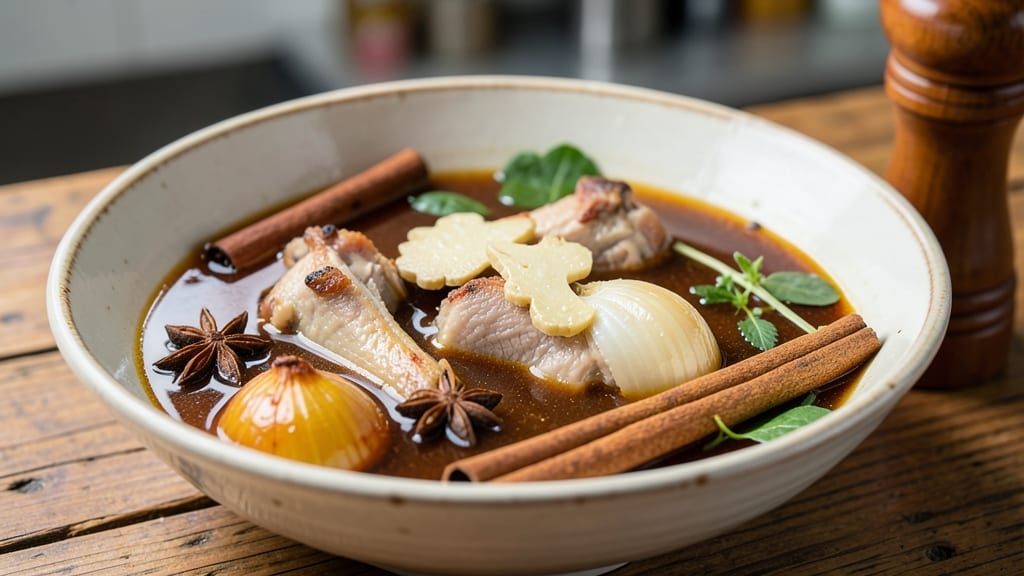
This Chinese pork bone broth recipe delivers the deep, umami-rich foundation of countless Asian comfort dishes. 🔥 I've spent years perfecting the technique—starting with the right bones, charring for complexity, and slow simmering to extract every ounce of collagen.
The result? A velvety, aromatic broth that transforms simple ingredients into something extraordinary.
The secret lies in patience and preparation: selecting pork bones with marrow, charring them for smoky depth, and simmering for 4+ hours with traditional aromatics like star anise, cinnamon, and ginger.
This isn't just broth—it's a flavor bomb that elevates everything from dumplings to stir-fries. The long cook time breaks down collagen into gelatin, creating that signature silky texture.
What you'll end up with is a restaurant-quality broth that's rich, savory, and packed with body—perfect for braising meats, making congee, or simply sipping as a healing tonic.
The aroma alone will transport you to bustling Chinese kitchens, while the flavor delivers that deep, meaty satisfaction that's hard to find elsewhere.
Whether you're making a traditional Hong Shao Tang or adapting it for modern shortcuts (like pressure cookers), this method ensures maximum flavor extraction. The bones are the star, but the aromatics and slow simmering create layers of complexity that turn simple broth into something truly special.
Ingredients for chinese pork bone broth
The foundation of authentic Chinese comfort—marrow-rich bones and aromatic spices for umami depth.
| Ingredient | Amount | Notes |
|---|---|---|
| Pork Bones with Marrow 🦴 | 4 lb | Knuckles and femur preferred |
| Cold Water 💧 | 16 cups | Filtered preferred for clarity |
| Yellow Onion 🧅 | 2 whole | Cut into quarters, charred |
| Fresh Ginger 🌿 | 4 cloves | 3-inch pieces, charred |
| Star Anise Pods 🌟 | 4 whole | Whole pods for infusion |
| Cinnamon Sticks 🌳 | 2 whole | 2-inch pieces for aroma |
| Rock Sugar or Brown Sugar 🍚 | ½ cup | Lightly browned for depth |
| Dried Chinese Dried Tangerine Peel 🍊 | 1 tbsp | Sliced thin for citrus notes |
| Dried Red Dates 🍇 | 4 whole | Pitted, for subtle sweetness |
| Kosher Salt 🧂 | 1 ½ tsp | Diamond Crystal preferred |
| Black Peppercorns 🌶️ | 10 whole | Crushed lightly for heat |
| Fresh Bay Leaves 🌿 | 2 whole | For herbal depth |
| Cornstarch Slurry 🌾 | 1 tbsp | 1 tbsp cornstarch + 2 tbsp water |
The pork bones are non-negotiable. Look for knuckles and femurs with visible marrow—these deliver that signature richness. Local Asian markets often carry the best cuts, but high-quality butchers can source them too. If you can't find marrow bones, pork neck bones work as a secondary option. Char the bones over a gas flame or under a broiler until deeply browned—this step unlocks smoky complexity. For the aromatics, Penzeys Spices or bulk bins at Whole Foods offer the freshest star anise and cinnamon, but even grocery store brands work if stored properly. The dried tangerine peel and dates? Asian grocery stores carry these essentials—look for packages labeled 'Chinese' or 'Hong Kong' for authenticity.
No star anise? Anise seeds or fennel seeds at half the amount will mimic the licorice note, though not identically. Substituting cinnamon? Allspice berries (crushed) add warmth without the same depth. The ginger and onion must be charred—this isn't optional. If you're short on time, broil them on a baking sheet for 10 minutes until blackened in spots. The rock sugar can be swapped for light brown sugar, but the caramelization process is key. For a quicker version, pressure cook for 2 hours instead of simmering, though the texture won't be as velvety. The cornstarch slurry at the end is optional but recommended—it clarifies the broth beautifully if you prefer a cleaner finish.
Store the broth in glass jars in the fridge for up to 5 days, or freeze in ice cube trays for 3 months. The flavor actually improves after 24 hours as the collagen fully emulsifies. For restaurant-quality results, simmer uncovered—this reduces the volume but concentrates the flavor. If you're making a large batch, divide it into quart-sized containers for easy portioning. The bones themselves can be composted or used for bone broth stock cubes if you're ambitious. Reheat gently over low heat—never boil, or you'll break the delicate gelatin strands.
Why You'll Love This Recipe
- No-Chop Setup: I swear by this—just toss in whole onion quarters, a few ginger slabs, and star anise pods. The bones do all the work while I sip tea. Honestly, my hands stay clean, and the broth still tastes like I slaved over it.
- Rich Umami Bomb: That marrow inside the bones? Pure gold. The slow simmer pulls out deep, savory notes while the star anise adds a warm, licorice-like depth. Between us, this isn’t just broth—it’s liquid flavor you’ll want to drink straight from the pot.
- Meal Prep MVP: I make a big batch on Sundays and freeze it in jars. A splash in stir-fries, dumplings, or even ramen later? Instant upgrade. My kids’ school lunches never tasted so good.
- Budget Goldmine: Pork bones are cheap, and this recipe stretches them into gallons. I’ve fed my whole family for days with just one pot. Plus, the leftovers? Even better the next day—if there are any. (There won’t be.)
Step-by-step instructions for Chinese pork bone broth
Transform humble pork bones into a deeply aromatic, umami-rich broth using traditional Chinese techniques.
🔥 Step 1: Char the Aromatics for Depth of Flavor
Begin by preparing your charred aromatics. Using a dry skillet over medium-high heat, toast the 2 whole yellow onion quarters and 4 cloves fresh ginger (3-inch pieces) until their edges darken to deep brown and you smell a nutty, almost caramelized aroma—about 8-10 minutes total. The charring develops complex flavors that will infuse your broth.
Transfer the charred aromatics to a large stockpot. Here's the thing—don't wash off any of that charred residue. Those dark bits are packed with concentrated flavor that will dissolve into your broth. Add the 4 whole star anise pods, 2 whole cinnamon sticks, 1 tbsp dried Chinese dried tangerine peel, 4 whole dried red dates, 10 whole black peppercorns, and 2 whole fresh bay leaves to the pot.
🍳 Step 2: Blanching and Initial Simmer
Add the 4 lb pork bones with marrow to the pot. Pour in the 16 cups cold water—enough to completely cover the bones by at least 2 inches. This generous water-to-bone ratio ensures maximum extraction of gelatin and collagen. Bring everything to a boil over high heat, then immediately reduce to a gentle simmer.
Once simmering, skim off any foam or impurities that rise to the surface using a fine-mesh skimmer or ladle. This step is crucial—it removes impurities that would otherwise make your broth cloudy. Simmer uncovered for 1 hour, maintaining a steady simmer. The broth should reduce slightly, and you'll notice the bones releasing their marrow and collagen into the liquid.
🔥 Step 3: Long-Slow Cooking for Maximum Extraction
After the initial hour, stir in the 0.5 cup rock sugar or brown sugar and 1.5 tsp kosher salt. The sugar caramelizes slightly during cooking, adding subtle depth, while the salt enhances all the natural flavors. Cover the pot and continue simmering at a low, gentle bubble—you should see just a few small bubbles breaking the surface—for 8-10 hours.
I know it seems like a long time, but this slow cooking is what transforms simple bones into a rich, velvety broth. Check the water level periodically and add hot water as needed to maintain the 2-inch liquid level above the bones. The broth should develop a deep amber color and an intense, aromatic fragrance that fills your kitchen.
⏰ Step 4: Straining and Finishing
Once the cooking time is complete, carefully strain the broth through a fine-mesh sieve or cheesecloth-lined colander into a large bowl or clean pot. Press gently on the solids to extract every last drop of flavorful liquid. Discard the bones and aromatics—your broth is now ready for the final touch.
Return the strained broth to the pot and bring to a gentle simmer over medium-low heat. Prepare the 1 tbsp cornstarch slurry by whisking 1 tbsp cornstarch with 2 tbsp water until smooth. Slowly whisk the slurry into the simmering broth. The broth will thicken slightly, creating a luxurious body. Simmer for another 2-3 minutes until it reaches your desired consistency.
🥘 Step 5: Rest and Serve
Remove the broth from heat and let it rest for 15-20 minutes at room temperature. This resting period allows any remaining particles to settle and the flavors to meld completely. Taste and adjust the seasoning if needed—you might want to add a touch more salt or sugar to suit your preference.
Your Chinese pork bone broth is now ready to serve. The final product should be deeply aromatic with layers of umami, sweetness from the dates and sugar, and subtle herbal notes from the star anise and bay leaves. Use it as a base for noodle soups, rice dishes, or simply sip it straight from a warm bowl with a side of steamed buns.
Pro Tips For Making Chinese Pork Bone Broth
- BLANCH BONES FIRST: Toss the pork bones in boiling water for 3 minutes before simmering—this loosens grime and marrow, so your broth stays clear and rich. I used to skip this step, and my broth always tasted like it had been dragged through a muddy field.
- PEEL GINGER THIN: Slice the ginger into paper-thin sheets instead of chunks—it infuses faster and dissolves without bitterness. After burning my mouth on a ginger chunk, I learned to treat it like onion: thin means flavor without fight.
- SKIP THE BOIL: Once the broth starts simmering, reduce to the lowest heat possible—even a gentle roll can break down collagen faster. My first batch turned into glue because I kept the heat too high. Now I let it whisper instead of shout.
- STAR ANISE LATE: Add the star anise in the last 30 minutes—it’s potent and can overpower if steeped too long. I once left mine in for hours and ended up with a broth that tasted like a spice shop exploded. Timing matters more than you’d think.
Flavor customization for this chinese pork bone broth
Spicy Sichuan Style
Transform your broth into a fiery Sichuan sensation by adding 2 tbsp Sichuan peppercorns (toasted and crushed) and 1 tbsp chili bean paste during the final 30 minutes of simmering. The numbing, tingling heat of Sichuan peppercorns pairs perfectly with the broth's natural umami.
I like to finish with 1 tsp toasted sesame oil and a sprinkle of dried chili flakes when serving. Trust me, this version will have your kitchen smelling like a bustling Chengdu street market. 🌶️
Sweet and Tangy Cantonese
For a sweeter, more aromatic profile inspired by Cantonese cuisine, add ½ cup rock sugar at the start (instead of later) and include 2 slices of preserved lemon peel (available at Asian markets) along with the charred aromatics.
The preserved lemon adds a bright citrus tang that cuts through the richness. I also like to finish with a splash of Shaoxing wine—just ¼ cup added during the last 15 minutes of simmering. This version works beautifully with congee or steamed fish.
Herbal and Light
If you prefer a lighter, more herbal broth, reduce the sugar to ¼ cup and add 1 tbsp goji berries and 1 tsp dried wolfberries instead of dates. The goji berries add a subtle sweetness while the wolfberries contribute a delicate floral note.
I also like to include 2 slices of fresh lotus root (charred lightly) for texture. This version is perfect for hot summer days or when you want something that's still deeply flavorful but not overly rich.
Smoky BBQ-Inspired
Channel my Southern roots by adding a smoky twist to this Chinese classic. After charring the aromatics, add 2 tbsp smoked paprika and 1 tbsp liquid smoke (just ½ tsp is enough) during the initial simmer.
For extra depth, include 1 small charred onion and 1 charred apple (yes, apple!) to balance the smokiness with subtle sweetness. This version is incredible with pulled pork or as a base for a smoky noodle soup. 🔥
Vegetarian Adaptation
While pork bones are traditional, you can create a vegetarian version using shiitake mushrooms (4 whole, charred) and kelp flakes (1 tbsp) to mimic the umami depth.
Replace the pork bones with 4 cups packed mushrooms (like king oyster or portobello) and add 1 tbsp soy sauce during the final hour of simmering. The kelp adds a briny, oceanic note that's surprisingly close to bone broth.
This version is perfect for those who want to keep the technique but need a plant-based alternative.
Nutrition facts
Frequently asked questions
Why do Chinese pork bone broth recipes call for charring the aromatics?
Charring the onion and ginger creates deep, caramelized flavors that infuse the broth with nutty, almost smoky complexity. This step is essential for authentic Chinese broth—it's what gives it that signature depth you won't get from raw aromatics. The charred bits dissolve into the liquid, adding layers of flavor that transform simple ingredients into something extraordinary.
Can I use regular pork bones instead of marrow bones?
While marrow bones deliver the richest flavor, you can use a mix of pork neck bones and pork ribs for a budget-friendly version. Just extend the simmering time to 12 hours to compensate for the lower collagen content. The broth will still be flavorful, though slightly less velvety. For best results, include at least 1 lb of marrow bones if possible.
What's the deal with the long simmering time?
The 8-10 hour simmer is what unlocks the magic—it breaks down collagen into gelatin, creating that signature silky texture. This slow process also extracts maximum flavor from the bones and aromatics. If you're short on time, a pressure cooker can reduce this to 2-3 hours, though the texture won't be as luxurious. Patience pays off with restaurant-quality results!
How do I know when the broth is done?
Your broth is ready when it reaches a deep amber color and has a rich, aromatic fragrance. The bones should be soft enough to crumble between your fingers, and the broth should coat the back of a spoon with a velvety consistency. Taste it—if the flavor is concentrated and umami-forward, it's perfect. If it's still too mild, simmer uncovered for another 1-2 hours to reduce and intensify the flavor.
Can I make this broth in a slow cooker?
Use a 6-quart slow cooker on low for 10-12 hours (or high for 6-8 hours). Just be sure to skim the foam during the first hour and add hot water to maintain the liquid level. The slow cooker method is perfect for hands-off cooking, though the flavor will be slightly less concentrated than stovetop. For best results, start with 20 cups of water to account for evaporation.