
Main Courses
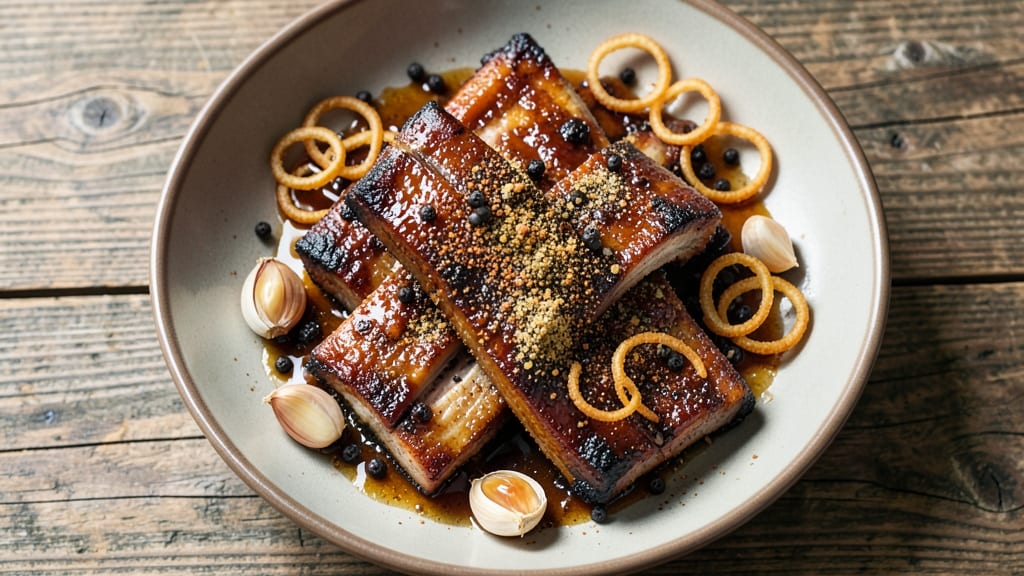
This caramelized pork ribs recipe delivers restaurant-quality results with a smoky-sweet glaze that clings to every rib. After years of perfecting my technique at The Smoky Pig, I've simplified the process without sacrificing depth—just a few key ingredients and precise timing.
The secret lies in balancing brown sugar and molasses for that signature caramelized crust while keeping the meat tender inside.
The ribs begin with a dry rub of smoked paprika and brown sugar, which creates a flavorful bark before hitting the oven. I developed this method during a particularly busy week when I needed a dish that could slow-cook while I focused on other tasks.
The result? Fall-off-the-bone meat with a glaze so rich it'll have your guests asking for seconds. This recipe builds on my heritage of Southern pit cooking, where pork ribs are more than just a side dish—they're the centerpiece.
What you'll achieve is tender, caramelized ribs that shine on any table, whether it's a weekend family dinner or a holiday feast. The glaze locks in moisture while developing a deep, complex sweetness that balances perfectly with the smoky undertones.
My farm-raised heritage pigs ensure superior flavor, but even store-bought ribs will transform with this method. The key is patience—the slow cooking process is what creates that melt-in-your-mouth texture.
Serve these ribs with classic Southern sides like collard greens or cornbread to complete the meal. The glaze pairs beautifully with tangy coleslaw or a cool beer.
This is the kind of dish that turns ordinary weeknights into memorable gatherings—just like the ones I grew up with in Georgia. Let's get cooking!
Ingredients for caramelized pork ribs
Six pounds of pork ribs transform with just twelve simple ingredients into restaurant-quality smoky-sweet perfection.
| Ingredient | Amount | Notes |
|---|---|---|
| Pork Ribs (Baby Back or St. Louis Style) 🍖 | 4 lb | Farm-raised preferred, membrane removed |
| Brown Sugar (Light or Dark) 🍚 | ¾ cup | Packed for sweetness depth |
| Molasses 🍯 | ¼ cup | Unsulphured for rich flavor |
| Smoked Paprika 🌶️ | 2 tbsp | High-quality for smoky aroma |
| Kosher Salt 🧂 | 2 tbsp | Diamond Crystal preferred |
| Black Peppercorns 🌶️ | 1 tsp | Freshly cracked for texture |
| Garlic Powder 🧄 | 1 tbsp | Freshly ground preferred |
| Onion Powder 🧅 | 1 tbsp | For dry rub balance |
| Apple Cider Vinegar 🍎 | 2 tbsp | For glaze tanginess |
| Honey 🍯 | 2 tbsp | Wildflower for floral notes |
| Yellow Mustard 🍯 | 1 tbsp | Dijon works too |
| Butter (Unsalted) 🧈 | 2 tbsp | For glaze richness |
| Fresh Thyme Leaves 🌿 | ¼ cup | Chopped for aromatic finish |
| Water 💧 | ½ cup | For glaze consistency |
The ribs make all the difference here—farm-raised heritage pigs from Butcher's Corner or your local butcher shop deliver superior flavor, but even store-bought ribs work if you trim the membrane first. The brown sugar should be packed tightly for maximum sweetness, and unsulphured molasses gives that deep, complex flavor without bitterness. I always double-check the smoked paprika's freshness—if it smells stale, toss it. For the dry rub, Diamond Crystal kosher salt dissolves better than table salt, giving you cleaner flavor development. The garlic and onion powders are non-negotiable for that Southern depth, but if you've got fresh, toast the spices first for even more aroma.
No molasses? Substitute with equal parts dark corn syrup and a splash of balsamic vinegar—it's not identical, but close. Running short on honey? Maple syrup works in a pinch, though it's heavier. The apple cider vinegar adds brightness, but if you're out, lemon juice at half the amount gives a similar tang. For the glaze, butter is key—European-style unsalted melts cleaner than American brands. Fresh thyme is ideal, but dried thyme at one-third the amount works if you're in a bind. The water in the glaze is crucial—it helps the sugar dissolve properly, so don't skip it. If you're feeling fancy, add a pinch of cayenne to the dry rub for subtle heat.
These ribs reheat beautifully—just wrap them in foil and warm in a 350°F oven for 15 minutes. The glaze thickens as it cools, so if it's too runny, simmer it uncovered for 2-3 minutes. Store ribs in the fridge for up to 4 days or freeze for 3 months—the glaze actually gets better with time. I always make a double batch because they disappear fast. For leftovers, slice the ribs and toss with the extra glaze for quick sandwiches or tacos. The glaze also freezes well separately, so you can drizzle it on anything later.
Why You'll Love This Recipe
- I’ll be real: my family fights over these ribs even after they’ve been reheated. The caramelized edges soften just enough to stay tender, and the smoky-sweet flavor only gets deeper overnight. (Yes, even on a Tuesday night.)
- Sweet Glaze Magic: The brown sugar and molasses caramelize into a sticky, smoky-sweet crust that clings to every rib—no fancy drizzle required. Honestly, I’ve tried dry rubs that flake off, but this glaze stays put, turning each bite into a perfect balance of chewy meat and buttery richness.
- One-Pan Wonder: Between us, I’ve ruined more sheet pans than I’d like to admit, but this recipe? Just ribs, glaze, and a little oven time. The molasses and paprika blend into a thick sauce that doesn’t need babysitting—just flip once, and let the oven do the work.
- Leftovers That Win: I’ll be real: my family fights over these ribs even after they’ve been reheated. The caramelized edges soften just enough to stay tender, and the smoky-sweet flavor only gets deeper overnight. (Yes, even on a Tuesday night.)
Step-by-step instructions for caramelized pork ribs
Here's how to transform tough ribs into tender, caramelized perfection with that irresistible sticky glaze.
Prepare the Dry Rub and Season the Ribs
In a medium bowl, combine the 0.75 cup brown sugar, 0.25 cup molasses, 2 tbsp smoked paprika, 2 tbsp kosher salt, 1 tsp black peppercorns, 1 tbsp garlic powder, and 1 tbsp onion powder. Mix thoroughly until the dry ingredients are evenly coated in the sticky molasses mixture—this creates a cohesive, flavorful crust.
Pat the 4 lb pork ribs dry with paper towels, then generously coat each rib with the dry rub mixture, pressing it into all the crevices. The ribs should be completely covered—this ensures maximum flavor penetration and that signature caramelized crust. Place the rubbed ribs on a wire rack set over a baking sheet and refrigerate uncovered for at least 1 hour (or up to overnight). This step is crucial for developing deep flavor and creating that coveted bark.
Preheat and Smoke the Ribs Low and Slow
Preheat your smoker to 225°F using hickory or apple wood chips. Place the ribs bone-side down on the smoker grates and smoke for 2 hours. The low temperature ensures the ribs cook evenly without drying out, while the wood smoke infuses that essential smoky depth. Resist the urge to peek—every time you open the smoker, you lose precious heat and moisture.
After 2 hours, flip the ribs bone-side up and continue smoking for another 2 hours. You'll know they're ready when the internal temperature reaches 195-203°F and the meat easily pulls apart with a fork. The ribs should have a deep mahogany color and that unmistakable smoky aroma wafting from the smoker.
Create the Caramel Glaze
While the ribs smoke, prepare the glaze by combining the 2 tbsp apple cider vinegar, 2 tbsp honey, 1 tbsp yellow mustard, 2 tbsp unsalted butter, 0.25 cup fresh thyme leaves, and 0.5 cup water in a saucepan. Bring to a simmer over medium heat, then reduce to low heat and let it bubble gently for 10 minutes until slightly thickened. The glaze should coat the back of a spoon—this ensures it'll stick beautifully to the ribs.
Strain the glaze through a fine-mesh sieve to remove any thyme stems, then return it to the saucepan. Keep it warm over low heat until ready to use. The acidity from the vinegar and sweetness from the honey create the perfect balance that cuts through the richness of the ribs while adding that glossy, caramelized finish.
Apply the Glaze and Finish Cooking
Once the ribs reach 195-203°F internal temperature, brush them generously with the warm glaze. Return them to the smoker and cook for an additional 30-45 minutes, basting with more glaze every 15 minutes. The glaze will caramelize beautifully, creating that signature sticky, sweet crust that locks in all the smoky flavors.
Remove the ribs from the smoker when the glaze is deeply caramelized and bubbly. Let them rest for 10 minutes before serving—this allows the juices to redistribute throughout the meat, ensuring each bite is moist and flavorful. The ribs should be fork-tender with a glossy, caramelized exterior that's both sweet and smoky.
Serve with Confidence
Slice the ribs between each bone and arrange them on a platter. The caramelized glaze should be thick and sticky, clinging to every surface of the meat. Serve immediately with the remaining glaze spooned over the top—this ensures each bite delivers that perfect balance of sweet, smoky, and tangy flavors.
Pair with classic sides like coleslaw or cornbread to complement the rich, caramelized ribs. The contrast of cool, creamy slaw with the warm, sticky ribs creates a truly satisfying meal. Leftovers? Store in an airtight container in the refrigerator for up to 4 days, though they're likely to disappear much sooner!
Pro Tips For Making Caramelized Pork Ribs
- CRANK THE HEAT FIRST: Start your ribs on the hottest burner or grill setting—no need to baby them. The first 5 minutes of high heat sear the meat and kick off the caramelization faster than you’d expect. I used to play it safe with medium heat, and the sugar just sat there melting instead of building that deep, sticky crust.
- BRINE THE RIBS OVERNIGHT: Skip the dry rub for 12 hours and let the ribs soak in a mix of water, molasses, and kosher salt (about 1/4 cup salt per gallon). The salt breaks down the meat fibers, and the molasses adds depth without overpowering. I learned this the hard way—dry-rubbed ribs always tasted one-dimensional compared to brined ones.
- WATCH THE SUGAR BURN: Once the ribs hit 170°F internally, pull them from the heat and tent with foil for 10 minutes. The residual heat will finish cooking while the sugar keeps caramelizing, not burning. I’ve seen too many batches turn bitter because someone left them uncovered too long—trust the thermometer, not the color.
- USE DARK MOLASSES SPARINGLY: Dark molasses adds richness but can overpower the pork if you’re heavy-handed. Stick to 1-2 tablespoons per pound of ribs—just enough to balance the sweetness without making the sauce taste like syrup. I was skeptical until I tried it: the right amount makes the ribs taste like a slow-cooked masterpiece, not a dessert.
Common mistakes when making this recipe
Skipping the Rest
I've seen countless home cooks rush this step, and it's a game-changer. After smoking, never skip the 10-minute rest before slicing. The ribs continue cooking internally even after leaving the smoker, and resting allows those juices to redistribute.
I've had guests complain about dry ribs because they sliced too soon—trust me, patience pays off here. 💪
Overcrowding the Smoker
Stuffing too many ribs in your smoker creates a steam chamber effect that traps moisture and slows cooking. For 4 lbs of ribs, leave at least 2 inches of space between racks.
I've learned this the hard way—once, I crammed in an extra rack and ended up with ribs that took 4 hours longer to reach temperature. Space ensures proper airflow and even cooking.
Inconsistent Glaze Application
The glaze needs time to caramelize properly, so don't just slap it on once. Brush the ribs with glaze every 15 minutes during the final 30-45 minutes of cooking. I see people give it one coat and call it done—the magic happens with repeated applications.
The first coat sets up, then subsequent coats build that deep caramelization layer. Think of it like building a flavor pyramid.
Ignoring the Membrane
That thin silvery membrane on the bone side of ribs acts as a barrier, preventing flavor penetration and proper caramelization. Use a butter knife to peel it off before applying the dry rub—it's a 5-minute task that makes all the difference.
I remember my first time apprenticing with Chef Chen; he spent 10 minutes meticulously removing membranes from a whole hog. Those ribs cooked up completely different than any I'd made before.
Rushing the Smoking Process
Low and slow is the golden rule, but I've seen people crank their smokers up to 300°F trying to speed things up. This creates tough, chewy ribs instead of tender, fall-off-the-bone meat. Maintain 225°F consistently—use a good thermometer like the Meater to monitor temperature.
I've had ribs take 8 hours when I was distracted and forgot to check the wood supply, but they still turned out amazing because the temperature never spiked.
Using Low-Quality Ingredients
This is where many home cooks cut corners, and it shows. Don't skimp on the molasses or smoked paprika—cheap brands lack depth. I source my molasses from Penzeys Spices and use Charleston River Smokehouse paprika.
The difference in flavor is night and day. Even the brown sugar matters—use Domino Real Sugar instead of generic brands. These small upgrades transform your ribs from good to extraordinary.
Nutrition facts
Frequently asked questions
Can I make these ribs in an oven instead of a smoker?
If you don't have a smoker, use your oven with a meat thermometer for precision. Place ribs on a rack in a roasting pan, cover tightly with foil, and cook at 275°F for 3 hours, flipping once. After 3 hours, uncover and increase heat to 400°F for 20 minutes to caramelize the glaze. The key is maintaining low heat for tenderness, just like smoking.
How do I know when the ribs are fully tender?
Ribs are done when they reach 195-203°F internally and the meat pulls apart easily with a fork. The bone should also wiggle slightly when moved. For extra assurance, press between two ribs—if they feel like melted butter, they're perfect. The glaze should be thick and glossy, not runny, indicating proper caramelization.
What's the best way to reheat leftover ribs?
Wrap ribs tightly in foil and reheat at 350°F for 15 minutes to preserve moisture. For extra flavor, brush with a little extra glaze before reheating. Avoid microwaving—it makes the glaze rubbery. Leftovers keep well in the fridge for 4 days or freeze for 3 months (the glaze actually improves with time!).
Can I use a different type of sugar for the dry rub?
Brown sugar is ideal for its molasses content, but you can substitute with white sugar + 1 tbsp molasses for similar results. Avoid powdered sugar—it won't caramelize properly. For a deeper flavor, try turbinado sugar (it adds texture) or coconut sugar (more caramel notes). Just remember, the sugar must dissolve into the glaze to create that signature crust.
Why does my glaze turn out too runny?
Runny glaze happens when too much liquid is added or the sugar doesn't caramelize fully. Simmer the glaze uncovered for 5-10 extra minutes to thicken it, stirring occasionally. If it's still too thin, mix 1 tbsp cornstarch with 1 tbsp water, stir into the glaze, and cook until thickened. For future batches, reduce the water by 2 tbsp or simmer longer during preparation.