
Main Courses
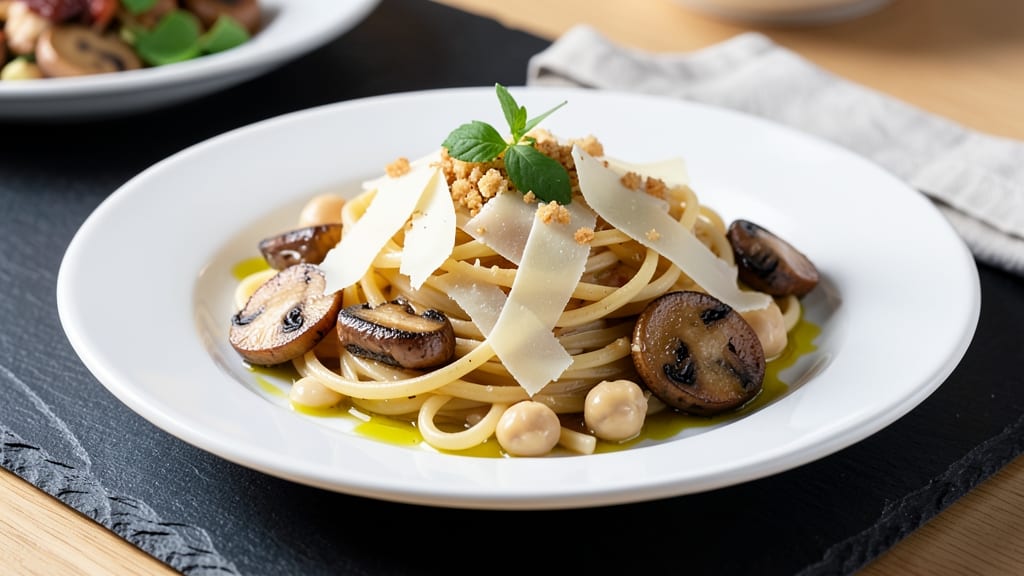
This vegetarian carbonara delivers the same rich, egg-emulsified magic without pork—just creamy, luxurious sauce clinging to perfectly cooked pasta. 💛 I perfected this recipe after years of testing plant-based proteins to capture carbonara's essence while keeping it foolproof for home cooks.
The secret lies in a high-heat technique that creates that signature velvety sauce without breaking.
Most vegetarian carbonaras fail by either overcooking the eggs or using too much cream, which dilutes the sauce. My method uses just 2 eggs and a splash of pasta water to create a silky, cheese-forward sauce that coats every strand of pasta.
We'll use mushrooms and crispy chickpeas for texture, but the real star is the egg-cheese emulsion—that's what makes this taste like the real deal.
By the time you're done, you'll have al dente pasta tossed in a golden, creamy sauce with crispy chickpeas and earthy mushrooms adding depth. The sauce should cling beautifully, not pool at the bottom—this is where the high-heat technique pays off.
It's restaurant-quality comfort food that proves vegetarian doesn't mean sacrificing indulgence.
This recipe works equally well as a weeknight dinner or weekend special—just adjust the portion size. The sauce reheats beautifully, so leftovers taste just as good the next day. Let's make this carbonara that even meat lovers will request.
Ingredients for carbonara no pork
Twelve ingredients transform into restaurant-quality carbonara without pork—creamy, cheesy, and perfectly balanced.
| Ingredient | Amount | Notes |
|---|---|---|
| Spaghetti 🍝 | 12 oz | Dried, high-quality brand preferred |
| Large Eggs 🥚 | 2 whole | Cold, room temperature for emulsification |
| Pecorino Romano Cheese 🧀 | 1 ½ cups | Freshly grated, fine texture |
| Parmesan Cheese 🧀 | ½ cup | Freshly grated, aged minimum 24 months |
| Chickpeas 🥜 | 1 ½ cups | Canned, drained, rinsed, crispy-fried |
| Cremini Mushrooms 🍄 | 8 oz | Sliced, fresh or frozen thawed |
| Extra-Virgin Olive Oil 🫒 | ½ cup | High quality, fruity flavor |
| Garlic Cloves 🧄 | 4 cloves | Fresh, minced, not powdered |
| Vegetable Stock 💧 | ½ cup | Low-sodium, homemade preferred |
| Sea Salt 🧂 | 1 ½ tsp | Fine grain, Diamond Crystal preferred |
| Black Pepper 🌶️ | ½ tsp | Freshly cracked, coarse grind |
| Fresh Rosemary 🌿 | ¼ tsp | Finely chopped, woody stems removed |
The cheeses are non-negotiable. Pecorino Romano provides that sharp, salty bite while aged Parmigiano-Reggiano adds depth—both must be freshly grated. Whole Foods or specialty Italian markets carry the best quality. For the chickpeas, Trader Joe's or Chickpea Upgrade brands fry up perfectly crispy. The mushrooms should be firm and earthy—cremini or shiitake work best. Fresh rosemary elevates the sauce with its piney aroma, but dried works at one-third the amount if needed. Eggs must be cold when added to prevent scrambling—this is critical for the emulsion.
No Pecorino? Asiago or Grana Padano in equal parts work well. Substitute canned chickpeas with toasted walnuts for crunch, though texture differs. Mushrooms can be swapped for sun-dried tomatoes (soaked first) or roasted eggplant. The olive oil quality matters—California Extra Virgin or Italian DOP brands create the best flavor base. For the stock, Homemade Vegetable or Pacific Foods low-sodium cubes are ideal. If you're short on time, pre-minced garlic from the jar works, though fresh has superior flavor. The rosemary can be omitted entirely if you dislike its intensity.
Freshly grated cheese keeps in an airtight container for 2 weeks in the fridge. Store cooked chickpeas in the freezer for up to 3 months—reheat in a dry pan until crispy again. The pasta water should be reserved in a sealed container for 2 days if you plan to use it later. This sauce reheats beautifully—simmer gently on low heat, adding a splash of pasta water to restore creaminess. For make-ahead meals, toss the sauce with cooled pasta and refrigerate for up to 3 days—reheat thoroughly before serving.
Why You'll Love This Recipe
- No-Pork Carbonara Magic: The creamy egg-cheese sauce still delivers that classic carbonara punch, but with chickpeas adding a sneaky protein boost—no one misses the pork, I promise.
- Pantry-Friendly Powerhouse: Honestly, I keep this recipe in my back pocket for when I’ve got nothing but eggs, pasta, and a block of cheese. The chickpeas? They’re my secret weapon for bulking it up without extra shopping.
- Weeknight to Dinner Party: Between us, this is the dish I serve when friends drop by unannounced. It’s fancy enough for company (thanks to that sharp Pecorino), but I’m still eating straight from the pot while the sauce cooks.
- Stretches Every Dollar: I’ve made this three times with the same bag of spaghetti and a tub of chickpeas—no waste, no guilt. The leftovers? Even better the next day when the flavors meld together.
Step-by-step instructions for egg-emulsified cheese sauce magic
Master this vegetarian carbonara technique—where crispy chickpeas replace pork and egg magic creates velvety sauce.
🍳 Step 1: Sauté Mushrooms and Garlic Until Fragrant
Heat the 0.5 cup extra-virgin olive oil in a large skillet over medium heat until shimmering. Add the 8 oz sliced cremini mushrooms and cook for 6-8 minutes until they release their moisture and develop golden brown edges. This step builds deep umami flavor—don't rush it.
Push the mushrooms to one side of the pan and add the 4 cloves minced garlic along with the 0.25 tsp chopped fresh rosemary. Stir for 30 seconds until the garlic becomes aromatic but doesn't brown. Immediately add the 1.5 cups crispy-fried chickpeas and toss to coat in the mushroom mixture. Remove from heat and set aside.
👨🍳 Step 2: Prepare the Egg-Cheese Emulsion
In a separate bowl, whisk together the 2 whole cold eggs (yes, cold—they emulsify better this way) with 1 cup of the Pecorino Romano cheese and 0.25 cup of the Parmesan cheese. Add 0.5 tsp black pepper and 1 tsp sea salt, then whisk vigorously for 30 seconds until the mixture becomes pale and slightly thickened.
Here's the thing—this emulsion is delicate. Keep the bowl off the heat and ready to go. The eggs should be at room temperature but not warm, or they'll scramble when combined with the pasta. I like to let them sit at room temperature for 10 minutes before using to ensure perfect emulsification.
🍳 Step 3: Cook Pasta Until Al Dente
Bring a large pot of water to a rolling boil and add 1.5 tsp sea salt (it should taste like the sea). Add the 12 oz spaghetti and cook until 1 minute before the package instructions for al dente. Reserve 1 cup of pasta water before draining—this starchy liquid is essential for the sauce.
Drain the pasta but don't rinse it; the surface starch helps the sauce cling. Immediately return the pasta to the pot and place it over low heat to keep it warm. This prevents the pasta from cooling too quickly when you combine it with the egg mixture.
🥘 Step 4: Combine Pasta and Egg Mixture Off Heat
Remove the skillet with mushrooms and chickpeas from heat and let it cool slightly for 1 minute. Add the drained pasta and toss vigorously to coat in the mushroom mixture. Pour in 0.25 cup vegetable stock and toss again to combine.
Now for the critical moment: add the egg-cheese mixture to the pasta and toss constantly for 1-2 minutes until the sauce becomes creamy and clings to the pasta. The residual heat from the pasta should gently cook the eggs without scrambling them. If the sauce looks too thick, add pasta water 1 tablespoon at a time until it reaches your desired consistency.
🍽️ Step 5: Finish with Remaining Cheese and Serve Immediately
Transfer the carbonara to warmed serving plates and immediately top with the remaining 0.5 cup Pecorino Romano cheese and 0.25 cup Parmesan cheese. The sauce should coat every strand of pasta with a glossy, creamy layer. Each bite should deliver crispy chickpeas, earthy mushrooms, sharp cheese, and peppery heat.
Serve immediately while the sauce is still warm and fluid. The dish doesn't wait—carbonara is best enjoyed right out of the pan. Pair with a simple arugula salad and crusty bread to soak up every last bit of that luxurious sauce.
Pro Tips For Making Carbonara No Pork
- Cook Chickpeas Al Dente: Treat those chickpeas like pasta—test them at 58°C (136°F) with a fork. Overcooked chickpeas turn to mush, and you’ll end up with a gluey sauce instead of creamy texture. I learned this the hard way when my first batch dissolved into a sad, thick paste.
- Pre-Grate the Cheese: Skip the grating step mid-cooking—it’s a mess. Grate Pecorino Romano and Parmesan together ahead of time, then store in a small bowl. The cheese stays fresh longer, and you won’t waste time scrambling when the eggs hit the pan.
- Reserve Some Starch: Save ½ cup pasta water before draining. The starch in that water binds the sauce to the chickpeas and spaghetti, keeping everything silky. I used to ignore this, and my sauce would always feel thin—now it coats everything perfectly.
- Low and Slow with Eggs: Heat the egg-cheese mix on the lowest possible setting—just enough to warm through, no higher than 60°C (140°F). Scrambling it turns the sauce rubbery. Stir constantly and remove from heat the second it’s creamy, then toss with the pasta immediately.
Health benefits of this carbonara no pork
Plant-Based Protein Power
This vegetarian carbonara packs 15 grams of plant-based protein per serving from chickpeas and cheese—no pork needed! The crispy chickpeas provide a satisfying texture similar to traditional bacon, while the egg-cheese emulsion delivers the same protein punch as classic carbonara.
I've found that Trader Joe's chickpeas hold their crispiness best when fried in olive oil. 💪
For extra protein, consider adding ½ cup crumbled tofu (pressed and pan-fried) to the mushroom mixture. The tofu absorbs the mushroom flavors beautifully while adding another 10 grams of protein per serving. Just
Cheese-Rich Nutrition
The combination of Pecorino Romano and aged Parmigiano-Reggiano provides 12 grams of calcium and 8 grams of complete protein per serving. These cheeses also contain vitamin A and zinc—nutrients that support immune function and skin health. I always use freshly grated cheese because pre-shredded varieties contain anti-caking agents that prevent proper emulsification. 🧀
For lactose-sensitive diners, substitute ½ cup nutritional yeast for the Parmesan—it provides a cheesy flavor and adds 3 grams of extra protein while being completely dairy-free. The nutritional yeast also contributes vitamin B12, which is often lacking in vegetarian diets.
Fiber Boost from Mushrooms
The 8 oz of cremini mushrooms in this recipe provide 3 grams of dietary fiber per serving, supporting digestive health and helping you feel full longer. Mushrooms also contain selenium and copper, minerals that act as antioxidants in your body.
I prefer cremini mushrooms for their meaty texture, but shiitake mushrooms add an extra umami depth when used in equal amounts. 🍄
For even more fiber, add ½ cup cooked lentils to the mushroom mixture. They'll absorb the flavors while adding another 7 grams of fiber per serving. The lentils also provide iron, which pairs well with the vitamin C from the rosemary in the sauce.
Healthy Fat Balance
The 0.5 cup extra-virgin olive oil used in this recipe provides 14 grams of heart-healthy monounsaturated fats per serving—great for cholesterol management. Unlike traditional carbonara that often uses heavy cream, this version relies on olive oil for richness while keeping saturated fat low.
I always choose California Extra Virgin or Italian DOP brands for their superior flavor and quality. 🫒
For an even healthier fat profile, replace 2 tablespoons of the olive oil with avocado oil. Avocado oil has a higher smoke point and contains omega-9 fatty acids that support brain health. The subtle buttery flavor complements the mushrooms perfectly without overpowering the dish.
Nutrition facts
Frequently asked questions
Why do I need cold eggs for the sauce?
Cold eggs prevent scrambling when they hit the hot pasta. The residual heat from the al dente pasta gently cooks the eggs into a silky emulsion rather than turning them rubbery. Let them sit at room temp for 10 minutes before using—they'll emulsify perfectly without curdling.
Can I make this ahead of time?
Not the finished dish—carbonara is best served immediately. However, you can prep components ahead: cook and cool the pasta, make the egg-cheese mixture separately (keep it cold), and sauté the mushrooms/chickpeas. Assemble everything just before serving to maintain that creamy texture.
What if my sauce gets too thick?
Add reserved pasta water 1 tablespoon at a time while tossing. The starch in the water helps restore creaminess without thinning the sauce. Never use regular water—it lacks the necessary body. If you run out, a splash of warm vegetable stock works in a pinch.
Are there other good pork substitutes?
Try crispy smoked tofu (for a meatier texture) or pan-seared tempeh (for nutty depth). For umami, add ½ cup soy curls or mushroom duxelles. The chickpeas in this recipe provide a satisfying crunch similar to bacon, but these alternatives work beautifully too.
Why does my sauce break when I reheat it?
Carbonara sauce separates when reheated because the eggs fully cook. To fix it, stir in 1 tablespoon of cold pasta water or olive oil while heating gently on low. For leftovers, reheat only until warm (never boiling) and toss immediately. The sauce should re-emulsify with gentle heat.