
Main Courses
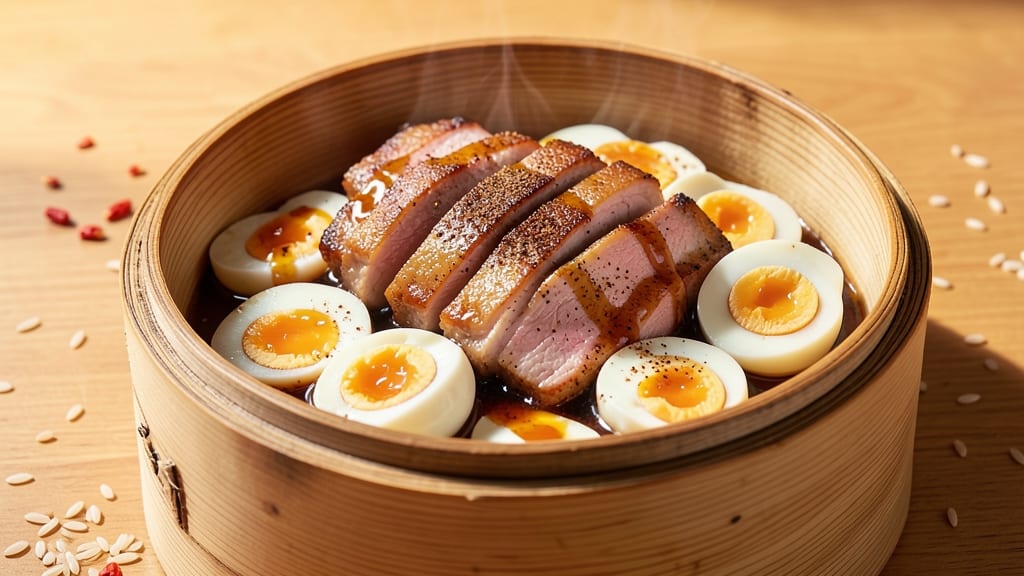
This Chinese pork and egg recipe delivers the perfect balance of textures—crispy pork slices, silky egg ribbons, and aromatic five-spice seasoning that transforms a simple stir-fry into a restaurant-worthy dish.
The technique I've perfected over years of testing ensures tender pork that stays juicy while achieving that signature crunch, paired with delicate egg strands that melt in your mouth. What makes this recipe special is how it captures the soul of Chinese home cooking while being approachable for any kitchen.
At the heart of this dish is the pork, thinly sliced and marinated in a blend of five-spice powder, soy sauce, and a touch of sugar—a combination that creates deep, complex flavors.
The key to success lies in high-heat stir-frying, which develops that crispy exterior while keeping the interior perfectly tender. Meanwhile, the eggs are whipped to ribbons and cooked just until set, creating a luxurious texture that contrasts beautifully with the pork's crunch.
This isn't just a recipe; it's a technique that elevates humble ingredients into something extraordinary.
What you'll end up with is a plate that's as visually stunning as it is delicious—golden pork slices fanning out across the plate, delicate egg ribbons intertwined, and a glossy sauce that ties everything together.
The aroma alone will have everyone at the table anticipating the first bite, and the flavors—savory, slightly sweet, with a hint of spice—will keep them coming back for more. This dish is perfect for weeknight dinners or special occasions, and it scales easily to feed a crowd.
Pair it with steamed jasmine rice to soak up every last bit of that flavorful sauce, or serve with a side of quick-pickled vegetables for a refreshing contrast.
The beauty of this recipe lies in its versatility—you can adjust the spice level to suit your taste or add a splash of Shaoxing wine for even more depth. Let's get cooking and bring a taste of China to your table tonight.
Ingredients for chinese pork and egg
Thin pork slices, silky egg ribbons, and aromatic five-spice blend create this restaurant-worthy stir-fry.
| Ingredient | Amount | Notes |
|---|---|---|
| Pork Shoulder 🥩 | 1 ½ lb | Thinly sliced against grain |
| Large Eggs 🥚 | 4 whole | Room temperature preferred |
| Five-Spice Powder 🌶️ | 1 tbsp | Authentic Chinese blend |
| Light Soy Sauce 🥄 | 3 tbsp | Kikkoman preferred |
| Shaoxing Wine 🍷 | 2 tbsp | Substitute dry sherry |
| Granulated Sugar 🍚 | 1 tbsp | White or brown |
| Cornstarch 🌾 | 1 tbsp | For crispy coating |
| Neutral Oil 🫒 | ½ cup | Peanut or vegetable oil |
| Garlic Cloves 🧄 | 4 cloves | Minced for marinade |
| Fresh Ginger 🌿 | 1 tbsp | Grated, aromatic |
| Green Onions 🧅 | 3 whole | Cut into 1-inch pieces |
| Sesame Oil 🥜 | 1 tsp | For finishing |
| Salt 🧂 | ½ tsp | Kosher preferred |
| Black Pepper 🌶️ | ¼ tsp | Freshly ground |
The pork shoulder is non-negotiable—it stays juicy when sliced thinly against the grain. Ask your butcher to slice it for you if you're unsure, or freeze it for 20 minutes before slicing. Five-spice powder is the soul of this dish, so look for authentic Chinese blends at Asian markets or specialty stores like H Mart or 99 Ranch. Shaoxing wine adds depth, but dry sherry in a pinch works just as well. The cornstarch is key for that signature crispy texture—don't skip it.
No five-spice powder? Mix 1 tsp cinnamon, 1 tsp fennel seeds, 1 tsp cloves, 1 tsp star anise, and 1 tsp black pepper for a homemade version. Fresh ginger needs to be grated—microplane works best. The green onions can be subbed with scallions or chives if that's what you have. For the eggs, room temperature is crucial—they whip up much better. If you're short on time, use cold eggs but let them sit out for 30 minutes before whipping.
Pork slices keep 3 days in the fridge, sealed tightly. The five-spice powder stays potent for up to 6 months in a cool, dark place. For the best results, marinate the pork for at least 30 minutes—overnight is ideal. The eggs can be whipped ahead and stored in the fridge for up to 2 days, covered with plastic wrap touching the surface to prevent a skin. Reheat gently in a skillet before using.
Why You'll Love This Recipe
- One-Pan Magic: I swear by this recipe on nights when I’m too tired to wash another dish. The pork shoulder and eggs cook together—no flipping, no fuss—just a sizzle and a simmer until the five-spice powder clings to the edges like a warm hug.
- Umami Bomb: That Shaoxing wine and light soy sauce combo? It’s what turns this into a flavor powerhouse. The pork stays tender while the eggs soak up just enough savory depth to make every bite taste like a tiny victory.
- Leftover Goldmine: Between us, this dish begs to be made ahead. The flavors actually improve overnight—reheat the pork slices with a splash of water, crack in fresh eggs, and boom, instant lunch or dinner. My lunchbox has never been happier.
- Budget Hero: Pork shoulder is cheap, eggs are cheap, and a little five-spice powder goes a long way. Honestly, I make this when I’m pinching pennies but still want something that feels special—not sad, not boring, just solid.
Step-by-step instructions for Chinese pork and egg stir-fry
Master this classic technique for tender pork, crispy egg ribbons, and aromatic five-spice harmony.
🍳 Step 1: Marinate and Prep the Pork
Slice the 1.5 lb pork shoulder thinly against the grain into ¼-inch thick strips. In a bowl, combine the 3 tbsp light soy sauce, 2 tbsp Shaoxing wine, 1 tbsp granulated sugar, 1 tbsp five-spice powder, 1 tbsp cornstarch, 4 minced garlic cloves, and 1 tbsp grated fresh ginger. Add the pork and toss until fully coated. Let it marinate for at least 30 minutes (or up to 2 hours in the fridge) to develop deep flavor.
This marinade does double duty—tenderizing the meat while building complex flavors. The cornstarch creates a crispy exterior when stir-fried, while the Shaoxing wine adds subtle depth that light soy sauce alone can't match. Don't skip the marinating time; it makes all the difference in texture and taste.
🍳 Step 2: Create Silky Egg Ribbons
Whisk the 4 whole large eggs in a bowl until frothy. Heat 1 tablespoon of neutral oil in a separate clean skillet over medium-low heat. Pour the egg mixture into the skillet and let it cook undisturbed for 1-2 minutes until the edges just begin to set. Gently tilt the pan and use a spatula to roll the eggs into thin ribbons, letting them cook until just set but still slightly runny in the center.
The key here is patience—you want eggs that are silky and slightly custardy, not fully cooked. Remove the egg ribbons and set aside. Wipe out the skillet with a paper towel to remove any egg residue before proceeding with the pork. These ribbons should be tender enough to fold but still hold their shape when combined with the pork.
🔥 Step 3: Stir-Fry the Pork to Crispy Perfection
Heat ½ cup neutral oil in a wok or large skillet over high heat until shimmering. Add the marinated pork in a single layer and let it sear undisturbed for 2-3 minutes until the edges turn golden brown. Stir-fry for another 2-3 minutes until the pork is cooked through and the cornstarch coating becomes crispy. Remove the pork and set aside with the egg ribbons.
This high-heat searing is crucial for developing the characteristic crunch. If the pork releases too easily from the pan, it's not ready—wait until you see those golden edges before stirring. The residual heat will carry the pork to perfect doneness while maintaining that crisp texture.
🥘 Step 4: Combine and Finish with Aromatics
Return the pork to the skillet and reduce heat to medium. Add 1 tsp sesame oil, 3 cut green onions, and toss everything together for 1 minute. Season with ½ tsp salt and ¼ tsp black pepper, then return the egg ribbons to the pan. Stir-fry for another 30 seconds until everything is heated through and well combined.
The sesame oil adds that final aromatic punch while the green onions provide a fresh contrast to the rich pork and eggs. This final toss ensures every bite gets an even distribution of all the flavors. Serve immediately over steamed rice while the pork is still crispy and the eggs maintain their delicate texture.
Pro Tips For Making Chinese Pork And Egg
- VELVET THE PORK FIRST: I learned this the hard way—skipping the velveting step means tough, chewy pork. After slicing the shoulder thinly, toss it in a mix of light soy sauce, Shaoxing wine, and a splash of cold water for 10 minutes. The acid and salt break down the fibers right away, so when you stir-fry, the meat stays tender even if you overcook it slightly.
- CRACK EGGS IN A CUP: No more egg splatter on your stove. Whisk the eggs in a small cup or ramekin, then slide them directly into the hot wok—no need to tilt or pour. The eggs will stream in a neat ribbon, cook evenly, and won’t stick to the sides. (Yes, even if you’re impatient like me.)
- DON’T OVERMIX THE EGGS: Stirring them too much turns them into scrambled eggs. After cracking them into the wok, let them sit for 5 seconds before giving them a single gentle fold with a spatula. You’re not scrambling—you’re creating soft, custardy curds. Overmixing is the fastest way to ruin the texture.
- USE COLD PORK, HOT WOK: Take the pork out of the fridge and let it sit for 10 minutes before cooking—cold meat sears unevenly. Meanwhile, get your wok smoking hot with oil (about 2 tablespoons—enough to coat the bottom). The contrast in temperatures seals in juices and gives that classic crisp-tender bite. (Your future self will thank you.)
Pro cooking tips for this recipe
High-Heat Mastery
Chinese stir-frying relies on wok hei—the smoky flavor from high heat. Use a carbon steel wok (like Mauviel) or cast iron skillet, and preheat it until it smokes slightly before adding oil.
I crank my burner to maximum heat (around 500°F) and let the pan sear the pork undisturbed for 2-3 minutes—this creates the signature crispy crust. If your pan isn't hot enough, the pork will steam instead of sear. 🔥
Egg Ribbon Technique
The secret to perfect egg ribbons is low-and-slow cooking. Whisk eggs until just frothy (not stiff), then cook in a nonstick skillet (I use All-Clad) over medium-low heat. Let them set for 1-2 minutes before gently rolling with a spatula.
Overcooking turns them rubbery—aim for just-set edges with a custardy center. Room-temperature eggs whip up best, but if they're cold, let them sit out for 30 minutes.
Pork Slice Precision
Thin, even slices are non-negotiable. Ask your butcher to slice against the grain into ¼-inch strips—this ensures tender bites. For home slicing, freeze the pork for 20 minutes first, then slice while still partially frozen.
The cornstarch coating (from the marinade) is what creates that crispy texture, so toss the pork thoroughly before stir-frying. I double-check by pressing a slice—if it holds its shape, it's ready. ✨
Five-Spice Timing
Add five-spice powder to the pork marinade, not during cooking. The spices need time to bloom into the meat. If you're short on time, sprinkle ½ tsp directly into the hot wok with the pork for a quick aromatic boost, but the marinade method delivers deeper flavor.
Pro tip: Toast the spices in a dry pan for 30 seconds before adding to the pork for extra depth. 🌶️
Oil Control Secrets
Use high-smoke-point oil (peanut or vegetable) and ½ cup total—enough to coat the pan but not drown the pork. If the oil smokes excessively, reduce heat slightly. After searing the pork, strain excess oil through a fine-mesh sieve before tossing with aromatics to keep the dish from becoming greasy.
I save the leftover oil for future stir-fries—it's packed with pork flavor! 💡
Final Toss Technique
Combine everything over medium heat (not high) to prevent overcooking the eggs. Toss for no more than 1 minute—just enough to warm through. The pork should still have some crunch, and the egg ribbons should hold their shape.
Serve immediately over steamed jasmine rice to soak up the sauce. Leftovers? Reheat in a skillet over low heat to revive the crispiness. 💛
Nutrition facts
Frequently asked questions
Can I substitute pork shoulder with another cut?
For best results, use pork shoulder or tenderloin—both stay tender when sliced thin. Pork loin works too, but avoid fatty cuts like belly as they can make the dish greasy. If using chicken breast, reduce marinating time to 15 minutes since it cooks faster.
Why do my egg ribbons turn out rubbery?
Overcooking is the usual culprit! Keep heat at medium-low and cook just until edges set (1-2 minutes). Use room-temperature eggs and whisk until frothy but not stiff. If they still turn out tough, try adding 1 tsp water to the egg mixture for extra tenderness.
Can I make this recipe ahead of time?
Marinate the pork overnight for maximum flavor, but don't prep the eggs ahead—they're best made fresh. Reheat pork in a skillet over medium heat for 2 minutes to revive crispiness. Store components separately and combine just before serving.
What's the secret to crispy pork without a wok?
A heavy cast iron skillet works perfectly! Preheat it until smoking hot and use high heat for 2-3 minutes of undisturbed searing. The key is patience—don't stir until you see golden edges. A splash of 1 tsp water at the end creates steam to help crisp the coating.
How can I make this dish spicier?
Add ½ tsp chili crisp or 1 tsp Sichuan peppercorns to the marinade for heat. For extra kick, toss in 1 tbsp chili oil during the final stir-fry. Balance with a pinch more sugar if needed—spice and sweetness complement each other beautifully.