
Main Courses
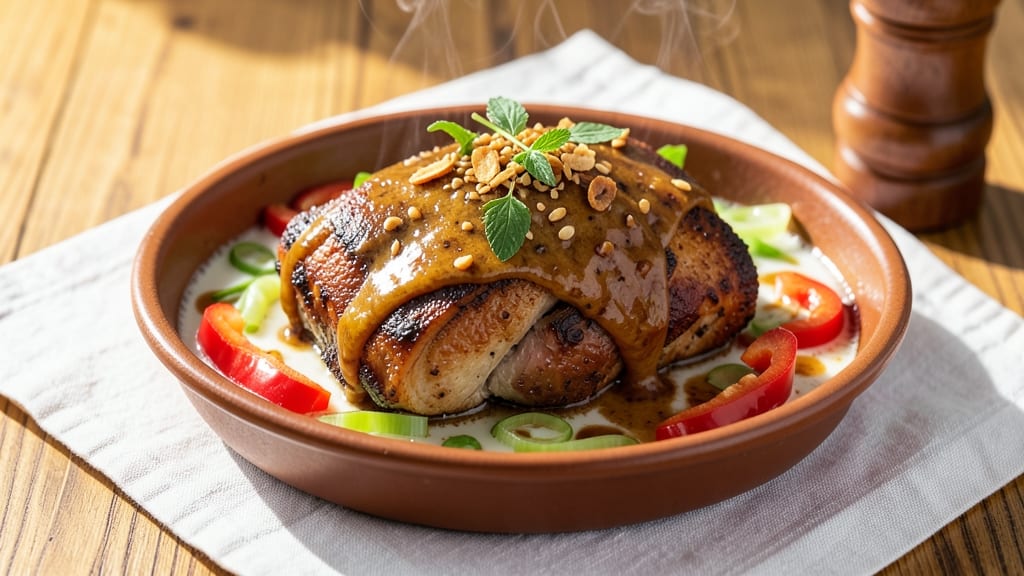
This Chamorro pork adobo recipe brings the rich flavors of Guam's culinary heritage to your kitchen table. 🌟 The secret lies in the perfect balance of tangy vinegar, sweet coconut milk, and slow-braised pork that falls apart with every bite.
As someone who's spent years perfecting pork dishes, I can tell you this technique transforms tough cuts into melt-in-your-mouth perfection.
The traditional Chamorro method starts with marinating the pork in a blend of vinegar, coconut milk, and aromatic spices. This isn't your average adobo—it's where the vinegar's acidity meets the creaminess of coconut milk, creating a sauce that's both complex and comforting.
The slow braising process ensures the meat stays tender while developing deep, caramelized flavors that'll have everyone asking for seconds.
What you'll end up with is a dish that's equally impressive for family dinners and special occasions. The pork becomes fork-tender, absorbing all those rich flavors while maintaining its natural texture.
This recipe serves as a beautiful connection to Chamorro culture, bringing the warmth of Guam's home cooking to your own kitchen.
Serve it with steamed white rice to soak up every bit of that delicious sauce, or pair it with pickled vegetables for a perfect balance of flavors. The aroma alone will transport you to the Pacific islands, making this more than just a meal—it's an experience. Let's get cooking!
Ingredients for chamorro pork adobo
Six aromatic ingredients transform tough pork into tender, sauce-drenched perfection.
| Ingredient | Amount | Notes |
|---|---|---|
| Pork Shoulder 🥩 | 3 lb | Bone-in for flavor, cut into 2-inch chunks |
| White Vinegar 🍶 | 1 cup | Distilled preferred for balance |
| Coconut Milk 🥥 | 1 can | Full-fat, 13.5 oz can (not light) |
| Brown Sugar 🍚 | ½ cup | Packed, light or dark |
| Garlic Cloves 🧄 | 8 cloves | Minced, fresh preferred |
| Fresh Ginger 🌿 | 1 inch | Peeled, grated, about 1 tbsp |
| Bay Leaves 🌿 | 2 whole | Dried, standard size |
| Black Peppercorns 🌶️ | ½ tsp | Crushed, not ground |
| Salt 🧂 | 1 ½ tsp | Kosher or sea salt |
| Olive Oil 🫒 | 2 tbsp | For searing, high smoke point |
| Green Onions 🧅 | 3 whole | Sliced, for garnish |
| Fresh Cilantro 🌿 | ¼ cup | Chopped, stems removed |
The pork shoulder is the star here—bone-in, cut into 2-inch chunks for maximum flavor. Look for well-marbled cuts at Costco or your local butcher; the fat renders down into the sauce, making it rich and velvety. If you can't find bone-in, use pork butt instead. For the coconut milk, full-fat is non-negotiable—it's what gives this dish its signature creaminess. I always grab Thai Kitchen brand from the Asian aisle at Walmart—it's affordable and reliable. The vinegar should be white, not apple cider—distilled vinegar has a cleaner acidity that balances the sweetness perfectly.
No brown sugar? White sugar works in a pinch, but the molasses notes in brown sugar are key. Fresh ginger is ideal, but powdered ginger at half the amount will do if you're short on time. The garlic can be pre-minced from a jar (though fresh is better), but never skip the ginger—it's the bridge between the vinegar's tang and coconut milk's sweetness. For extra depth, add a 1-inch piece of turmeric root (peeled) along with the ginger. The bay leaves add earthiness; if you only have one, that's fine, but two gives that authentic Chamorro touch. And for the love of all things savory, don't use pre-ground black pepper—crush the whole peppercorns in a mortar or with the flat side of your knife.
This dish tastes even better the next day, so make extra—it reheats beautifully. Store leftovers in the fridge for up to 5 days, covered with a splash of water to keep the sauce from drying out. For longer storage, freeze portions for 3 months. The sauce thickens as it cools, so add a splash of water or coconut milk when reheating. Garnish with cilantro and green onions right before serving—it adds that fresh, bright finish that makes the dish pop. And trust me, the aroma alone will have everyone gathering around the table.
Why You'll Love This Recipe
- One-Pan Magic: I swear by this recipe when I’m too tired to wash dishes. The pork shoulder simmers in its own juices with just a splash of vinegar and coconut milk—no extra pots, no fuss. My countertop stays clean, and my family stays fed.
- Sweet-Savory Balance: That first bite? Chef’s kiss. The vinegar tenderizes the pork while the brown sugar caramelizes into a glossy, sticky glaze, and the garlic? Oh, it’s roasted until it’s sweet and jammy. It’s the kind of dish that makes you go back for seconds without even thinking.
- Leftovers for Days: Between us, I make this on Sundays just so I can reheat it all week. The flavors deepen overnight, and it’s perfect cold in sandwiches or reheated with rice. My kids ask for it more than takeout—yes, even on a Tuesday night.
- Budget-Friendly Feast: Pork shoulder is cheap, and this recipe stretches it into a full meal. A can of coconut milk and a bag of sugar make it taste like a restaurant dish without breaking the bank. Honestly, it’s my go-to when I need to feed a crowd without stress.
Step-by-step instructions for Chamorro pork adobo
Here's how to create tender, flavorful pork shoulder with that perfect balance of tangy vinegar and creamy coconut richness.
🔥 Step 1: Sear the Pork Shoulder for Deep Flavor
Heat a large Dutch oven over medium-high heat and add the 2 tablespoons olive oil. Working in batches if needed, add the 3 lb pork shoulder cut into 2-inch chunks, arranging them in a single layer. Let them sear undisturbed for 4-5 minutes until deep golden brown on all sides.
This initial searing creates a flavorful crust that locks in juices during the long braising. I press down gently on the pork pieces during the first minute to prevent them from curling up—this ensures even contact with the hot pan. Once all pieces are browned, transfer them to a plate and set aside.
🍳 Step 2: Build the Aromatic Base
In the same Dutch oven, add the 8 cloves minced garlic and 1 inch grated fresh ginger. Cook for 1-2 minutes until the garlic becomes fragrant and just begins to turn golden—don't let it burn, or it'll turn bitter. Add the 2 whole bay leaves and 0.5 teaspoon crushed black peppercorns, stirring for 30 seconds to toast the spices.
Here's where the magic happens: pour in the 1 cup white vinegar and scrape up all those delicious browned bits from the bottom of the pan. These bits, called fond, are packed with flavor that will infuse into your pork. Let the vinegar simmer for 3-4 minutes until it reduces by about half and becomes slightly syrupy.
🥘 Step 3: Combine and Simmer the Adobo
Return the seared pork to the Dutch oven. Add the 1 can full-fat coconut milk, 0.5 cup packed brown sugar, and 1.5 teaspoons salt. Stir everything together until the pork is well-coated in the sauce. Bring the mixture to a gentle simmer over medium heat, then reduce heat to low.
Cover the Dutch oven and let it simmer for 2 hours without disturbing it. The pork should be fork-tender and easily pull apart. If the sauce reduces too much and becomes thick, add 2-3 tablespoons water to maintain moisture. The coconut milk will create a luscious, velvety texture that balances the tangy vinegar perfectly.
⏰ Step 4: Finish and Garnish
Once the pork is tender, remove the bay leaves and adjust the seasoning if needed. The sauce should be slightly thickened but still coat the back of a spoon. Transfer the pork and some of the sauce to a serving platter, reserving the remaining sauce in the Dutch oven.
Garnish with 3 sliced green onions and 0.25 cup chopped fresh cilantro. The green onions add a fresh contrast to the rich pork, while the cilantro brightens up the dish with its citrusy notes. Serve immediately with steamed rice to soak up every last bit of that delicious sauce.
Pro Tips For Making Chamorro Pork Adobo
- Brown the Pork First: Skip the slow start—sear the pork shoulder in a hot pan with a splash of oil until deep golden brown. This locks in flavor and prevents the vinegar from turning your dish into a watery stew. (Yes, it’ll take 10 extra minutes, but the difference is night and day.)
- Use Aged Vinegar: If you grab the cheapest white vinegar, you’re cheating yourself. Aged or cane vinegar adds complexity—think caramel notes instead of harsh bite. I learned this the hard way after making adobo that tasted like a science experiment. (No, you don’t need to spend $20; a decent bottle at the grocery store works.)
- Simmer, Don’t Boil: Once the vinegar and coconut milk hit the pot, keep the heat low enough that the liquid barely bubbles. Boiling toughens the pork and turns the sauce into a gloopy mess. (I used to rush it, and the texture suffered—now I just watch for a gentle shimmer.)
- Balance the Sweet-Sour: Taste the sauce early and adjust before the sugar caramelizes. Too much vinegar? Add a spoonful of brown sugar. Too cloying? A splash of vinegar cuts through. (Trust me, fixing it at the end is a nightmare—do it in stages.)
Storing and reheating your leftovers
Refrigerator Storage
Let your Chamorro pork adobo cool completely before transferring to airtight containers—I swear by glass Pyrex with snap-on lids for even heating later. Store at 40°F or below for up to 5 days, but trust me, the flavors deepen overnight as the spices meld.
The sauce will thicken slightly, so add a splash of water or coconut milk when reheating. 🥥
Freezer Magic
For longer storage, freeze portions in quart-sized freezer bags with 1 inch headspace—this prevents ice crystals from tearing the meat. I label mine with dates and freeze for up to 3 months.
When ready to eat, thaw overnight in the fridge, then reheat gently on the stove. The texture stays tender, and the sauce remains rich. ❄️
Stovetop Reheating
My preferred method: Pour the frozen or refrigerated adobo into a heavy-bottomed pot and add 2-3 tablespoons water or coconut milk to prevent sticking. Heat over medium-low for 10-15 minutes, stirring occasionally, until reaching 165°F internal temperature.
Taste and adjust seasoning—it often needs a pinch of salt after reheating. 🔥
Microwave Shortcut
For quick meals, transfer a portion to a microwave-safe dish, cover with a damp paper towel, and heat on 50% power for 3-4 minutes. Stir halfway through to distribute heat evenly.
Avoid high power—it can dry out the pork. Garnish with fresh cilantro and green onions right before serving for that restaurant-quality finish. 💫
Sauce Rescue Tips
If your sauce thickens too much during storage, thin it with 1-2 tablespoons water or coconut milk while reheating. For extra richness, stir in 1 tablespoon butter at the end.
The key is patience—never rush reheating, or the pork will turn rubbery. I’ve made this mistake (and learned the hard way!). 💡
Nutrition facts
Frequently asked questions
What makes Chamorro pork adobo different from Filipino adobo?
The key difference lies in the coconut milk! Chamorro adobo uses full-fat coconut milk for a rich, velvety texture that balances the vinegar's tang, while Filipino adobo typically relies on soy sauce and less dairy. The Chamorro version also often includes ginger and turmeric for deeper earthy notes that you won't find in traditional Filipino recipes.
Can I substitute bone-in pork shoulder with pork loin?
While you can use pork loin, it won't be as flavorful or tender. Pork loin is leaner and cooks faster, so it may dry out during the 2-hour braise. If you must use it, cut it into 1-inch cubes and reduce the cooking time to 1 hour, checking for doneness at 145°F internal temperature. For best results, stick with bone-in pork shoulder!
How do I know when the pork is fully tender?
The pork is ready when it easily shreds with a fork—no resistance at all! Insert a meat thermometer into the thickest piece; it should read 203°F for fall-apart tenderness. If it's not quite there after 2 hours, add 2 tablespoons water and simmer covered for another 30 minutes. Never rush this step—the slow cooking is what makes it melt-in-your-mouth perfect.
Can I make this recipe in a slow cooker?
Sear the pork first as directed, then transfer everything (including the browned bits) to a 6-quart slow cooker. Cook on low for 8 hours or high for 5 hours. The slow cooker's gentle heat will create the same tender results. Just add 1-2 tablespoons water if the sauce gets too thick during cooking.
What's the best way to serve Chamorro pork adobo?
Traditionally, it's served with steamed white rice to soak up the rich sauce, and pickled vegetables like radishes or carrots for acidity. For extra authenticity, add a side of Goya brand rice (a Puerto Rican staple often found in Chamorro households) or fresh plantain chips. The combination of textures and temperatures makes it a complete meal.