
Main Courses
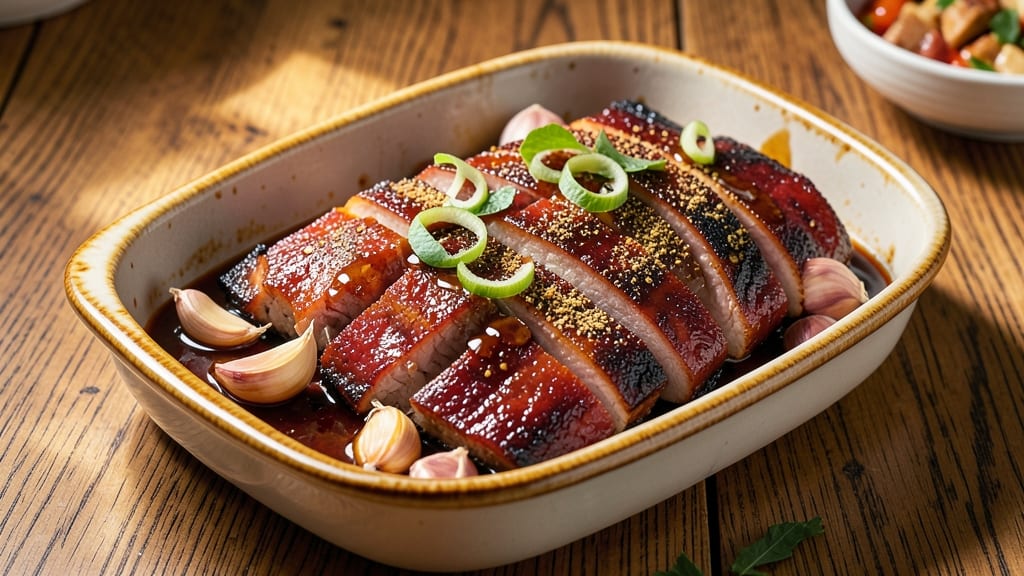
This char siu pork oven recipe brings authentic Cantonese BBQ flavor to your home kitchen without needing a wok. 🔥 I developed this version after years of perfecting the balance between sweet, smoky, and aromatic five-spice marinade that transforms simple pork into something extraordinary.
The key lies in a precise oven technique that creates that signature caramelized bark while keeping the meat tender inside.
The traditional method requires hours of wok cooking, but this oven adaptation delivers the same results in just 2 hours with minimal effort. We'll use a combination of hoisin sauce, honey, and Chinese five-spice powder to create the signature glaze that's both sticky and aromatic.
The pork gets marinated overnight, allowing the flavors to deeply penetrate the meat.
By the time you pull it from the oven, you'll have perfectly caramelized pork with a glossy, sticky exterior that's impossible to resist. The meat stays tender and juicy, with layers of sweetness balanced by the warm spices.
This is the kind of dish that makes weeknight dinners feel like a celebration.
Serve with steamed jasmine rice and stir-fried bok choy for an authentic experience, or pair it with roasted vegetables for a modern twist. The leftovers reheat beautifully, making this an excellent meal prep option that tastes just as good the second day.
Ingredients for char siu pork oven
Sweet, smoky, and sticky—this Cantonese BBQ pork transforms simple ingredients into something extraordinary.
| Ingredient | Amount | Notes |
|---|---|---|
| Boneless Pork Shoulder 🥩 | 2 lb | Cut into 1-inch thick slices |
| Hoisin Sauce 🍶 | ½ cup | High-quality, thick consistency |
| Honey 🍯 | ½ cup | Pure, thick honey preferred |
| Chinese Five-Spice Powder 🌶️ | 2 tbsp | Authentic blend for warmth |
| Garlic Cloves 🧄 | 6 cloves | Minced, fresh preferred |
| Ginger Root 🌿 | 1 tbsp | Freshly grated, aromatic |
| Sesame Oil 🫒 | 1 tbsp | Toasted, for depth |
| Soy Sauce 🍶 | ¼ cup | Dark soy for color |
| Brown Sugar 🍚 | ¼ cup | Lightly packed |
| Rice Vinegar 🍶 | 1 tbsp | For tangy balance |
| Red Fermented Beans 🌶️ | 1 tbsp | Optional, for umami |
| Cornstarch 🌾 | 1 tbsp | For glaze consistency |
| Jasmine Rice 🍚 | 2 cups | Uncooked, for serving |
| Bok Choy 🥬 | 2 whole | Baby or regular size |
The pork shoulder is the star here. Look for well-marbled cuts at your local Asian market or butcher shop—H Mart or 99 Ranch carry excellent options. If you can't find boneless, buy a bone-in shoulder and trim it yourself. The slices should be 1-inch thick for even cooking. Hoisin sauce? Lee Kum Kee is the gold standard, but any reputable brand works. For the five-spice powder, Penzeys or Asian markets have the best blends—avoid the generic grocery store versions if you can.
No hoisin sauce? Mix 2 tbsp soy sauce with 1 tbsp brown sugar and 1 tsp sesame oil as a quick substitute. Running low on honey? Maple syrup works in a pinch, though it adds a different depth. The red fermented beans are optional but add that signature Cantonese umami—Trader Joe's sells them pre-soaked in jars. For the glaze, whisk the cornstarch with a splash of water first to avoid clumping. And if you're feeling adventurous, swap the bok choy for Chinese broccoli or gai lan—both pair beautifully with the sticky pork.
Marinate the pork overnight for maximum flavor penetration. Store the marinade in an airtight container in the fridge. The cooked pork reheats beautifully—350°F for 10-15 minutes in the oven with a splash of water keeps it juicy. Leftovers keep for 4-5 days in the fridge or 3 months frozen. I like to slice the leftovers thin and toss them with steamed rice for quick stir-fries. The glaze hardens when chilled, so bring it to room temperature before serving for that signature glossy finish.
Why You'll Love This Recipe
- No-Marination Hassle: I’ll be real—most char siu recipes make you wait hours for the pork to soak. Not this version. Just slather that sticky-sweet hoisin-honey mix on raw, let it sit 15 minutes while you chop garlic, and boom—oven magic handles the rest. (Yes, even on a Tuesday night.)
- Sticky-Sweet Magic: That crispy bark? The five-spice warmth? The way the honey caramelizes into a glossy glaze? Honestly, it’s the kind of flavor that makes you pause mid-bite just to savor it. The pork shoulder stays juicy inside while the edges get that addictive char—like a cross between BBQ and dim sum.
- Leftover Goldmine: This isn’t one of those recipes where leftovers turn dry. Char siu pork reheats beautifully—toss it in a pan with a splash of water, or shred it cold for sandwiches. I’ve fed a crowd with one batch: rice bowls, tacos, even fried rice. (My kids beg for it the next day.)
- Budget Crowd-Pleaser: Pork shoulder is cheap, and this recipe stretches it far. A single roast feeds six, and the sauce costs pennies. Plus, the five-spice powder and hoisin add depth without breaking the bank. It’s my go-to for potlucks, game days, or when I’m too tired to order takeout.
Step-by-step instructions for Cantonese BBQ pork
Here's how to transform simple pork into restaurant-quality char siu with oven precision.
👨🍳 Step 1: Marinate the Pork for Maximum Flavor
Cut the 2 lb boneless pork shoulder into 1-inch thick slices and place them in a large bowl. In a separate bowl, whisk together the 0.5 cup hoisin sauce, 0.5 cup honey, 0.25 cup soy sauce, 0.25 cup brown sugar, 1 tbsp rice vinegar, 1 tbsp red fermented beans, and 2 tbsp Chinese five-spice powder. This marinade is the soul of char siu—sweet, savory, and aromatic.
Pour the marinade over the pork, making sure every slice is fully coated. Cover the bowl with plastic wrap and refrigerate for at least 4 hours (overnight is best). The longer it marinates, the deeper the flavor penetration. Here's the thing—don't skip this step. Rushing the marinating leads to bland, dry pork that lacks that signature char siu sweetness.
🔥 Step 2: Prepare the Glaze for Sticky Perfection
In a small bowl, mix together 1 tbsp sesame oil, 1 tbsp cornstarch, and 6 cloves minced garlic with 1 tbsp freshly grated ginger root. This glaze will give your char siu that signature glossy sheen and extra umami punch. The cornstarch acts as a thickener, creating that perfect sticky-sweet exterior we all love.
Preheat your oven to 375°F and line a baking sheet with aluminum foil for easy cleanup. Arrange the marinated pork slices in a single layer on the prepared baking sheet, leaving about ½ inch between each piece. This spacing allows the pork to brown evenly without steaming in its own juices.
🔥 Step 3: Roast Until Caramelized and Tender
Bake the pork for 25 minutes at 375°F. After the initial baking, brush each slice with the glaze mixture. The pork should be starting to brown at the edges by now—this is when the magic happens. Return to the oven and bake for another 15-20 minutes until the internal temperature reaches 145°F and the edges are deep golden brown.
Here's where it gets tricky: the pork should be caramelized on the outside but still juicy inside. If it's browning too quickly, tent with foil to prevent over-browning. The glaze will bubble and thicken as it cooks, creating that beautiful sticky exterior that makes char siu so irresistible.
🍳 Step 4: Rest and Serve with Jasmine Rice
Remove the pork from the oven and let it rest for 10 minutes before slicing. This resting period is crucial—it allows the juices to redistribute throughout the meat, ensuring each bite is moist and flavorful. While the pork rests, cook the 2 cups jasmine rice according to package instructions for a perfect side.
Slice the char siu against the grain into ¼-inch thick pieces. The pork should be tender enough to pull apart easily with a fork. Serve immediately with the jasmine rice and 2 whole bok choy lightly sautéed in sesame oil. The contrast of the tender pork with the crisp rice and fresh bok choy makes this dish a complete meal.
Pro Tips For Making Char Siu Pork Oven
- Marinate Overnight: I used to think 4 hours was enough, but this cut needs time to soak up the hoisin and honey. The longer it sits—ideally 12–24 hours—the deeper the flavor penetrates, especially through the thick pork shoulder. Trust me, the difference in juiciness is night and day.
- Preheat to 400°F: Skip the slow start—your oven needs to hit 400°F before the pork goes in. Cold meat steams instead of caramelizing, and you’ll end up with sticky, underwhelming glaze. Let that oven scream hot for 10 minutes first, then slide the pork in.
- Don’t Overcrowd the Pan: I learned this after my first batch turned into a soggy mess. Leave space between pork pieces—even if it means two batches. Crowding traps steam, which dilutes the caramelized crust you’re after. A single layer on a wire rack guarantees that golden, crispy exterior.
- Balance Sweet and Spice: Too much honey? Your char siu will taste like candy. Too much five-spice? It’ll taste like a spice cabinet exploded. Start with 1:1 ratio of hoisin to honey (e.g., ¼ cup each) and adjust after tasting. The five-spice should be a whisper, not a shout—about 1 teaspoon per pound of pork.
Common mistakes when making your char siu pork oven
Skipping the Marinade
This is the biggest mistake I see home cooks make—rushing the marinating process. The five-spice blend and hoisin need at least 4 hours (overnight is ideal) to deeply penetrate the pork.
I once made char siu with just 1 hour of marinating, and the result was bland, dry pork that lacked that signature sweetness. The longer you marinate, the more tender and flavorful your pork becomes. Trust me, the extra time is worth it. 💪
Overcrowding the Pan
Placing pork slices too close together causes steaming instead of caramelization. Leave ½ inch between each slice on your baking sheet. I learned this the hard way when I tried to fit all the pork on one tray—it ended up soggy and undercooked.
Proper spacing ensures even browning and that beautiful sticky exterior we all crave.
Ignoring the Resting Time
Skipping the 10-minute rest after baking leads to dry, stringy pork. The juices need time to redistribute throughout the meat. I remember my first time making char siu—I sliced it immediately and was disappointed by the dry texture.
Now I always rest it, and the difference is night and day. Patience here makes all the difference. ✨
Using Low-Quality Ingredients
Substituting cheap hoisin sauce or generic five-spice powder ruins the flavor profile. I recommend Lee Kum Kee hoisin and Penzeys five-spice blend for authentic results. The difference between quality and store-brand ingredients is like night and day—your taste buds will notice immediately. Don't cut corners here.
Overcooking the Pork
Watching the pork too closely can lead to overcooking. The internal temperature should reach 145°F, not higher. I've seen home cooks pull it out at 160°F because they thought it needed more time, resulting in dry, tough meat.
Use a meat thermometer and trust the temperature—it's the only way to get perfectly tender char siu every time. 🌡️
Skipping the Glaze Brush
Many cooks forget to brush the glaze mixture after the initial baking. This step creates that signature sticky-sweet exterior. I once made char siu without reapplying the glaze, and while it was still good, it lacked that restaurant-quality shine.
The glaze isn't just for looks—it adds flavor and texture that makes this dish truly special.
Nutrition facts
Frequently asked questions
Can I use pork tenderloin instead of pork shoulder for this recipe?
Yes, but with adjustments! Pork tenderloin is leaner, so it cooks faster and can dry out. Use 1-inch thick slices and reduce baking time to 15-20 minutes total at 375°F. Brush with extra glaze to compensate for the lack of fat. The result will be more tender but slightly less juicy than shoulder.
How do I make this recipe without hoisin sauce?
Mix 2 tbsp soy sauce, 1 tbsp brown sugar, 1 tbsp honey, 1 tsp sesame oil, and ½ tsp five-spice powder to mimic hoisin's depth. For umami, add 1 tsp fermented bean paste or ½ tsp MSG. The flavor won't be identical, but it'll still taste delicious.
Can I grill this char siu instead of baking?
Preheat grill to medium-high (400°F) and cook for 3-4 minutes per side until caramelized. Brush with glaze halfway through. For indirect heat, use a 225°F smoker for 1.5-2 hours with apple wood. The smoky flavor pairs beautifully with char siu's sweetness.
Why did my char siu turn out dry?
Most likely from overcooking or skipping the rest. Use a meat thermometer—145°F internal is perfect. Also ensure your pork slices are 1-inch thick and don't overcrowd the pan. For extra moisture, add 1 tbsp honey to the marinade or wrap slices in bacon before baking.
How can I make this gluten-free?
Replace hoisin with 3 tbsp gluten-free tamari + 1 tbsp honey + 1 tsp rice vinegar. Use gluten-free soy sauce and check five-spice powder for additives. For the glaze, substitute cornstarch with 1 tbsp arrowroot powder. The flavor will be slightly different but still authentic.