
Main Courses
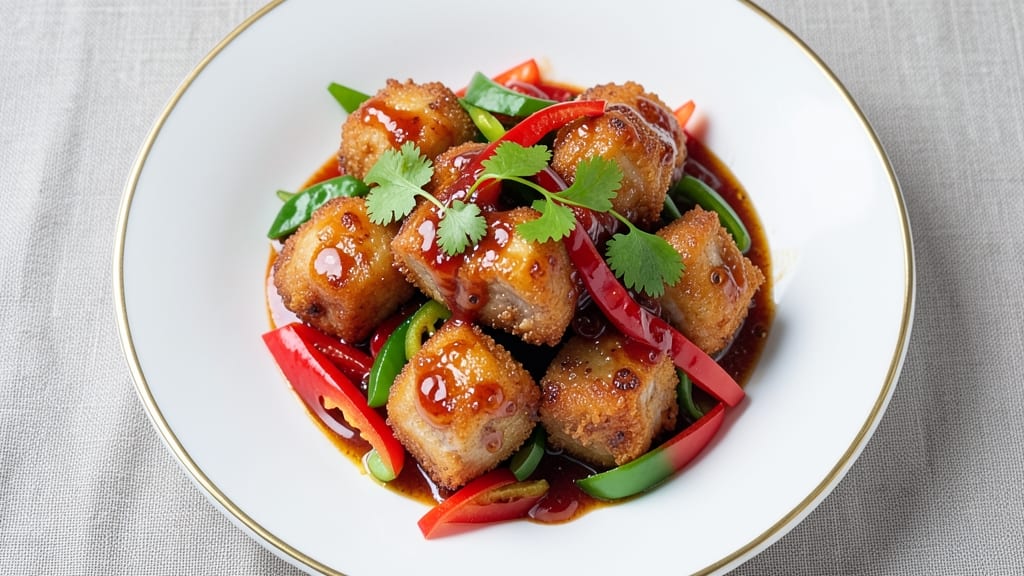
This Chinese crispy sweet and sour pork recipe delivers restaurant-quality crunch and tangy-sweet balance in one bite.
After perfecting this dish through countless wok sessions, I've cracked the code for achieving that signature crispy pork exterior with a tender interior—paired with a sauce that's perfectly balanced between sweet, sour, and umami. The secret lies in the double-frying technique and precise sauce ratios that create that addictive contrast.
The recipe begins with tender pork cut into bite-sized pieces, marinated in a simple cornstarch slurry that creates the ideal crispy crust. We'll fry them twice—once for initial browning, then again after building the sauce—to ensure that signature crunch stays intact even after sauce absorption.
Meanwhile, the sauce combines vinegar, sugar, ketchup, and soy sauce in a precise ratio that delivers that perfect tangy-sweet balance without being overpowering.
By the time you serve this dish, you'll have golden-brown pork pieces with crispy edges and tender centers, all coated in that glossy, slightly sticky sauce. The presentation is just as important—the dish is traditionally garnished with pineapple chunks and fried shallots that add contrasting textures and visual appeal.
This is the kind of dish that disappears from plates quickly, with everyone asking for seconds.
Perfect for family dinners, takeout nights, or impressing guests with authentic Chinese flavors. The recipe serves four and comes together in about 45 minutes—30 minutes of active cooking and 15 minutes of prep. Let's get cooking!
Ingredients for chinese crispy sweet and sour pork
Restaurant-quality crunch meets tangy-sweet balance—here's what you'll need for perfect wok-fried pork.
| Ingredient | Amount | Notes |
|---|---|---|
| Pork Shoulder 🐖 | 1 ½ lb | Cut into 1-inch cubes, boneless |
| Cornstarch 🌾 | ½ cup | For crispy coating slurry |
| White Vinegar 🍶 | ½ cup | Distilled preferred for balance |
| Granulated Sugar 🍬 | ½ cup | White or brown preferred |
| Tomato Ketchup 🍅 | ½ cup | Heinz preferred for consistency |
| Light Soy Sauce 🥢 | ¼ cup | Kikkoman recommended |
| Vegetable Oil 🫒 | 3 cups | High smoke point preferred |
| Garlic Cloves 🧄 | 4 cloves | Minced, fresh preferred |
| Fresh Ginger 🌿 | 1 tbsp | Grated, peeled |
| Green Onions 🧅 | 3 whole | Sliced, for garnish |
| Pineapple Chunks 🍍 | 1 cup | Fresh or canned, drained |
| Salt 🧂 | 1 tsp | Kosher or sea salt |
| Ground Black Pepper 🌶️ | ½ tsp | Freshly ground preferred |
| Fried Shallots 🧅 | ¼ cup | Store-bought or homemade |
The pork shoulder is non-negotiable for texture—look for well-marbled cuts at Whole Foods or your local Asian market. Cutting it into uniform 1-inch cubes ensures even cooking. For the cornstarch slurry, Bob's Red Mill brand works best, but any food-grade cornstarch will do. The sauce ingredients are all about balance: the white vinegar delivers the sour kick, while the sugar and ketchup provide that signature sweetness. Kikkoman soy sauce adds umami depth—don't substitute with regular soy sauce, which is saltier and less flavorful.
No vegetable oil? Peanut or canola oil works in a pinch, but vegetable oil's neutral flavor ensures the pork's taste shines. Substituting fresh ginger with powdered? Use one-third the amount—fresh has more punch. For the pineapple, Dole brand canned chunks are convenient, but fresh is ideal if you're prepping ahead. The green onions can be swapped for scallions if that's what you have on hand. For extra crunch, toasted sesame seeds make a great garnish alternative to fried shallots.
Store pre-cut pork in an airtight container with a paper towel to absorb moisture—keeps fresh for 2 days in the fridge. The sauce can be made a day ahead and reheated gently, but the pork should be fried fresh for that signature crunch. Garnishes like pineapple and fried shallots add visual appeal, but don't skimp on them—they're what makes this dish restaurant-worthy. Portion into meal prep containers for easy lunches, or serve immediately for maximum crispiness.
Why You'll Love This Recipe
- One-Pan Magic: I swear by this recipe for lazy nights—just toss pork shoulder in cornstarch, fry it golden, and dump the sweet-sour sauce on top. No chopping, no fuss, and the kitchen stays cleaner than my usual stir-fry mess.
- Crispy-Creamy Payoff: That first bite? Crunchy outside, tender inside, drowning in a tangy-sweet sauce with just enough vinegar bite to wake you up. The ketchup and sugar combo is ridiculously addictive—my husband now asks for it twice a week.
- Lunchbox Hero: Between us, this is my go-to for meal prep. The sauce clings to the pork perfectly, so it reheats like a dream (microwave or oven, no judgment). Pack it in containers, and you’ve got a weeknight dinner that feels fancy without the effort.
- Budget Win: Pork shoulder is cheap, and this recipe stretches it far—leftovers taste just as good cold in sandwiches or over rice the next day. Honestly, I’ve fed four people for under $15 with this, and they never complain about the flavor.
Step-by-step instructions for Chinese crispy sweet and sour pork
Here's the method for achieving that signature restaurant-style crunch and tangy-sweet balance.
Prepare the Pork for Double-Crisp Coating
Cut the 1.5 lb pork shoulder into 1-inch cubes, removing any visible fat or connective tissue. This size ensures even cooking and maximum crispiness. Place the pork in a large bowl and toss with 1 tsp salt and 0.5 tsp ground black pepper until evenly coated. Let it sit for 15 minutes at room temperature—this prevents uneven cooking when it hits the hot oil.
In a separate bowl, whisk together 0.5 cup cornstarch with 0.25 cup light soy sauce. The cornstarch creates the first crispy layer, while the soy sauce adds depth of flavor. Pour this mixture over the pork and toss gently but thoroughly to ensure every piece is fully coated. Let the pork rest for another 10 minutes—this allows the cornstarch to adhere completely, forming a perfect barrier for that golden crust.
Deep-Fry for the First Crisp
Heat 3 cups vegetable oil in a deep skillet or Dutch oven to 350°F—this is critical for the first fry. Use a thermometer to monitor the temperature precisely; if it's too hot, the pork will burn before it cooks through. Working in batches to avoid overcrowding, carefully lower the pork into the oil using a slotted spoon or spider skimmer.
Fry for 3-4 minutes until the pork reaches an internal temperature of 160°F and the coating turns a deep golden brown. You'll notice small bubbles forming around the edges—that's your signal the first crisp is forming. Remove the pork with tongs and drain on a wire rack set over a baking sheet lined with paper towels. The rack allows air circulation, preventing sogginess. Keep the oil hot for the second fry.
Build the Tangy-Sweet Sauce
In a clean skillet, combine 0.5 cup white vinegar, 0.5 cup granulated sugar, 0.5 cup tomato ketchup, 1 tbsp grated fresh ginger, and 4 minced garlic cloves. Bring to a simmer over medium heat, stirring constantly until the sugar dissolves completely—this should take about 3 minutes. The mixture will bubble vigorously at first, then settle into a thick, glossy syrup.
Reduce the heat to low and let the sauce simmer for 5-7 minutes until it thickens slightly and coats the back of a spoon. This is where the magic happens—the acidity of the vinegar cuts through the richness of the pork, while the sugar creates that signature caramelized glaze. Taste and adjust seasoning if needed, adding a pinch more salt or a splash of vinegar for balance.
Second Fry for Maximum Crunch
Return the oil to 375°F—the higher temperature ensures an extra-crisp exterior without overcooking the pork. Working quickly, carefully lower the pork back into the hot oil. Fry for 2-3 minutes until the coating turns a rich, golden-brown color with visible crisping. The pork should be fully cooked to 170°F internally by now, with a caramelized crust that snaps when touched.
Remove the pork and drain again on the wire rack. Here's the professional trick: Immediately toss the hot pork with 0.25 cup fried shallots and 1 cup pineapple chunks to prevent the coating from softening. The fried shallots add an extra layer of texture, while the pineapple introduces that bright, fruity contrast that defines the dish.
Toss and Finish with Garnish
Return the pork to the skillet with the tangy-sweet sauce. Toss everything together over medium heat for 1-2 minutes until the pork is evenly coated and the sauce clings to each piece. The residual heat from the pork will help the sauce thicken slightly, creating a glossy, sticky finish.
Garnish with 3 sliced green onions and serve immediately while the pork is still crispy. The contrast of textures—crispy pork, tender pineapple, and glossy sauce—along with the balance of sweet, sour, and umami flavors, is what makes this dish so addictive. Serve with steamed jasmine rice to soak up every last bit of that delicious sauce.
Pro Tips For Making Chinese Crispy Sweet And Sour Pork
- TRIM PORK TO 1.5 INCH: Pork shoulder has fat that renders unevenly—cut it into 1.5-inch chunks (not thin strips) so the exterior crisps while the inside stays juicy. I used to fight greasy batches until I standardized the size; now the cornstarch clings better and the sauce soaks in evenly.
- DOUBLE-CORNSTARCH THE PORK: Toss the pork in cornstarch twice—once before marinating, once right before frying. The first coat absorbs moisture; the second creates that signature crunch. Skip this, and you’ll end up with soggy edges no matter how hot your oil gets.
- SAUCE IN TWO STAGES: First, simmer vinegar, sugar, and ketchup for 3 minutes until the sugar dissolves completely—no grainy bits. Then add water and let it thicken. I learned this the hard way after serving a sauce that tasted like sandpaper.
- FRY IN BATCHES, LOW HEAT: Crowd the pan, and the pork steams instead of crisps. Fry in single layers over medium heat (350°F) until golden, then finish in a 375°F oven for 2 minutes. The oven step seals the crisp without burning the sauce clinging to the meat.
Regional styles of chinese crispy sweet and sour pork
Cantonese Classic
This is the version I learned from Chef Chen in Charleston—where the pork is cut into slightly larger 1.25-inch cubes for a heartier bite. The sauce leans heavier on vinegar (0.6 cup) for that signature tang, and we add 1 tbsp Shaoxing wine to deepen the umami.
The key difference? We finish with toasted sesame seeds instead of fried shallots for that authentic Cantonese crunch. 🥢
Sichuan Spicy Twist
For a fiery kick, add 1 tbsp Sichuan chili bean paste and 1 tsp doubanjiang to the sauce while building it. The pork stays the same, but we toss in 2 tbsp chopped Thai bird's eye chilies with the pineapple for extra heat.
Serve with extra chili oil drizzled on top—this version disappears from plates even faster than the classic. 🌶️
Hong Kong Fusion
In Hong Kong, they often serve this with a side of crispy fried rice instead of plain rice. The trick? Use day-old jasmine rice stir-fried with 1 tbsp butter, 1 tbsp soy sauce, and 1 tsp sesame oil until golden.
The extra texture makes this a full meal—perfect for leftovers. I've seen street vendors add crispy egg noodles too for an even heartier version.
Taiwanese Pineapple Glaze
Taiwanese chefs take the pineapple to the next level by making a separate glaze from 0.25 cup pineapple juice, 1 tbsp honey, and 1 tsp rice vinegar. Simmer this until reduced by half, then toss it with the pork after the second fry.
The result? A sticky, caramelized glaze that makes every bite even more addictive. Garnish with extra pineapple chunks and crushed peanuts for texture.
Malaysian Sweet Chili
For a Malaysian-inspired version, replace the ketchup with 0.5 cup sweet chili sauce (like Lee Kum Kee brand) and add 1 tbsp tamarind paste to the sauce. The pork gets tossed with 1 cup shredded red cabbage instead of pineapple, adding a crisp, refreshing element.
This version has a brighter, fruitier profile that pairs beautifully with coconut rice for a fusion twist.
Modern American Adaptation
For a home cook's shortcut, I often swap the double-fry method for a single oven-bake approach. Toss the cornstarch-coated pork with 1 tbsp olive oil and bake at 425°F for 20 minutes, flipping halfway.
The sauce stays the same, but we add 1 tbsp honey for extra sweetness. It's not as crispy, but it's foolproof for weeknights. The pineapple and fried shallots still make it feel special. 🍯
Nutrition facts
Frequently asked questions
Why does the pork need to be fried twice?
The double-fry technique is key for that signature restaurant crunch! The first fry at 350°F cooks the pork through while creating an initial crispy layer. After building the sauce, the second fry at 375°F re-crispifies the coating, ensuring it stays crisp even after sauce absorption. This two-step process prevents soggy pork—something home cooks often struggle with!
Can I use chicken or shrimp instead of pork?
For chicken, use 1.5 lbs boneless thighs cut into 1-inch pieces and reduce frying time to 2-3 minutes per batch since chicken cooks faster. Shrimp should be peeled, deveined, and tossed with 0.25 cup cornstarch—fry for just 1-2 minutes until pink. The sauce ratios stay the same, but shrimp versions are often lighter on the soy sauce (0.1 cup instead).
What's the best way to store leftovers?
Store in an airtight container with parchment paper between layers to preserve crispiness. Reheat in a skillet over medium heat for 3-4 minutes, adding 1 tsp vegetable oil to prevent drying. For extra crunch, broil for 1-2 minutes after reheating. Leftovers keep well for 3 days in the fridge or 1 month in the freezer—though the sauce may thicken slightly when frozen.
How can I make the sauce less sweet?
Reduce the sugar to 0.3 cup and increase white vinegar to 0.6 cup for a more tangy profile. For extra depth, add 1 tsp fish sauce or 1 tbsp oyster sauce—both enhance umami without sweetness. Taste as you simmer and adjust gradually, remembering that the sauce will thicken further when combined with the pork.
Can I make this dish in an air fryer?
Yes! Coat the pork as directed, then air fry at 380°F for 8-10 minutes, shaking the basket halfway. For crispiness, spray with 1 tsp oil before the second air fry cycle. The sauce should be made separately and tossed with the pork after air frying. Expect slightly less crisp than deep-frying, but it's a great healthier alternative that still delivers bold flavors!