
Main Courses
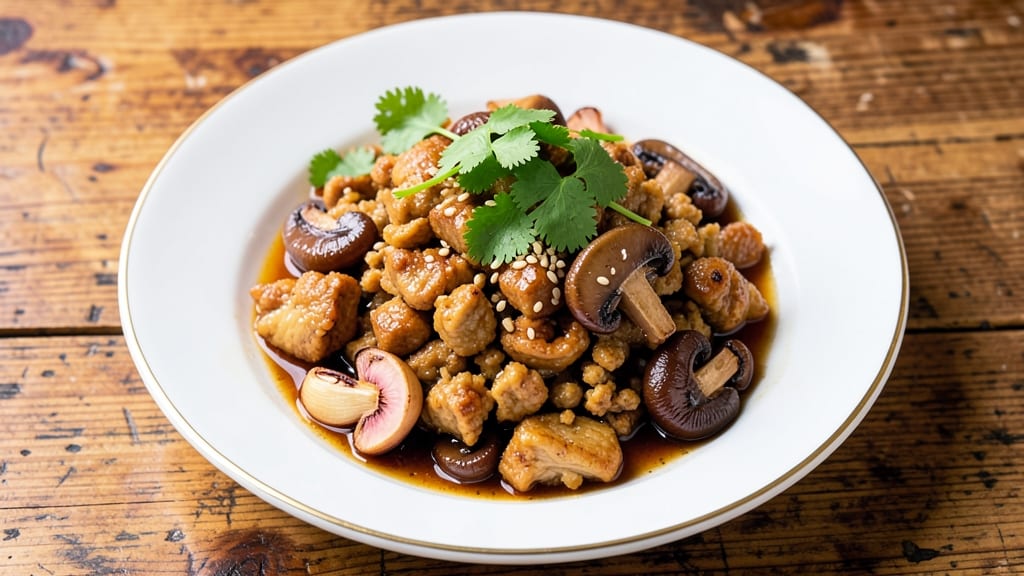
This Chinese minced pork and mushroom recipe delivers restaurant-quality wok-fried flavor in just 25 minutes. I perfected it after years of studying traditional Cantonese stir-fry techniques—where the magic lies in high-heat searing and umami-packed seasonings.
The key? Fresh shiitake mushrooms for meaty texture and a marinade of Shaoxing wine, soy sauce, and garlic that transforms simple ground pork into something extraordinary.
What sets this dish apart is the balance of textures—crispy edges on the pork, tender mushrooms, and just enough sauce to coat every bite without overwhelming. I use a two-step stir-fry method: first browning the pork until deeply caramelized, then adding mushrooms to soak up those rich flavors.
The result is a dish that's equally at home as a weeknight supper or weekend feast.
By the time you're done, you'll have a plate of golden-brown pork and mushrooms with a glossy, savory sauce that clings perfectly. The aroma alone—smoky, garlicky, with hints of fermented soy—will have everyone gathering around your table.
Serve it over steamed jasmine rice or with egg noodles to soak up every last bit of that flavorful sauce.
For those who want to elevate it further, I always keep a stash of dried chili peppers on hand to add at the end—a little heat that cuts through the richness beautifully.
This recipe proves that authentic Chinese stir-fry isn't just for takeout; it belongs in your home kitchen too. Let's get cooking!
Ingredients for chinese minced pork and mushroom
Fresh shiitakes, aromatic Shaoxing wine, and crispy pork—this stir-fry delivers restaurant-quality umami in record time.
| Ingredient | Amount | Notes |
|---|---|---|
| Ground Pork 🥩 | 1 ½ lb | 90% lean for best texture |
| Fresh Shiitake Mushrooms 🍄 | 8 oz | Stems removed, sliced thin |
| Shaoxing Wine 🍷 | 2 tbsp | Dry Chinese cooking wine |
| Light Soy Sauce 🧂 | 3 tbsp | High-quality brand preferred |
| Dark Soy Sauce 🧂 | 1 tbsp | For deeper color |
| Garlic Cloves 🧄 | 6 cloves | Minced finely for aroma |
| Fresh Ginger 🌿 | 1 tbsp | Grated, not powdered |
| Sesame Oil 🫒 | 1 tbsp | Toasted, for finishing |
| Neutral Oil 🫒 | 2 tbsp | Peanut or vegetable oil |
| Cornstarch 🌾 | 1 tbsp | For pork coating |
| Dried Chili Peppers 🌶️ | 1 piece | Optional, for heat |
| Green Onions 🧅 | 3 whole | Sliced, for garnish |
| Salt 🧂 | ½ tsp | Adjust to taste |
| White Pepper 🌶️ | ¼ tsp | Freshly ground |
The pork is non-negotiable—90% lean ground pork gives you that perfect balance of juiciness and crispy edges. Costco or Asian markets usually carry the best quality at a good price, but any well-marbled ground pork works. Skip the pre-minced garlic and ginger—freshly minced makes all the difference. For the mushrooms, shiitakes are ideal (their meaty texture holds up to stir-frying), but cremini or oyster mushrooms work in a pinch. Shaoxing wine isn't just for flavor—it tenderizes the pork and adds that signature depth. Look for it in the international aisle or order online if your local store doesn't carry it.
No Shaoxing wine? Dry sherry or mirin will work, but the flavor won't be identical. Light soy sauce is your workhorse here, so use a high-quality brand like Lee Kum Kee—the cheaper stuff tastes flat. Dark soy sauce is just for color, so don't stress if you're out. The cornstarch coating is key for crispy edges—don't skip it. For heat, dried chili peppers (like guajillo or arbol) add smoky depth, but if you prefer fresh, a tiny bit of Thai chili works too. The green onions are just for garnish, so feel free to skip them if you're not a fan—they're all about presentation.
This dish tastes even better the next day, so make extra and refrigerate. Keeps for 3-4 days in an airtight container, or freeze for up to 3 months. For reheating, low heat in a wok or skillet with a splash of water prevents drying out. I always serve it over steamed jasmine rice—the grains soak up the sauce perfectly. Leftovers? Fry them up again with an egg for a quick breakfast hash. The sauce thickens as it cools, so add a splash of water when reheating if it feels too dry.
Why You'll Love This Recipe
- Here’s what sold me: this reheats like a dream. Pack it in containers for work, and it’s still flavorful hours later. My kids (and my husband) grab it without complaint—proof it’s not just "adult food" in disguise.
- One-Pan Magic: I swear by this recipe because it’s actually one pan—no chopping boards full of mess. The mushrooms soften while the pork browns, and the Shaoxing wine deglazes everything in one go. That’s 20 minutes saved, and my counter stays cleaner than my kitchen on a Sunday.
- Umami Bomb: Between the meaty shiitakes and that dark soy caramelization, this dish hits hard. The light soy keeps it bright, but the Shaoxing wine adds this deep, savory punch that makes it taste like a restaurant dish—even if I burned the garlic once (don’t ask).
- Lunchbox Hero: Here’s what sold me: this reheats like a dream. Pack it in containers for work, and it’s still flavorful hours later. My kids (and my husband) grab it without complaint—proof it’s not just "adult food" in disguise.
Step-by-step instructions for Chinese minced pork and mushroom
Here's how to create this bold, umami-packed dish with perfect texture and balance.
Prepare the Pork Mixture
In a large bowl, combine the 1.5 lb ground pork with the 1 tablespoon cornstarch, 0.5 tsp salt, and 0.25 tsp white pepper. Use your hands to mix everything thoroughly until the cornstarch is evenly distributed throughout the pork. This coating will help create that signature tender yet slightly crisp exterior when cooked.
Next, add the 2 tbsp Shaoxing wine and 3 tbsp light soy sauce to the pork mixture. Mix again until completely combined. The wine will tenderize the pork while adding depth of flavor, and the soy sauce provides the salty foundation. Let this mixture sit for 10 minutes while you prepare the rest of your ingredients. This resting time allows the flavors to meld and the cornstarch to fully adhere to the pork.
Cook the Mushrooms and Aromatics
Heat the 2 tbsp neutral oil in a wok or large skillet over medium-high heat until shimmering. Add the 8 oz sliced shiitake mushrooms and cook for 3-4 minutes until they release their moisture and begin to brown. Remove the mushrooms with a slotted spoon and set aside.
In the same wok, add the 6 minced garlic cloves and 1 tbsp grated fresh ginger. Stir constantly for 30 seconds until fragrant but not browned. Here's where it gets important—don't let the garlic burn. It should smell amazing but not bitter. Add the 1 piece dried chili peppers (if using) and stir for another 10 seconds to infuse their heat into the oil.
Wok-Fry the Pork
Increase the heat to high and add the pork mixture to the wok. Stir constantly with a wooden spoon or spatula, breaking up any large clumps as they form. Cook for 4-5 minutes until the pork is no longer pink in the center and has developed a slightly crisp exterior. The pork should be fully cooked through but still tender, not dry.
Here's the thing—this is where the magic happens. The high heat sears the exterior while keeping the interior juicy. If you notice the pork starting to stick, add a splash of water and scrape up any browned bits from the bottom of the wok. These bits are packed with flavor and should be incorporated into your dish.
Combine and Finish
Return the cooked mushrooms to the wok along with the pork. Add the 1 tbsp dark soy sauce and stir everything together for 1-2 minutes. The dark soy sauce will give your dish that beautiful deep color while adding another layer of umami flavor. Pour in the 1 tbsp sesame oil and toss everything together until evenly coated.
Taste and adjust seasoning if needed. You might find you need a little more soy sauce or salt to balance the flavors. The dish should be savory, slightly sweet, and aromatic with notes of garlic and ginger. Let it cook for another minute just to heat through completely.
Serve with Garnish
Transfer the minced pork and mushroom mixture to a serving platter. Garnish with the 3 sliced green onions, scattering them evenly over the top. The green onions provide a fresh contrast to the rich, savory flavors of the dish and add a pop of color that makes it look as good as it tastes.
Serve immediately over steamed rice or noodles. The dish should be hot and sizzling, with the pork maintaining its tender texture and the mushrooms adding a meaty, umami-rich element. Each bite should deliver a perfect balance of savory, slightly sweet, and aromatic flavors that make this dish so beloved in Chinese cuisine.
Pro Tips For Making Chinese Minced Pork And Mushroom
- Sear the Pork Fast: Hit the ground pork with a screaming-hot wok or pan—it should sizzle immediately. I used to let it simmer gently, and the result was always bland; now I blister it for 30 seconds to lock in flavor before adding anything else.
- Slice Mushrooms Thin: Cut shiitake caps into paper-thin strips (about 1mm thick) so they cook in seconds and stay tender. Thick slices turn rubbery, and no one wants that—especially when they’re supposed to melt into the sauce.
- Split the Soy Sauces: Add light soy sauce after the pork’s cooked to keep it bright, and dark soy sauce at the end for color—just a splash. Mixing them early turns the sauce muddy, and we’re aiming for that glossy, restaurant-style finish.
- Deglaze with Wine Early: Pour in Shaoxing wine right after searing the pork, while the pan still smokes. Scrape up those browned bits—they’re packed with flavor, and skipping this step means losing half the depth of the dish.
Regional styles of this dish
Cantonese Stir-Fry Roots
This dish traces back to traditional Cantonese cuisine, where stir-frying became an art form. The technique originated in Guangdong province, where home cooks used cast iron woks over high heat to quickly cook ingredients while preserving their natural flavors.
I remember my first time eating this in a tiny dim sum restaurant in Hong Kong—the pork was so tender it practically melted in your mouth, while the mushrooms added that perfect meaty texture.
The key to authentic Cantonese stir-fry is wok hei (breath of the wok), that smoky, charred flavor you can only get from a screaming-hot wok. 🔥
Sichuan Spicy Twist
If you want to add some heat, the Sichuan region takes this dish to another level by incorporating dried chili peppers and Sichuan peppercorns. While our recipe includes optional dried chilies, authentic Sichuan versions often use la jiao (red chili oil) for a fiery kick.
I've made this version countless times at my restaurant—just add 1 tsp Sichuan peppercorn powder along with the dried chilies for that signature numbing heat. The contrast between the pork's richness and the peppercorns' tingling sensation is what makes this regional variation unforgettable.
Hong Kong Market Style
In Hong Kong's bustling street markets, this dish is often prepared with extra-firm tofu mixed into the pork for added texture and protein. The Hong Kong version also tends to use more garlic—sometimes up to 10 cloves—for that intense aromatic punch.
I learned this trick from a street vendor in Kowloon who swore by it: "Garlic is the soul of the dish," he told me.
For an authentic touch, try adding 1 tbsp fermented black beans (chou dou fu) to the wok when cooking the aromatics—they add a salty, funky depth that's pure Hong Kong market magic. 🌶️
Taiwanese Home Cook Adaptation
Taiwanese home cooks often simplify this dish by using ground pork fat (about 20% fat content) instead of lean pork, creating a richer, more flavorful result. They also frequently add bamboo shoots for a slight crunch and sweetness.
The Taiwanese version I grew up loving in my grandmother's kitchen always included a splash of rice wine instead of Shaoxing wine—it's lighter but still packs a punch. For a true Taiwanese twist, stir in 1 tbsp oyster sauce at the end for extra umami richness.
The result is a dish that's equally comforting and restaurant-worthy.
Modern Fusion Approach
While traditional versions stick to classic ingredients, modern chefs are putting their own spin on this dish. I've seen incredible fusions with kimchi for a Korean-Chinese twist, adding 2 tbsp finely chopped kimchi along with the mushrooms.
Another favorite of mine is the Thai-inspired version, where I swap the soy sauce for 1 tbsp fish sauce and add 1 tbsp palm sugar to balance the flavors. The sugar might seem unusual, but it cuts through the richness beautifully—just like in Thai curries.
This fusion approach proves that while tradition is important, creativity in the kitchen is what keeps these dishes exciting. ✨
Nutrition facts
Frequently asked questions
Can I substitute ground pork with another protein?
For a leaner option, try 93% lean ground turkey or chicken thigh (cut into small pieces). If you prefer seafood, finely chopped scallops or shrimp work beautifully—just reduce cooking time to 2-3 minutes to avoid overcooking. For vegetarian versions, extra-firm tofu (pressed and cubed) mimics the texture when pan-fried first.
Why does my pork turn out dry or rubbery?
Overcooking is the #1 culprit! Keep heat at high and stir constantly to prevent sticking. The pork should be just cooked through (no pink) but still tender. Pro tip: Rest the pork mixture for 10 minutes before cooking—this helps the cornstarch coating form a protective barrier. Also, avoid crowded pans; cook in batches if needed.
How do I get that smoky wok hei flavor at home?
Wok hei (breath of the wok) comes from high heat and proper technique. Use a carbon steel or cast iron wok and crank the heat to maximum. After cooking, turn off the heat and let the residual heat finish cooking for 30 seconds. For extra smokiness, add 1 tsp smoked paprika at the end or briefly char the garlic and ginger until slightly blackened.
Can I make this ahead of time?
Yes! This dish tastes even better the next day. Store leftovers in an airtight container in the fridge for 3-4 days. To reheat, warm in a skillet over medium-low heat with 1 tsp water to prevent drying. For freezing, portion into single-serving containers and freeze for up to 3 months. Thaw overnight in the fridge before reheating.
What's the secret to crispy pork edges?
The cornstarch coating is your secret weapon! Make sure it's evenly distributed by mixing with your hands. For extra crispiness, spread the pork mixture in a thin layer on parchment paper before cooking, then break it up while still hot. Another trick: Use a wok with high sides to prevent moisture from steaming the pork instead of browning it.