
Main Courses
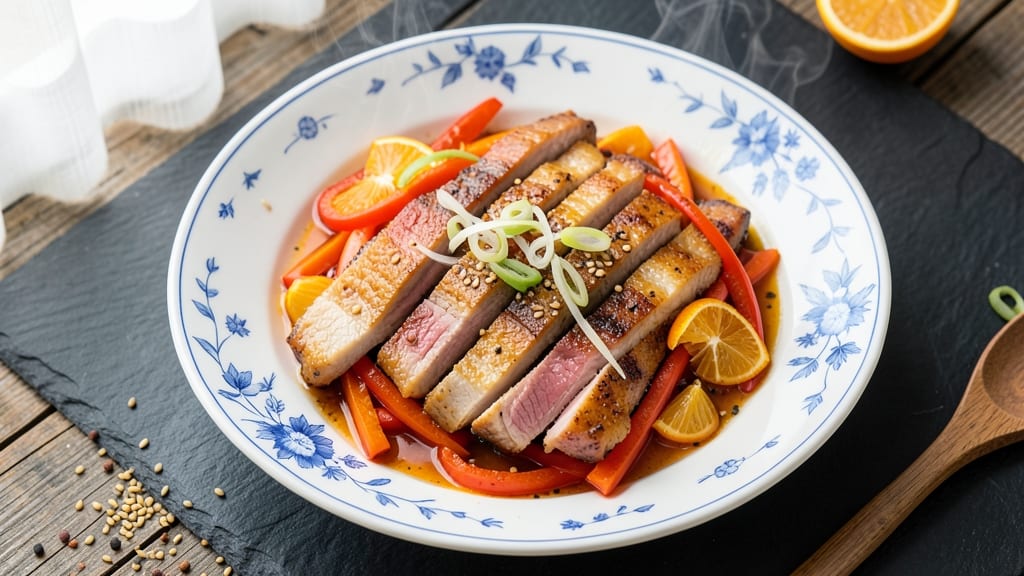
This Chinese orange pork stir fry delivers restaurant-quality crispy edges and tangy-sweet sauce in just 20 minutes. The secret lies in high-heat wok technique and a balance of orange juice, vinegar, and soy that creates that signature glossy finish.
After years of perfecting stir-fry methods in professional kitchens, I've simplified it for home cooks while keeping the authentic flavors intact.
The recipe begins with tender pork slices marinated in cornstarch and a touch of ginger—this creates the perfect crispy exterior while keeping the meat juicy inside.
Bell peppers and onions add color and crunch, while the sauce combines fresh orange juice, rice vinegar, and soy sauce for that signature tangy-sweet balance. The key is working quickly over high heat to achieve that coveted wok hei—those smoky, aromatic notes that make stir-fry truly special.
By the time you're done, you'll have perfectly seared pork with crispy edges and tender centers, vibrant vegetables, and a sauce that's glossy and packed with bright orange flavor. The dish is ready in minutes but tastes like you've spent hours in the kitchen.
Garnish with sesame seeds and green onions for extra texture and aroma—this is comfort food at its finest.
This stir-fry works beautifully as a weeknight dinner or for meal prep—just store leftovers in the fridge for up to 3 days. The flavors actually improve as they sit, making it perfect for busy schedules. Let's get cooking!
Ingredients for chinese orange pork stir fry
Pork, citrus, and wok-hei magic—just 14 ingredients for that restaurant-style stir-fry glow.
| Ingredient | Amount | Notes |
|---|---|---|
| Boneless Pork Shoulder 🥩 | 1 ½ lb | Thinly sliced against grain |
| Cornstarch 🌾 | ½ cup | For crispy coating |
| Fresh Ginger 🧄 | 1 tbsp | Finely grated |
| Fresh Orange Juice 🍊 | ½ cup | Freshly squeezed |
| Rice Vinegar 💧 | 2 tbsp | White or seasoned |
| Low-Sodium Soy Sauce 🍶 | 2 tbsp | For umami depth |
| Sesame Oil 🫒 | 1 tbsp | For aroma (toasted) |
| Neutral Oil 🫒 | 3 tbsp | Vegetable or canola |
| Red Bell Pepper 🌶️ | 1 whole | Sliced into strips |
| Green Onion 🧅 | 3 whole | Sliced for garnish |
| Sesame Seeds 🥜 | 1 tbsp | Toasted for crunch |
| Salt 🧂 | ½ tsp | Kosher or sea |
| Black Pepper 🌶️ | ¼ tsp | Freshly ground |
| Garlic Cloves 🧄 | 2 cloves | Minced for marinade |
The pork shoulder is your secret weapon here. Ask the butcher to slice it thinly against the grain—this ensures tender bites instead of chewy strips. If you can't find pre-sliced pork, freeze it for 30 minutes first to make slicing easier. Costco or H Mart usually carry pre-sliced pork for stir-fry, saving you time. For the ginger, grab the fresh root—it's more potent than powdered. Look for vibrant, firm pieces with no soft spots. The bell pepper should be crisp and bright; Trader Joe's has the best selection of colorful ones.
No fresh orange juice? Bottled works in a pinch, but fresh has that bright, zesty punch. Swap rice vinegar for apple cider vinegar if needed, though it'll be slightly less authentic. Low-sodium soy sauce is key—regular soy can make the dish too salty. The sesame oil adds aroma, but if you're sensitive to its strong flavor, reduce to 1/2 tbsp. For the oil, high-smoke-point neutral oils like vegetable or canola are best—avoid olive oil, which burns easily. The garlic and ginger marinade can be prepped the night before, saving you time on busy weeknights.
This stir-fry reheats beautifully—just toss with a splash of water and stir-fry again over high heat. Keeps in the fridge for 3 days or freeze for 2 months. I like to double the sauce and freeze it separately for quick reheating. The sesame seeds and green onions are best added fresh after reheating—trust me, the texture and aroma make all the difference. Garnish with extra sesame seeds for that restaurant-style finish.
Why You'll Love This Recipe
- One-Pan Magic: I swear by this recipe when I’m too tired to scrub pots—just toss the pork, sauce, and veggies in one skillet. The cornstarch gives it that signature crisp-tender bite without extra mess, and the orange juice caramelizes into a glossy glaze that practically cooks itself.
- Bright & Tangy Kick: That fresh orange juice isn’t just for show—it cuts through the richness of the pork with a zesty punch, while the rice vinegar adds a bright finish. Honestly, the first time I tasted it, I thought, “Why haven’t I been doing this all along?” The ginger ties it all together with warmth that lingers.
- Lunchbox Hero: Between us, this is my go-to for meal prep because it reheats like a dream. Pack it in containers with steamed rice, and the pork stays juicy while the sauce keeps its vibrancy—no sad, dry leftovers here. My kids actually ask for it on Wednesdays (yes, even after the third time).
- Budget Stretch: Pork shoulder is affordable, and a single batch feeds four for under $15. The cornstarch and ginger are pantry staples, and that orange juice? Use half a glass, save the rest for smoothies. It’s the kind of recipe that makes grocery day feel like a win.
Step-by-step instructions for Chinese orange pork stir fry
Here's how to create restaurant-quality crispy pork with that signature tangy orange glaze.
Prep the Pork for Maximum Crispiness
Slice the 1.5 lb boneless pork shoulder thinly against the grain into ¼-inch thick strips. You want even cooking and maximum tenderness. Place the sliced pork in a bowl and add 0.5 cup cornstarch, tossing until every piece is completely coated. Let it sit for 10 minutes—this resting time helps the cornstarch adhere better.
While the pork rests, make the marinade by whisking together 0.5 cup fresh orange juice, 2 tbsp rice vinegar, 2 tbsp low-sodium soy sauce, 1 tbsp sesame oil, 1 tbsp finely grated fresh ginger, 2 minced garlic cloves, 0.5 tsp salt, and 0.25 tsp black pepper. Pour this marinade over the cornstarch-coated pork and toss gently to coat. Let it marinate for at least 20 minutes—this ensures the pork absorbs all those bright, tangy flavors.
Cook the Pork Until Crispy and Golden
Heat a wok or large skillet over medium-high heat until it's smoking hot. Add 3 tbsp neutral oil and let it get shimmering hot—this high heat is crucial for that signature wok-hei (breath of the wok) flavor. Working in batches if needed, add the pork in a single layer and don't stir immediately. Let it sear undisturbed for 1-2 minutes until the edges turn golden brown and crispy.
Once the bottoms are crispy, stir the pork gently and continue cooking for another 2-3 minutes until it's fully cooked through and the cornstarch coating has turned golden brown. Remove the pork to a plate and set aside. Don't rush this step—the crispy coating is what makes this dish special. If the pork releases easily from the pan, it's ready. If it sticks, your pan isn't hot enough—let it heat up a bit more before trying again.
Stir-Fry the Vegetables
In the same wok, add a bit more neutral oil if needed and increase heat to high. Add the 1 whole red bell pepper sliced into strips and stir-fry for 2 minutes until it starts to soften. Add the 3 whole green onions sliced diagonally and cook for another 1 minute until everything is heated through and slightly charred in spots.
Here's where the flavor comes together: pour any remaining marinade from the pork into the wok and scrape up all those delicious browned bits from the bottom. Add the cooked pork back in and toss everything together for 1-2 minutes until everything is well-coated and heated through. The pork should be piping hot and the sauce should be glossy and slightly reduced.
Finish with Crunch and Serve Immediately
Give the stir-fry one final taste and adjust seasoning if needed—you might want to add a splash more rice vinegar for tang or a pinch of salt if the pork needs more balance. Transfer the stir-fry to serving plates and garnish with 1 tbsp toasted sesame seeds. The contrast between the crispy pork, tender vegetables, and toasted sesame seeds adds amazing texture to each bite.
Serve immediately while everything is hot and crispy. This dish tastes best straight from the wok when the pork is still crisp and the sauce is glossy. If you need to hold it for a few minutes, cover it loosely with a lid to keep it warm but not steamed. Pair with steamed jasmine rice to soak up all that delicious sauce.
Pro Tips For Making Chinese Orange Pork Stir Fry
- Veloute the Pork First: Skip the raw pork straight into the pan—it’ll turn rubbery. Sear it first in a dry, screaming-hot wok until golden, then pull it out. Add 2 tablespoons oil, toss in 1 tablespoon cornstarch, and swirl until it coats the meat. This creates a glossy, tender crust that soaks up the orange sauce like a dream.
- Juice the Orange Right: Fresh orange juice is non-negotiable, but don’t grab any old bottle. Roll the orange on the counter to soften it, then slice it in half and squeeze it by hand—no blender. The pulp adds body to the sauce, and skipping this step means a thinner, less vibrant dish. (Yes, even if you’re impatient like me.)
- Don’t Overcrowd the Pan: I learned this the hard way—dumping all the pork in at once steams it instead of sears it. Work in batches: 2-3 slices max per sear, then set aside. The pan needs space to breathe, or you’ll end up with soggy, unevenly cooked meat. Crowding also kills that crispy crust you just spent time velouting.
- Finish with Cold Ginger: Toss in the fresh ginger at the very end—just before serving. Slice it paper-thin and add it cold so it doesn’t cook down into oblivion. This keeps the zing bright and cuts through the richness of the pork. (Pro move: Use a mandoline for even slices if you’re feeling fancy.)
Common mistakes when making perfect results
Overcrowding the Pan
This is the #1 mistake I see in home kitchens—packing too much pork into the wok at once. When you overcrowd, the pork steams instead of searing, resulting in soggy, pale pieces instead of crispy, golden-brown edges.
I've learned the hard way: work in batches if needed, even if it means two trips to the pan. A good rule of thumb is to leave at least ½-inch space between pork pieces when adding them to the wok. 🔥
Skipping the Resting Time
Many home cooks rush the 10-minute cornstarch resting time or 20-minute marinade time, thinking they don't matter. But this is where the magic happens—the cornstarch needs time to form that perfect crispy crust, and the marinade needs time to penetrate the pork.
I once made this stir-fry without resting the pork, and the cornstarch coating fell off during cooking. Trust the process: let the pork marinate and rest—it's worth the wait.
Using the Wrong Oil
I can't stress this enough: never use olive oil for stir-frying. Its low smoke point means it'll burn before your pork gets crispy, creating bitter flavors instead of that clean, aromatic wok hei. Stick to neutral oils like vegetable or canola oil with a high smoke point (400°F+).
Even better, use peanut oil—it has a higher smoke point and adds a subtle nutty aroma that complements the dish beautifully.
Low and Slow Cooking
The key to authentic stir-fry is high heat, not simmering. Many home cooks cook at medium heat, which steams the pork instead of creating those crispy edges.
Your wok should be smoking hot before adding the pork—if you can hold your hand an inch above it and only feel warmth (not immediate heat), it's not hot enough. Medium-high to high heat is non-negotiable for that signature texture and flavor. 🌡️
Ignoring the Wok Hei
Wok hei, or "breath of the wok," is that smoky, aromatic essence that makes restaurant stir-fry taste so special. Many home cooks miss this by not using a properly heated wok or by covering the pan too soon.
Let that wok get ripping hot before adding oil, and keep it uncovered during cooking. If you don't have a wok, a carbon steel or cast iron skillet works just as well—just make sure it's seasoned and preheated properly.
Over-Stirring the Pork
Another common mistake is stirring the pork too soon or too frequently. The secret is to let it sear undisturbed for 1-2 minutes on each side before stirring. This allows the cornstarch to crisp up and create that golden crust.
If you stir too soon, you'll break up the coating and end up with mushy pork. Patience is key: let it develop that crust before tossing gently.
Nutrition facts
Frequently asked questions about Chinese orange pork stir fry
Can I substitute chicken or shrimp for the pork?
For chicken, use 1.5 lb boneless thighs (they stay juicier than breasts) and reduce marinating time to 15 minutes. Shrimp should be peeled and deveined (no marinating needed) and cooked for just 1-2 minutes per side. The sauce quantities remain the same, but shrimp cooks much faster than pork. For best results, toss shrimp in 1 tbsp cornstarch before cooking to help them hold their shape.
How do I make this dish spicier?
Add 1 tsp chili flakes or 1 tbsp sriracha to the marinade for heat. For extra kick, stir-fry ½ tsp minced red chili with the vegetables. Garnish with chopped Thai basil or cilantro for freshness. Remember, the sauce can be adjusted after cooking too—just add a dash of chili oil or hot sauce when serving.
What's the best way to reheat leftovers?
Reheat in a wok or skillet over medium-high heat with 1 tsp neutral oil and 1 tbsp water to restore crispiness. Stir-fry for 2-3 minutes until piping hot. Microwaving works in a pinch, but the texture suffers—add a splash of water and cover with a damp paper towel to prevent drying. Leftovers keep well for 3 days in the fridge or 2 months frozen.
Can I make this dish ahead of time?
Yes! Prep the marinade and chop vegetables the night before. For the pork, marinate and coat with cornstarch up to 12 hours ahead, then refrigerate uncovered on a wire rack to keep it dry. Cook only when ready to serve—this ensures maximum crispiness. The sauce can be made 1 day ahead and stored separately. Assemble everything just before serving for the best texture and flavor.
What sides pair best with this stir fry?
Steamed jasmine rice is classic, but you could also try egg fried rice or coconut rice for variety. For a lighter option, serve with steamed bok choy or a simple cucumber salad. The bright citrus flavors in the stir fry complement mandarin orange segments or lychee as a refreshing dessert.