
Main Courses
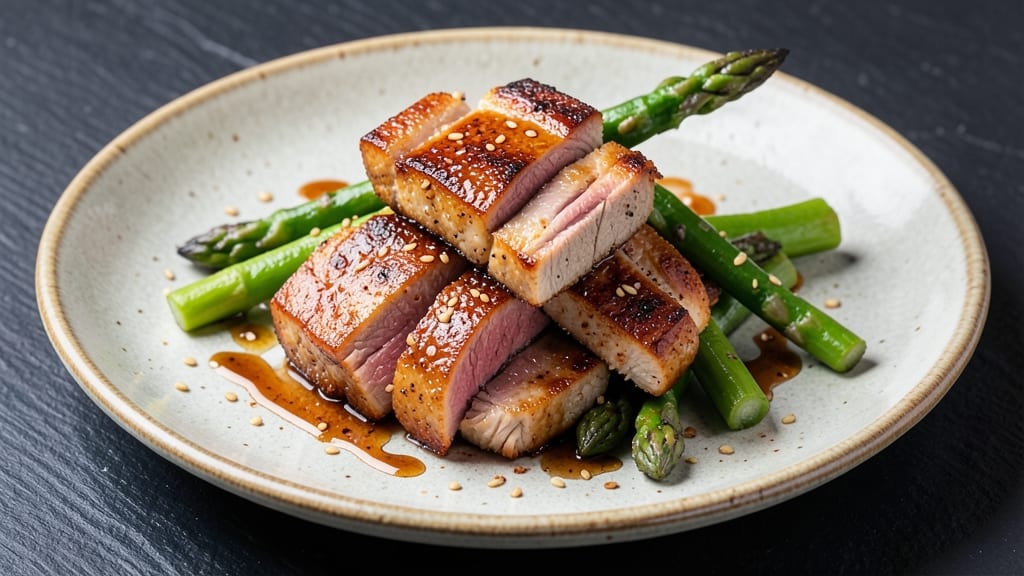
This Chinese pork and asparagus recipe delivers the perfect balance of wok-fried five-spice crunch and silky sauce that transforms a simple weeknight dinner into something extraordinary. 🔥 As someone who's spent years perfecting pork techniques—from backyard pits to wok hei—I know how to make this dish shine with restaurant-quality results at home.
The secret lies in high-heat stir-frying that creates crispy edges on the pork while keeping the asparagus tender-crisp, all wrapped in a sauce that's rich yet light enough to let the ingredients speak.
The magic begins with properly prepping the pork—thin slices ensure even cooking, while a five-spice marinade infuses deep aromatic notes that cut through the asparagus's natural bitterness.
I've found that blanching the asparagus first preserves its vibrant green color and crisp texture, which is crucial for that visual pop when plated. This isn't just another stir-fry; it's a dish that showcases how simple ingredients can become something truly special when handled with precision and care.
What you'll end up with is a plate that's as impressive to look at as it is delicious to eat: golden-brown pork slices with crisp edges, bright green asparagus spears that hold their shape, and a glossy sauce that clings beautifully to every bite.
The five-spice blend adds warmth and complexity, while the silky sauce ties everything together with just the right amount of umami. This dish proves that authentic Chinese flavors don't require complicated techniques—just the right approach and quality ingredients.
Serve it over steamed jasmine rice for the full experience, or pair with a simple cucumber salad to cut through the richness. The leftovers reheat beautifully, making this an excellent meal-prep option for busy weeks. Let's get cooking—this recipe is about to become your new weeknight staple.
Ingredients for chinese pork and asparagus
Precision-cut pork and vibrant asparagus transform into a restaurant-worthy dish with just these 15 ingredients.
| Ingredient | Amount | Notes |
|---|---|---|
| Boneless Pork Shoulder 🥩 | 1 ½ lb | Thinly sliced against grain |
| Asparagus Spears 🌱 | 1 lb | Medium thickness, trimmed |
| Five-Spice Powder 🌶️ | 1 tbsp | Authentic Chinese blend |
| Cornstarch 🌾 | 1 tbsp | For crispy pork coating |
| Sesame Oil 🫒 | 1 tbsp | Toasted for aroma |
| Light Soy Sauce 🥫 | 3 tbsp | High-quality preferred |
| Oyster Sauce 🥫 | 2 tbsp | Rich umami depth |
| Hoisin Sauce 🍶 | 1 tbsp | Sweet-savory balance |
| Garlic Cloves 🧄 | 4 cloves | Minced for sauce base |
| Fresh Ginger 🌿 | 1 tbsp | Grated, aromatic |
| Neutral Oil 🫒 | 3 tbsp | High smoke point |
| Sesame Seeds 🌰 | 1 tsp | Toasted for garnish |
| Green Onions 🧅 | 3 whole | Sliced for garnish |
| Jasmine Rice 🍚 | 1 ½ cups | Uncooked, for serving |
| Salt 🧂 | ½ tsp | Fine sea salt |
The pork selection is critical—boneless shoulder delivers the right marbling for flavor and texture. Ask your butcher to slice it paper-thin against the grain—this ensures even cooking and those coveted crisp edges. For five-spice powder, Penzeys or a reputable Asian market carry authentic blends; avoid the generic supermarket versions that often lack depth. Asparagus should be bright green and firm—avoid woody stalks. I always buy organic when possible, as conventional asparagus often has more bitterness. The sesame oil should be toasted, not the raw variety; Kadoya or La Tourangelle are excellent brands for this purpose.
No five-spice powder? Combine 1/2 tsp each of ground cinnamon, star anise, fennel, clove, and black pepper for a DIY version. Substituting pork? Chicken thigh works best—boneless, skinless, and sliced similarly. For the sauce, if you can't find hoisin, substitute 1 tbsp soy sauce plus 1 tsp honey. The cornstarch is non-negotiable for that signature crunch; don't skip it. For extra umami depth, add 1 tsp fish sauce to the sauce mixture. And if you're prepping ahead, marinate the pork in the five-spice and soy sauce for up to 4 hours—this develops incredible flavor without overcooking.
Pork and asparagus cook in minutes—keep everything prepped and ready to maintain that wok hei (breath of the wok) heat. The sauce can be made 1 day ahead and stored in the fridge; reheat gently before using. Leftover pork reheats beautifully in a skillet with a splash of water to maintain crispness. For optimal freshness, store cooked asparagus separate from the pork—it wilts faster. This dish freezes well for 2 months; portion the sauce separately and combine when reheating. The jasmine rice should be steamed just before serving to maintain its delicate texture.
Why You'll Love This Recipe
- One-Pan Magic: I swear by this recipe when I’m too tired to dirty multiple pans. The pork and asparagus share the same space—no chopping boards to scrub, no skillets to stack. Just toss, sear, and let the five-spice powder work its magic while you sip your wine.
- Crispy-Creamy Balance: That cornstarch coating on the pork? Chef’s kiss. It gives you a satisfying crunch outside while keeping the inside juicy, and the asparagus—just a quick char—adds a smoky bite. Drizzle with sesame oil at the end, and suddenly, it’s restaurant-quality without the fuss.
- Leftover Goldmine: Between us, this dish tastes better the next day. The pork stays tender, the asparagus holds its shape, and reheating it in a skillet with a splash of soy sauce? Instant takeout vibes. I meal prep this for three days straight—no complaints.
- Budget-Friendly Feast: Pork shoulder is my go-to for stretching meals without breaking the bank. A single cut feeds four, and asparagus in season is cheaper than you’d think. Plus, five-spice powder and sesame oil last forever, so you’re not blowing cash on specialty ingredients.
Step-by-step instructions for wok-fried five-spice pork and asparagus
Here's the professional method for achieving that signature wok hei while keeping the pork ultra-crispy and asparagus perfectly tender.
🔥 Step 1: Marinate and Prep the Pork for Maximum Crispiness
Slice the 1.5 lb boneless pork shoulder thinly against the grain into ¼-inch thick strips. Place them in a bowl and toss with the 1 tbsp five-spice powder, 1 tbsp cornstarch, 0.5 tsp salt, and 1 tbsp sesame oil. Let this marinate for 15 minutes at room temperature—this ensures even coating and prevents the pork from drying out during the high-heat sear.
While the pork marinates, trim the 1 lb asparagus spears by snapping off the woody ends (they should break naturally about 1 inch from the base). This prep step is crucial—it guarantees the asparagus cooks evenly without any bitter stems ruining the dish.
🍳 Step 2: Build the Flavor Base with Aromatics
Heat 3 tbsp neutral oil in a wok or large skillet over medium-high heat until shimmering. Add the 4 cloves minced garlic and 1 tbsp grated fresh ginger, cooking for 30 seconds until fragrant but not browned. This quick sauté unlocks the aromatic foundation of the dish—don't let it burn, or you'll get bitter flavors instead of sweet, bright notes.
Immediately add the marinated pork strips in a single layer. Let them sear undisturbed for 2 minutes until they develop a deep golden crust. Here's the thing—you want that Maillard reaction happening on the outside while keeping the interior juicy. Once the edges are set, stir and continue cooking for another 2 minutes until fully cooked through.
🥘 Step 3: Add Asparagus and Create the Signature Sauce
Push the pork to one side of the wok and add the asparagus spears in a single layer. Stir-fry for 2 minutes until they begin to soften but still retain their vibrant green color. Add the 3 tbsp light soy sauce, 2 tbsp oyster sauce, and 1 tbsp hoisin sauce, letting the liquids coat everything evenly.
Here's where the magic happens: pour in 1 tbsp sesame oil and immediately turn off the heat. The residual heat will finish cooking the asparagus while infusing that nutty sesame aroma. The sauce should coat the pork and asparagus like a glossy sheen—if it looks too thick, add 1-2 tablespoons hot water to loosen it slightly.
🔪 Step 4: Garnish and Serve Over Jasmine Rice
Transfer the pork and asparagus to a serving platter. Sprinkle with 1 tsp toasted sesame seeds and 3 whole sliced green onions for that authentic restaurant presentation. The sesame seeds add a delightful crunch contrast to the tender pork and crisp asparagus.
Serve immediately over 1.5 cups cooked jasmine rice—the rice should be hot and fluffy, providing the perfect neutral base to let the bold flavors of the pork and sauce shine. Each bite should deliver that perfect balance of crispy pork, tender asparagus, and that complex five-spice aroma with umami-rich sauce.
Pro Tips For Making Chinese Pork And Asparagus
- Sear Pork on Sizzle: Get that pan ripping hot before adding pork—no, your stove’s medium-high isn’t enough. A proper sear locks in flavor and keeps the meat from turning rubbery later. I used to rush this, and the pork just steamed instead of caramelizing. Trust me, wait for the oil to shimmer like a lake before touching it to the meat.
- Trim Asparagus Like a Pro: Snap those asparagus spears at a 45-degree angle where the stalk bends naturally—no knife needed. And skip peeling the woody bottoms; just snap off the tough ends and trim the rest. I learned this the hard way after peeling every spear and ending up with sad, stringy bits. Save yourself the hassle.
- Slurry the Cornstarch: Mix that cornstarch with cold water first—about 1 tablespoon per 3 tablespoons liquid—to avoid lumps. Stir it into the sauce last minute and let it simmer just until it thickens, or you’ll end up with gluey, pasty nonsense. I’ve burned sauce this way more times than I’ll admit.
- Five-Spice Timing Matters: Toast the five-spice powder in the dry pan for 30 seconds before adding oil—just until it smells like a spice market. This wakes up the flavors without burning them. I was skeptical until I tried it; now it’s non-negotiable for depth. Don’t skip it, even if the recipe doesn’t say so.
Regional styles of chinese pork and asparagus
Cantonese Wok Hei
This dish originates from Cantonese cuisine, where the technique of wok hei (breath of the wok) is everything. The high-heat stir-fry creates that signature smoky aroma and crisp edges on the pork. I remember my first time cooking this in Chef Chen's kitchen—he'd say, "The wok must sing!"
That means keeping your heat at medium-high to high and working quickly. Use a carbon steel wok like Mauviel or De Buyer for authentic results. 🔥
Sichuan Spicy Twist
For a Sichuan-inspired version, add 1 tbsp chili bean paste and 1 tsp Sichuan peppercorns to the marinade. The peppercorns add a subtle numbing heat that pairs beautifully with the five-spice.
I like to finish with ½ tsp chili oil> drizzled over the top just before serving. This version is perfect for those who love bold flavors with a kick.
Shanghai Silky Sauce
Shanghainese cooks often use a silkier, slightly sweeter sauce profile. Replace the hoisin with 1 tbsp dark soy sauce> and add 1 tsp Shaoxing wine> to the sauce mixture. The wine adds depth and helps balance the saltiness.
For extra silkiness, whisk in 1 tsp cornstarch> mixed with 1 tsp water> at the end of cooking. This creates a glossy finish that coats every bite.
Hong Kong Market Style
In Hong Kong, this dish often includes dried shiitake mushrooms> rehydrated and sliced into the stir-fry. Add 2 shiitake mushrooms> (about ¼ cup sliced>) with the asparagus for an earthy umami boost.
I also like to finish with ½ tsp white pepper> for a cleaner, more aromatic finish. This version has that classic Hong Kong street food vibe with restaurant-quality results.
Taiwanese Five-Spice
Taiwanese cooks often use a slightly sweeter five-spice blend with added orange zest>. For this version, add ½ tsp orange zest> to the marinade along with the five-spice. The citrus brightens the pork and pairs beautifully with the asparagus.
I also recommend adding 1 tsp rock sugar> to the sauce for a subtle sweetness that balances the savory notes. This is my go-to version when I want something with a little extra brightness.
Modern Fusion Adaptation
For a contemporary twist, try adding ½ cup baby bok choy> with the asparagus and finishing with 1 tbsp toasted almonds> for crunch. The bok choy adds another layer of texture while keeping the dish vibrant.
I also like to drizzle with 1 tsp honey> at the end for a touch of sweetness that modern palates often enjoy. This version works beautifully as a vegetarian-friendly option if you swap the pork for extra-firm tofu.
Nutrition facts
Frequently asked questions
Can I substitute chicken for pork in this recipe?
Use 1.5 lb boneless chicken thigh instead of pork shoulder, sliced ¼-inch thick against the grain. Chicken cooks faster, so reduce stir-fry time to 1-2 minutes total after the aromatics. The five-spice marinade works perfectly on chicken, giving it that same aromatic depth. Just ensure the chicken reaches 165°F internally for safety.
Why does my asparagus turn mushy when stir-frying?
Overcooking is the most common issue. Asparagus should cook for only 2 minutes after adding to the wok—it should be tender-crisp, not soft. Start with medium-high heat and work quickly. Also, blanch asparagus for 30 seconds in boiling water before stir-frying to preserve its bright green color and crisp texture.
How can I make this dish spicier?
Add ½ tsp chili flakes or 1 tsp doubanjiang (chili bean paste) to the sauce mixture. For extra heat, finish with a drizzle of chili oil or Sichuan peppercorn oil before serving. The five-spice already adds warmth, so these additions will give it that fiery kick while keeping the dish balanced.
Can I prepare this ahead of time for meal prep?
Yes, but with some adjustments. Marinate the pork up to 4 hours ahead and store in the fridge. Cook the pork separately (it reheats best) and store asparagus separately to maintain texture. Reheat pork in a skillet with a splash of water for 1 minute to restore crispiness. Reheat asparagus in the microwave for 30 seconds covered with a damp paper towel.
What's the best way to achieve that crispy pork texture?
The secret lies in the cornstarch coating and high heat. Pat pork dry before marinating, then toss with 1 tbsp cornstarch and 1 tbsp five-spice. Use a carbon steel wok or cast iron skillet on medium-high heat. Let pork sear undisturbed for 2 minutes before stirring—this creates that perfect crispy edge while keeping the inside tender.