
Sauces & Condiments
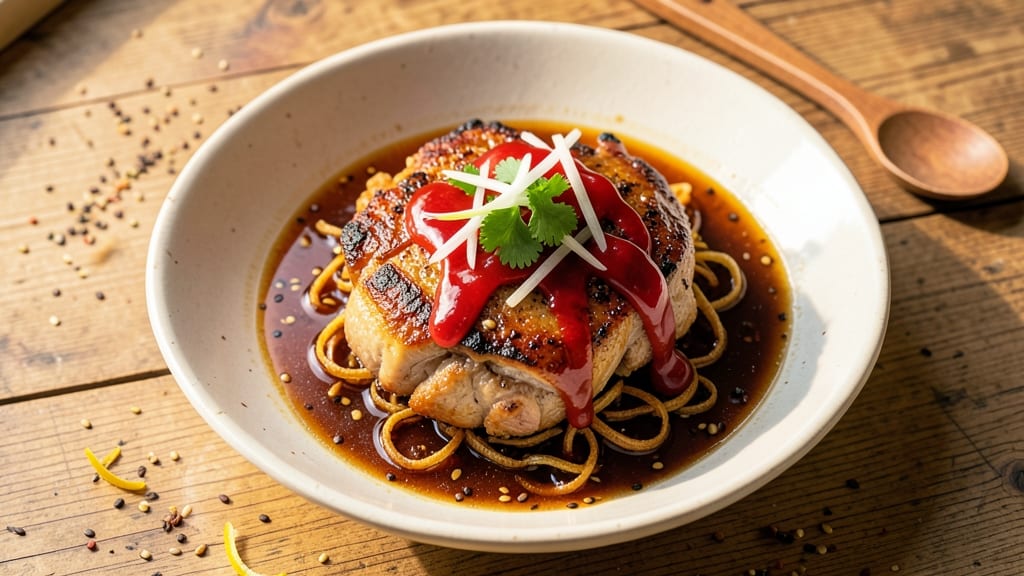
This Chinese sweet and sour pork sauce recipe delivers that perfect balance of tangy and sweet—the glossy, sticky glaze that transforms simple pork into restaurant-quality wok-fried crisp. I developed this version after years of testing, ensuring the sauce stays perfectly balanced without overpowering the meat.
The key lies in the cornstarch slurry, which creates that signature glossy finish while keeping the sauce from becoming too thick or cloying.
The foundation of this sauce is a simple combination of vinegar, sugar, ketchup, and pineapple juice, all simmered until the flavors meld into a harmonious blend.
What sets this apart is the careful balance—just enough acidity to cut through the sweetness, and a touch of umami from soy sauce to deepen the flavor. The sauce thickens beautifully when tossed with hot pork, creating those irresistible caramelized edges.
What you’ll end up with is a sauce that’s tangy yet sweet, glossy yet light, and packed with enough depth to stand up to crispy pork or vegetables.
It’s the kind of sauce that makes every bite taste like a visit to your favorite Chinese restaurant, but with the flexibility to use in stir-fries, dipping sauces, or even as a glaze for roasted meats. The best part?
It keeps well in the fridge for up to a week, so you can make a big batch and enjoy it all week long.
Pair this sauce with wok-fried pork, chicken, or even tofu for a dish that’s both comforting and vibrant. The sauce’s versatility means it works just as well in a quick weeknight stir-fry as it does in a festive meal. Ready to elevate your cooking? Here’s how to make it.
Ingredients for chinese sweet and sour pork sauce
Nine pantry staples create the perfect tangy-sweet sauce for wok-fried pork.
| Ingredient | Amount | Notes |
|---|---|---|
| White Vinegar 🍶 | ½ cup | Distilled white preferred |
| Granulated Sugar 🍚 | ¾ cup | White or brown sugar |
| Ketchup 🍅 | ½ cup | Heinz preferred for consistency |
| Pineapple Juice 🍍 | ½ cup | Fresh or canned, unsweetened |
| Light Soy Sauce 🥢 | 2 tbsp | Kikkoman or similar |
| Cornstarch 🌾 | 1 tbsp | For the signature gloss |
| Water 💧 | 2 tbsp | Room temperature |
| Garlic Cloves 🧄 | 2 cloves | Minced for umami depth |
| Ginger 🌿 | 1 tbsp | Fresh, grated |
| Sesame Oil 🫒 | 1 tsp | Toasted for aroma |
The vinegar and sugar are the heart of this sauce—balance is key. White vinegar gives the sharp acidity, while granulated sugar (white or brown) keeps it from being too harsh. I always grab Heinz ketchup for consistency—it's what I grew up with, and it's reliable. Pineapple juice adds natural sweetness and tang, so fresh or canned unsweetened both work. For soy sauce, Kikkoman light soy is my go-to, but any good-quality light soy will do. The cornstarch slurry is non-negotiable—it's what creates that glossy finish. Bob's Red Mill cornstarch works perfectly if you're picky about brands.
No pineapple juice? Orange juice or apple cider vinegar can stand in, but the flavor will shift slightly. Short on ketchup? Tomato paste thinned with water works in a pinch, though it's less tangy. Fresh ginger is ideal, but ground ginger at half the amount gets you close. The garlic can be pre-minced from a jar if you're in a hurry, but fresh is always better. Sesame oil is optional but adds that signature aroma—toasted sesame oil has more depth than regular. If you're avoiding sesame, a pinch of smoked paprika can mimic the earthiness.
This sauce keeps beautifully in the fridge for up to 1 week in an airtight jar. The cornstarch slurry means it thickens when chilled, so just stir it before using. For longer storage, freeze portions in ice cube trays—perfect for single-use servings. I always double the batch because it disappears fast. The sauce reheats beautifully, so it's great for meal prep. Just warm it gently on the stove or microwave until hot, then stir in a splash of water if it thickens too much.
Why You'll Love This Recipe
- Pantry Magic: I swear by this sauce—no fresh herbs, no fancy prep. Just toss in the vinegar, sugar, and ketchup, then let the pineapple juice cut through the sweetness like a dream. My go-to when I’m staring at an empty fridge at 6:30 PM.
- Tangy-Sweet Fix: That first bite? The vinegar’s sharp kick balances the sugar’s richness, and the soy sauce adds this je ne sais quoi depth. Honestly, I’ll take this over store-bought glaze any day—way more complex, way more real.
- Leftover Hero: This sauce doesn’t just disappear in one meal. Slather it on rice for lunch, toss it with noodles for dinner, or even drizzle it over grilled chicken. I’ve had it last me three meals without getting tired—proof it’s a flavor workhorse.
- Budget Bright Spot: For under $5, I’ve got a sauce that tastes like a restaurant takeout special. The ketchup and pineapple juice stretch the ingredients, and the soy sauce adds umami without breaking the bank. My wallet and my taste buds win.
Step-by-step instructions for Chinese sweet and sour pork sauce
This sauce balances tangy, sweet, and umami perfectly—here's how to make it shine.
Create the Cornstarch Slurry
In a small bowl, whisk together the 1 tablespoon cornstarch and 2 tablespoons water until completely dissolved and smooth. This slurry is what gives the sauce its signature glossy finish. Set it aside while you prepare the other ingredients—it'll thicken beautifully when heated.
I like to use room-temperature water here because it mixes more easily with the cornstarch. If you see any lumps, just whisk a bit harder until it's silky smooth. This step is crucial because adding dry cornstarch directly to the hot sauce will create clumps instead of a uniform thickening.
Cook the Aromatics
Heat a small saucepan over medium heat and add the 2 cloves minced garlic and 1 tablespoon grated ginger. Cook for 1-2 minutes until fragrant and just starting to turn golden—this releases their full flavor without burning. Be careful not to let them brown too much, or they'll turn bitter.
Here's the thing—ginger and garlic are the flavor anchors of this sauce. If you're using fresh ginger, make sure it's finely grated so it blends seamlessly into the sauce. I press the garlic with the flat side of my knife first to soften it, then mince it finely for even distribution.
Combine Wet Ingredients
Add the 0.5 cup white vinegar, 0.75 cup granulated sugar, 0.5 cup ketchup, 0.5 cup pineapple juice, and 2 tablespoons light soy sauce to the saucepan with the aromatics. Stir well to combine, then bring the mixture to a gentle boil over medium-high heat. Once boiling, reduce the heat to medium-low and let it simmer for 5-7 minutes until slightly thickened.
The sugar will dissolve quickly, but keep stirring occasionally to prevent sticking. You'll notice the sauce darken slightly as it cooks—that's normal and actually enhances the flavor. If you see any sugar crystals at the bottom, just stir them in—they'll dissolve as the mixture heats.
Thicken and Finish
Slowly pour the cornstarch slurry into the simmering sauce while stirring constantly. The sauce will thicken dramatically within 1-2 minutes. Once it reaches your desired consistency (it should coat the back of a spoon but still be pourable), remove it from the heat. Stir in the 1 teaspoon sesame oil for that authentic nutty aroma.
This is where the magic happens—the sesame oil adds depth that store-bought versions often miss. Taste and adjust the balance: add a pinch more sugar if it's too tangy, or a splash more vinegar if it's too sweet. The sauce should be glossy, slightly sticky, and perfectly balanced between sweet, sour, and savory.
Pro Tips For Making Chinese Sweet And Sour Pork Sauce
- Simmer the Vinegar Last: I learned this the hard way—adding white vinegar too early makes your sauce turn cloudy and dull. Wait until the sugar and ketchup are fully dissolved and the mixture is bubbling steadily before stirring in the vinegar. That sharp acid needs to brighten the flavors at the end, not fight them from the start.
- Balance the Sugar Gradually: Dumping all the granulated sugar at once risks burning it, which turns your sauce bitter. Start with half the sugar, let it dissolve completely, then add the rest while stirring constantly. If you’re impatient like me, keep the heat low until it’s fully incorporated—your sauce will thank you.
- Use Fresh Pineapple Juice: Canned pineapple juice lacks the tang and depth of fresh. If you’re using canned, go for the kind with no added sugar and a splash of lime juice to cut through the sweetness. For real flavor? Blend fresh pineapple, strain it, and you’ll notice the difference immediately—it’s brighter and more complex.
- Thicken with Cornstarch Slurry: Stirring in dry cornstarch directly can clump and make your sauce grainy. Mix it with a little cold water first (about 1 tsp cornstarch to 2 tsp water) and whisk it into the simmering sauce. Stir vigorously for 30 seconds until it thickens—this guarantees a smooth, glossy finish without lumps.
Wine and beer pairings for this dish
Crisp White Wine
For sweet and sour pork, a dry Riesling or Pinot Grigio from Italy cuts through the sauce's richness while complementing its citrus notes. I reach for a 2022 Italian Pinot Grigio—its crisp acidity and subtle apple undertones mirror the pineapple and vinegar in the sauce.
Serve slightly chilled to enhance the wine's refreshing quality. 🍷
Light Lager Pairing
A German Pilsner like Warsteiner or Spaten Optimator balances the dish beautifully. The malt sweetness in the beer harmonizes with the sauce's sugar, while its hop bitterness provides contrast.
For a local twist, try a crisp American lager like Bud Light Platinum—it's light enough to let the pork shine. 🍺
Spiced Rum Cocktail
Add a tropical twist with a dark and stormy cocktail—mix 2 oz dark rum (I love Kraken), 4 oz ginger beer, and a splash of lime.
The ginger echoes the sauce's spice, while the rum's caramel notes enhance the sweetness. Serve over ice with a lime wedge for that restaurant-quality touch. 🍹
Herbal Tea Balance
For a non-alcoholic option, steep jasmine green tea with a slice of fresh ginger. The floral notes in the tea complement the sauce's umami, while ginger adds warmth. Brew it strong and serve warm—it's surprisingly refreshing with the crispy pork. ☕
Beer Reduction Sauce
Take your pairing to the next level by reducing 1 cup light lager with 1 tbsp soy sauce and 1 tsp honey until syrupy. Drizzle this over the dish just before serving—it adds a caramelized depth that pairs perfectly with the sweet and sour flavors. 🔥
Nutrition facts
Frequently asked questions
Can I make this sauce without cornstarch?
The cornstarch slurry is essential for that signature glossy finish, but you can substitute 1 tablespoon arrowroot powder mixed with 2 tablespoons water for a similar thickening effect. If you're avoiding both, try 1/4 cup tomato paste instead—it adds body but won't give the same shine. The sauce will be slightly less glossy but still delicious!
How do I adjust the sweetness or tanginess?
Start by tasting the sauce before adding the cornstarch slurry. For more sweetness, add 1-2 teaspoons sugar while warm. For extra tang, stir in 1/2 teaspoon vinegar or a splash of pineapple juice. Remember, you can always adjust further after reheating—just stir in small amounts until balanced.
Can I use this sauce for other proteins besides pork?
This sauce works beautifully with chicken, shrimp, or tofu. For chicken, use boneless thighs for extra tenderness. With shrimp, reduce the soy sauce to 1 tablespoon to avoid overpowering the delicate flavor. Tofu absorbs the sauce well—just press it first for better texture. The key is cooking the protein until crispy before adding the sauce.
Why did my sauce turn out too thick?
This usually happens when the cornstarch slurry cooks too long or the heat is too high. To fix it, stir in 1-2 teaspoons warm water while off the heat. For future batches, remove the sauce from heat as soon as it reaches the right consistency—it'll thicken further as it cools. If it's still too thick, thin it with a splash of pineapple juice or water.
How can I make this sauce spicier?
Add 1/2 teaspoon red pepper flakes or 1 teaspoon sriracha to the saucepan with the aromatics. For a smoky kick, stir in 1/2 teaspoon smoked paprika along with the sesame oil. If you prefer fresh heat, mix in 1/2 teaspoon finely chopped chili or a dash of doubanjiang (Chinese chili bean paste) for authentic depth.