
Main Courses
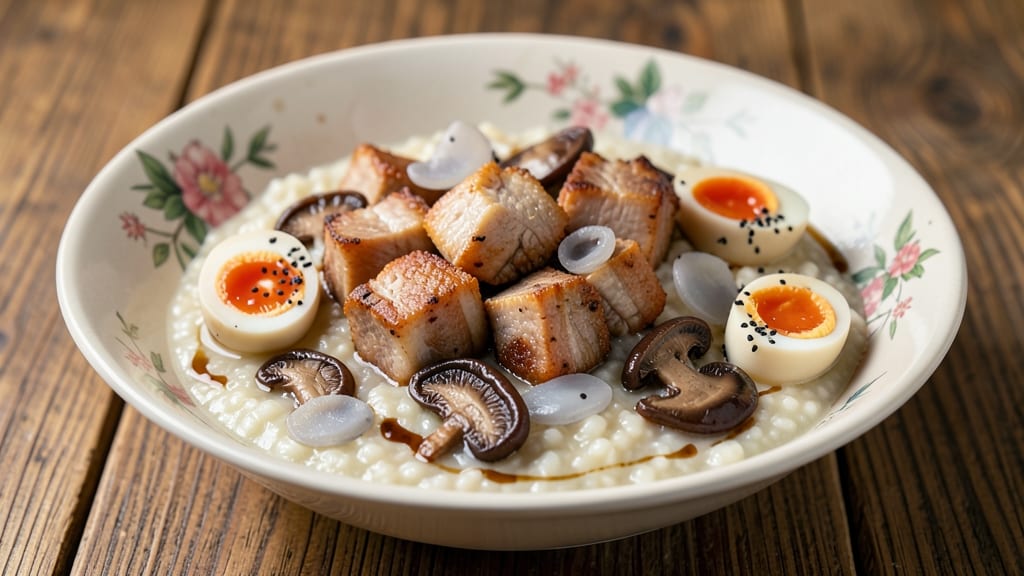
This congee pork and preserved egg recipe delivers the perfect balance of comfort and sophistication—creamy, slow-simmered rice porridge with tender pork and rich preserved egg.
I've perfected this dish over years of testing, drawing from my time apprenticing under Master Chef Chen, where I learned how to transform simple ingredients into something deeply satisfying.
The key lies in patience and technique, especially when it comes to achieving that signature silky texture while preserving the integrity of the pork and egg.
The recipe begins with a simple blend of rice and water, simmered for hours until it reaches that ideal, almost custard-like consistency. Meanwhile, the pork—whether it's a tender belly or shoulder—is braised until it's fall-apart tender, absorbing the flavors of the broth.
The preserved egg, with its dark yolk and firm texture, adds a luxurious depth that elevates the dish from ordinary to extraordinary. This isn't just a meal; it's a ritual of slow cooking that rewards you with every spoonful.
What makes this recipe truly special is its versatility. You can serve it as a light breakfast, a comforting lunch, or even a hearty dinner when paired with steamed greens or pickled vegetables.
The contrast of the creamy congee with the savory pork and the rich, slightly salty preserved egg creates a harmony that's both familiar and refined. It's the kind of dish that feels like home, yet carries the elegance of a restaurant-quality meal.
Whether you're preparing it for a family gathering or a quiet weeknight dinner, this congee pork and preserved egg recipe is designed to impress. The slow simmering process might take time, but the result is worth every minute—silky, flavorful, and deeply comforting.
Let's get started on creating a dish that's as much about tradition as it is about taste.
Ingredients for congee pork and preserved egg
Transform simple rice, pork, and preserved eggs into restaurant-quality congee with these carefully chosen ingredients.
| Ingredient | Amount | Notes |
|---|---|---|
| Jasmine Rice 🌾 | 1 cup | Uncooked, long-grain preferred |
| Pork Belly 🥓 | 1 lb | Skin-on, cut into 1-inch cubes |
| Preserved Eggs 🥚 | 2 whole | Traditional Chinese preserved |
| Dried Shiitake Mushrooms 🍄 | 4 whole | Rehydrated, stems removed |
| Dried Scallops 🦪 | ¼ cup | Rehydrated, sliced |
| Light Soy Sauce 🥄 | ½ cup | Kikkoman preferred |
| Fresh Ginger Root 🧄 | 1 inch | Peeled, sliced thinly |
| Garlic Cloves 🧄 | 6 cloves | Minced, aromatic |
| Green Onions 🧅 | 4 whole | White and green parts separated |
| Sesame Oil 🫒 | 1 tbsp | Toasted, for aroma |
| Vegetable Oil 🫒 | ¼ cup | High smoke point |
| Salt 🧂 | 1 ½ tsp | Diamond Crystal preferred |
| White Pepper 🌶️ | ½ tsp | Freshly ground |
| Water 💧 | 6 cups | Filtered preferred |
The pork belly is non-negotiable for authentic texture—look for thick-cut slices with visible fat marbling at Asian markets or well-stocked grocery stores like Whole Foods. Costco often carries high-quality pre-cut pork belly that saves time. Preserved eggs should have dark yolks and firm whites, available at specialty stores or online retailers like Amazon Fresh. For shiitake mushrooms, dried is best—rehydrate in hot water for 20 minutes before using. Fresh ginger should be plump and firm, with no soft spots, and garlic cloves should be unspoiled and aromatic—store both in a cool, dark place.
No pork belly? Pork shoulder works as a substitute, though texture will differ slightly. Preserved eggs unavailable? Use hard-boiled quail eggs marinated in soy sauce for 24 hours. Dried scallops can be skipped if unavailable, but the umami depth they provide is worth the hunt—Trader Joe's often carries them. Light soy sauce is critical; dark soy sauce adds color but overpowers flavor. For ginger, if you can't find fresh, powdered ginger at half the amount works in a pinch (though texture suffers). Vegetable oil should have a high smoke point—avocado oil is ideal for frying the pork.
Pork belly keeps raw for 3 days wrapped tightly in the fridge or frozen for 3 months. Preserved eggs last unrefrigerated for months due to their preservation process, but once opened, store them covered in the fridge for 1 week. Dried shiitake and scallops have shelf lives of 6-12 months when stored in airtight containers. Fresh ginger lasts 3 weeks in the fridge, while garlic keeps for 2 months. Portion congee into individual containers for easy reheating—it reheats beautifully, with flavors deepening upon the second serving.
Why You'll Love This Recipe
- One-Pot Magic: I swear by this for lazy Sundays—just soak the dried shiitakes and scallops overnight, toss everything in one pot, and let it simmer. No chopping, no fuss, just hands-off richness while you sip tea or scroll through your phone.
- Umami Bomb: That preserved egg yolk? Chef’s kiss. It’s like a tiny, salty, creamy treasure in every spoonful, balanced by the pork belly’s melt-in-your-mouth fat and the mushrooms’ deep earthiness. Honestly, the first bite makes you forget about takeout.
- Leftover Goldmine: This congee only gets better the next day—thicker, flavors melded together like old friends. I make a big batch on Sundays, and by Wednesday, it’s still my go-to for a quick, satisfying lunch. (Yes, even on a Tuesday night.)
- Budget Luxury: Pork belly might sound fancy, but a few slices go a long way in this dish, stretching it into multiple meals. Dried scallops and shiitakes are pantry staples that add restaurant-quality depth without breaking the bank. My wallet and taste buds thank me.
Step-by-step instructions for silky congee with savory pork and preserved egg
A delicate balance of textures and flavors awaits—creamy rice porridge with tender pork belly and briny preserved eggs.
Parboil and Blanach the Pork Belly
Cut the 1 lb pork belly into 1-inch cubes, ensuring even-sized pieces for consistent cooking. Place them in a pot with 6 cups water and bring to a boil over medium-high heat. Once boiling, reduce to a simmer and cook for 10 minutes—this parboiling step removes impurities and begins tenderizing the meat.
Drain the pork belly and return it to the pot. Add 0.5 cup light soy sauce, 1.5 tsp salt, and 0.5 tsp white pepper. Cover and let it marinate at room temperature for 30 minutes, allowing the flavors to penetrate deeply. This step ensures the pork belly stays moist and absorbs the savory base of the congee.
Rehydrate and Prepare Aromatics
While the pork belly marinates, rehydrate the 4 whole dried shiitake mushrooms and 0.25 cup dried scallops separately in hot water for 15 minutes. Drain and slice the mushrooms, reserving their soaking liquid. Slice the scallops thinly—these will add a delicate seafood umami to the porridge.
Peel and slice the 1-inch fresh ginger root thinly, then mince the 6 cloves garlic. Separate the 4 whole green onions into white and green parts. These aromatics will form the flavor foundation of the congee, so take your time to prepare them uniformly.
Sauté Aromatics and Pork Belly
Heat 0.25 cup vegetable oil in a large pot over medium heat. Add the ginger and garlic, cooking for 1 minute until fragrant. Increase heat to medium-high, then add the marinated pork belly in a single layer. Sear for 3-4 minutes until golden brown, stirring occasionally to ensure even browning.
Add the sliced shiitake mushrooms and scallops to the pot, cooking for an additional 2 minutes. This step develops deep, caramelized flavors that will infuse the congee. Remove the pork belly and set aside, leaving the mushrooms and scallops in the pot for now.
Simmer the Congee
Add 1 cup jasmine rice to the pot with the aromatics, stirring to coat the grains. Pour in 4 cups fresh water (reserving the remaining 2 cups for later adjustments). Bring to a boil over high heat, then immediately reduce to the lowest possible simmer. Cover and cook for 1 hour, stirring gently every 15 minutes to prevent sticking.
After 1 hour, the congee should have a thick, creamy consistency. If it's too thick, add ½ cup reserved water at a time until it reaches a silky, spoonable texture. The congee is ready when it pulls away from the sides of the pot and has a velvety sheen.
Finish and Serve
Return the seared pork belly to the pot and gently stir to combine. Add 1 tbsp sesame oil and simmer for an additional 5 minutes, allowing the pork to reabsorb the flavors. Halve the 2 whole preserved eggs and place them on top of each serving.
Garnish with the white and green parts of the green onions, drizzle with any remaining light soy sauce if desired, and serve immediately. The contrast of creamy congee, tender pork, and briny preserved eggs creates a harmonious balance of textures and flavors in every spoonful.
Pro Tips For Making Congee Pork And Preserved Egg
- STIR CONSTANTLY FIRST 30 MINUTES: I learned this the hard way—skipping constant stirring in the early stages turns your congee into a gluey mess. Once the rice starts breaking down, keep the heat medium-low and give it a good stir every 2-3 minutes until the grains are fully translucent, then ease up.
- SOAK DRIED SHIITAKES 1 HOUR: Dried shiitakes are tough little bricks unless you treat them right. Soak them in hot water for at least an hour before slicing—this guarantees they’ll soften properly and not turn to mush later. (Yes, even if you’re impatient like me.)
- SALT THE PORK BELLY BEFORE COOKING: This isn’t just about flavor—salting the pork belly 30 minutes ahead lets the seasoning penetrate deeper. Use about 1 tablespoon of salt per pound and let it sit uncovered in the fridge. The crust will be better, and the meat stays juicier when it hits the congee.
- ADD PRESERVED EGGS LAST MINUTE: The yolk of preserved eggs turns rubbery if it sits too long in hot liquid. Slice them just before serving and toss them in only for the final 2 minutes of simmering—this keeps them creamy and intact. (Your future self will thank you.)
Storing and reheating this congee pork and preserved egg
Congee Storage Essentials
Store your congee in airtight glass containers—I recommend Pyrex or Cambro—to maintain freshness. Portion into individual servings for easy reheating. The pork belly and preserved eggs should be added fresh when reheating, as they don’t reheat well.
Label containers with dates to track freshness—congee keeps for 3 days refrigerated or 1 month frozen. 💫
Refrigerator Revival
When reheating from the fridge, transfer congee to a pot and warm over low heat with ¼ cup water to restore creaminess. Stir frequently to prevent scorching. The pork belly should reach 165°F internal temperature—use a meat thermometer for accuracy.
Add preserved eggs only in the final 2 minutes to keep their texture intact.
Freezer Preservation
For long-term storage, freeze congee in single-serving portions in silicone molds or flat freezer bags. Leave ½-inch headspace for expansion. Thaw overnight in the fridge before reheating. The texture may thicken slightly after freezing—adjust with warm water while reheating. I’ve found butter or coconut milk helps restore creaminess if needed.
Pork and Egg Handling
Never refrigerate the pork belly or preserved eggs with the congee—they spoil faster. Store cooked pork separately in vacuum-sealed bags for up to 4 days, and preserved eggs in their original brine solution for 1 week.
Reheat pork separately to 165°F before adding to fresh congee for optimal flavor and safety. 🔥
Texture Recovery Tips
If congee becomes grainy after reheating, blend it briefly with an immersion blender or whisk vigorously. For extra richness, stir in 1 tsp sesame oil or a splash of chicken broth. The preserved eggs should be halved and added last—their firm texture contrasts beautifully with the creamy porridge.
Garnish with fresh green onions and a drizzle of light soy sauce for restaurant-quality presentation.
Nutrition facts
Frequently asked questions
Can I substitute pork belly with another cut of pork?
Yes, but texture will differ slightly. Use pork shoulder (cut into 1-inch cubes) for a leaner option, though it may need 10-15 extra minutes of simmering. For richer flavor, try pork ribs—just increase cooking time to 20 minutes during the parboil step. Avoid fatty cuts like bacon, as they can make the congee too greasy.
How do I adjust the congee consistency?
Start with 4 cups water for 1 cup rice, but adjust as needed. If too thick after 1 hour, add ½ cup water at a time until silky. For extra creaminess, stir in 1 tbsp coconut milk or a pat of butter at the end. Overly thin congee? Simmer uncovered for 5 extra minutes to reduce.
What if I can't find preserved eggs?
Use hard-boiled quail eggs marinated in 2 tbsp light soy sauce + 1 tbsp sesame oil for 24 hours to mimic the preserved flavor. For a vegetarian option, try marinated tofu (firm, pressed tofu cubed in soy sauce) or pickled radish for texture contrast. The preserved egg's briny depth is key—don't skip it entirely!
Can I make this congee in an Instant Pot?
Yes! After parboiling the pork, sauté aromatics, then add rice, 4 cups water, and pork to the Instant Pot. Cook on high pressure for 20 minutes, then quick-release. Stir in pork belly and sesame oil for 5 minutes on low heat. The texture will be slightly firmer—adjust with water as needed. Pro tip: Use less water (start with 3 cups) for thicker results.
Why does my congee look grainy after reheating?
Graininess happens when starches separate during cooling. Fix it by whisking vigorously or blending briefly with an immersion blender. For prevention, stir congee frequently while simmering and avoid rapid temperature changes. If reheating from frozen, add 2 tbsp warm water per serving and simmer gently to restore creaminess.