
Main Courses
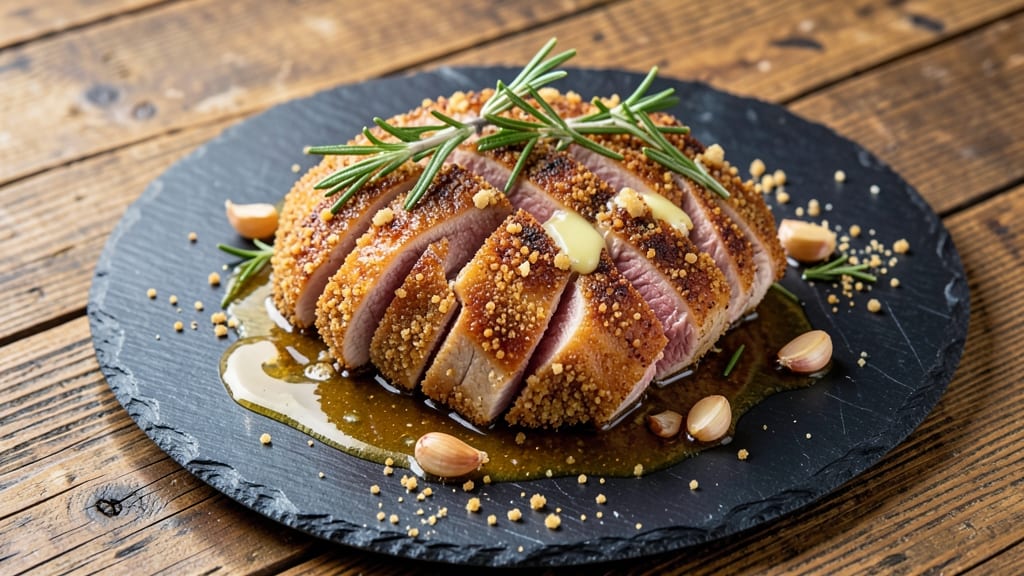
This crusted pork roast recipe transforms a simple cut of pork into a showstopper with crispy bark and fall-off-tender meat—the kind of dish that makes Sunday dinner feel like a celebration. 🔥 As someone who's spent years perfecting pork roasts in professional kitchens and on my own farm, I know the secret lies in the crust: a blend of coarse breadcrumbs, aromatic herbs, and just the right amount of fat to create that perfect golden crust while keeping the inside juicy and rich.
The magic happens in the roasting process, where precise temperature control and patience ensure every bite delivers on that crispy-tender promise. We're talking 325°F for slow, even cooking that renders fat beautifully while the crust develops into something restaurant-worthy.
This isn't your average pork roast—it's a centerpiece that commands attention, with a flavor profile that balances savory, herby notes with just enough sweetness from the caramelized crust.
What you'll end up with is a juicy, perfectly cooked roast that practically melts in your mouth, crowned with that crispy, golden bark that shatters at every bite.
The aroma alone will have your whole house smelling like Sunday dinner, while the texture contrast between the tender interior and crispy exterior creates an experience that's hard to resist. This is the kind of pork roast that turns casual meals into memorable occasions—without requiring hours in the kitchen.
Pair it with classic sides like roasted root vegetables, a crisp green salad, or my favorite—apple sauce with a hint of cinnamon—to complete the meal.
The beauty of this recipe is its versatility: it works for family gatherings, holiday feasts, or even a special weeknight dinner when you want to impress. Let's get started on creating your perfect pork roast.
Ingredients for crusted pork roast
Six ingredients transform simple pork into restaurant-quality showstopper with crispy bark and juicy perfection.
| Ingredient | Amount | Notes |
|---|---|---|
| Pork Shoulder Roast 🐖 | 4 lb | Bone-in for best flavor, trimmed of excess fat |
| Coarse Breadcrumbs 🍞 | 1 ½ cups | Panko or homemade from crusts, toasted |
| Unsalted Butter 🧈 | ½ cup | Cold, cubed for crust mixture |
| Fresh Rosemary 🌿 | ¼ cup | Finely chopped, stems removed |
| Fresh Thyme 🌿 | 0.15 cup | Leaves only, finely chopped |
| Garlic Cloves 🧄 | 6 cloves | Minced, for crust and roasting |
| Diamond Crystal Kosher Salt 🧂 | 2 tbsp | Plus extra for seasoning |
| Ground Black Pepper 🌶️ | 1 tbsp | Freshly cracked |
| Olive Oil 🫒 | ¼ cup | For searing and basting |
| Apple Cider Vinegar 🍎 | 2 tbsp | For tenderizing pork |
| Honey 🍯 | 1 tbsp | For glaze, optional |
| Fresh Sage Leaves 🌿 | 0.1 cup | Chopped, for garnish |
| Onion Powder 🧅 | 1 tsp | For crust depth |
The pork shoulder is where it all starts—bone-in cuts from Costco or your butcher deliver the best flavor. Look for good marbling (white fat streaks) and ask for a cut around 4 lbs—big enough to feed a crowd but not so large it dries out. If you can't find bone-in, bone-out with skin works too, but trim that skin off before roasting. The apple cider vinegar is non-negotiable—it tenderizes the meat while adding subtle sweetness that pairs perfectly with the crust. I always grab the organic cider vinegar from Trader Joe's—it's consistent and affordable. For the herbs, fresh is ideal, but if you're in a pinch, dried thyme and rosemary at half the amount will work, though texture suffers slightly.
No panko breadcrumbs? Toast regular breadcrumbs in a dry pan until golden—they'll be slightly less crisp but still delicious. Running short on butter? Substitute with olive oil, but reduce by 2 tbsp since it's more fluid. The honey glaze is optional but worth it for that caramelized finish—Manuka honey adds depth if you want to splurge. For extra crust flavor, toast the garlic and herbs with the breadcrumbs before mixing. If you're prepping ahead, make the crust mixture up to 2 days early and store it in an airtight container. The pork should sit at room temp for 1 hour before roasting—this ensures even cooking and that perfect crust.
This roast tastes even better the next day—plan ahead. Wrap leftovers tightly in foil and refrigerate for up to 4 days, or freeze portions for 3 months. The crust stays crispy for about 2 days if stored properly, so reheat in a 400°F oven for 15 minutes to revive it. For serving, I like to let the roast rest 15 minutes before slicing—this keeps the juices locked in. Garnish with fresh sage right before serving (the good stuff, not the dried kind) and a drizzle of pan juices for extra richness. The aroma alone will have everyone gathering at the table.
Why You'll Love This Recipe
- No-Fuss Crust: The breadcrumbs and butter create that golden, shatteringly crisp shell with zero fuss—just mix, press, and roast. Honestly, my kids think I’m a genius, and I just happened to have stale bread on hand.
- Herb-Packed Pork Magic: That rosemary and thyme? They turn simple pork into something rich and aromatic, like a hug from a French bistro. The butter melts into the meat while the crust stays perfectly crisp—no dry bites here.
- Leftovers That Shine: This roast tastes even better the next day, especially sliced thin for sandwiches or chopped into salads. Between us, I’ve fed a crowd with half a roast and still had enough for lunch.
- Budget-Friendly Feast: Pork shoulder is affordable, and the crust uses pantry staples—no specialty ingredients needed. I’ve made this for Sunday dinners, potlucks, and even a last-minute weeknight meal without breaking the bank.
Step-by-step instructions for crispy crusted pork roast
Here's how to create that perfect crust while keeping the meat impossibly tender—no guesswork involved.
👨🍳 Step 1: Prep the Pork for Maximum Flavor and Crisp
Start by trimming any excess fat from the 4 lb pork shoulder roast, leaving about ¼ inch of fat cap for moisture. Pat the meat completely dry with paper towels—this is non-negotiable for crispy crust. The drier the surface, the better the crust will form.
In a small bowl, mix together the 1.5 cups coarse breadcrumbs, 1 tsp onion powder, 1 tbsp ground black pepper, and 2 tbsp diamond crystal kosher salt. This dry crust mix needs to cling to the meat, so give it a good stir to distribute everything evenly. I like to press the mixture firmly into the meat later, so it doesn't fall off during cooking.
🍳 Step 2: Build the Herb Butter Crust
In a separate bowl, combine the 0.5 cup cold unsalted butter (cut into small cubes), 0.25 cup finely chopped fresh rosemary, 0.15 cup finely chopped fresh thyme, and 6 minced garlic cloves. Rub this mixture all over the pork, pressing it into every crevice. The butter will melt slightly when it hits the warm oven, creating that irresistible golden crust.
Here's a pro tip: Don't skip the 2 tbsp apple cider vinegar step. Rub it all over the meat before applying the crust—it tenderizes the pork and adds a subtle tang that balances the richness. Let the pork sit at room temperature for 30 minutes while you preheat the oven to 425°F. This ensures even cooking and helps the crust adhere better.
🔥 Step 3: Sear for Color and Flavor
Heat a large oven-safe skillet over medium-high heat and add the 0.25 cup olive oil. Once shimmering, carefully place the pork roast in the skillet, fat-side down. Let it sear undisturbed for 5-6 minutes until the crust is deeply golden brown and the meat releases easily from the pan. Flip the roast and repeat on the other side for another 4-5 minutes.
This searing step is where all the magic happens—it locks in juices and creates that beautiful caramelized crust. If you notice the crust starting to burn before the meat releases, reduce the heat slightly. You want color, not char. Once seared, transfer the skillet to the preheated oven.
⏰ Step 4: Roast to Perfect Tenderness
Roast the pork for 1 hour 15 minutes at 425°F, then reduce the heat to 300°F and continue cooking for another 2 hours 30 minutes to 3 hours (depending on your oven). The meat is done when it reaches an internal temperature of 200-205°F and a fork slides in like butter.
About 45 minutes before the pork is done, brush it with a mixture of 1 tbsp honey and 2 tbsp apple cider vinegar for a glossy finish. This glaze adds sweetness and helps create that sticky, caramelized bark. The low-and-slow cooking at the end ensures the meat becomes fork-tender while maintaining that crispy exterior.
🍽️ Step 5: Rest and Slice for Maximum Juiciness
Remove the pork from the oven and let it rest on a cutting board for at least 30 minutes (I prefer 45 minutes to an hour). This resting period is crucial—it allows the juices to redistribute throughout the meat so every slice is moist and flavorful. Tent loosely with foil to keep it warm.
Slice the pork against the grain into ½-inch thick slices. Garnish with 0.1 cup chopped fresh sage leaves just before serving. The crust should be crispy and golden, while the meat should be so tender it practically falls apart. Serve with pan juices spooned over the top for extra richness.
Pro Tips For Making Crusted Pork Roast
- SEAR FIRST, REST LATER: I used to rush the crusting step, but here’s the deal: sear the pork shoulder until it’s deep golden—almost brown—before adding the breadcrumb mix. Then, pull it from the pan and let it rest for 5 minutes under foil. This prevents the crust from turning soggy when the butter melts later.
- TOAST YOUR BREADCRUMBS: Skip the raw breadcrumbs—toss them in a dry pan over medium heat for 2-3 minutes until they’re fragrant and lightly toasted. This adds depth to the crust and prevents it from tasting like wet cardboard. (Yes, even if you’re impatient like me.)
- DON’T OVERMIX THE HERBS: Chop the rosemary and thyme fine, but don’t pulverize them—just small, even pieces. When you mix them into the butter and breadcrumbs, resist the urge to blend everything into a paste. You want pockets of herb flavor, not a muddy, herby sludge.
- USE COLD BUTTER: Take the unsalted butter straight from the fridge and cut it into small cubes before mixing it with the breadcrumbs. Cold butter creates a better crust—it melts slower, locking in moisture and giving you that crispy, buttery texture instead of a greasy mess. (Trust me, this is the thing that matters most.)
Wine and beer pairings for this dish
Red Wine Pairings
For this rich, herby pork roast, I always reach for a bold red wine that can stand up to the crust's depth while complementing its savory-sweet balance. A Cabernet Sauvignon from Napa Valley—like the Silver Oak—is my go-to choice.
Its dark fruit notes and firm tannins cut through the butter and herbs, while the oak aging adds complexity that mirrors the crust's caramelized richness. 🍷
If you prefer something slightly lighter, a Syrah from Crozes-Hermitage offers vibrant red berry flavors and a touch of spice that pairs beautifully with the rosemary and thyme in the crust.
The Guigal Côte-Rôtie is a personal favorite—it's elegant enough for a weeknight dinner but substantial enough for a holiday feast.
White Wine Options
Don't overlook white wines if you're serving this roast with lighter sides. A dry Riesling from Germany's Mosel region—like the Dr. Loosen Blue Slate—brings bright acidity and honeyed apple notes that contrast wonderfully with the pork's richness.
The slight sweetness in these wines actually enhances the honey glaze on the crust. ✨
For a crisp, refreshing option, try a Chardonnay from California's Sonoma Coast, such as Kistler Vineyards. The stone fruit flavors and subtle vanilla from oak aging provide a smooth transition between the pork's savory notes and any accompanying vegetables.
Just avoid overly oaked Chardonnays—they can clash with the herbaceous crust.
Beer Pairings
When it comes to beer, I love a Belgian-style witbier like Hoegaarden for its citrusy notes and effervescence. The coriander and orange peel flavors in the beer complement the rosemary and thyme in the crust, while the bubbles help cleanse the palate between bites. 🍺
For something heartier, a German Dunkelweizen—like Weihenstephaner Hefeweissbier—offers a malty sweetness that balances the pork's savory depth. The banana and clove notes in the beer pair surprisingly well with the honey glaze, creating a harmonious flavor combination that feels both traditional and innovative.
Cider Complements
Don't underestimate the power of a well-chosen hard cider with this dish. A dry English cider like Thatchers Gold—with its crisp apple flavors and subtle spice—mirrors the apple cider vinegar in the recipe while adding its own complexity.
The tannins in these ciders help cut through the richness of the pork.
For a sweeter option, try a French poiré like Domaine Dupont. The pear notes complement the honey glaze beautifully, while the slight effervescence keeps the palate fresh. I often serve this when I'm hosting a casual gathering—it's approachable and universally appealing.
Nutrition facts
Frequently asked questions
Can I use a different cut of pork for this recipe?
A bone-in pork shoulder (like the one called for) is ideal, but you can substitute with a pork butt or pork picnic roast—they're essentially the same cut. Avoid leaner cuts like tenderloin, as they lack the fat needed for a crispy crust and juicy interior. For a 4 lb roast, adjust cooking time slightly (pork butt may need 10-15 extra minutes).
Why does my crust keep falling off?
This usually happens when the meat isn't dry enough or the crust isn't pressed firmly. Pat the pork thoroughly dry before applying the crust, and press the breadcrumb mixture very firmly into the meat—almost like you're sculpting it. Chilling the pork for 30 minutes before roasting also helps the crust adhere better.
How do I know when the pork is fully cooked?
Use a meat thermometer for accuracy—the pork is done when it reaches 200-205°F internally. The meat should feel tender when probed with a fork, and the juices should run clear (not pink). If you don't have a thermometer, cut into the thickest part: the meat should separate easily, and the juices should be clear.
Can I make this ahead of time?
This roast tastes even better the next day. Cook it fully, then refrigerate in an airtight container for up to 4 days. Reheat in a 400°F oven for 15 minutes to revive the crust. For leftovers, slice and store in the fridge for 3 days or freeze for 3 months. The crust stays crispy for about 2 days if stored properly.
What’s the best way to serve this roast?
Slice against the grain into ½-inch thick pieces for maximum tenderness. Serve with pan juices spooned over the top, and pair with classic sides like roasted root vegetables, crisp green salad, or my favorite—cinnamon-spiced apple sauce. The crust stays crispy for 2 days, so it’s perfect for meal prep or holiday gatherings.