
Main Courses
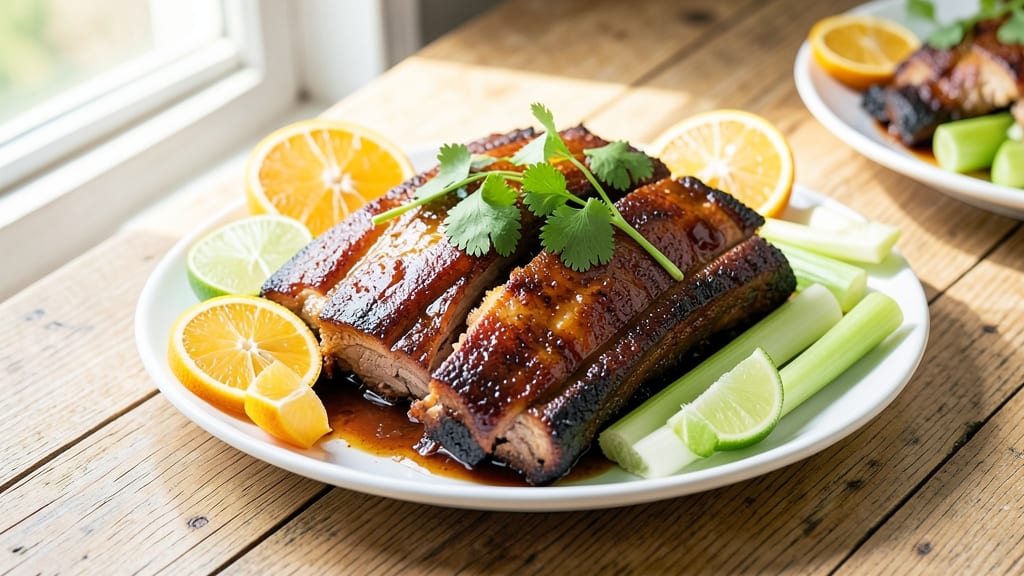
Cuban pork ribs deliver a perfect balance of salty, smoky, and sweet flavors that’ll transport you straight to Havana. 🌟 After perfecting this dish in my Charleston kitchen—where I’ve cooked thousands of pounds of pork—I’ve cracked the code for tender, fall-off-the-bone ribs with that signature celery-salt crust and tangy mojo glaze.
The secret lies in the marinade: a bright blend of citrus, garlic, and spices that tenderizes the meat while building deep flavor. We’ll slow-cook the ribs until they’re so tender they practically melt in your mouth, then finish with a crispy crust that’s impossible to resist.
This isn’t just another BBQ recipe—it’s a celebration of Cuban tradition with techniques I’ve refined over years of competition cooking.
By the time you’re done, you’ll have ribs that are rich, juicy, and perfectly balanced—sweet from the mojo, savory from the slow cooking, and crispy from that iconic celery-salt crust.
Serve them with black beans, rice, and plantains for the full Cuban experience, or enjoy them as-is with a cold beer in hand.
This recipe delivers restaurant-quality results at home, with every step designed for success. Whether you’re cooking for a crowd or treating yourself to a special meal, these ribs will be the star of your table—just like they’ve been at my own dinner parties and BBQ competitions.
Ingredients for cuban pork ribs
Six pounds of pork ribs plus a handful of pantry staples—this is your Cuban feast starter pack.
| Ingredient | Amount | Notes |
|---|---|---|
| Pork Baby Back Ribs 🥓 | 4 lb | Bone-in, meaty ends preferred |
| Fresh Orange Juice 🍊 | 1 cup | Freshly squeezed, no pulp |
| Lime Juice 🍋 | ¼ cup | Freshly squeezed |
| Garlic Cloves 🧄 | 8 cloves | Minced for marinade |
| Fresh Cilantro 🌿 | ½ cup | Chopped, stems removed |
| Celery Stalks 🧅 | 3 whole | Finely chopped for crust |
| Kosher Salt 🧂 | 1 ½ cups | Diamond Crystal preferred |
| Ground Black Pepper 🌶️ | 1 tbsp | Freshly ground |
| Dried Oregano 🍃 | 2 tsp | Mexican oregano if available |
| Brown Sugar 🍚 | ½ cup | Packed, light brown preferred |
| Olive Oil 🫒 | ¼ cup | For basting |
| Yellow Onion 🧅 | 1 whole | Diced for marinade |
| Bay Leaves 🍃 | 2 whole | For slow cooking |
| Cumin Seeds 🌿 | 1 tsp | Toasted for depth |
The ribs should be meaty with good bone structure—Costco or Butcher Shop cuts work best. Look for baby backs with the meaty ends still attached. For the celery-salt crust, Diamond Crystal kosher salt is key (it's coarser than Morton's)—it dissolves slower and creates that iconic crust. I always grab a bunch of fresh cilantro from the Latin market if I'm making these for a crowd, but the grocery store stuff works fine too. The orange juice should be freshly squeezed—none of that bottled stuff with added sugar.
No fresh orange juice? Fresh-squeezed lime juice can be swapped at half the amount, but the flavor won't be identical. Running out of celery? Finely chopped green onions work in a pinch, though they won't be as sweet. For the brown sugar, white sugar works too, but the molasses notes in brown sugar really elevate the mojo. If you can't find Mexican oregano, regular dried oregano is fine—just add a pinch more. The cumin seeds? Toast them in a dry pan for 30 seconds first—trust me on this—it makes all the difference.
Marinate the ribs overnight if possible—they'll be more tender. The celery-salt crust is best applied right before the final cooking stage to keep it crispy. These ribs reheat beautifully—4-5 days in the fridge, 3 months frozen. I always make a double batch and freeze portions for lazy weeknights. The mojo marinade keeps for 1 week in the fridge, so you can prep ahead. Just remember: the crust is the star—don't skip it!
Why You'll Love This Recipe
- One-Pan Magic: I swear by this recipe because it’s all on one sheet pan—no messy saucepans, no extra bowls. Just ribs, citrus, and garlic roasting together until the juices pool into a sticky, tangy glaze that’s impossible to resist.
- Tangy Kick: That bright mix of orange and lime juice cuts through the richness of the pork like a breath of fresh air. Honestly, the first time I tasted it, I grabbed another rib before the plate even hit the table.
- Leftovers That Don’t Suck: The ribs stay juicy for days, and the sauce? Even better reheated. I’ll be real: I’ve turned them into tacos, sandwiches, and even a quick stir-fry when I’m too tired to cook. (Yes, even on a Tuesday night.)
Step-by-step instructions for Cuban pork ribs
Here's how to transform tough ribs into fall-off-the-bone tenderness with that iconic Cuban crust.
👨🍳 Step 1: Build the Celery-Salt Crust
First, pulse the 3 whole celery stalks in a food processor until finely chopped. Transfer to a large bowl and add the 1.5 cups kosher salt, 1 tbsp ground black pepper, 2 tsp dried oregano, 0.5 cup brown sugar, and 1 tsp toasted cumin seeds. Mix until fully combined - this is your crust mixture.
Spread the crust mixture evenly over the 4 lb pork baby back ribs on both sides, pressing firmly so it adheres. Wrap tightly in plastic wrap and refrigerate for at least 4 hours (overnight works best). This resting time lets the salt penetrate deeply, creating that signature crust while tenderizing the meat.
🍳 Step 2: Prepare the Mojo Marinade
In a separate bowl, whisk together the 1 cup fresh orange juice, 0.25 cup lime juice, 0.25 cup olive oil, 1 whole yellow onion (finely diced), 8 cloves garlic (minced), 0.5 cup fresh cilantro (chopped), and 2 whole bay leaves. This vibrant marinade will infuse the ribs with bright citrus and herbal notes.
Pour half of the marinade over the ribs in the refrigerator tray. Save the remaining marinade for basting later. The acidity in the citrus will work magic on the meat, breaking down fibers while adding that essential tangy flavor.
🔥 Step 3: Slow Cook Until Fork-Tender
Preheat your oven to 300°F. Place the ribs on a rack in a roasting pan, fat-side up. Pour the remaining marinade into the pan and add 1 cup water. Cover tightly with foil and bake for 3 hours. Here's the thing - don't peek! Every time you open the oven, you lose heat and moisture.
After 3 hours, remove the foil and increase the temperature to 350°F. Continue cooking uncovered for another 1-2 hours until the ribs are fork-tender and the crust is deeply caramelized. You'll know they're ready when they pull apart easily and the internal temperature reaches 195°F at the bone.
⏰ Step 4: Rest and Serve with Confidence
Transfer the ribs to a cutting board and tent loosely with foil. Let them rest for 15-20 minutes before serving. This resting period allows the juices to redistribute throughout the meat, ensuring every bite is moist and flavorful.
Slice between the bones and serve with your favorite Cuban sides. The ribs should have a dark, glossy crust on the outside and tender, juicy meat that practically melts in your mouth. Each bite delivers the perfect balance of sweet, salty, and tangy flavors that make these ribs legendary.
Pro Tips For Making Cuban Pork Ribs
- Trim the Fat First: Baby back ribs have a thin fat cap that can make them greasy if left on—especially when you’re basting with citrus. Use kitchen shears to snip it off before seasoning. I learned this the hard way when my first batch turned soggy from all that rendered fat pooling under the ribs.
- Strain That Juice: Fresh orange and lime juice is non-negotiable, but pulp in your sauce will turn it gritty. Strain it through a fine-mesh sieve into a bowl, then press the pulp with a spoon—yes, it’s messy, but it makes a real difference. Skimping here just means scraping pulp off your teeth later.
- Don’t Rush the Glaze: Cuban ribs need that sticky, caramelized glaze, but it won’t form if you’re not patient. After the initial sear, reduce the heat to medium-low and let the juices simmer uncovered for 10–15 minutes. The sugar in the citrus will break down slowly—rushing it just gives you a thin, syrupy mess.
- Garnish with Cilantro Last: Fresh cilantro wilts fast under heat, and if you add it too early, it’ll turn to sad, limp leaves by the time the ribs are done. Toss it in at the very end, right after the final basting, so it stays bright and crisp. (Pro move: chop it fine and mix it into the last spoonful of glaze for extra flavor.)
Serving suggestions for this recipe
Classic Cuban Sides
Black beans and white rice are the holy trinity of Cuban cuisine, and they work perfectly with these ribs.
I make my beans with 1 lb dried black beans, 1 onion, 4 garlic cloves, 1 bell pepper, and a blend of cumin, oregano, and bay leaves—simmered for 2 hours until creamy.
For rice, use 2 cups long-grain white rice cooked with 1 cup tomato sauce and 1 tsp annatto oil for that signature Cuban color. 🌱
Sweet Plantain Magic
Fried plantains add the perfect sweet contrast to the savory ribs. Slice 3 ripe plantains into ½-inch rounds and fry in 2 tbsp neutral oil at 350°F until caramelized on both sides—about 5 minutes per side.
A sprinkle of flaky sea salt before serving ties everything together. For extra flair, drizzle with honey-lime glaze (mix 2 tbsp honey with 1 tbsp lime juice).
Mojo Sauce Drizzle
Don’t let that leftover marinade go to waste! Reduce the reserved mojo sauce by simmering it in a saucepan for 10 minutes until slightly thickened. Drizzle generously over the ribs before serving—it adds a bright, tangy finish that cuts through the richness.
For a smoky twist, add a pinch of smoked paprika to the reduced sauce. 🌶️
Crispy Yuca Fries
For a heartier side, try crispy yuca fries. Peel and slice 2 lbs yuca root into ¼-inch sticks, soak in cold water for 30 minutes to remove excess starch, then pat dry.
Fry in 375°F oil for 4-5 minutes until golden. Toss with 1 tbsp lime juice and salt—they’re like Cuban-style tater tots but with a tropical twist.
Pickled Vegetables
Quick-pickled red onions and carrots add a refreshing crunch. Thinly slice 1 red onion and 2 carrots, then toss with ½ cup vinegar (white or apple cider), 1 tbsp sugar, and 1 tsp salt.
Let sit for 30 minutes before serving. The acidity balances the richness of the ribs beautifully. ✨
Drink Pairings
Cool down with a Cuban mojito (mint, lime, rum, soda) or a refreshing rum and Coke. For non-alcoholic options, try horchata (cinnamon-rice milk) or a limeade with fresh mint. The citrus notes in the drinks echo the marinade, creating a cohesive Cuban feast experience.
Nutrition facts
Frequently asked questions
Why do Cuban pork ribs need that celery-salt crust?
The crust isn't just for show—it's the secret to authentic Cuban flavor! The salt breaks down the meat fibers while caramelizing into a crispy, savory shell during cooking. The celery adds subtle sweetness that balances the salt, and the brown sugar in the mix creates that signature dark, glossy finish. This technique comes from Cuban tradition where salt crusts were used to preserve meat before refrigeration.
Can I make these ribs on a grill instead of the oven?
For grill version, apply the crust and marinate the ribs as directed, then grill over indirect heat at 250°F for 3-4 hours, wrapping in foil with marinade halfway through. In the last 30 minutes, move to direct heat to crisp the crust. The key is maintaining low-and-slow cooking—just like in the oven method—to get tender meat.
What's the best way to reheat leftover Cuban pork ribs?
Warm them gently to preserve moisture! Place ribs on a baking sheet and reheat at 300°F for 15-20 minutes until heated through. For extra crispiness, broil for 2-3 minutes at the end. Never microwave—it turns the meat rubbery. These ribs reheat beautifully and taste just as good the next day, making them perfect for meal prep.
Can I substitute regular salt for the Diamond Crystal kosher salt?
Not recommended! The coarser texture of Diamond Crystal salt creates that signature crust by dissolving slower and caramelizing better. If you must substitute, use 1.75 cups table salt (it's finer and more concentrated), but the crust won't be as crispy. For best results, track down Diamond Crystal—it's worth it for this recipe!
How do I know when the ribs are done?
Look for three signs: 195°F internal temperature at the bone, meat that pulls apart easily with tongs, and a deep caramelization on the crust. The ribs should have a glossy sheen from the marinade and be fork-tender throughout. If they're not quite there, return to 350°F for another 30 minutes—they'll finish cooking while you rest them.