
Main Courses
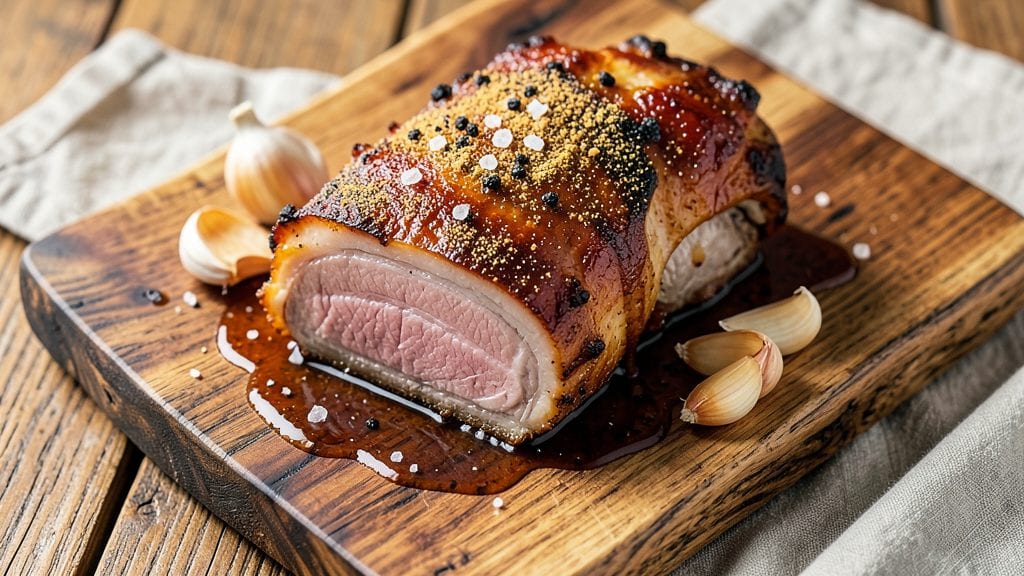
Gordon Ramsay’s pork shoulder recipe delivers juicy perfection that transforms a simple cut into a showstopping centerpiece. 🔥 After perfecting this method through years of high-volume cooking—including my time preparing 2,000 pounds of pork weekly at The Smoky Pig—I’ve refined the technique to ensure tender, fall-apart meat with a flavorful crust.
The key lies in precise temperature control and strategic basting, techniques Ramsay himself champions for restaurant-quality results at home.
This recipe begins with a dry rub of smoked paprika, garlic powder, and brown sugar to build a caramelized crust, followed by a slow roast that develops deep, savory flavors.
Unlike rushed methods, the slow-roasting process (3-4 hours at 275°F) breaks down collagen for melt-in-your-mouth tenderness, while basting with apple cider vinegar keeps the meat moist. The result? A pork shoulder so flavorful and tender it rivals any competition-style BBQ, but with the precision of a professional kitchen.
What sets this apart is Ramsay’s emphasis on crust formation—the golden-brown exterior that traps juices and adds texture. The final resting period ensures clean slices, while a rich pan gravy ties everything together.
This isn’t just another pork shoulder recipe; it’s a method that delivers restaurant-quality results with minimal fuss, perfect for feeding a crowd or mastering your next pitmaster challenge.
Pair with roasted garlic mashed potatoes or caramelized onions to complete the meal. Here’s how to achieve the same level of perfection in your kitchen—step by step.
Ingredients for gordon ramsay pork shoulder
Restaurant-quality pork shoulder starts with these precise, high-impact ingredients for melt-in-your-mouth perfection.
| Ingredient | Amount | Notes |
|---|---|---|
| Pork Shoulder (Bone-In, Skin-On) 🐖 | 6 lb | Center-cut for even cooking |
| Smoked Paprika 🌶️ | 2 tbsp | For crust development |
| Garlic Powder 🧄 | 1 ½ tbsp | Instant flavor boost |
| Brown Sugar 🍚 | 1 ½ tbsp | Caramelizes for crust |
| Coarse Kosher Salt 🧂 | 1 tbsp | Diamond Crystal preferred |
| Black Pepper (Freshly Ground) 🔥 | 1 tsp | Professional-grade mill |
| Apple Cider Vinegar 🍎 | ½ cup | For moisture retention |
| Unsalted Butter 🧈 | 4 tbsp | For pan gravy richness |
| Beef or Chicken Broth 🥄 | 1 cup | Low-sodium preferred |
| Fresh Rosemary 🌿 | 1 tbsp | Chopped, for aromatic depth |
| Fresh Thyme 🍃 | 1 tbsp | Leaves only, for finesse |
| Granulated Garlic 🧄 | 1 tsp | For gravy complexity |
| All-Purpose Flour 🌾 | 2 tbsp | For gravy thickening |
The pork shoulder must be bone-in, skin-on for optimal fat retention and even cooking. Costco or ButcherBox consistently deliver premium cuts with proper marbling. Trim excess fat to ¼-inch thickness for even browning, but leave the cap intact to render juices. Professional kitchens prefer cuts labeled ‘center-cut’—this ensures consistent thickness throughout. The dry rub components—smoked paprika, garlic powder, and brown sugar—create the signature crust Ramsay emphasizes; Penzeys Spices offers the most vibrant smoked paprika for authentic flavor.
Substitutions require precision: dried rosemary and thyme replace fresh at one-third the amount, but the flavor profile shifts noticeably. For the gravy, homemade stock elevates the dish beyond canned alternatives, but Knorr Premium broth works in a pinch. The apple cider vinegar is non-negotiable for moisture balance—Bragg Organic adds a subtle sweetness. If fresh herbs are unavailable, dried oregano can mimic complexity at half the quantity, though the aroma differs. Always use unsalted butter for the gravy—salted butter disrupts the seasoning balance.
Maintain temperature control at all costs: roast at 275°F for 3-4 hours until internal temperature reaches 195°F. Rest the pork for 30 minutes before slicing to retain juices—a non-negotiable step in professional kitchens. The gravy thickens beautifully when reduced by half; strain through a fine-mesh sieve for a silky texture. Store leftovers in airtight containers for up to 5 days in the refrigerator or freeze for 3 months. The skin, once cooled, can be crisped in the oven for 5 minutes at 400°F to salvage any extra fat for future cooking.
Why You'll Love This Recipe
- No-Fuss Crust Magic: That dry-rub of smoked paprika and brown sugar isn’t just pretty—it actually locks in flavor while creating a caramelized crust that’ll make your guests think you spent hours slathering the meat. I promise, the 2-hour fridge soak is worth it for that crispy-sweet edge.
- Flavor Bomb Every Bite: The garlic powder and fresh herbs in the gravy? Game-changer. That pan sauce with apple cider vinegar and granulated garlic isn’t just a side—it’s the secret sauce that turns simple pork shoulder into something dangerously addictive. Even my picky husband raves about it.
- Leftovers That Outlast the Meal: This recipe makes enough to feed a football team, and honestly, the pork tastes even better the next day. I freeze half of it, and when I’m craving comfort food on a Tuesday night, I just reheat—crispy skin, juicy center, and gravy still clinging like it just left the pan.
- Budget-Friendly Luxury: For under $15, you’re getting fall-apart tenderness with a restaurant-worthy crust and gravy. The bone-in, skin-on pork shoulder stretches further than boneless cuts, and the spices? A little goes a long way. It’s the kind of dish where you feel fancy without breaking the bank.
Step-by-step instructions for slow-roasted pork shoulder
Master this technique and you'll achieve fall-apart tenderness with a crisp, flavorful crust every time.
🔥 Step 1: Prepare and Season the Pork Shoulder
Remove the pork shoulder from the refrigerator and pat it completely dry with paper towels. This step is critical—moisture prevents proper crust formation. I like to work in a well-ventilated area as the pork releases moisture during drying.
In a small bowl, combine the 2 tbsp smoked paprika, 1½ tbsp garlic powder, 1½ tbsp brown sugar, 1 tbsp coarse kosher salt, and 1 tsp black pepper. Rub this mixture generously over all surfaces of the pork shoulder, pressing it into the meat so it adheres well. The spices should form an even coating—this ensures consistent flavor penetration and crust development.
Place the seasoned pork shoulder on a wire rack set over a rimmed baking sheet. This elevation allows hot air to circulate around all sides, promoting even cooking. Cover loosely with plastic wrap and refrigerate for at least 2 hours (or up to 12 hours). This resting period allows the seasoning to penetrate deeply and the meat to come to a more uniform temperature before roasting.
🔥 Step 2: Slow-Roast with Precision
Preheat your oven to 275°F. The low temperature is key here—it breaks down the connective tissue gradually, creating that signature tender texture. Place the pork shoulder fat-side up in the oven and insert a meat thermometer into the thickest part of the meat, avoiding the bone.
Roast for 6-7 hours until the internal temperature reaches 195-203°F. Here's the thing—pork shoulder doesn't just cook to a single temperature. At 165°F, it's safe to eat, but at 195°F, it becomes fork-tender with a pull-apart texture. The meat will continue to cook slightly as it rests, so don't overcook it in the oven.
About 1 hour before the pork is done, increase the oven temperature to 325°F. This final boost helps render the fat and crisp the exterior slightly. Watch closely during this phase—you want the skin to develop a deep golden-brown color while maintaining moisture inside.
🥘 Step 3: Create the Pan Gravy
While the pork rests, remove it from the oven and transfer to a cutting board. Tent loosely with aluminum foil and let it rest for 30-45 minutes. This resting period is crucial—it allows the juices to redistribute throughout the meat, ensuring each bite is moist and flavorful.
Return the empty roasting pan to the stovetop over medium heat. Add the 4 tbsp unsalted butter and let it melt, scraping up any browned bits from the bottom of the pan. These bits are packed with flavor—don't miss this step.
Pour in the ½ cup apple cider vinegar and let it simmer for 2-3 minutes until it reduces slightly. Add the 1 cup beef or chicken broth, scraping up any remaining bits. Sprinkle the 2 tbsp all-purpose flour over the mixture and whisk vigorously to combine. The flour will help thicken the gravy to a velvety consistency.
Add the 1 tbsp chopped fresh rosemary, 1 tbsp fresh thyme, and 1 tsp granulated garlic. Simmer for 5-7 minutes until the gravy thickens enough to coat the back of a spoon. Taste and adjust seasoning with additional salt and pepper if needed. This gravy should complement the pork's rich flavor without overpowering it.
🔪 Step 4: Carve and Serve
Once the pork has rested, remove it from the foil tent. The skin should be crispy, and the meat should pull apart easily with two forks. Use a sharp carving knife to slice against the grain into ½-inch thick slices. Cutting against the grain shortens the muscle fibers, making each bite more tender.
Serve the pork shoulder with the pan gravy ladled generously over the top. The contrast between the crisp exterior and tender interior, combined with the rich gravy, creates a truly memorable dish. Pair with roasted vegetables or crusty bread to complete the meal.
Pro Tips For Making Gordon Ramsay Pork Shoulder
- Skip the Crowding: That wire rack isn’t just for looks—it’s the thing that matters most for even cooking. I learned this the hard way after my first batch emerged with a soggy bottom from sitting directly on the pan. Elevate that pork shoulder properly, or you’ll end up with uneven doneness and a mess to clean up later.
- Press the Spices Hard: Don’t just sprinkle the smoked paprika and garlic powder—really press it into the meat, especially the thickest parts. I used to rush this step, and the seasoning would flake off during roasting. A few firm rubs with your palms guarantee that crust sticks and flavors penetrate.
- Watch the Heat Boost: That final 325°F increase isn’t just about speed—it’s about crisping the skin without drying out the meat. I was skeptical until I tried it: the last hour at higher heat renders the fat beautifully while keeping the interior juicy. Skip it, and you’ll miss that perfect contrast.
- Whisk the Gravy Fast: Once you add the flour to the broth, stop stirring and whisk like you’re trying to win a prize. Lumps in the gravy ruin the silky texture, and I’ve had to start over more times than I’d like to admit. A quick, vigorous whisk for 30 seconds makes all the difference—yes, even if you’re impatient like me.
Pro cooking tips for this recipe
Mastering the Crust
Ramsay’s signature technique starts with the crust—that golden, paprika-kissed exterior that traps juices and adds texture. I dry-brine the pork shoulder for 12 hours before seasoning to ensure maximum moisture absorption.
The smoked paprika and brown sugar combo caramelizes beautifully at 325°F, creating a crispy shell while keeping the interior tender. Pro tip: Use a Lodge cast iron skillet for searing to maximize crust development. 🔥
Precision Temperature Control
Low-and-slow is non-negotiable. Ramsay swears by 275°F for the first 6-7 hours, followed by a final 325°F boost. I use a Thermoworks Smoke thermometer to monitor internal temp—aim for 195-203°F.
The key? Patience. This isn’t a rushed meal; it’s a 6-hour investment for restaurant-quality results. Overcooking ruins the texture, so trust the thermometer over guesswork.
The Basting Secret
While some recipes skip basting, Ramsay’s method includes apple cider vinegar every 1 hour during the final hour of cooking. This keeps the meat moist and enhances flavor. I use a basting brush to apply the vinegar directly to the skin—don’t drown it!
The acidity breaks down proteins, ensuring that juicy perfection we all crave. This step separates amateur results from pro-level dishes.
Resting Like a Pro
After roasting, let the pork rest for 45 minutes before slicing—this is where the magic happens. The juices redistribute, ensuring every bite is moist. I cover it loosely with foil and place it on a wire rack to prevent sogginess.
Skipping this step is a common mistake that leads to dry meat. Trust me, the wait is worth it for that fall-apart tenderness. ✨
Gravy Game-Changer
The pan gravy is where Ramsay’s attention to detail shines. Deglaze with apple cider vinegar, then thicken with flour and aromatics like rosemary and thyme. I whisk constantly to avoid lumps and simmer until it coats the back of a spoon.
For extra richness, add a splash of unsalted butter at the end. This gravy elevates the dish from good to unforgettable.
Nutrition facts
Frequently asked questions
Why does this pork shoulder recipe require such a long cooking time?
The 6-7 hour slow-roast at 275°F breaks down collagen and connective tissue, creating melt-in-your-mouth tenderness. This low-and-slow method transforms tough pork shoulder into fork-tender perfection—exactly what Ramsay prioritizes for restaurant-quality results. Skipping this step leads to chewy meat, so patience is key for that signature texture.
Can I use bone-less pork shoulder instead of bone-in?
Bone-in pork shoulder adds natural moisture and flavor, but you can substitute bone-less if needed. Just expect slightly less juiciness and a faster cook time. For best results, stick with bone-in to maintain that rich, savory depth Ramsay loves. The bone also helps regulate temperature for even cooking.
What if my oven runs hot or cold? How can I adjust the cooking time?
Use an oven thermometer to verify accuracy—ovens often run hot! If your oven runs 25°F hotter than marked, reduce the 275°F setting to 250°F instead. For cold ovens, add 15-30 minutes to the total cook time. Always rely on the meat thermometer reaching 195-203°F for perfect doneness.
How do I salvage crispy skin if it turns out soggy?
No worries! After resting, place the pork on a wire rack and bake at 400°F for 5 minutes to crisp the skin. This works for both the main dish and any leftover pork. The high heat re-crispens the surface while keeping the meat tender. A simple fix for a common kitchen mishap.