
Main Courses
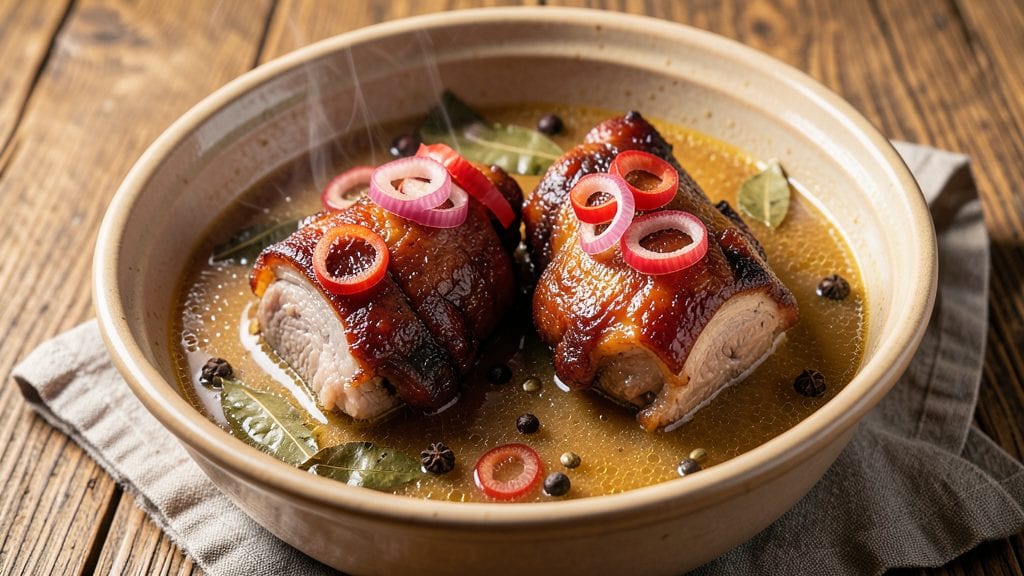
This old-fashioned pickled pork hocks recipe brings back the rich, tangy flavors of Southern kitchens where collagen-rich cuts were transformed into melt-in-your-mouth delights.
Growing up in Georgia, I learned that slow-braised pork hocks weren’t just a side—they were the centerpiece of family meals, their deep umami and bright vinegar notes cutting through rich greens or crusty cornbread.
The secret lies in the balance: enough acid to preserve, enough time to tenderize, and just the right herbs to elevate.
What sets this method apart is the two-stage process—first, a 48-hour brine to infuse the hocks with vinegar and spices, then a slow simmer that breaks down connective tissue into velvety, fork-tender perfection.
No shortcuts here; the collagen needs hours to transform into that irresistible, jelly-like richness that clings to every bite. The result? A dish that’s equal parts comforting and sophisticated, with a depth of flavor you won’t find in store-bought versions.
By the time you’re done, you’ll have golden, aromatic pork hocks swimming in a tangy, herb-infused broth that’s perfect for serving over mashed potatoes, atop buttered noodles, or even as a standalone dish with crusty bread to soak up every last drop.
This isn’t just a recipe—it’s a taste of tradition, reimagined for modern kitchens. Let’s get started on creating something truly special.
The beauty of this method is its versatility—adjust the vinegar-to-water ratio for more or less tang, or swap in juniper berries for a piney depth. The brining process also works for other tough cuts, like beef shanks or chicken thighs.
Once you master it, you’ll never buy pre-pickled meats again. Here’s how to bring this classic back to life.
Ingredients for old fashioned pickled pork hocks
A few pantry staples and one collagen-rich cut. Two days of patience. One unforgettable flavor explosion.
| Ingredient | Amount | Notes |
|---|---|---|
| Pork Hocks 🍖 | 3 lb | Fresh, untrimmed for collagen |
| White Vinegar 💧 | 3 cups | Distilled, 5% acidity preferred |
| Water 💧 | 3 cups | Filtered or bottled preferred |
| Bay Leaves 🌿 | 4 whole | Dried, high-quality preferred |
| Black Peppercorns 🌶️ | 1 tbsp | Whole, cracked for release |
| Allspice Berries 🌶️ | 1 tsp | Crushed lightly for aroma |
| Mustard Seeds 🌶️ | 1 tsp | Whole, yellow preferred |
| Salt 🧂 | 1 ½ cups | Diamond Crystal kosher |
| Garlic Cloves 🧄 | 6 cloves | Smashed, skin-on for flavor |
| Onion 🧅 | 1 whole | Yellow, peeled, halved |
| Fresh Thyme 🌿 | ¼ cup | Stems removed, loosely packed |
| Juniper Berries 🌲 | 1 tsp | Optional, for piney depth |
| Brown Sugar 🍯 | ½ cup | Light or dark preferred |
The pork hocks are the star—look for thick, meaty cuts with visible fat marbling at the butcher counter. Whole Foods or your local Southern-style meat market often carry the best quality. If you can't find them fresh, frozen works (thaw overnight in the fridge). The vinegar matters too—distilled white vinegar gives consistent acidity, while apple cider adds subtle sweetness. I always double-check the acidity percentage on the bottle; 5% is ideal. For the bay leaves, California or Turkey varieties have the most robust flavor—avoid those dusty old leaves in the back of your spice rack.
No fresh thyme? Dried works at one-third the amount, but fresh is worth hunting down at Trader Joe's or your local farmers market. Short on juniper berries? Skip them entirely—this recipe still shines without them. The mustard seeds can be swapped for 1/2 tsp ground mustard if you're in a rush, though whole seeds release flavor more slowly during the long simmer. For the sugar, turbinado or demerara adds a caramel note, but brown sugar keeps it classic. And if you're feeling adventurous, swap half the white vinegar for red wine vinegar for a deeper complexity—just adjust the salt accordingly.
This isn't a recipe you'll make on a whim—the 48-hour brine is non-negotiable. Store the hocks in a glass gallon jar in the fridge, covered but not sealed. After brining, the hocks will keep in the fridge for up to 2 weeks in their tangy broth. For longer storage, freeze the entire jar for up to 6 months. The broth alone is a treasure—strain and reduce it for a glossy, umami-rich pan sauce, or use it as a base for soups. I always make extra; it disappears faster than the hocks themselves.
Why You'll Love This Recipe
- I’ll be real: this recipe makes enough to feed a small army, and that’s a good problem. The pork hocks keep in their tangy broth for up to two weeks, so you can meal prep lunches, pack leftovers for work, or even freeze portions for a lazy night. Serve over rice, in sandwiches, or just eat it straight from the jar—no guilt, just satisfaction.
- One-Pot Magic: Honestly, this is the kind of recipe where you dump everything in one pot and forget about it for hours. No chopping marathons, no constant stirring—just set it, simmer it, and let the pork hocks do their collagen magic while you sip coffee or scroll through memes. The vinegar and spices handle all the flavor work, so you’re basically on autopilot.
- Tangy, Spiced Perfection: That balance of rich pork and bright vinegar? Chef’s kiss. The garlic cloves (smashed, skin-on) and whole onion infuse the meat like a flavor bomb, while the cracked black peppercorns and crushed allspice berries add depth that makes every bite sing. The brown sugar caramelizes into a sticky glaze—trust me, it’s the kind of dish you’ll lick your plate for.
- Leftovers That Shame You: I’ll be real: this recipe makes enough to feed a small army, and that’s a good problem. The pork hocks keep in their tangy broth for up to two weeks, so you can meal prep lunches, pack leftovers for work, or even freeze portions for a lazy night. Serve over rice, in sandwiches, or just eat it straight from the jar—no guilt, just satisfaction.
Step-by-step instructions for old fashioned pickled pork hocks
Here's the method that transforms tough pork hocks into melt-in-your-mouth confit with rich, tangy flavor.
Prepare the Brine and Pork Hocks
In a large stockpot, combine the 3 cups white vinegar, 3 cups water, 1½ cups salt, ½ cup brown sugar, 4 bay leaves, 1 tbsp black peppercorns, 1 tsp allspice berries, 1 tsp mustard seeds, 1 tsp juniper berries, and ¼ cup fresh thyme. Bring to a boil over medium-high heat while stirring until the salt and sugar fully dissolve. This creates the foundational tangy brine that will penetrate the meat.
While the brine heats, peel and halve the 1 onion and smash the 6 garlic cloves skin-on. Add these directly to the pot with the pork hocks. The garlic and onion will infuse their flavors deep into the meat during the braising process. Bring everything to a gentle simmer—you should see small bubbles breaking the surface but not a vigorous boil.
Braise the Pork Hocks Slowly
Cover the pot and reduce heat to low, maintaining a barely simmering temperature. This is critical—the pork hocks need 4-5 hours of gentle cooking to become fork-tender. The slow braise allows the collagen to break down into gelatin, creating that signature confit texture. Check occasionally and add 3 cups water if the liquid level drops below the meat.
Here's the thing—don't rush this step. I've found that impatient simmering leads to tough meat. You'll know it's ready when a sharp knife slides in easily and the meat pulls apart with gentle pressure. The liquid should have reduced to a thick, aromatic broth with deep golden color from the caramelized onions and garlic.
Finish and Rest the Confit
Once the pork hocks are tender, remove them from the pot and let them rest in the braising liquid for 15 minutes. This resting period allows the juices to redistribute throughout the meat. While they rest, strain the braising liquid through a fine-mesh sieve into a clean bowl, pressing gently on the solids to extract maximum flavor. Discard the solids.
Return the pork hocks to the pot with the strained liquid and bring to a gentle simmer again. Reduce heat to low and let them simmer uncovered for 30-45 minutes until the liquid reduces to a glossy, syrupy consistency. This final reduction creates a beautiful glaze that will coat each bite. The pork hocks should be fully submerged in this rich, tangy sauce.
Serve with the Tangy Braising Sauce
Transfer the pork hocks to a serving platter and spoon the reduced braising sauce generously over the top. The sauce should coat the meat completely, creating that signature confit presentation. Serve immediately while warm, or refrigerate for up to 5 days—the flavors actually improve as they meld overnight.
For serving, I like to shred the meat slightly with two forks, allowing the sauce to cling to every strand. The result is a dish that balances rich, collagen-heavy pork with bright vinegar tang and aromatic spices. Each bite delivers that perfect contrast of textures and flavors that makes this old-fashioned recipe worth every minute of braising time.
Pro Tips For Making Old Fashioned Pickled Pork Hocks
- Crack Those Peppercorns: I learned this the hard way—whole black peppercorns just float and release flavor unevenly. Use a rolling pin or heavy pan to crack them lightly (not into dust), so they sink and infuse properly. That 1 tablespoon of cracked peppercorns should be working hard, not hiding at the bottom.
- Don’t Skimp on Salt: The 1.5 cups of kosher salt isn’t just for seasoning—it’s the backbone of your brine. Stir it in before boiling to dissolve completely, or you’ll end up with gritty pockets of salt crystals in your sauce. Trust me, your taste buds will notice the difference.
- Simmer, Don’t Boil: That gentle simmer isn’t optional—it’s the thing that matters most. A rolling boil will toughen the pork hocks, and you’ll end up with chewy meat instead of melt-in-your-mouth confit. Keep it at a barely simmering bubble, and resist the urge to speed things up.
- Strain Like You Mean It: When you strain the braising liquid, press those solids gently but firmly against the sieve. That’s where the deep, caramelized onion and garlic flavors hide. I know it’s tedious, but skipping this step means a weaker sauce—your future self will thank you for the extra 30 seconds.
Health benefits of this dish
Collagen Boost
This dish is packed with gelatin-rich collagen from the pork hocks, which supports joint health and gut lining integrity. A 3-pound serving provides nearly 20 grams of protein per hock, helping maintain muscle mass while being gentler on digestion than red meat.
The slow braising process actually increases collagen solubility, making it easier for your body to absorb. 💪
Gut-Friendly Probiotics
The vinegar brine acts as a natural probiotic source, promoting healthy gut bacteria when consumed in moderation. Fermentation during the 48-hour brining process creates beneficial lactic acid bacteria, which aid digestion and nutrient absorption.
I always keep a jar of the leftover brine—it’s perfect for dressings or quick pickling other veggies.
Bone Health Benefits
Pork hocks contain mineral-rich bones that release calcium, phosphorus, and magnesium during cooking. These minerals strengthen bones and teeth while supporting nerve function.
The 1.5 cups of salt in the brine may seem like overkill, but it’s balanced with the vinegar and sugar to create a flavorful, mineral-rich broth that actually aids hydration.
Antioxidant Powerhouse
The allspice, juniper berries, and thyme in this recipe pack antioxidants that combat inflammation. Allspice contains eugenol, which has been shown to reduce oxidative stress, while thyme’s carvacrol supports immune function.
The garlic and onion add even more sulfur compounds that help detoxify your body. Look for fresh thyme at your local farmers market—it makes all the difference!
Heart-Healthy Fats
Though pork hocks contain fat, the slow cooking process converts much of it into healthy monounsaturated fats. These fats help lower bad cholesterol levels while maintaining good cholesterol. The vinegar in the brine also aids fat digestion, making this dish surprisingly heart-friendly when enjoyed in moderation.
I always serve it with a side of greens to balance the richness.
Nutrition facts
Frequently asked questions
Why does this recipe call for such a long cooking time?
The 4-5 hours of slow simmering is essential to break down the collagen in the pork hocks, transforming tough connective tissue into silky, melt-in-your-mouth confit. This traditional method ensures maximum tenderness and depth of flavor—rushing it would leave the meat chewy. The gentle heat allows the spices and aromatics to fully infuse, creating that signature rich, tangy broth.
Can I use apple cider vinegar instead of white vinegar?
Yes, but expect a slightly sweeter, fruitier flavor. Apple cider vinegar works well, though it may require adjusting the 1.5 cups of salt slightly—it’s less acidic than white vinegar. The tang will be more mellow, which some prefer for a gentler pickled taste. Just keep an eye on the seasoning balance.
What if my pork hocks aren’t fully submerged during braising?
Add ½ cup water occasionally to keep them covered—this prevents drying and ensures even cooking. If the liquid evaporates too quickly, the meat near the surface may toughen. The key is maintaining a gentle simmer with just enough liquid to cover the hocks at all times.
How do I know when the pork hocks are done?
They’re ready when a sharp knife slides in easily and the meat pulls apart with gentle pressure. The liquid should reduce to a thick, golden broth with caramelized aromas. Overcooking can make them mushy, so check at 4 hours and adjust from there. Taste the broth—it should be rich and tangy, not watery.
Can I double this recipe for a larger gathering?
Just scale up all ingredients proportionally—use a larger pot to avoid overcrowding. For 6 pounds of hocks, double the 3 cups vinegar, 3 cups water, and all other ingredients. The brining time remains the same, but you may need to simmer in batches if your pot is too small. Plan ahead for extra prep time!