
Sauces & Condiments
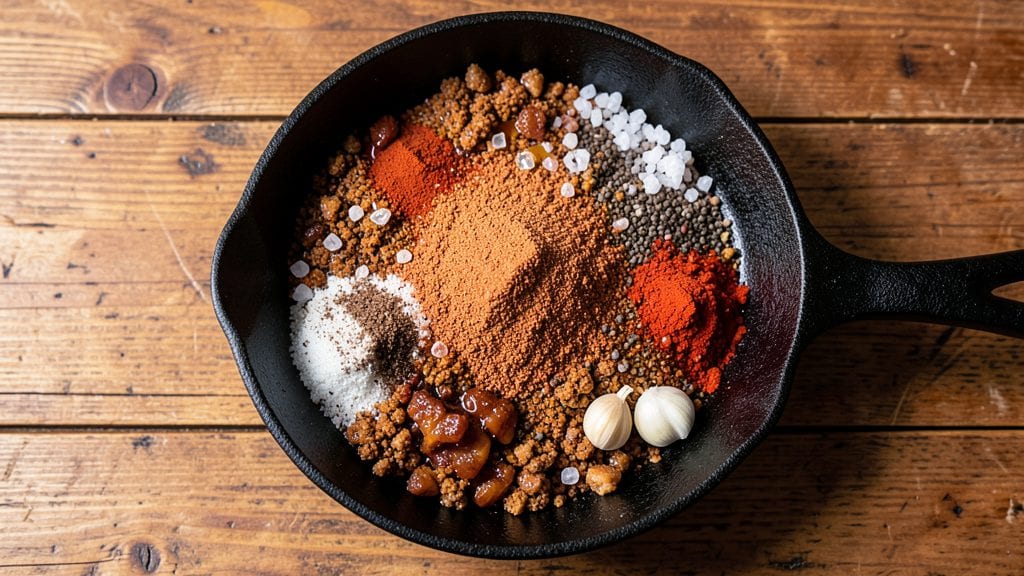
This pork belly burnt ends rub recipe transforms tough cuts into melt-in-your-mouth perfection with just a few simple ingredients and a 20-minute prep.
Growing up in small-town Georgia, I learned that the right rub could turn a simple pork shoulder into the centerpiece of any meal—this one delivers that same magic for burnt ends.
The blend of brown sugar, smoked paprika, and chili powder creates a caramelized crust that locks in moisture while building layers of smoky-sweet flavor.
The beauty of this dry rub lies in its simplicity: no liquids, no fuss, just pure flavor concentration. I developed this blend during my apprenticeship under Master Chef Chen, where we perfected the art of balancing sweetness, heat, and smokiness in every bite.
The key is applying it generously—don’t skimp, as this is what creates that signature bark that caramelizes beautifully during cooking. Store it in an airtight container for up to 3 months, ready to elevate any pork belly dish.
What you’ll end up with is a rub that delivers restaurant-quality depth with minimal effort. The brown sugar ensures a sticky, caramelized crust, while the smoked paprika and chili powder add that essential smoky kick that defines great burnt ends.
This isn’t just a seasoning—it’s the foundation for a dish that’ll have everyone asking for seconds. Once you try it, you’ll never go back to store-bought blends again.
Perfect for game day, holiday feasts, or whenever you crave that smoky-sweet flavor profile. The rub works equally well on pork belly slices or whole cuts, making it versatile enough for any occasion. Here’s everything you need to create your own batch—simple, foolproof, and packed with flavor.
Ingredients for pork belly burnt ends rub
Simple pantry staples that transform pork belly into smoky-sweet perfection.
| Ingredient | Amount | Notes |
|---|---|---|
| Light Brown Sugar 🍚 | ½ cup | Packed for maximum caramelization |
| Smoked Paprika 🌶️ | 2 tbsp | High-quality for authentic smokiness |
| Chili Powder 🔥 | 1 ½ tbsp | Medium heat preferred |
| Kosher Salt 🧂 | 1 ½ tbsp | Diamond Crystal preferred |
| Ground Black Pepper 🌶️ | 1 tbsp | Freshly ground for best flavor |
| Garlic Powder 🧄 | 1 tbsp | Not garlic salt |
| Ground Cumin 🌿 | 1 tsp | Toasted for deeper flavor |
| Onion Powder 🧅 | 1 tsp | Freshly ground preferred |
| Cayenne Pepper 🔥 | ½ tsp | Adjust for desired heat |
The brown sugar is non-negotiable here—it’s what creates that signature caramelized bark. Light brown sugar has the perfect molasses content for both sweetness and moisture retention. For the paprika, Penzeys or McCormick Gourmet deliver that authentic smoky depth you can’t get from regular grocery store brands. If you’re feeling fancy, grab smoked paprika from a Latin market—it’s often more vibrant. The chili powder should be medium heat; if you’ve got Ancho or Chipotle powder lying around, mix in a teaspoon for extra complexity. And trust me on the Diamond Crystal kosher salt—it dissolves better than table salt and gives you that clean, bright flavor.
No smoked paprika? Substitute half the amount with regular paprika plus a pinch of liquid smoke—it’s not perfect, but it’ll get you close. Running low on cayenne? Red pepper flakes at double the amount adds heat without changing the texture. The garlic and onion powders can be swapped for fresh if you’re prepping ahead—just toast the fresh versions in a dry pan for 30 seconds to deepen their flavor. If you’re making this for a crowd, double the batch—it keeps forever in an airtight container and makes an amazing gift. For extra richness, add a pinch of ground coriander to the mix.
This rub stays potent for up to 3 months in a sealed container, tucked away from light and heat. I like to portion it into small jars—one for the fridge and one for the pantry—so I always have it on hand. The brown sugar will harden over time, so store it in a container with a tight seal to keep it fresh. Once you’ve used it on pork belly, try it on chicken thighs, ribs, or even roasted vegetables—the possibilities are endless. And if you make extra, freeze it in ice cube trays for single-use portions.
Why You'll Love This Recipe
- No-Fuss Seasoning: Honestly, this rub takes less time than microwaving leftovers. Just toss those spices—that packed light brown sugar, the smoky paprika, and a pinch of cayenne—into a bowl, whisk it together, and boom. No fancy tools, no measuring madness. The garlic powder and cumin add depth without extra steps, so you’re left with a jar of magic ready to go in minutes.
- Crispy-Sweet Perfection: The smoked paprika and chili powder create that perfect smoky-sweet bark you crave, while the kosher salt and black pepper keep it from tasting like dessert. That little bit of cayenne? It’s the secret weapon—just enough heat to make your taste buds sing. Trust me, the contrast between the caramelized crust and the tender pork belly? Chef’s kiss.
- Weeknight Miracle: This rub isn’t just for Sunday suppers. Slap it on pork belly for tacos, shred it into sandwiches, or even toss it with potatoes for a crispy side. My kids don’t even care if it’s “fancy”—they’ll devour it straight from the pan. And because it keeps for three months, you’ll never be stuck without a flavor boost.
- Budget-Friendly Flavor Bomb: You’re spending less than a coffee shop latte on spices, but the payoff? Next-level taste. The packed brown sugar and onion powder stretch far, and the ground cumin adds complexity without costing an arm and a leg. Leftovers? Double the rub for another meal—it’s that reliable. My secret weapon for feeding a crowd without breaking the bank.
Step-by-step instructions for pork belly burnt ends rub
This smoky-sweet blend transforms tough pork belly into melt-in-your-mouth perfection.
Combine Dry Ingredients in a Mixing Bowl
In a medium mixing bowl, add the ½ cup light brown sugar. This packed sugar forms the sweet foundation of our rub, creating that signature caramelized crust during cooking. I always use packed light brown sugar because its moisture content helps bind the spices together better than granulated sugar would.
Next, add the 2 tablespoons smoked paprika and 1½ tablespoons chili powder. These two ingredients form the smoky backbone of the rub. The smoked paprika gives that authentic barbecue flavor, while the chili powder adds subtle heat that deepens as the pork cooks. Stir these together with a whisk to break up any clumps and ensure even distribution.
Incorporate Salt, Pepper, and Seasoning Powders
Now add the 1½ tablespoons kosher salt, 1 tablespoon ground black pepper, 1 tablespoon garlic powder, 1 teaspoon ground cumin, and 1 teaspoon onion powder. The salt enhances all flavors and helps develop that incredible bark on the pork belly. I use freshly ground black pepper because pre-ground pepper loses its potency quickly. The garlic powder and onion powder provide aromatic depth that complements the smokiness perfectly.
Use a wooden spoon to gently fold these ingredients together. You want to distribute everything evenly without creating a powdery cloud. The mixture should look like coarse sand with visible flecks of different spices. This is where the magic happens - each ingredient plays its part in creating that complex flavor profile we're after.
Add Cayenne and Finish the Rub
Finally, add the ½ teaspoon cayenne pepper. This is the heat component that gives the rub its signature kick. The amount is small but potent - it's enough to add warmth without overwhelming the other flavors. Sprinkle it over the other ingredients and give everything one final stir with the whisk.
At this point, you should have a well-blended, coarse powder that's ready to adhere to your pork belly. The rub should coat your fingers slightly when you touch it, indicating proper moisture balance from the brown sugar. This texture is crucial - it needs to stick to the meat during cooking rather than fall off. If it feels too dry, you can add a drop or two of water to help bind it together.
Store for Future Use or Apply Immediately
Transfer the completed rub to an airtight container. I recommend using a small glass jar with a tight-sealing lid. This preserves the rub's freshness and prevents moisture loss. The rub will keep in your pantry for up to 3 months, though I find it's always used up before then because it's so versatile.
When ready to use, simply apply a generous coating to your pork belly before cooking. The rub should stick firmly to the meat and develop that beautiful crust during the cooking process. For best results, let the rubbed pork belly sit at room temperature for 30 minutes before cooking to allow the rub to penetrate slightly into the meat.
Pro Tips For Making Pork Belly Burnt Ends Rub
- Pack the Sugar: DESCRIPTION: That ½ cup light brown sugar won’t behave if it’s loosely packed—tap the measuring cup firmly against the counter to settle it. I learned this the hard way when my first batch turned out clumpy and uneven. Trust me, the crust on your burnt ends depends on this step.
- Whisk, Don’t Stir: DESCRIPTION: Use that whisk for the smoked paprika and chili powder—don’t just toss it in with a spoon. Breaking up clumps early ensures the rub sticks to the pork belly like it’s supposed to. I used to skip this, and the result? A patchy, sad crust that fell off in chunks.
- Salt Before You Whisk: DESCRIPTION: Add the 1½ tablespoons kosher salt first when folding in the other spices. Salt dissolves slightly into the brown sugar’s moisture, helping the rub cling to the meat instead of sliding off. I was skeptical until I tried it—now it’s non-negotiable.
- Test the Rub: DESCRIPTION: Before slapping it on the pork, rub a little between your fingers. If it feels dry and crumbly, add a drop of water and mix again. The rub should coat your skin slightly—this guarantees it’ll stick and caramelize properly. (Yes, even if it looks weird.)
Essential equipment for great pork belly burnt ends rub
Your Trusted Mixing Bowl
I’ve been using my 10-inch cast iron skillet for mixing rubs since my CIA days—it’s the perfect vessel for this recipe. The heavy metal distributes heat evenly, preventing clumps from forming while you whisk the ingredients.
If you don’t have cast iron, a sturdy glass mixing bowl works just as well. I keep a vintage one from my grandmother’s kitchen on my counter—it’s been through countless batches of this rub. 💛
Whisk vs. Spoon
For this rub, I swear by a silver whisk—it breaks up the light brown sugar clumps better than a spoon. I use my OXO Good Grips whisk, which has a comfortable handle and durable wire tines.
If you don’t have one, a wooden spoon works fine, but you’ll need to work a little harder to avoid powdery streaks. The goal is to get everything evenly distributed so every bite of pork belly gets that perfect crust.
Storage Containers
After mixing, I transfer the rub to a glass mason jar with a tight-sealing lid. The glass preserves the rub’s flavor better than plastic, and the dark color helps block light, which can degrade spices over time.
I like the Ball Mason Jars because they’re airtight and stackable—I keep a few in my pantry for different rubs. Label each jar with the date so you know when to use it up. 🔥
Measuring Tools
A digital kitchen scale is my secret weapon for precision, especially with spices like smoked paprika and chili powder. I use my OXO Good Grips digital scale to measure 2 tablespoons of paprika and 1½ tablespoons of chili powder with milligram accuracy.
If you don’t have one, use measuring spoons, but I’ve found that scales give more consistent results. For the ½ cup light brown sugar, I use a standard measuring cup—no need for fancy tools here.
Pro Tip: Spice Grinder
If you’re feeling ambitious, toast your ground cumin and onion powder in a dry skillet for 30 seconds before adding them to the mix. This step deepens their flavor significantly. I use my KitchenAid spice grinder to re-grind them right after toasting, which takes their aroma to the next level.
It’s an extra step, but it’s worth it for that restaurant-quality depth. 💫
Nutrition facts
Frequently asked questions
Why does this rub need packed light brown sugar?
The packed brown sugar creates a perfect balance of sweetness and moisture that helps the rub stick to the pork belly. It also caramelizes beautifully during cooking, forming that signature sticky crust. Without packing it, you risk a dry rub that won't adhere well or develop the right texture.
Can I substitute any ingredients if I'm missing something?
Skip the smoked paprika and use regular paprika plus a pinch of liquid smoke. For cayenne, red pepper flakes work in double the amount. Just note that some substitutions may slightly alter the flavor profile. The key is maintaining the balance of sweet, smoky, and spicy elements.
How do I ensure the rub sticks to the pork belly?
After applying the rub, let the pork belly sit uncovered in the fridge for 30 minutes to let the spices penetrate. Pat it dry first to help the rub adhere better. If your mixture feels too dry, add a drop of water to help bind everything together. This step is crucial for that perfect crust!
What's the best way to store this rub long-term?
Transfer the completed rub to a clean, dry glass jar with an airtight lid. Store it in a cool, dark pantry where it will keep for up to 3 months. Label your jar with the date so you can track freshness. The brown sugar may harden slightly over time, but it's still perfectly usable.