
Main Courses
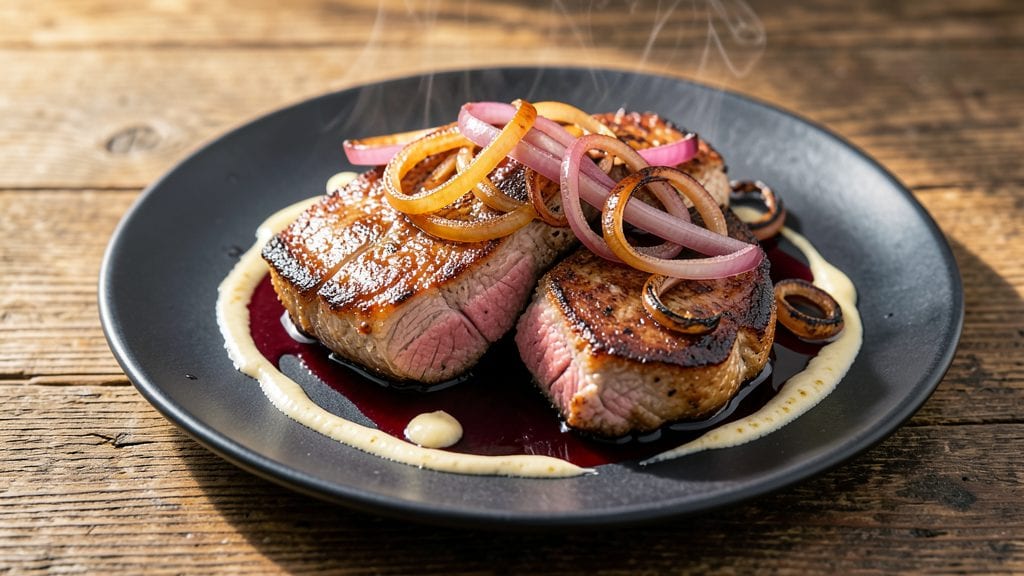
This pork chops and onions recipe delivers crispy edges and caramelized sweetness that transforms a simple weeknight dinner into something special. I developed it after years of perfecting pan-seared techniques, combining my grandmother's Italian seasoning traditions with American home cooking simplicity.
The secret lies in high-heat searing paired with slow caramelization—where golden onions meet tender pork in perfect harmony.
The beauty of this dish is its balance—crispy pork chops with tender centers, paired with sweet, jammy onions that add depth without overpowering. We start with bone-in chops for maximum flavor, seasoned simply with salt, pepper, and a touch of garlic powder before hitting the skillet.
The onions caramelize in their own juices, creating a natural glaze that ties everything together. It's the kind of dish that feels restaurant-quality but comes together in under 30 minutes.
What you'll end up with is a plate that looks as impressive as it tastes—juicy pork chops with crackling edges, surrounded by rich, caramelized onions that practically melt in your mouth.
The aroma alone will have everyone gathering around the table. This recipe works equally well for weeknight suppers or special occasions, and the leftovers reheat beautifully for sandwiches the next day.
Serve with mashed potatoes or crusty bread to soak up those delicious onion juices, or pair with a simple green salad for balance. The technique is straightforward, but the results are anything but ordinary—this is comfort food elevated to its finest form. Let's get cooking!
Ingredients for pork chops with onions
Bone-in chops and sweet onions create restaurant-quality comfort in one pan.
| Ingredient | Amount | Notes |
|---|---|---|
| Bone-In Pork Chops 🐷 | 4 whole | 1.5-inch thick, center-cut |
| Yellow Onions 🧅 | 4 whole | Medium, thinly sliced |
| Extra-Virgin Olive Oil 🫒 | ½ cup | For high-heat searing |
| Dry Red Wine 🍷 | ¼ cup | Optional for deglazing |
| Beef or Chicken Broth 🥄 | ½ cup | Low-sodium preferred |
| Dijon Mustard 🧂 | 1 tbsp | For emulsifying sauce |
| Garlic Powder 🧄 | 1 tsp | Freshly ground preferred |
| Salt 🧂 | 1 tsp | Kosher flake preferred |
| Black Pepper 🌶️ | ½ tsp | Freshly ground |
| Fresh Rosemary 🌿 | 1 tbsp | Chopped, for aroma |
| Butter 🧈 | 2 tbsp | Cubed, for finishing |
| Honey 🍯 | 1 tbsp | For caramelizing onions |
The pork chops are everything here. Bone-in center-cut chops give you that perfect balance of tenderness and flavor—1.5 inches thick ensures even cooking. I always grab mine from Whole Foods or my local butcher, but any grocery store should have quality cuts. Look for chops with good marbling—they'll stay juicier during cooking. If you're short on time, pre-sliced onions from Trader Joe's work fine, but fresh is always better for that sweet caramelization. The olive oil matters too—high smoke point is key for searing without burning.
No red wine? Broth plus a splash of apple cider vinegar mimics the acidity. Skip the Dijon? Plain mustard at half the amount works, but it won't emulsify as nicely. Fresh rosemary is ideal, but dried at one-third the amount gets you close. The honey can be maple syrup in a pinch—just adjust sweetness to taste. For extra depth, add a pinch of smoked paprika to the onions while they caramelize. And if you're using frozen onions, thaw them first—no one wants rubbery texture.
This reheats beautifully—honestly tastes better the next day once everything melds. Store leftovers in airtight containers for up to 4 days in the fridge. For longer storage, freeze portions in glass containers—they keep for 3 months. I always make extra because the pork chops reheat like they were just cooked. The caramelized onions? Even better cold in sandwiches. Just toss them with a little mayo and you've got instant onion jam.
Why You'll Love This Recipe
- Let’s be real: bone-in pork chops are cheaper than you think, and the ingredients? Basic pantry staples. The dry red wine adds a fancy touch, but honestly, it’s just there to deglaze—you could even swap it for broth if you’re on a tight budget. Still ends up tasting like you spent hours in the kitchen. (Spoiler: You didn’t.)
- One-Pan Magic: I love that this recipe turns one skillet into your whole dinner—no extra dishes, no stress. The onions caramelize while you season the chops, and by the time you’re searing those bone-in beauties, the sauce is already building. Honestly, the only cleanup is wiping down a pan and tossing the scraps. That’s my kind of efficiency.
- Crispy, Juicy, Repeat: That crispy edge on the pork chops? Chef’s kiss. The honey-kissed onions? Dangerously addictive. And the red wine deglaze? It turns a simple pan sauce into something restaurant-worthy without overcomplicating things. My daughter picks out the rosemary from the garden, but she still asks for seconds because—well—it’s that good.
- Feeds a Crowd (or Just Me): Four bone-in pork chops? Perfect for a weeknight dinner for two, but double the recipe and you’ve got leftovers for lunch the next day. And if you’re feeding a crowd? This is my secret weapon—everyone gets a juicy chop with those sweet onions, and the sauce ties it all together. No fuss, no fancy prep.
Step-by-step instructions for pan-seared pork chops with caramelized onions
Here's how to achieve restaurant-quality pork chops with perfectly crisp edges and sweet, tender onions.
Prepare the Pork Chops and Caramelize the Onions
Pat the 4 bone-in pork chops completely dry with paper towels—this is crucial for achieving that crispy crust. Season both sides generously with the 1 teaspoon garlic powder, 1 teaspoon salt, and ½ teaspoon black pepper. Let them sit at room temperature for 15 minutes while you prepare the onions.
In a large skillet, heat the ½ cup extra-virgin olive oil over medium heat. Add the 4 yellow onions and cook for 5 minutes, stirring occasionally. Reduce heat to medium-low, then add the 1 tablespoon honey and stir to combine. Cook for an additional 10-12 minutes, stirring frequently, until the onions are golden brown and caramelized. Remove the onions from the skillet and set them aside on a plate.
Sear the Pork Chops to Golden Perfection
Increase the heat to medium-high and add the 2 tablespoons butter to the same skillet. Once the butter foams, carefully add the pork chops and cook for 4-5 minutes per side until they develop a deep golden-brown crust. The chops should release easily from the pan when ready—this is your signal they're properly seared.
Here's the thing—don't overcrowd the pan. Cook one chop at a time if needed, and resist the urge to move them around. You want that beautiful crust to form undisturbed. When the chops are golden and cooked to an internal temperature of 145°F, remove them from the skillet and let them rest on a wire rack for 5 minutes.
Deglaze and Finish the Sauce
Return the skillet to medium heat and add the ¼ cup dry red wine, scraping up any browned bits from the bottom. Let it simmer for 2-3 minutes until reduced by half. Stir in the ½ cup beef or chicken broth and bring to a gentle simmer. Add the 1 tablespoon Dijon mustard and the 1 tablespoon chopped fresh rosemary, stirring until the rosemary is fragrant and the sauce has thickened slightly.
Return the pork chops to the skillet, spooning the sauce over the top. Let everything heat through together for 1-2 minutes. The pork chops should be juicy and the sauce should coat them beautifully. If the sauce is too thick, add a splash of water or broth to reach your desired consistency.
Serve with Caramelized Onions
Transfer the pork chops to serving plates and top each with a generous portion of the caramelized onions. The contrast between the crispy pork chops, sweet onions, and rich sauce is what makes this dish truly special. Serve immediately while the chops are still warm and the onions retain their caramelized sweetness.
Real talk—this is where the magic happens. The crispy edges on the pork chops paired with the tender, sweet onions create a perfect balance of textures and flavors. Don't skip the resting time; it ensures juicy chops that won't fall apart when you cut into them.
Pro Tips For Making Pork Chops With Onions
- Don’t Rush the Onions: Those 10-12 minutes of caramelizing at medium-low heat are non-negotiable—rushing turns them mushy instead of sweet and jammy. I used to skip the honey or speed it up, and the onions just tasted bland. Trust the process, even if it means staring at them like they’re a science experiment.
- Salt Early, Salt Right: Season the pork chops generously with the 1 tsp salt and ½ tsp pepper before searing—don’t wait for the butter. Kosher flake works best, and yes, it sounds like a lot, but it penetrates better than table salt. I learned this the hard way when my chops tasted flat because I salted after cooking.
- Skip the Crowding: Cooking all four chops at once? Your crust will suffer. One at a time is the only way to get that deep golden-brown sear—no exceptions. I know it’s tempting to speed up, but a crowded pan steams the meat instead of browning it. Take the extra minute; it’s worth it.
- Use That Wine Scrape: When you deglaze with the ¼ cup dry red wine, scrape hard—those browned bits are flavor gold. I used to half-ass it, and the sauce ended up tasting weak. A wooden spoon works, but a silicone spatula gets every last bit. Your future self will notice the difference.
Perfect pairings for these flavors
Bread Pairings
This dish is made for crusty Italian ciabatta or sourdough loaves—dip those caramelized onions into the warm bread to soak up every last bit of sauce. I always grab my loaves from Eataly Market on the East Coast, where the bakers let them cool completely for that perfect chewy crust.
The acidity in the onions cuts through the richness of the pork beautifully. 🍞
Salad Complements
A simple arugula salad with lemon vinaigrette provides a peppery contrast to the sweet onions. Toss 4 cups baby arugula with 2 tbsp extra-virgin olive oil, 1 tbsp fresh lemon juice, and a pinch of salt.
The bright acidity cleanses your palate between bites of rich pork. I swear by this combo—it's like a Sicilian garden on your plate!
Wine Recommendations
For wine lovers, a medium-bodied Chianti Classico pairs perfectly with the dish's sweet and savory notes. The tannins in the wine complement the pork's richness while the acidity balances the caramelized onions.
If you prefer something lighter, a crisp Pinot Grigio works too—just avoid heavy reds that might overpower the dish. Trust me, a glass of wine makes this meal feel like a true celebration. 🍷
Beer Pairings
A Belgian-style witbier with its citrus and coriander notes cuts through the richness of the pork and onions. I love Hoegaarden for this—it's light enough to complement the dish without competing.
For a local option, try a German hefeweizen with its banana and clove notes. Avoid dark beers or heavy IPAs that might clash with the delicate flavors. 🍺
Condiment Elevations
Add a dollop of whipped crème fraîche or sour cream to your plate for extra creaminess that contrasts with the crispy pork. A squeeze of fresh lemon brightens up the dish and enhances the caramelized onions.
For a touch of heat, sprinkle ½ tsp red pepper flakes over the top—it's surprising how well the spice balances the sweetness. My grandmother always said, "A little spice makes everything better!"
Nutrition facts
Frequently asked questions
Why does the recipe call for bone-in pork chops?
Bone-in chops add incredible depth of flavor that boneless cuts can't match. The bones release natural juices during cooking, keeping the meat tender and infusing the dish with a rich, savory taste. It's a Sicilian-inspired trick my grandmother swore by—those little extra minutes of flavor are worth it!
Can I use frozen onions instead of fresh?
but thaw them completely first—no one wants rubbery onions! Frozen onions work perfectly for caramelization, but fresh ones give that perfect sweetness. If using frozen, pat them dry thoroughly before cooking to prevent steam instead of crispiness.
What if I don't have red wine for deglazing?
No problem! Mix equal parts beef broth and apple cider vinegar (about ¼ cup total) to mimic the acidity. The broth adds depth while the vinegar helps emulsify the sauce. It's a trick I learned from my butcher friend—works every time!
Why is the resting time important after cooking?
Resting lets the juices redistribute throughout the meat instead of pooling on the cutting board. This ensures every bite is juicy, not dry. I always tell my students: "Patience in the kitchen equals perfection on the plate!" Skip this step, and your chops will turn to sawdust.