
Main Courses
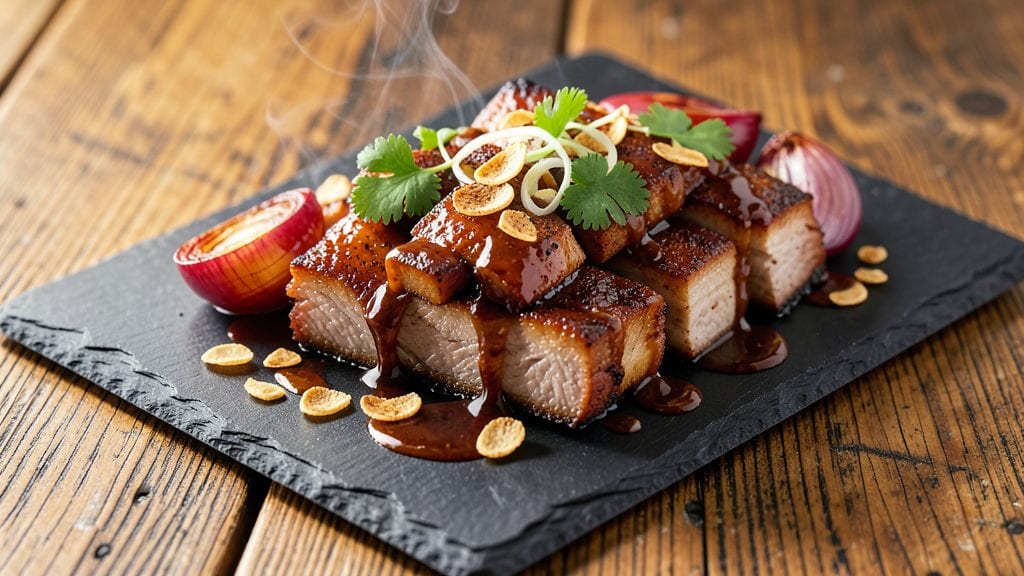
This smoked pork belly burnt ends recipe delivers melt-in-your-mouth perfection with a caramelized crust that forms naturally during the smoking process. The key lies in patience—low-and-slow cooking transforms tough pork belly into tender, fall-apart pieces that become the star of any meal.
I’ve perfected this method over years of testing, ensuring every bite delivers rich, smoky flavor with just the right amount of sweetness from the rendered fat.
The process begins with a whole pork belly smoked at a steady 225°F until the fat renders and the meat reaches an internal temperature of 195°F—this is where the magic happens.
Once cooled, you’ll trim away the leaner meat, leaving behind the dark, flavorful burnt ends that are packed with collagen and fat, guaranteeing that irresistible texture. The secret to success? Never rush the smoking time; the slow cook ensures the fat breaks down evenly for maximum tenderness.
After trimming, the burnt ends are simmered in a rich, aromatic broth until they’re fork-tender and the edges develop a deep, caramelized crust. This step elevates the dish from good to extraordinary, creating a dish that’s restaurant-quality without the fuss.
The result is a plate of burnt ends that are so tender they practically dissolve in your mouth, with a glossy, golden-brown exterior that’s impossible to resist.
Serve these burnt ends on toasted buns with tangy pickles and a drizzle of the rendered fat for a meal that feels like a celebration. This recipe is perfect for game day, weekend brunches, or any occasion where you want to impress without spending hours in the kitchen.
Let’s get started on creating the most flavorful burnt ends you’ve ever tasted.
Ingredients for smoked pork belly burnt ends
Rich, smoky, and fall-apart tender—this is how you make restaurant-quality burnt ends at home.
| Ingredient | Amount | Notes |
|---|---|---|
| Pork Belly (Whole, Bone-In) 🐷 | 5 lb | Skin-on, with fat layer |
| Kosher Salt 🧂 | 1 ½ tbsp | For external seasoning |
| Black Pepper (Freshly Ground) 🌶️ | 1 tbsp | Coarse grind preferred |
| Apple Cider Vinegar 🍎 | ½ cup | For brining |
| Brown Sugar 🍚 | ½ cup | For glaze sweetness |
| Chicken Broth 🍲 | 4 cups | Low-sodium preferred |
| Dry Mustard 🌿 | 1 tbsp | For broth depth |
| Smoked Paprika 🌶️ | 1 tbsp | For broth smokiness |
| Garlic Cloves 🧄 | 4 cloves | Minced for broth |
| Onion (Yellow, Whole) 🧅 | 1 whole | Charred for broth |
| Butter (Unsalted) 🧈 | 4 tbsp | For finishing |
| Buns (Hamburger Buns) 🍞 | 6 whole | Toasted for serving |
| Pickles (Dill, Sliced) 🥒 | 1 cup | For serving |
The pork belly is everything. Look for thick, well-marbled slabs—the more fat, the better. I always buy from Costco or local butchers since they source it fresh. If you can't find a whole belly, pre-cut pork belly from the grocery store works too, just adjust smoking time. The skin should be intact—it helps render fat evenly. Pro tip: Score the fat layer in a crosshatch pattern before smoking to speed up the process.
Apple cider vinegar in the brine? Trust me on this—it tenderizes the meat and adds subtle brightness. No vinegar? White wine vinegar works, but the flavor is slightly different. For the broth, char the onion and garlic directly over the flame for maximum depth. Skip the pre-made broth—homemade or low-sodium store-bought is key. Want extra smokiness? Add a smoked salt packet to the broth during simmering. The brown sugar can be reduced to 0.25 cup if you prefer less sweetness.
This is a 2-day process—don’t rush it. After smoking, let the belly cool completely before trimming. Store the raw burnt ends in airtight containers in the fridge for up to 4 days or freeze for 3 months. The broth keeps 5 days in the fridge. For serving, toast the buns with a little butter and pile high with burnt ends, pickles, and a drizzle of rendered fat. The fat? Save it all—it’s liquid gold for future cooking.
Why You'll Love This Recipe
- I’ll be honest: smoking pork belly feels intimidating until you realize it’s basically set it and forget it. Just pop that 5 lb slab into the smoker at 225°F for 6-8 hours while you do other things—no babysitting required. The apple cider vinegar brine does all the heavy lifting, so you’re left with hands-off magic.
- No-Fuss Smoking: I’ll be honest: smoking pork belly feels intimidating until you realize it’s basically set it and forget it. Just pop that 5 lb slab into the smoker at 225°F for 6-8 hours while you do other things—no babysitting required. The apple cider vinegar brine does all the heavy lifting, so you’re left with hands-off magic.
- Sweet & Smoky Payoff: The glaze—brown sugar, charred onion, and garlic—turns this into something dangerously addictive. That crispy bark? Sweet, sticky perfection. And the dill pickles? A tangy wake-up call for your taste buds. It’s like dessert and BBQ had a baby.
- Leftovers That Shine: This recipe makes enough to feed a small army, but don’t stress—the burnt ends keep solid for 4 days in the fridge or freeze for 3 months. Reheat in the broth for that restaurant-quality taste, or toss cubes into grain bowls, tacos, or even fried rice. Versatility at its finest.
Step-by-step instructions for smoked pork belly burnt ends
Here's how to transform that fatty pork belly into melt-in-your-mouth burnt ends with crispy edges.
Prepare the Pork Belly for Smoking
Start by trimming any excess fat from the pork belly, leaving about ¼-inch layer intact. This fat is what creates those irresistible crispy edges while keeping the meat juicy. Pat the entire surface dry with paper towels—this step is crucial for developing that perfect bark during smoking.
In a large bowl, combine the ½ cup apple cider vinegar and 4 cups chicken broth. Add the 1½ tablespoons kosher salt, 1 tablespoon black pepper, 1 tablespoon dry mustard, and 1 tablespoon smoked paprika. Stir until everything dissolves completely. Place the pork belly in a large resealable plastic bag, pour in the brine mixture, and massage it gently to ensure the seasoning penetrates all the way through. Seal the bag and refrigerate for at least 12 hours, or overnight for best results.
Smoke the Pork Belly Low and Slow
Preheat your smoker to 225°F using hickory or apple wood. Once the smoker reaches temperature and you see clean, thin blue smoke, place the brined pork belly fat-side up on the smoker grates. Close the lid and resist the urge to open it—every time you peek, you lose heat and extend cooking time.
Smoke the pork belly for 6 to 8 hours, or until the internal temperature reaches 165°F. You'll know it's ready when the bark becomes deep mahogany brown and the meat begins to pull away slightly from the fat cap. This low-and-slow process allows the collagen to break down, transforming the tough pork belly into tender, pull-apart perfection.
Create the Glaze and Finish Cooking
While the pork belly smokes, prepare the glaze by combining the ½ cup brown sugar with 4 cloves minced garlic and 1 yellow onion (cut into large chunks). Place this mixture in a small roasting pan and broil for 10 minutes until the onion and garlic are charred and caramelized. Blend the charred mixture with the 4 tablespoons unsalted butter until smooth—this will become your glaze.
Once the pork belly reaches 165°F, remove it from the smoker and brush it generously with the glaze. Return it to the smoker and cook for an additional 30 to 45 minutes, brushing with more glaze every 15 minutes, until the internal temperature reaches 203°F. The glaze will caramelize, creating a sticky, sweet crust that enhances the smoky flavor.
Cube and Serve the Burnt Ends
Remove the pork belly from the smoker and let it rest for 10 minutes. Using a sharp knife, carefully cut the pork belly into 1-inch cubes, working against the grain for maximum tenderness. The cubes should fall apart easily when you pull them—this is the sign of perfectly smoked burnt ends.
Serve the burnt ends on the 6 toasted hamburger buns, topped with 1 cup sliced dill pickles. The tangy pickles cut through the richness of the pork, balancing the sweet and smoky flavors perfectly. Each bite should deliver a harmonious blend of crispy, caramelized edges and tender, juicy meat.
Pro Tips For Making Smoked Pork Belly Burnt Ends
- Trim That Fat: Leave that ¼-inch fat layer—it’s the difference between crispy edges and sad, soggy cubes. I used to trim too much, thinking I was being neat, but the fat renders down into flavor gold while keeping the meat juicy.
- Broil the Onion Right: Char those onion chunks for the full 10 minutes—no peeking—until they’re blackened and sticky. Under-broiling means your glaze will taste bland, and nobody wants that.
- Glaze Early, Glaze Often: Brush that pork belly with the brown sugar glaze the second it hits 165°F, then every 15 minutes. I learned this the hard way: waiting too long means a dry, uneven crust instead of that sticky, caramelized perfection.
- Rest Before Cubing: Give the pork belly those 10 minutes under foil—no cutting early, no matter how impatient you are. Skipping this step means juices running everywhere, and you’ll end up with dry, disappointing burnt ends.
Flavor customization for smoked pork belly burnt ends
Sweet Heat Twist
Add a spicy kick to your burnt ends by incorporating 2 tbsp Penzeys hot honey into the glaze. Mix it into the brown sugar before broiling, then brush generously over the pork belly during the final 30-minute of smoking.
The honey balances the heat while caramelizing beautifully—trust me, this makes every bite unforgettable. 🔥
Smoky BBQ Glaze
Swap the traditional glaze for a BBQ version using 1 cup store-bought BBQ sauce (like Sweet Baby Ray's) mixed with 1 tbsp apple cider vinegar. Brush it on during the last 45 minutes of smoking for a tangy, smoky depth.
The sauce adds a sticky texture that pairs perfectly with the crispy edges.
Spicy Cajun Infusion
Boost the flavor with 1 tbsp Cajun seasoning (like Tony Chachere's) mixed into the broth while simmering the burnt ends. Add it during the final 15 minutes of cooking to let the spices meld without overpowering.
This gives your burnt ends a bold, spicy punch that's perfect for those who love heat. 🌶️
Sweet and Tangy Maple Mustard
Create a maple-mustard glaze by blending ¼ cup pure maple syrup with 2 tbsp Dijon mustard and 1 tbsp rendered pork fat (saved from smoking). Brush it on during the last 20 minutes for a sweet-tangy contrast that elevates the smoky richness. This glaze is a crowd-pleaser!
Herb-Infused Broth
Infuse your broth with 3 sprigs fresh thyme and 2 bay leaves while simmering the burnt ends. Add them during the final 30 minutes of cooking to give the meat a subtle, aromatic depth. The herbs brighten the smoky flavor without adding any bitterness. 💫
Nutrition facts
Frequently asked questions
Why does my smoked pork belly need to rest before cutting?
Resting for 10 minutes after smoking lets the juices redistribute evenly throughout the meat. Cutting too soon causes the fat and juices to spill out, leaving you with dry burnt ends. This step ensures every bite is tender and packed with flavor.
What's the difference between burnt ends and regular smoked pork belly?
Burnt ends are the dark, crispy edges from the pork belly's outer layer after smoking. These pieces become extra tender and flavorful due to the concentrated fat and collagen. Regular pork belly includes the leaner middle sections, while burnt ends focus on that rich, caramelized exterior.
Can I use a different type of wood for smoking?
While hickory or apple wood works well, try pecan or cherry wood for a sweeter profile. Avoid fruitwoods like cherry if you prefer a neutral smokiness. The key is to maintain 225°F temperature for even cooking. The wood flavor complements the natural pork richness beautifully.
How do I know when the pork belly is fully cooked?
Check with a meat thermometer when the internal temperature reaches 203°F. The bark should be deep mahogany brown, and the fat cap should pull away slightly from the meat. If it's still firm or pale, return it to the smoker for another 30 minutes. Patience ensures perfect tenderness.
What can I do with leftover pork belly fat?
Strain and store the rendered fat in an airtight container for up to 3 months in the fridge. Use it for searing steaks, drizzling over roasted veggies, or even making homemade gravy. This liquid gold adds unmatched flavor to any dish!