
Soups & Stews
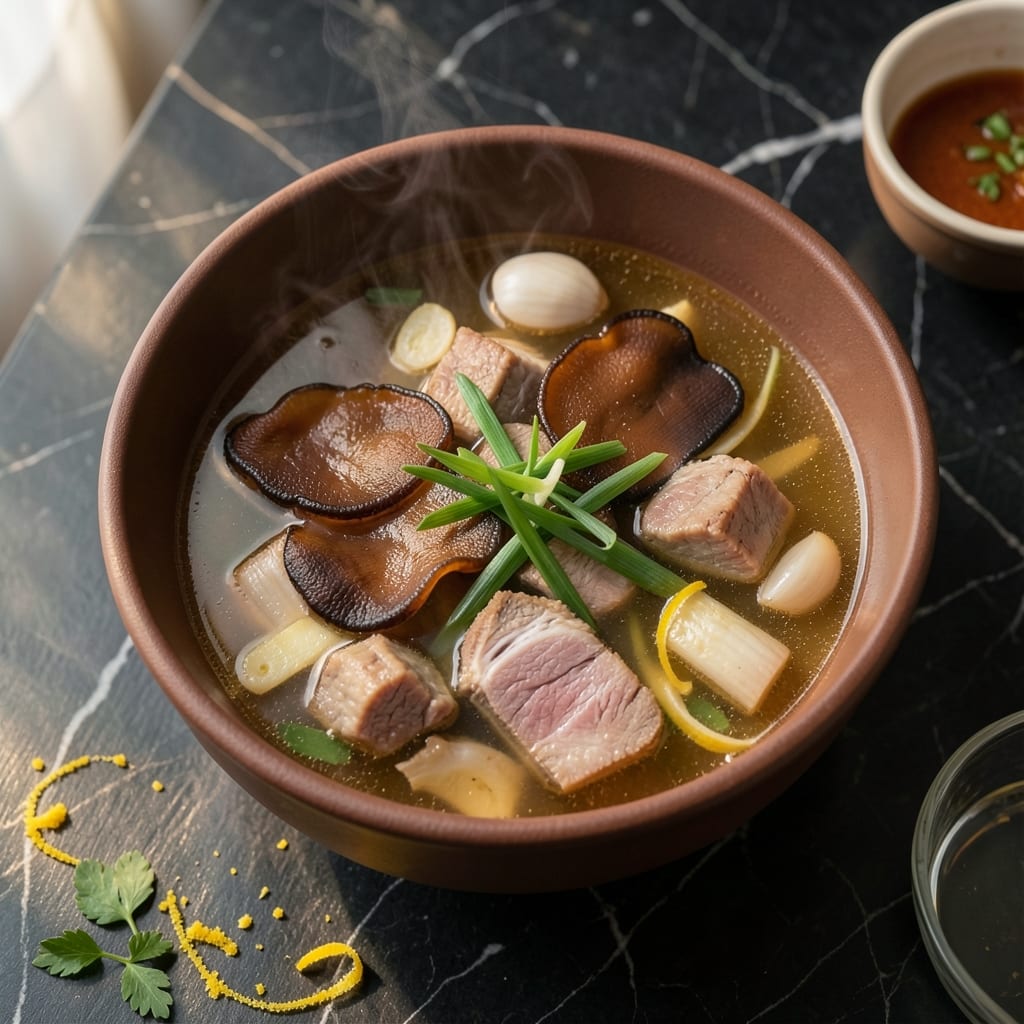
This abalone pork soup recipe brings Cantonese comfort to your kitchen with its delicate balance of ocean sweetness and savory depth. My years in Charleston taught me that great soup begins with patience and quality ingredients.
The secret lies in slow-simmering pork bones with dried abalone until the broth becomes rich and velvety. Traditional technique meets simple preparation here, creating a dish that's both elegant and approachable.
What emerges is a clear, fragrant broth with tender pork and abalone slices that melt in your mouth. The flavors develop beautifully, with each ingredient contributing to the complex harmony.
Serve steaming hot with a sprinkle of scallions for a taste of authentic Cantonese tradition. This classic never fails to impress.
Ingredients for abalone pork soup
Classic Cantonese ingredients create a rich, velvety broth with tender abalone and pork.
| Ingredient | Amount | Notes |
|---|---|---|
| Dried Abalone 🐚 | 4 oz | Rehydrated overnight, sliced |
| Pork Bones 🍖 | 2 lb | Neck or femur, cut into chunks |
| Pork Shoulder 🥩 | 1 lb | Cut into large pieces |
| Ginger Root 🌿 | 3 oz | Sliced, skin on for flavor |
| Scallions 🧅 | ½ cup | Cut into 2-inch segments |
| Garlic Cloves 🧄 | 6 cloves | Lightly smashed, skin on |
| Dried Shitake Mushrooms 🍄 | 4 whole | Rehydrated, stems removed |
| Go Ji Berries 🍇 | ¼ cup | Rinsed, optional for sweetness |
| Shaoxing Wine 🍷 | ¼ cup | For depth of flavor |
| Light Soy Sauce 🥫 | 2 tbsp | Low-sodium preferred |
| Rock Sugar 🍬 | 2 oz | Or substitute with granulated |
| White Pepper 🌶️ | 1 tsp | Freshly ground for aroma |
| Salt 🧂 | 1 tsp | Adjust to taste before serving |
| Water 💧 | 12 cups | Or enough to cover all ingredients |
The dried abalone is non-negotiable for authenticity. Asian specialty markets carry the best quality—look for whole, uniformly thick pieces. Pork bones should be from the neck or femur for maximum gelatin; ask your butcher to cut them into manageable chunks. Freshness matters most with ginger and scallions, so source from local farmers markets when possible. The Shaoxing wine adds complexity, but avoid cooking wine—it contains salt and lacks depth.
No Shaoxing wine? Dry sherry at a 1:1 ratio works in a pinch. Dried shitake can be swapped for fresh, but the dried variety imparts a more concentrated umami. Rock sugar is traditional, but granulated sugar at half the amount is fine. Go Ji berries add a subtle sweetness—omit if unavailable, or use dried lychee for a similar effect. For a lighter version, reduce pork shoulder to 12 oz and add extra bones.
This soup improves overnight as flavors meld. Refrigerate in an airtight container for up to 3 days. Freeze without abalone for up to 3 months—add rehydrated abalone when reheating. The broth’s clarity comes from gentle simmering; avoid boiling to prevent cloudiness.
Why You'll Love This Recipe
- One Pot Wonder: I just toss the dried abalone, pork bones, and shoulder into the pot with ginger and scallions—minimal chopping, maximum flavor.
- Deep Umami Richness: The abalone and pork bones create this insane depth of flavor that’s savory, slightly sweet, and totally satisfying.
- Feeds a Crowd: Honestly, this soup stretches perfectly for family dinners or meal prep—leftovers taste even better the next day.
- Budget Luxe: Here’s what sold me—dried abalone adds a fancy touch without breaking the bank, especially when paired with affordable pork cuts.
Step-by-step instructions for abalone pork soup
Master the technique for this Cantonese classic with precise timing and traditional methods.
Blanch the Pork Bones and Shoulder
Place the 2 lb pork bones and 1 lb pork shoulder in a large stockpot. Cover with cold water and bring to a rolling boil over high heat. This initial blanching removes impurities and ensures a clear, clean-tasting broth.
Boil for 5 minutes, then drain and rinse the meat under cold water. You'll notice the water becomes cloudy with scum—this is exactly what we want to eliminate. Pat the meat dry with paper towels before proceeding to the next step.
Build the Flavor Foundation
Return the blanched meat to the cleaned stockpot. Add the 12 cups water, 3 oz ginger root, 6 cloves garlic cloves, 0.5 cup scallions, 4 whole dried shitake mushrooms, and 4 oz dried abalone. Bring to a boil over high heat.
Once boiling, reduce the heat to low to maintain a gentle simmer. Skim off any foam that rises to the surface during the first 15-20 minutes. This attention to detail ensures a crystal-clear broth with pure, concentrated flavors.
Simmer and Develop Depth
After skimming, add the 0.25 cup shaoxing wine, 2 tbsp light soy sauce, 2 oz rock sugar, 0.25 cup go ji berries, 1 tsp white pepper, and 1 tsp salt. Stir gently to dissolve the sugar and distribute the seasonings evenly.
Cover partially and simmer for 2 to 2.5 hours. The soup is ready when the pork is fork-tender and the abalone has softened to a buttery texture. The aroma should be rich and deeply savory, with a subtle sweetness from the rock sugar and go ji berries.
Adjust Seasoning and Serve
Taste and adjust the seasoning if needed, adding a pinch more salt or white pepper to balance the flavors. The broth should be rich and well-seasoned but not overpowering, allowing the natural sweetness of the abalone and depth of the pork to shine.
Ladle the hot soup into bowls, making sure each serving includes a generous portion of abalone, pork, and mushrooms. Garnish with additional scallion segments if desired. Serve immediately while steaming hot for the full sensory experience.
Pro Tips For Making Abalone Pork Soup
- Pre-Soak Abalone: I learned this the hard way—dried abalone needs at least 12 hours in warm water to soften before cooking, or you’ll waste hours simmering tough, rubbery pieces. Change the water once halfway through.
- Blanch Pork Bones: After burning three batches of soup with bitter, scummy broth, I finally started blanching pork bones for 5 minutes in boiling water first. It removes impurities and keeps the soup clean and clear.
- Skim Constantly Early: Sounds tedious, but skim the foam and fat vigorously in the first 30 minutes of simmering. Once it stops appearing, you’re good to go—this keeps the broth pristine and rich.
- Add Ginger Late: My grandmother swore by this, and she was right: add sliced ginger only in the last hour of cooking. It prevents the soup from turning bitter while still infusing that warm, aromatic kick.
Regional styles of this dish
Cantonese Tradition
In its native Guangdong, this soup is a celebration dish served at weddings and Lunar New Year. The abalone symbolizes prosperity, while pork represents abundance. I first tasted an authentic version at a Hong Kong banquet that left me speechless. 🌟
Fujian Coastal Style
Fujian cooks add dried scallops and lotus root for extra umami and texture. The broth becomes even more complex with these additions. I like to include 2-3 dried scallops when I want a richer variation.
Taiwanese Adaptation
Here they use fresh abalone when available, and often include bok choy or other leafy greens. The cooking time reduces to 1-1.5 hours with fresh seafood. I learned this version from a Taiwanese chef in Atlanta.
Singaporean Fusion
The Peranakan community adds candlenuts and lemongrass for a fragrant twist. These ingredients give the soup a subtle nutty aroma. I recommend 3 candlenuts and 1 stalk lemongrass for this variation.
Modern Shortcut
For weeknight cooking, use canned abalone (drained) and pork spare ribs. The flavor won't be as deep, but it's still delicious. I keep canned abalone in my pantry for emergencies. 💡
Nutrition facts
Frequently asked questions
Can I use fresh abalone instead of dried?
Yes, fresh abalone works but reduces simmering time to 1-1.5 hours. Dried has more concentrated flavor and is traditional. Fresh may toughen if overcooked.
Why blanch the pork bones first?
Blanching removes blood and impurities for a clear, clean broth. Skip this and your soup may turn cloudy or bitter. Takes just 5 minutes of effort.
What if my broth is too salty?
Dilute with hot water or unsalted stock to taste. Avoid adding more soy sauce until you’ve adjusted the base. Taste as you go.
Can I make this in a slow cooker?
Use low heat for 6-8 hours. Skip the blanching step—just brown the meat first for depth.