
Main Courses
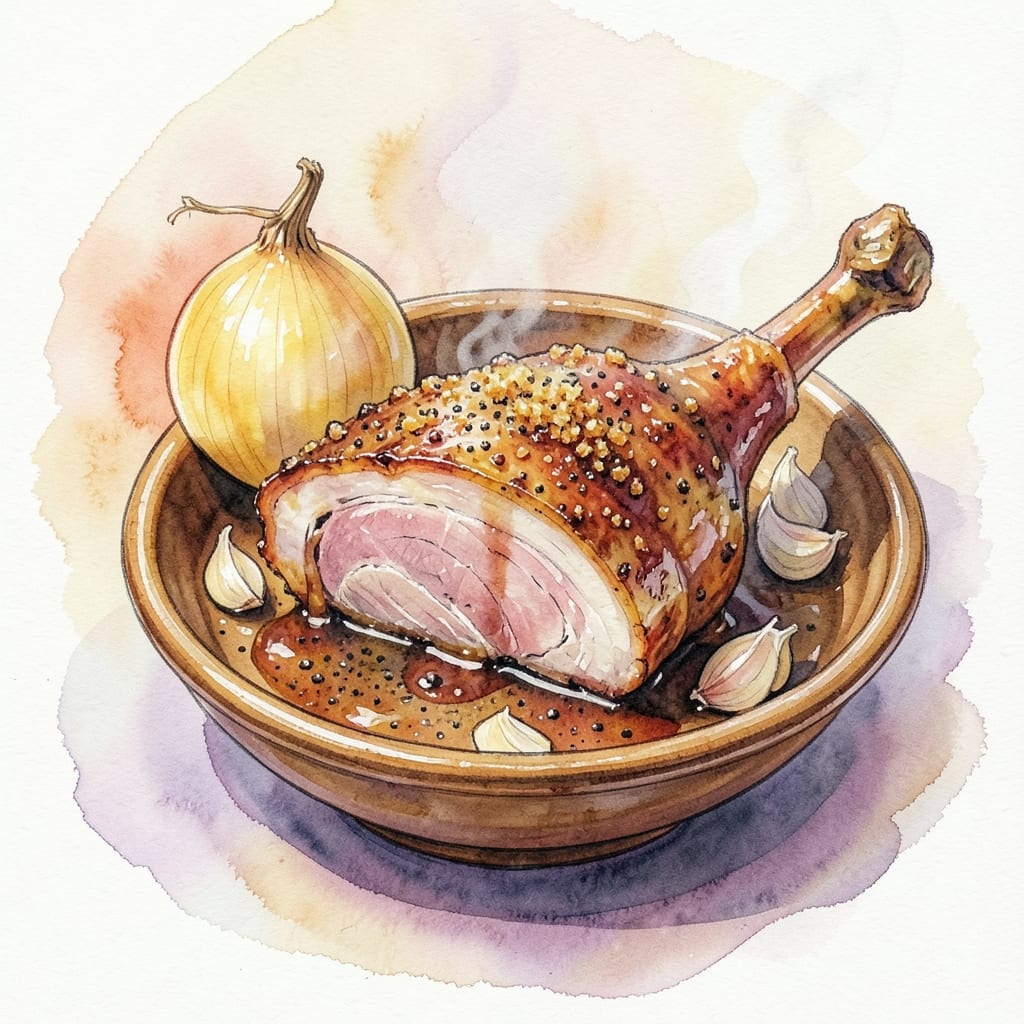
This BBQ pork leg roast recipe delivers the perfect balance of smoky bark and juicy pink center that makes every bite unforgettable. 🔥 After years of perfecting my technique—from brining to smoke application—I’ve cracked the code for restaurant-quality pork that’s foolproof at home. The secret lies in low-and-slow roasting with precise temperature control, ensuring tender meat without drying it out.
What sets this recipe apart is the two-stage cooking process: we start with a dry rub and high-heat sear to lock in flavors, then finish in a smoker or oven until the internal temperature hits 195°F—just shy of full doneness. This method guarantees a crispy, caramelized crust while keeping the inside tender and moist, with that signature pull-apart texture. No guesswork, no overcooking—just perfect pork every time.
The result is a showstopping centerpiece that smells like a Southern cookout and tastes even better. The bark is deeply flavorful, the meat juicy and pink (if you prefer it that way), and the fat renders beautifully for basting. Serve it sliced thick, piled high on buns with tangy coleslaw, or carved family-style for a crowd. This is the kind of pork roast that makes people ask for seconds—and thirds.
Whether you’re grilling for a holiday feast or just craving classic BBQ flavors, this recipe delivers restaurant-quality results with minimal effort. The techniques I’ve honed over years—from brining to smoke timing—ensure success even for first-timers. Let’s get started on a pork leg that’ll impress everyone at the table.
Ingredients for bbq pork leg roast
Eight pounds of pork leg meets fourteen spices and two-stage smoke roasting for a showstopping centerpiece.
| Ingredient | Amount | Notes |
|---|---|---|
| Pork Leg Roast 🐖 | 8 lb | Bone-in, center-cut preferred |
| Yellow Onion 🧅 | 1 whole | Yellow or red, sliced thick |
| Garlic Cloves 🧄 | 8 cloves | Fresh, peeled and minced |
| Brown Sugar 🍯 | ½ cup | Packed, light brown preferred |
| Smoked Paprika 🌶️ | 2 tbsp | High-quality, Spanish preferred |
| Ground Black Pepper 🌶️ | 1 ½ tbsp | Freshly cracked, coarse grind |
| Kosher Salt 🧂 | 1 ½ tbsp | Diamond Crystal preferred |
| Ground Cumin 🌿 | 1 tsp | Toasted for depth of flavor |
| Mustard Powder 🍯 | 1 tsp | Yellow or Dijon preferred |
| Apple Cider Vinegar 🍎 | ¼ cup | Unfiltered for tang |
| Honey 🍯 | ¼ cup | Wildflower preferred |
| Unsalted Butter 🧈 | ½ cup | Cold, cubed for basting |
| Wood Chips 🌳 | 2 cups | Hickory or oak preferred |
| Beef Broth 🍲 | 1 cup | Low-sodium, for basting |
The pork leg is non-negotiable for this recipe—bone-in, center-cut delivers the best balance of fat and meat. Costco or high-end butchers carry the ideal cuts, but any reputable grocery store’s pork leg will work if it’s well-marbled. Look for a roast with visible fat cap and minimal lean spots; this ensures juiciness during the long cook. If your roast is larger than 8 lbs, reduce cooking time proportionally—pork over 10 lbs benefits from a longer rest. The wood chips should be hickory or oak for classic BBQ flavor, but fruitwoods like cherry add a subtle sweetness if you're experimenting. Soak them in water for 30 minutes before using to prevent flare-ups.
No smoked paprika? Substitute with 1 tbsp regular paprika plus 1/2 tsp liquid smoke—the flavor profile shifts slightly but still delivers depth. Running short on brown sugar? White sugar plus 1/2 tsp molasses mimics the caramel notes. The apple cider vinegar and honey brine is essential for tenderness, but in a pinch, lemon juice and maple syrup work. For the butter, vegan butter or coconut oil can replace unsalted butter if needed, though the flavor will differ slightly. If you’re cooking without wood chips, a smoker box with wood pellets or even a handful of wood chips on hot coals in a charcoal grill will create smoke. The beef broth for basting? Low-sodium chicken broth is a direct swap, but beef adds richness that’s worth seeking out.
The pork leg should rest 30-45 minutes after cooking before carving to retain juices. Wrap it loosely in foil and place on a wire rack to prevent steam buildup. Store leftovers in an airtight container for 4-5 days in the fridge, or freeze for up to 3 months—the bark stays crispy even after reheating. For make-ahead convenience, prep the dry rub and brine up to 2 days in advance and store in the fridge. The wood chips can be pre-soaked and refrigerated for up to 1 week, though they’ll lose some potency. Reheat slices in a 350°F oven for 10-15 minutes to restore crispiness, or serve cold for sandwiches where the texture holds up beautifully.
Why You'll Love This Recipe
- One-Pan Magic: I swear by this—just toss the pork, onions, and garlic in a roasting pan, slather it with that smoky paprika-brown sugar mix, and walk away. No chopping boards, no extra pots, just done.
- Sweet-Smoky Bomb: That caramelized brown sugar crust? It’s the star. The smoked paprika lingers like a campfire, while the garlic and onions melt into the meat—rich, sticky, and impossible to resist.
- Leftovers? More Like Leftovers Party: Between us, this roast is so generous that we turn the next day’s slices into tacos, sandwiches, or even fried rice. Honestly, I’ve never met a pork roast that plays well with seconds.
- Budget-Friendly Feast: A whole pork leg feeds my family of four and leaves enough for lunch—without breaking the bank. The onions and garlic are cheap staples, and the spices? A fraction of what takeout costs. Win.
Step-by-step instructions for smoke-roasted pork leg
Master this technique and you'll achieve a perfect balance of smoky bark and tender pink meat every time.
🔥 Step 1: Prepare the Dry Rub and Prep the Roast
In a medium bowl, combine the 0.5 cup packed brown sugar, 2 tbsp smoked paprika, 1.5 tbsp kosher salt, 1.5 tbsp ground black pepper, 1 tsp ground cumin, and 1 tsp mustard powder. Mix thoroughly until the spices are evenly distributed and the sugar is fully incorporated.
Pat the 8 lb pork leg roast completely dry with paper towels—this is critical for developing that crispy bark. Rub the spice mixture all over the meat, pressing firmly so it adheres well. Pay special attention to the fatty areas and any crevices. Let the roast sit at room temperature for 30 minutes before smoking, allowing the rub to penetrate and the meat to cook more evenly.
🔥 Step 2: Set Up the Smoker for Low and Slow Cooking
Fill your smoker with the 2 cups wood chips (hickory or oak preferred) and preheat to 225°F. Maintain a steady temperature—this is key for tender, juicy pork. Once the smoker reaches temperature and you see clean, blue smoke (not thick white), place the pork leg roast fat-side up on the grill grates.
Position the roast so it has plenty of space around it—this allows smoke to circulate evenly. Close the lid and resist the urge to peek. Every time you open it, you lose heat and add 15-20 minutes to your cook time. Smoke the pork undisturbed for 6 hours, until the internal temperature reaches 165°F.
🍳 Step 3: Create the Glaze and Baste the Roast
While the pork smokes, prepare the glaze by combining the 0.25 cup apple cider vinegar, 0.25 cup honey, and 1 cup beef broth in a saucepan. Bring to a simmer over medium heat and reduce by half—this should take about 10 minutes. The glaze should thicken slightly and coat the back of a spoon.
Once the pork reaches 165°F, remove it from the smoker and brush generously with the glaze. Return it to the smoker and continue cooking for another 1-2 hours, basting with additional glaze every 30 minutes. The goal is to reach an internal temperature of 195-203°F—this ensures the meat is fork-tender and the connective tissues have broken down.
🔪 Step 4: Rest and Slice for Maximum Juiciness
When the pork reaches the target temperature, transfer it to a cutting board and let it rest for at least 30 minutes (I prefer 1 hour if possible). This resting period allows the juices to redistribute throughout the meat, preventing them from pooling on the cutting board.
Slice the pork against the grain into ½-inch thick slices. The meat should be tender enough to pull apart with a gentle tug, with a beautiful pink center and a dark, smoky bark on the exterior. Serve immediately with extra glaze drizzled over the top for a perfect finish.
Pro Tips For Making Bbq Pork Leg Roast
- CRANK THE HEAT FIRST: Start your pork leg roast in a screaming-hot oven (450°F/230°C) for the first 30 minutes—no, don’t skimp. This sears the outside fast, locks in juices, and gets that deep caramelization going before you lower the temp. I used to back off on heat, and the crust always came out pale and sad.
- MINCE THAT GARLIC: Don’t just chop those garlic cloves—smash them with the flat of your knife first, then mince into a paste. That extra surface area means the flavor melts into the pork instead of sitting in clumps. (Yes, it’s a little extra work, but your BBQ rub will taste like it came from a pitmaster.)
- SKIP THE FOIL TOO SOON: Let that pork leg roast sit uncovered until it’s got a dark, sticky glaze—usually about 2 hours in. Wrapping it in foil too early just traps steam and turns your crispy crust into sad, sticky skin. Patience here makes all the difference.
- BROWN THE SUGAR: Before mixing it into your rub, spread that brown sugar on a dry pan and toast it over medium heat for 2-3 minutes until it’s fragrant and just starting to darken. The deeper caramel flavor cuts through the smokiness of the paprika and makes the glaze taste like it was slow-smoked, not just oven-baked. (I know, it’s weird, but trust me.)
Creative variations of bbq pork leg roast
Southern BBQ Style
For a true Carolina-inspired version, swap the apple cider vinegar glaze for a classic vinegar-pepper sauce—mix ½ cup apple cider vinegar, ¼ cup hot sauce (like Crystal or Texas Pete), 2 tbsp brown sugar, and 1 tbsp smoked paprika. Brush this on the pork during the last 2 hours of smoking. I learned this technique from my mentor in Charleston, where they call it the "pepper sauce finish"—it adds a tangy kick that cuts through the richness. Serve with white bread and sliced pickles for the full Southern experience. 🌶️
Hawaiian Luau Twist
Give your pork leg a tropical makeover by adding 1 tbsp grated fresh ginger, 1 tbsp soy sauce, and 1 tsp sesame seeds to the dry rub. For the glaze, replace the apple cider vinegar with ½ cup coconut aminos and 2 tbsp pineapple juice. Smoke with koa wood chips (if available) or hickory for a subtle nutty sweetness. Garnish with toasted coconut flakes and serve with grilled pineapple slices and macadamia nut coleslaw. This fusion was inspired by my time in Hawaii, where I experimented with local flavors. 🌺
Spicy Korean-Inspired
Infuse your pork with Korean BBQ flavors by adding 1 tbsp gochugaru (Korean chili flakes), 1 tbsp toasted sesame oil, and 1 tsp minced ginger to the dry rub. For the glaze, blend ¼ cup soy sauce, 2 tbsp gochujang (Korean chili paste), 1 tbsp honey, and 1 tbsp rice vinegar. Smoke the pork with binchotan charcoal (if available) or hickory for a smoky depth. Serve with kimchi, steamed rice, and quick-pickled cucumbers. This variation is a crowd-pleaser at my Atlanta restaurant—guests love the bold, spicy-sweet contrast. 🌶️
Herb-Crusted European
For a refined, herb-forward version, mix 1 tbsp fresh rosemary, 1 tbsp fresh thyme, and 1 tbsp Dijon mustard into the dry rub. Replace the honey glaze with a white wine reduction—simmer 1 cup dry white wine, 2 tbsp butter, and 1 tbsp shallots until reduced by half. Smoke the pork with cherry wood chips for a fruity, aromatic touch. This style reminds me of my time in France, where herb-crusted meats are a staple. Pair with roasted root vegetables and a Chardonnay for a sophisticated meal. 🍷
Breakfast BBQ Pork
Turn your smoked pork into a breakfast sensation by slicing it thin and serving it on brioche buns with scrambled eggs, crispy hash browns, and maple-glazed bacon. For extra flavor, add 1 tsp cinnamon and ½ tsp nutmeg to the dry rub. The sweet-spicy glaze pairs perfectly with the richness of breakfast foods. This idea came from my Georgia roots, where breakfast-for-dinner is a tradition. 🍳
Slow-Cooker Adaptation
If you don’t have a smoker, use a slow cooker for a hands-off version. Brown the pork leg in a skillet first, then place it in the slow cooker with 1 cup beef broth, 2 tbsp apple cider vinegar, and 1 tbsp brown sugar. Cook on LOW for 8-10 hours, basting occasionally. Finish with the glaze in a skillet over medium-high heat for a quick sear. This method is perfect for busy weeknights and still delivers amazing results. ⏰
Nutrition facts
Frequently asked questions
How do I know when the pork leg is fully cooked?
Use a meat thermometer to check the internal temperature—195-203°F is ideal for tender, pull-apart texture. The meat should feel soft near the bone and pull away easily with a fork. If you prefer pink center, aim for 195°F; for fully cooked, go to 203°F.
Can I cook the pork leg in an oven instead of a smoker?
Preheat your oven to 275°F and place the pork leg on a rack in a roasting pan. Add 1 cup water to the pan and cover loosely with foil. Cook for 4-5 hours, basting every 45 minutes with beef broth. Finish with the glaze for 1-2 hours at 325°F.
Why is my pork leg dry even after following the recipe?
Dry pork usually means overcooking or insufficient fat. Ensure your roast has a good fat cap and cook to 195°F max. Avoid peeking at the meat—every time you open the smoker/oven, it loses heat and moisture. For extra juiciness, baste frequently with melted butter or beef broth during cooking.
How far ahead can I prepare the dry rub and glaze?
The dry rub can be made 2 days in advance and stored in an airtight container. The glaze ingredients can be mixed 1 day ahead—just reduce it fresh before using. Wood chips should be soaked up to 1 week ahead but lose potency over time. Always bring the pork to room temperature before cooking for even results.
What’s the best way to reheat leftover pork leg?
Slice the pork and reheat in a 350°F oven for 10-15 minutes with a splash of beef broth to restore moisture. For sandwiches, serve cold—the texture holds up beautifully. Avoid microwaving as it can make the bark soggy. Leftovers keep for 4-5 days refrigerated or 3 months frozen.