
Main Courses
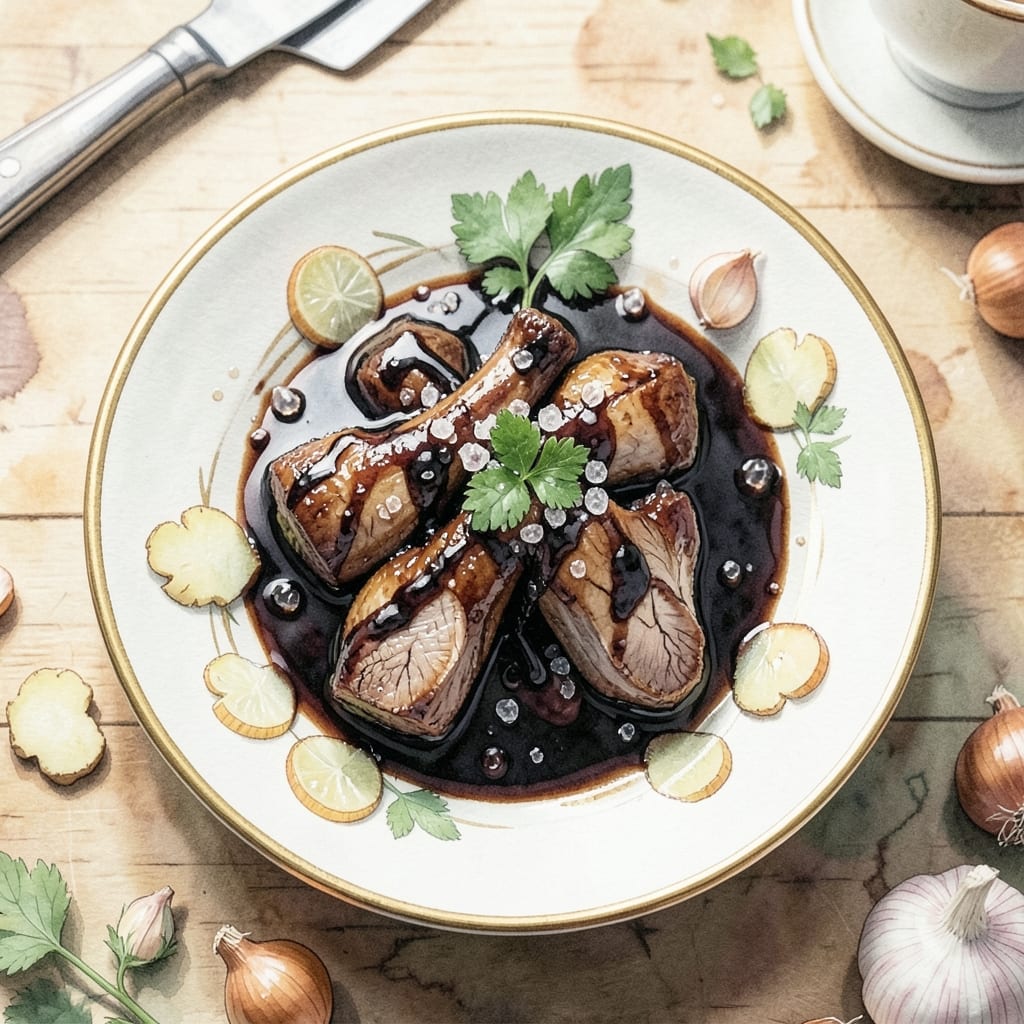
This black sweet vinegar pork trotters recipe delivers the perfect marriage of textures—crispy, caramelized edges giving way to silky, fall-apart tenderness inside. Growing up in Georgia, I learned how pork trotters transform from humble cuts into centerpiece dishes when braised just right, and this method preserves that tradition while adding Southeast Asian flair through the vinegar-sugar glaze.
The secret lies in the slow braise—2 to 3 hours of gentle simmering in a rich, tangy-sweet sauce that tenderizes the toughest connective tissue. My cast iron pot becomes a pressure cooker of flavor, where dark soy sauce, black vinegar, and rock sugar meld into a glossy, sticky glaze that clings to every bite. The trotters develop a deep mahogany crust while staying impossibly tender.
What you’ll end up with is a dish that looks as impressive as it tastes—glossy, caramelized trotters piled high on a bed of steamed jasmine rice, surrounded by quick-pickled cucumbers for brightness. The contrast of textures and flavors makes this a showstopper for any gathering, whether you’re feeding a crowd or treating yourself to a special meal.
Perfect for holiday feasts or weekend projects, this recipe scales beautifully and rewards patience with restaurant-quality results. The vinegar-sugar balance creates a sauce that’s both complex and addictive, turning simple pork trotters into something extraordinary. Let’s get cooking—your taste buds will thank you.
Ingredients for black sweet vinegar pork trotters
Six pounds of trotters and a handful of pantry staples transform into a dish that tastes like a celebration.
| Ingredient | Amount | Notes |
|---|---|---|
| Pork Trotters 🍖 | 4 lb | Cleaned and trimmed |
| Black Vinegar 🍶 | 1 cup | High-quality, aromatic |
| Dark Soy Sauce 🍶 | ½ cup | For deep color and flavor |
| Rock Sugar 🍬 | ½ cup | Or light brown sugar |
| Garlic Cloves 🧄 | 8 cloves | Minced for aromatic depth |
| Fresh Ginger 🌿 | ½ cup | Finely grated, aromatic |
| Star Anise Pods 🌟 | 2 whole | For subtle licorice note |
| Cinnamon Sticks 🌿 | 2 whole | For warmth and depth |
| Bay Leaves 🍃 | 2 whole | Dried for subtle flavor |
| Jasmine Rice 🍚 | 2 cups | Uncooked, long-grain |
| English Cucumber 🥒 | 1 whole | For quick pickles |
| Rice Vinegar 🍶 | ¼ cup | For pickling solution |
| Diamond Crystal Kosher Salt 🧂 | 1 ½ tbsp | For seasoning and pickling |
| Vegetable Oil 🫒 | ¼ cup | For searing trotters |
| Fresh Cilantro 🌿 | ¼ cup | Chopped for garnish |
The trotters are the star, so pick the freshest-looking ones you can find—look for a deep pinkish hue and minimal odor. Whole Foods or your local butcher shop are best for quality cuts. If you're feeling adventurous, ask for the trotters to be split in half before you leave—this speeds up cooking time later. The black vinegar should smell rich and slightly smoky; Lee Kum Kee is my go-to brand, but any high-quality Chinese black vinegar works. Rock sugar is key here—it caramelizes beautifully, so don't substitute with regular white sugar unless you're okay with a less complex flavor. For the spices, Penzeys carries whole star anise and cinnamon sticks that are perfect for this dish.
No black vinegar? Substitute with 1/4 cup balsamic vinegar plus 1/4 cup soy sauce, but you'll lose some of that deep umami punch. Running short on rock sugar? Light brown sugar works in a pinch, though the caramelization won't be as pronounced. The garlic and ginger can be swapped for 1 tablespoon each of garlic powder and ground ginger, but fresh is ideal. For the pickled cucumbers, English cucumbers hold their shape best—if you can't find them, use Persian cucumbers and reduce the pickling time to 10 minutes. The jasmine rice should be long-grain and uncooked; Lotus Foods is a reliable brand if you're unsure what to grab at the store.
This dish tastes even better the next day, so make extra for leftovers. Store the trotters in their braising liquid in the fridge for up to 4 days, or freeze for 3 months—the flavors deepen over time. The pickled cucumbers keep for 1 week in the fridge, and the rice reheats beautifully in a steamer or microwave. For a restaurant-worthy presentation, serve the trotters on a bed of jasmine rice with the pickled cucumbers scattered around and a sprinkle of fresh cilantro. The contrast of textures—crispy, tender, and crunchy—is what makes this dish unforgettable.
Why You'll Love This Recipe
- One-Pot Magic: I swear by this recipe when I’m too tired to dirty multiple pans—just trotters, vinegar, soy, and sugar in one deep pot. The black vinegar does all the work while you simmer, leaving me with zero scrubbing and maximum flavor.
- Sweet-Savory Fix: That balance of sticky rock sugar and tangy black vinegar? It’s the kind of harmony that makes you pause mid-bite. The garlic sears into the edges while the trotters stay tender—like a caramelized hug for your taste buds.
- Leftovers That Don’t Suck: Between us, most braised dishes turn sad after day two. Not this. The flavors deepen, the meat gets even more fall-off-the-bone, and I’ve reheated these for three days straight with zero complaints. (Even my picky teenager.)
- Budget Feast: Pork trotters are cheaper than steak, and this recipe stretches them into a whole meal. A single batch feeds four for under $15, plus the black vinegar and soy sauce make it taste like a fancy dinner—not a stretch. Win.
Step-by-step instructions for black sweet vinegar pork trotters
Here's how to transform tough trotters into fall-off-the-bone tender morsels with that signature glossy black bark.
Prepare the Trotting Marinade
In a large bowl, combine the 1 cup black vinegar, 0.5 cup dark soy sauce, 0.5 cup rock sugar, minced 8 cloves garlic, 0.5 cup finely grated fresh ginger, 2 whole star anise pods, 2 whole cinnamon sticks, and 2 whole bay leaves. Stir until the rock sugar dissolves completely, creating a syrupy marinade. This aromatic blend is what will penetrate the meat and create that signature glossy exterior.
I like to press the star anise pods and cinnamon sticks against the side of the bowl first to release their essential oils into the mixture. The sugar helps balance the acidity of the vinegar while adding just enough sweetness to complement the savory flavors. Let this marinade sit at room temperature for 15 minutes to allow the spices to fully infuse.
Sear and Braise the Trotters
Preheat your oven to 300°F. In a large Dutch oven, heat the 0.25 cup vegetable oil over medium-high heat until shimmering. Working in batches if needed, sear the 4 lb pork trotters on all sides until deeply golden brown, about 3-4 minutes per side. This initial searing creates the crispy bark that's so essential to this dish.
Once browned, remove the trotters from the Dutch oven and set them aside. Pour the prepared marinade into the Dutch oven, scraping up any browned bits from the bottom. Return the trotters to the pot, spooning marinade over the top. Bring to a simmer over medium heat, then transfer to the preheated oven.
Slow Braise to Perfection
Cover the Dutch oven and braise the trotters for 3 hours. The goal is slow, gentle cooking that renders the collagen and transforms the tough connective tissue into silky tenderness. After 3 hours, check the internal temperature with a meat thermometer - it should read between 195-205°F. If not, continue braising for another 30-60 minutes.
Here's the thing - don't be tempted to rush this step. The trotters need this time to break down completely. You'll know they're ready when they're fork-tender and the meat pulls away from the bone with just slight resistance. The braising liquid should be reduced and deeply flavorful, with a glossy sheen from the caramelized sugar and vinegar.
Prepare the Jasmine Rice
While the trotters are braising, prepare the 2 cups jasmine rice according to package instructions. I like to use a 1:1.5 rice-to-water ratio and bring it to a boil before reducing to a simmer. The rice should be tender but still have a slight bite - about 15-18 minutes total cooking time.
For extra flavor, you can add a pinch of the 1.5 tbsp diamond crystal kosher salt to the cooking water. This subtle seasoning enhances the natural aroma of the jasmine rice without overpowering it. Once cooked, fluff the rice gently with a fork and keep it covered to maintain moisture until ready to serve.
Finish and Serve
Once the trotters are perfectly tender, remove them from the braising liquid and let them rest for 10 minutes. Meanwhile, strain the braising liquid through a fine-mesh sieve to remove the spices and any impurities. Return the liquid to the Dutch oven and simmer over medium heat until slightly thickened - about 5-7 minutes.
To serve, slice the trotters into bite-sized pieces and arrange them over the jasmine rice. Spoon the reduced braising sauce over the top and garnish with the chopped 0.25 cup fresh cilantro. For a refreshing contrast, serve with quick-pickled cucumber slices made by thinly slicing the 1 whole English cucumber and tossing with 0.25 cup rice vinegar and a pinch of salt.
Pro Tips For Making Black Sweet Vinegar Pork Trotters
- BLANCH TROTTERS FIRST: I learned this the hard way—skipping the blanch makes the skin tough as boot leather. Simmer trotters in salted water for 15 minutes before braising, then shock in ice water. This loosens connective tissue and ensures the final texture is tender, not chewy.
- USE ROCK SUGAR LAST: Add the rock sugar only in the final 10 minutes of cooking. Dumping it earlier turns your sauce into a sticky mess instead of letting it caramelize beautifully on the trotters’ surface. Think of it like sprinkling salt on fries—timing is everything.
- DON’T SKIP THE GARLIC MASH: Crush those garlic cloves into a paste with a pinch of salt before adding them. Whole cloves won’t infuse properly, and you’ll end up with bland bites. A quick smash with the flat side of your knife (or a mortar if you’re fancy) guarantees that punchy aroma throughout.
- LOW AND SLOW AFTER SEARING: After browning the trotters, drop the heat to 275°F (135°C) and cover tightly. I used to rush this, and the sauce turned watery while the meat stayed tough. Patience here makes the difference—aim for 2 hours minimum, until the collagen breaks down into silky goodness. (Yes, even if you’re impatient like me.)
Serving suggestions for this black sweet vinegar pork trotters
Rice Pairing Perfection
Jasmine rice is my go-to base for these trotters—its floral aroma complements the deep umami of the braising sauce beautifully. Cook 2 cups using a 1:1.5 rice-to-water ratio, and season the water with a pinch of kosher salt for subtle depth. The slightly sticky texture soaks up the reduced vinegar sauce perfectly, creating each bite's harmony. 🍚
Pickled Cucumber Contrast
Quick-pickled English cucumbers add a refreshing crunch that cuts through the richness. Thinly slice 1 cucumber, toss with ¼ cup rice vinegar and a pinch of salt, then let sit for 20 minutes. The tangy brightness balances the sweet-savory trotters while adding vibrant color to your plate. I often serve these on the side or scatter them around the rice.
Garnish Like a Pro
Fresh cilantro adds a bright, herbaceous finish that elevates the dish instantly. Chop ¼ cup and sprinkle over the trotters just before serving. For extra flair, I sometimes add a few thin slices of red onion or a drizzle of chili oil for heat lovers. The contrast of textures makes every bite exciting.
Sauce Sliders
Don't let the braising sauce go to waste! Serve it in small bowls for dipping or drizzle it generously over the rice. If you have leftovers, reduce it further on the stovetop to create a glossy glaze for future meals. The sauce's depth makes it perfect for noodles or stir-fries too.
Bread Basket Bonus
Warm, crusty bread is ideal for soaking up extra sauce. I love using a baguette or sourdough—toast it lightly and serve with a side of herbed butter. The bread's texture contrasts perfectly with the tender trotters, making it a crowd-pleaser at any table.
Dessert Pairing
For a complete meal, finish with something light like lychee sorbet or mango slices. The sweet fruit cleanses the palate after the rich trotters, leaving your guests craving more. A simple green tea or jasmine tea complements the dish's flavors beautifully. 🍵
Nutrition facts
Frequently asked questions
Why do pork trotters need parboiling before braising?
Parboiling for 15 minutes breaks down collagen in the tough connective tissue, transforming it into gelatin during the braise. This creates that signature silky texture while reducing cooking time later. Without it, the trotters would stay chewy no matter how long you cook them. Think of it as pre-tenderizing for maximum results!
Can I substitute black vinegar with regular vinegar?
Not ideally—black vinegar adds deep umami and complexity that regular vinegar can't replicate. If you must, mix 1/4 cup balsamic vinegar with 1/4 cup soy sauce, but expect less richness. The sauce will be tangier without that signature dark, fermented depth. For best results, track down authentic black vinegar at Asian markets.
How do I know when the trotters are fully tender?
They're ready when they reach 195-205°F internally and pull apart easily with two forks. The meat should look glossy and opaque, not translucent. If they're still firm after 3 hours, add 1/2 cup water to the pot and simmer another 30 minutes. Patience here makes all the difference!
What's the best way to reheat leftovers?
Reheat in a 350°F oven for 10-15 minutes to restore crispiness. Avoid microwaving—it turns the bark soggy. For extra flavor, add a splash of water or broth to the pan before reheating. Leftovers actually taste better the next day as flavors meld! The sauce keeps for 1 week refrigerated or 3 months frozen.
Can I make this recipe without a Dutch oven?
Yes, but use a heavy pot with a tight lid. A 6-quart stockpot works well—just monitor the liquid level more closely. For even cooking, place the pot on the lowest oven rack to ensure even heat distribution. The key is maintaining consistent moisture while braising. If your pot isn't oven-safe, finish on the stovetop with the lid slightly ajar.