
Main Courses
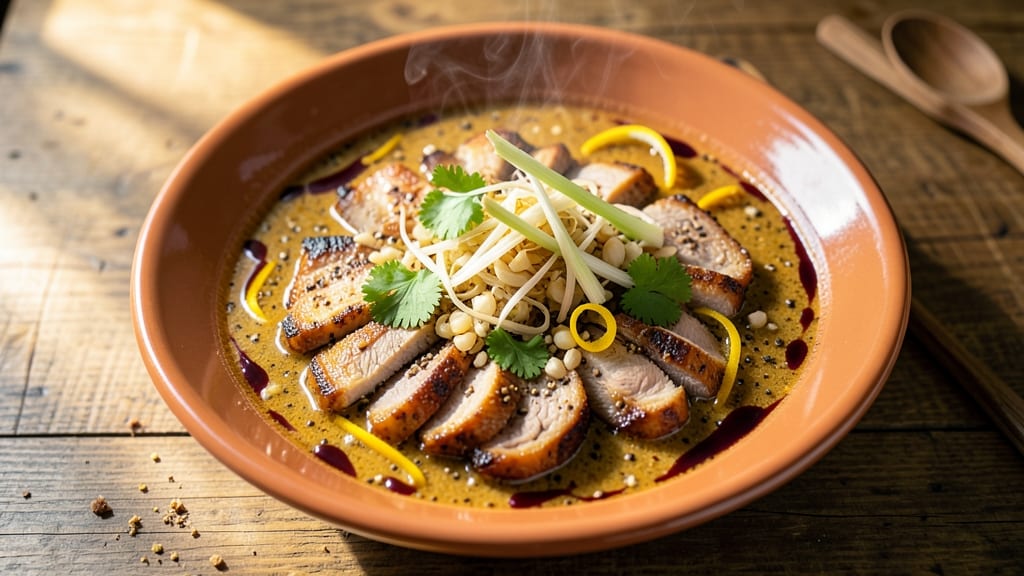
This Burmese pork curry recipe brings the vibrant flavors of Myanmar to your kitchen with its signature balance of turmeric, lemongrass, and tamarind. After years of perfecting this dish in professional kitchens, I've adapted it for home cooks—where rich, aromatic spices transform simple pork into something extraordinary.
The key lies in building layers of flavor through a fragrant paste that simmers into a velvety, slightly sweet-savory sauce.
The recipe begins with a fragrant paste of turmeric, lemongrass, garlic, and shallots—essential for authentic Burmese depth. Pork shoulder, marinated overnight in tamarind and fish sauce, develops tender texture while absorbing these complex flavors.
A slow cook on the stovetop ensures the meat stays juicy and the sauce reduces to perfect consistency, creating a dish that's both restaurant-quality and deeply comforting.
What makes this curry special is its harmony of textures and tastes: tender pork, crisp vegetables, and a sauce that's rich yet balanced by tangy tamarind and bright lemongrass. The aromatic spices don't overpower—they elevate, creating a dish that's as satisfying to make as it is to eat.
Serve it with steamed jasmine rice and quick-pickled vegetables for the full Burmese experience.
This recipe delivers authenticity without requiring exotic ingredients—just thoughtful preparation and patience. The result is a curry that's deeply flavorful, visually stunning, and impossible to resist. Let's bring the flavors of Myanmar to your table tonight.
Ingredients for burmese pork curry
These aromatic ingredients transform simple pork into restaurant-quality Burmese curry.
| Ingredient | Amount | Notes |
|---|---|---|
| Pork Shoulder 🥩 | 2 lb | Bone-in preferred for flavor |
| Fresh Turmeric Root 🌿 | 1 inch | Grated, about 1 tbsp paste |
| Lemongrass Stalks 🌿 | 4 whole | Bruised, lower 3 inches only |
| Garlic Cloves 🧄 | 8 cloves | Peeled, lightly crushed |
| Shallots 🧅 | 4 whole | Minced, about 0.5 cup |
| Galangal Root 🌿 | 1 inch | Peeled, grated, about 1 tbsp |
| Tamarind Paste 🍯 | ½ cup | Or 2 tbsp tamarind pulp |
| Fish Sauce 🍶 | 2 tbsp | Red Boat preferred |
| Coconut Milk 🥥 | 1 can (13.5 oz) | Full-fat, unsweetened |
| Thai Bird's Eye Chilies 🌶️ | 3 whole | Seeds removed, finely chopped |
| Coriander Seeds 🌿 | 1 tbsp | Toasted, ground |
| Cumin Seeds 🌿 | 1 tsp | Toasted, ground |
| Sugar 🍯 | 1 tbsp | Brown sugar preferred |
| Salt 🧂 | 1 ½ tsp | Diamond Crystal preferred |
| Vegetable Oil 🫒 | 2 tbsp | For cooking paste |
The galangal and turmeric roots are non-negotiable for authentic flavor—Asian markets carry fresh galangal, but if unavailable, substitute with extra ginger (though it won't be identical). For turmeric, fresh root yields brighter color and deeper flavor than powder, but if you must use powder, toast it first in a dry pan for 30 seconds to enhance aroma. The lemongrass should be vibrant green with no brown spots, and the stalks should snap cleanly when bent—this indicates freshness. Whole Foods or Trader Joe's typically stock these ingredients, though specialty Asian grocers will offer the freshest selection. Pork shoulder with a good fat cap ensures juicy results; trim excess fat but leave some for flavor.
No galangal? Ginger at half the amount works in a pinch, though it lacks the citrusy depth. Tamarind paste can be substituted with lime juice plus 1 tsp sugar, but the tang won't be identical. For chili heat, substitute with serrano peppers if bird's eye chilies are unavailable. The coconut milk should be full-fat—light versions lack richness and won't create the same velvety sauce. Toasting the coriander and cumin seeds before grinding releases their oils, intensifying flavor; skip this step only if short on time. For the fish sauce, Red Boat is the gold standard, but any reputable brand will suffice.
Fresh galangal and turmeric roots keep for 2 weeks in the fridge, wrapped in damp paper towels. Lemongrass can be trimmed and stored the same way for 1 week. The paste made from these ingredients can be refrigerated for 3 days or frozen for 3 months—portion into ice cube trays for easy use. The marinated pork can be prepped a day ahead, keeping flavors deeper. The finished curry reheats beautifully; add a splash of coconut milk if it thickens upon reheating to restore creaminess.
Why You'll Love This Recipe
- Fewer Ingredients, Bigger Impact: I swear by this recipe when I’m too tired to shop. Pork shoulder, a root of turmeric, and a stalk of lemongrass—just three core ingredients do the heavy lifting. No confusing spice blends or obscure pastes here; the real magic happens when you pound those shallots and garlic with the lemongrass until the paste smells like a Burmese street stall.
- Turmeric Glow-Up: That fresh turmeric root? It’s not just for color—it’s the secret weapon. The moment it hits the pan, the oil turns a golden haze, and the pork develops this unreal depth: earthy, slightly bitter, but balanced by the bright garlic. Honestly, I’ve tried powdered turmeric, but this? This is next-level stuff.
- Leftovers That Taste Fresh: Between us, this curry actually improves the next day. The flavors meld, the pork gets even more tender, and I’ve reheated it for lunch three times without a single complaint. Plus, it freezes like a dream—just throw it in a container and pull it out for a zero-effort weeknight dinner.
- Weeknight Flexibility: Need to feed a crowd? Double the batch. Hosting a casual dinner? Serve it with rice and a simple salad. Even my picky teenage nephew asked for seconds when I served it over noodles. It’s the kind of dish that works for lazy Sundays, last-minute guests, or when you just don’t feel like cooking.
Step-by-step instructions for Burmese pork curry
This aromatic curry builds layer upon layer of complexity—start with the paste, then braise the pork until tender.
Toast and Grind the Spice Paste
In a dry skillet over medium heat, toast the 1 tablespoon coriander seeds and 1 teaspoon cumin seeds for 2-3 minutes until fragrant and lightly golden. The seeds should smell deeply aromatic—this is your flavor foundation. Immediately transfer them to a spice grinder or mortar and pestle and grind until completely powdered.
In a food processor, combine the grated 1 inch fresh turmeric root, 1 inch galangal root, 4 whole lemongrass stalks (bruised and cut into 3-inch pieces), 8 cloves garlic, 4 whole shallots, and 3 whole Thai bird's eye chilies (seeds removed). Pulse until you achieve a coarse paste—about 1 tablespoon—with some texture remaining. This rough texture ensures the curry develops depth as it cooks.
Cook the Paste Until Fragrant
Heat 2 tablespoons vegetable oil in a heavy-bottomed pot over medium heat. Add the spice paste and cook for 8-10 minutes, stirring frequently, until the oil begins to separate and the paste darkens slightly. You'll notice the aroma intensify—this is when the galangal and turmeric release their earthy notes. The paste should be deeply golden and smell like a Burmese market.
Add the 0.5 cup tamarind paste, 2 tablespoons fish sauce, 1 tablespoon sugar, and 1.5 teaspoons salt. Stir well to combine, then pour in 1 cup of water (reserved from the coconut milk can). Bring to a gentle simmer and cook for 5 minutes until the mixture thickens slightly. This forms the flavor base that will carry the pork through its long braise.
Braise the Pork Shoulder
Pat the 2 lb pork shoulder dry with paper towels—this ensures a better sear. Add the pork to the pot and spoon the spice mixture over it completely, pressing gently to help it adhere. Pour in the remaining 1 can (13.5 oz) coconut milk until the pork is just submerged. The liquid should reach about halfway up the meat.
Bring the curry to a gentle simmer over medium-low heat. Cover partially and cook for 1 hour and 15 minutes, stirring occasionally, until the pork begins to pull away from the bone slightly. The curry should reduce to a thick, glossy sauce with a rich aroma. If the liquid evaporates too quickly, add 2-3 tablespoons of water to maintain the proper consistency.
Finish and Rest the Curry
Once the pork is tender—when a knife slides in and out easily—remove it from the pot and let it rest on a cutting board for 10 minutes. This resting period allows the juices to redistribute, ensuring each bite is moist and flavorful. Skim any excess fat from the surface of the curry sauce, but leave the rich, golden layer intact.
Slice the pork shoulder against the grain into ¼-inch thick pieces and return it to the pot. Stir gently to combine, then adjust the seasoning if needed—add a touch more fish sauce for saltiness or a splash of water if the sauce is too thick. Serve immediately with steamed jasmine rice to soak up every last bit of that fragrant, complex curry.
Pro Tips For Making Burmese Pork Curry
- CRUSH THE TURMERIC: Fresh turmeric root is non-negotiable here—skip the powder. Use a heavy knife or mortar and pestle to smash it into a thick paste with a splash of water, then strain out the fibers. I learned this the hard way: dried turmeric lacks the earthy depth and vibrant color that fresh delivers, and it burns faster when fried.
- STEAM THE LEMONGRASS FIRST: Split the stalks lengthwise and blanch them in boiling water for 30 seconds before mincing. This softens the fibers so they blend smoothly into the sauce instead of turning it into a stringy mess. Sounds weird, but it works—your future self will notice the difference when the curry isn’t glued together with tough lemongrass bits.
- BROWN THE PORK IN BATCHES: Pork shoulder releases a ton of fat, and crowding the pan will steam the meat instead of searing it. Cook in two batches over medium-high heat, letting the fat render completely before adding more. I used to rush this, and the curry always tasted flat—now it’s rich and caramelized, with layers of flavor.
- PULSE THE SHALLOTS GARLIC MIX: After frying the aromatics, transfer the shallots and garlic to a food processor and pulse 3-4 times until just broken down—no puree. This keeps texture while distributing the flavors evenly. I skip this when I’m lazy, but the dish is noticeably better when I don’t: the shallots stay slightly identifiable, and the sauce doesn’t turn into a paste.
Storing and reheating your burmese pork curry
Refrigerator Storage
Let your curry cool to room temperature (about 1 hour) before transferring to airtight containers—I swear by glass Pyrex bowls with tight lids. Store in the fridge for up to 4 days, but I recommend eating within 3 days for peak flavor.
The sauce will thicken slightly overnight, so add 1-2 tablespoons of water or coconut milk when reheating to restore creaminess. 🥫
Freezer Preservation
For longer storage, freeze the curry in quart-sized freezer bags or airtight containers, leaving 1-inch headspace for expansion. It keeps for 3 months without losing its vibrant flavors.
When ready to eat, thaw overnight in the fridge—never microwave directly from frozen. I always portion individual servings before freezing to avoid thawing more than needed. ❄️
Stovetop Reheating
My preferred method is stovetop reheating—it preserves texture and prevents rubbery pork. Transfer the curry to a pot over medium-low heat and add 2 tablespoons of water or coconut milk to prevent sticking.
Simmer uncovered for 10-15 minutes, stirring occasionally, until heated through to 165°F internal temperature. Taste and adjust seasoning—fish sauce or a squeeze of lime often helps brighten flavors. 🔥
Microwave Revival
For quick meals, reheat in 2-minute intervals on 50% power, stirring between each interval. Cover loosely with a microwave-safe lid to retain moisture. The curry should reach 165°F—use a meat thermometer to check the pork's temperature.
If the sauce separates, whisk in 1 tablespoon of coconut milk to restore its velvety texture. This method works best for single servings. ⚡
Pork Texture Tips
The pork's tenderness is key—if it feels dry after reheating, cover it with sauce and let it sit off-heat for 5 minutes to reabsorb moisture. For extra richness, stir in 1 teaspoon of coconut cream during reheating.
I've found that curries reheat better when stored with the sauce and pork together rather than separately. 💫
Sauce Consistency Fixes
If the sauce thickens too much upon reheating, thin it with 1-2 tablespoons of water or coconut milk. For extra depth, add a pinch of toasted cumin powder or a splash of fish sauce to restore umami.
The curry's balance of sweet, sour, and savory flavors should remain intact—adjust gradually to avoid overpowering the dish. 🌶️
Nutrition facts
Frequently asked questions
Can I substitute galangal if I can't find it?
Yes, but expect some flavor differences. Use 1 inch fresh ginger (about 2 tbsp grated) as a substitute, though it won't have galangal's citrusy, peppery depth. For best results, add a pinch of black pepper to mimic galangal's complexity. If you're feeling adventurous, try cardamom pods (2-3, lightly crushed) for an aromatic boost.
How spicy is this curry, and can I adjust the heat?
The recipe includes 3 whole Thai bird's eye chilies (seeds removed) for mild heat—adjust to taste. For less heat, reduce to 1-2 chilies or remove seeds entirely. For extra spice, add ½ tsp chili flakes or a dash of hot sauce at the end. The tamarind and coconut milk balance the heat beautifully, so don't be afraid to experiment!
What's the best way to serve this curry?
Traditionally, this curry shines with jasmine rice to soak up the rich sauce, but any steamed white rice works. For a full Burmese meal, pair it with quick-pickled vegetables (like daikon and carrot) or a simple cucumber salad. Garnish with fresh cilantro and lime wedges for brightness—it's the perfect balance of textures and flavors!
Why does my curry taste bland after cooking?
Blandness often comes from insufficient fish sauce or tamarind. Boost umami with an extra 1-2 tbsp fish sauce or brighten with ½ tsp more sugar to balance. If the sauce lacks depth, simmer it uncovered for 5-10 minutes to reduce and concentrate flavors. Always taste as you go—Burmese curry should have layers of sweet, sour, and savory!
Can I make this curry in an Instant Pot?
Follow the same steps for the paste, then add the pork and coconut milk to your Instant Pot. Cook on high pressure for 45 minutes, then do a natural release for 15 minutes. The pressure cooker speeds up the process but delivers the same tender pork and rich sauce. Just reduce the cooking time by 30 minutes compared to stovetop braising.