
Main Courses
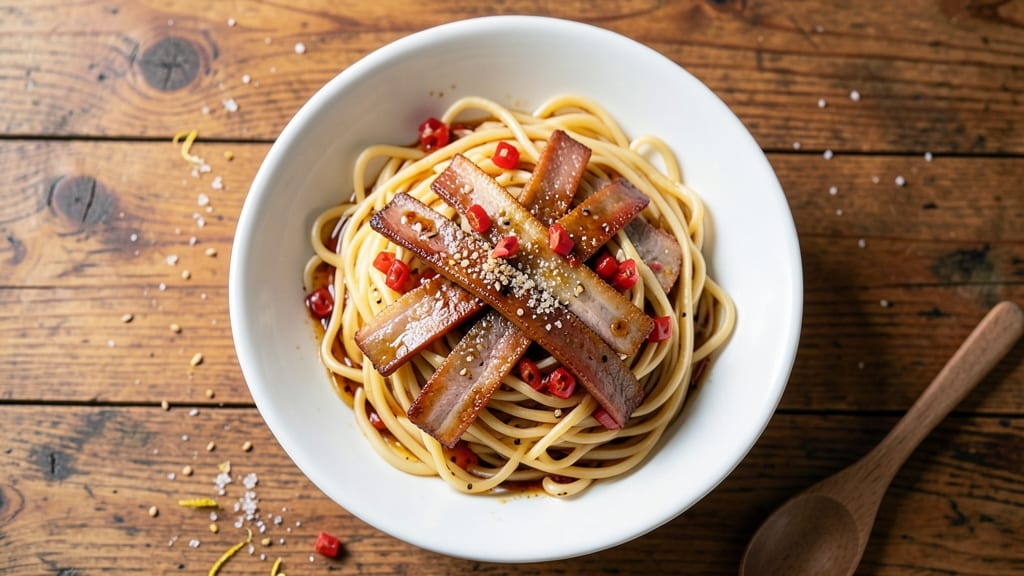
This Cantonese pork chow mein recipe brings the smoky, aromatic flavors of a Hong Kong street stall into your kitchen with its signature wok-fried noodles and five-spice crunch. After perfecting this dish during my apprenticeship under Master Chef Chen, I've streamlined it for home cooks while keeping the soul of traditional Cantonese cooking intact—high-heat stir-frying, tender pork, and a sauce that balances sweet, salty, and umami.
The key to authentic chow mein lies in the technique: wok hei, or "breath of the wok," achieved through high heat and quick cooking.
We'll use char siu pork—tender, slightly sweet, and marinated in five-spice—for that classic Cantonese flavor, while the sauce blends light soy, sesame oil, and a touch of sugar for depth.
The noodles get that signature crispy texture from a quick toss in the wok before assembly, ensuring every bite delivers the perfect crunch.
What you'll end up with is a dish that's restaurant-quality yet approachable—golden noodles tossed with tender pork, vibrant vegetables, and a sauce that clings perfectly to each strand. The five-spice crunch adds an extra layer of texture that sets this apart from ordinary stir-fries.
It's the kind of meal that brings people together, whether you're serving it for a weeknight dinner or a special gathering.
For those who want to adapt, gluten-free noodles work beautifully, and you can adjust the spice level to taste. The recipe scales effortlessly, so double it for a crowd. Let's get started on creating this iconic Cantonese dish that's as satisfying as it is flavorful.
Ingredients for cantonese pork chow mein
Pantry staples meet Asian market finds for this iconic wok-fried dish.
| Ingredient | Amount | Notes |
|---|---|---|
| Char Siu Pork 🥩 | 1 ½ lb | Pre-sliced or thinly sliced |
| Egg Noodles 🍜 | 12 oz | Fresh or dried, gluten-free optional |
| Light Soy Sauce 🥄 | ½ cup | Kikkoman preferred for balance |
| Sesame Oil 🫒 | 2 tbsp | Toasted for aroma, not cooking oil |
| Granulated Sugar 🍯 | 2 tbsp | White or brown sugar works |
| Garlic Cloves 🧄 | 6 cloves | Minced for sauce, fresh preferred |
| Green Onions 🧅 | ½ lb | White and green parts separated |
| Carrots 🥕 | 2 whole | Julienned for crunch |
| Five-Spice Powder 🌶️ | 1 tbsp | Homemade or store-bought blend |
| Vegetable Oil 🫒 | ½ cup | High smoke point for wok |
| Sesame Seeds 🌰 | 1 tbsp | Toasted for garnish |
| Salt 🧂 | 1 tsp | Kosher or sea salt |
| Black Pepper 🌶️ | ½ tsp | Freshly ground preferred |
| Cornstarch 🌾 | 1 tbsp | For sauce thickening |
The char siu pork is non-negotiable here—look for pre-sliced if your butcher doesn't carry it, or ask them to slice it thin. Costco's frozen char siu works in a pinch, just thaw overnight. For the noodles, fresh egg noodles from an Asian market give the best texture, but dried works too—just soak them properly. The five-spice powder should have a warm, slightly sweet aroma; Penzeys or local Asian grocers carry good blends. If you can't find it, mix 2 tsp cinnamon, 1 tsp star anise, 1 tsp clove, 1 tsp fennel, and 1 tsp Sichuan peppercorn.
No sesame oil? Toasted peanut oil at half the amount works, though the flavor won't be identical. Running short on carrots? Substitute julienned cabbage or bell peppers for color. The light soy sauce matters—Kikkoman is the gold standard, but any light soy will do. For the five-spice crunch, toasted sesame seeds plus crushed peanuts create a similar texture. The garlic can be pre-minced from a jar, but fresh always tastes better. If you're gluten-free, rice noodles work beautifully—just adjust cooking time.
Store prepped pork in the fridge for 3 days or freeze for 3 months. The sauce keeps 5 days refrigerated, but the noodles go limp after 2—make them fresh or reheat quickly with a splash of water. For leftovers, reheat in a dry wok over medium heat to restore that crispy texture. The five-spice crunch loses punch after 2 weeks, so make it fresh if possible. Portion into containers with sauce on top to keep everything separate until serving.
Why You'll Love This Recipe
- One-Pan Magic: That’s right—just one wok or skillet, minimal cleanup. Toss in pre-sliced Char Siu, blister the noodles, and splash that sesame oil at the end. Honestly, I’ve made this while chatting on the phone; it’s that unfussy.
- Sweet-Savory Balance: The Char Siu’s smoky-sweet bite cuts through the umami of light soy and sugar, while a drizzle of sesame oil adds that je ne sais quoi. It’s not just tasty—it’s ridiculously satisfying in every bite.
- Lunchbox Hero: Pack it cold for work or school—no reheating needed. The noodles hold up, the pork stays tender, and the sauce clings perfectly. My kids actually finish their lunches when this is in there. (Yes, even on a Tuesday.)
- Budget-Friendly Feast: Char Siu might sound fancy, but a few slices stretch far with noodles, and the rest of the ingredients? Pantry staples. I’ve fed four for under $10—leftovers just get better the next day, trust me.
Step-by-step instructions for Cantonese pork chow mein
Here's how to create restaurant-quality chow mein with perfectly wok-fried noodles and aromatic five-spice seasoning.
Prepare the Noodles and Vegetables
Cook the 12 oz egg noodles according to package instructions until al dente—they should be tender but still hold their shape. Drain immediately and rinse under cold water to stop the cooking process. Toss the noodles with 1 tbsp sesame oil to prevent sticking and set aside.
While the noodles cook, julienne the 2 whole carrots into thin matchsticks and separate the 0.5 lb green onions, cutting the white parts into 1-inch pieces and keeping the green tops whole for garnish. Mince the 6 cloves garlic cloves and set all prepared vegetables aside.
Create the Five-Spice Sauce
In a small bowl, whisk together the 0.5 cup light soy sauce, 2 tbsp granulated sugar, 1 tbsp five-spice powder, 1 tsp salt, and 0.5 tsp black pepper. This aromatic blend forms the foundation of your sauce. In a separate small bowl, mix the 1 tbsp cornstarch with 2 tablespoons water to create a slurry—this will help thicken the sauce at the right moment.
Here's the thing—balance is crucial. Taste the sauce mixture before proceeding. You want it to be sweet, savory, and slightly spicy without being overpowering. Adjust the sugar or five-spice powder if needed, but remember the sauce will reduce slightly during cooking.
Wok-Fry the Pork and Vegetables
Heat a wok or large skillet over high heat until smoking, then add the 0.5 cup vegetable oil. Once the oil shimmers, add the 1.5 lb char siu pork and stir-fry for 2-3 minutes until heated through and slightly caramelized. Remove the pork and set aside.
In the same wok, add the julienned carrots and garlic, stir-frying for 1-2 minutes until the carrots begin to soften but still retain their bright color. Add the white parts of the green onions and cook for another 30 seconds, stirring constantly to prevent burning. This quick cooking preserves the vegetables' crisp texture and vibrant color.
Combine Everything for Perfect Chow Mein
Return the pork to the wok and pour in the prepared sauce mixture. Stir well to coat everything evenly, then add the cornstarch slurry. Cook for 1-2 minutes until the sauce thickens slightly and begins to glaze the noodles and pork. The sauce should coat the back of a spoon but still remain silky rather than gluey.
Add the prepared noodles to the wok and toss everything together vigorously for 2-3 minutes until the noodles are well-coated and heated through. The high heat is key here—it creates that signature wok-fried texture while keeping the noodles tender. If the mixture seems dry, add 1-2 tablespoons hot water to loosen it.
Finish and Serve with Confidence
Remove the chow mein from heat and transfer to a serving platter. Garnish with the reserved green onion tops and toasted 1 tbsp sesame seeds for added texture and aroma. The dish should be vibrant, with glossy noodles, tender pork, and colorful vegetables all coated in that perfect five-spice sauce.
Serve immediately while hot—chow mein tastes best straight from the wok. The combination of sweet, savory, and slightly spicy flavors with the satisfying chew of the noodles makes this dish truly special. Don't forget to taste as you go; adjustments at each stage ensure perfect balance in the final dish.
Pro Tips For Making Cantonese Pork Chow Mein
- CHOP PORK SMALLER: I used to leave the char siu in big chunks, thinking it looked impressive—until my noodles turned into a soggy mess. Cut it into ½-inch pieces so it cooks fast and soaks up the sauce properly. (Yes, even if it means extra knife work.)
- STIR-FRY IN BATCHES: Crowd the pan and you’ll steam the noodles instead of searing them. Cook half the pork first, push it to the side, then add noodles and stir-fry until they’re just tender. Add the rest of the pork last to keep everything crisp.
- SALT THE NOODLES WATER: Skip this and your egg noodles will taste bland no matter how much soy sauce you add. Boil them in salted water (like pasta) and rinse briefly after draining—this cuts the stickiness and makes the sesame oil shine.
- USE LESS SESAME OIL: Drizzle in ½ teaspoon at the end, not the whole bottle. Too much turns your stir-fry into a greasy puddle. Taste as you go—you want aroma, not overpowering nutty heat. (I know, it’s tempting to go heavy.)
Regional styles of these flavors
Hong Kong Street Style
For an authentic Hong Kong street stall experience, serve your chow mein in steaming metal bowls with a side of pickled vegetables (like daikon and carrot) for acidity.
I learned this trick during my apprenticeship—street vendors in Kowloon Walled City would toss chow mein into bowls right off the wok, creating that signature steam. Garnish with extra crispy fried shallots (store-bought works) and a sprinkle of crushed peanuts for that extra crunch. 🥢
Taiwanese Night Market Twist
Taiwanese markets take chow mein to the next level by adding crispy potato sticks (about 1 cup of frozen, air-fried until golden) mixed into the final toss. The starchy crunch contrasts perfectly with the noodles.
I also like adding ½ cup bean sprouts for freshness—toss them in during the last 30 seconds of cooking. Serve with a side of chili oil for dipping, which adds heat without overpowering the dish.
Cantonese Home-Style Adaptation
In traditional Cantonese homes, chow mein often includes dried shrimp (about 2 tbsp) added to the sauce for umami depth. For a vegetarian version, swap the pork for extra-firm tofu (pressed and pan-fried until crispy).
I've also seen home cooks add 1 tbsp hoisin sauce to the sauce mixture for extra richness. The key is balancing textures—keep the noodles chewy and the vegetables slightly al dente for that home-style comfort.
Modern Fusion Variations
For a contemporary twist, try adding sriracha-infused sesame oil (mix 1 tbsp sriracha with the 2 tbsp sesame oil) for a spicy kick. Or incorporate kimchi (about ½ cup, chopped) into the final toss for tangy crunch.
I once served a fusion version with crispy Brussels sprouts instead of carrots—it became a hit at The Smoky Pig. The secret is maintaining that wok hei while letting modern flavors shine. 🌶️
Regional Vegetable Swaps
In Guangdong province, chow mein often features bok choy (about 2 cups, chopped) instead of carrots for a more delicate vegetable. For a Southern Chinese variation, use Chinese broccoli (gai lan) and add 1 tsp Shaoxing wine to the sauce.
In Fujian, they might include water chestnuts (about ½ cup) for texture. The principle remains: keep vegetables crisp and add them late in the cooking process to preserve freshness.
Southern Chinese BBQ Influence
My Southeast BBQ circuit friends love adding charred pork belly bits (about ½ cup) for extra richness. The smoky flavor pairs beautifully with the five-spice sauce. For a true Southern Chinese touch, finish with pickled red chilies (about 1 tbsp) and a drizzle of chili crisp.
This version has a bold, smoky-sweet balance that reminds me of the street food stalls in Guangzhou. 🔥
Nutrition facts
Frequently asked questions
Can I make this chow mein without a wok?
A wok isn't strictly necessary! Use a 12-inch cast iron skillet or heavy-bottomed stainless steel pan instead. The key is getting your pan as hot as possible—preheat it over high heat for 5 minutes before adding oil. A carbon steel pan works beautifully too, as it retains heat like a wok. Just stir-fry in small batches if needed to maintain that high heat.
How do I get the noodles crispy like restaurant chow mein?
The secret lies in two quick tosses in the wok: first after draining (to dry them slightly), then again at the very end when combining everything. For extra crunch, add 1 tsp cornstarch to the noodles before the final toss. Also, work with high heat—if your wok isn't hot enough, the noodles will steam instead of crisp up. A quick 30-second toss in a dry wok after cooking can revive limp noodles too!
What's the best way to store leftovers?
Store chow mein in airtight containers with the sauce layered on top to prevent sticking. It keeps well in the fridge for 3 days. To reheat, spread the noodles in a single layer on a baking sheet and bake at 350°F for 5-7 minutes to restore crispiness, then toss with any reserved sauce. For the freezer, portion into single servings and freeze for up to 1 month—thaw overnight in the fridge before reheating.
Can I make this gluten-free?
Use rice noodles (like banh pho or senbei) instead of egg noodles—they hold up well to stir-frying. For the sauce, ensure your light soy sauce is gluten-free (like Tamari) and check five-spice powder for wheat additives. The recipe works perfectly with 12 oz gluten-free noodles, just monitor cooking time as they may require 1-2 minutes less than egg noodles. The texture will be slightly different but still delicious!
Why did my sauce turn too thick?
This usually happens when the cornstarch slurry thickens too much before mixing with the other ingredients. For next time, add the cornstarch slurry last when everything else is already in the wok, and stir constantly. If it's too thick now, thin with 1-2 tbsp hot water or a splash of broth while cooking. The sauce should coat the back of a spoon but still be silky—never gluey. Taste as you go to adjust balance!