
Sauces & Condiments
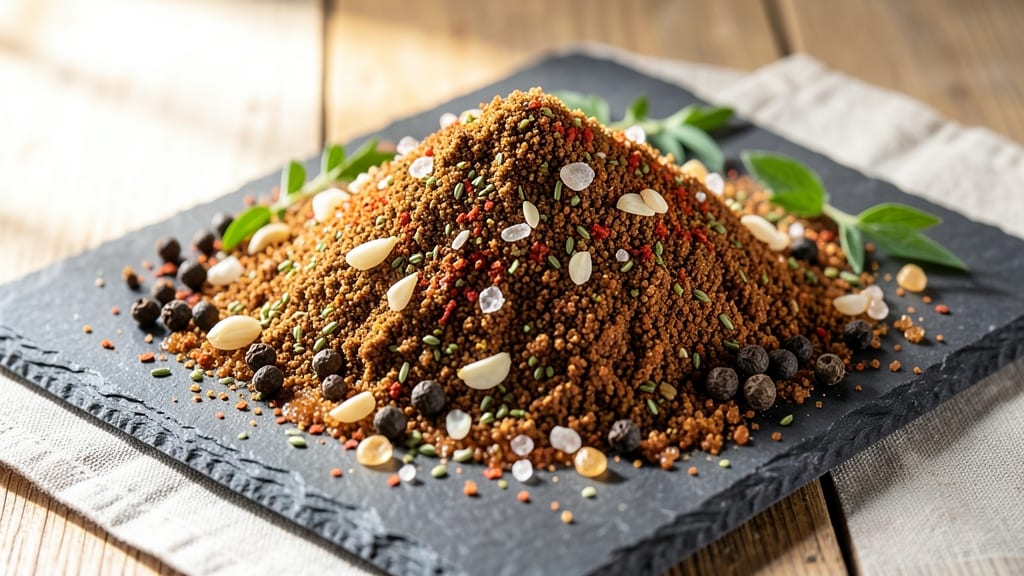
This country pork sausage seasoning recipe transforms raw pork into links with restaurant-quality depth—just mix and grind. 🔥 The blend of smoked paprika, brown sugar, and black pepper creates that signature smoky-sweet flavor that defines Southern-style sausages.
I developed this blend during my apprenticeship in Charleston, where I learned how precise seasoning elevates humble pork into something extraordinary.
The magic lies in balancing heat, sweetness, and earthiness—smoked paprika for depth, brown sugar for caramelization, and black pepper for a subtle kick. This dry rub works with ground pork or whole muscle cuts, and the measurements are designed for consistency every time.
Whether you're making breakfast links or weekend brats, this blend delivers professional results without the guesswork.
What makes this seasoning special is its versatility. Use it for fresh sausage, fermented links, or even as a dry rub for pork chops. The spices develop richer flavors when mixed with fresh pork, but they'll keep well in an airtight container for up to six months.
No liquid ingredients mean no mess—just measure, mix, and grind.
For those who love experimentation, try swapping half the brown sugar for maple powder or adding a pinch of cayenne for extra heat. The key is starting with quality pork from a trusted source—something I learned from raising my own heritage pigs. Let's get seasoning!
Ingredients for country pork sausage seasoning
Nine spices, one perfect blend—this is how you make restaurant-quality sausage at home.
| Ingredient | Amount | Notes |
|---|---|---|
| Smoked Paprika 🌶️ | 3 tbsp | High-quality, not smoked paprika substitute |
| Brown Sugar 🍚 | 2 tbsp | Light or dark, packed measurement |
| Coarse Black Peppercorns 🌶️ | 1 ½ tbsp | Freshly cracked for optimal flavor |
| Granulated Garlic 🧄 | 1 tbsp | Minced garlic powder alternative |
| Ground Coriander 🌿 | 1 tbsp | Freshly ground preferred |
| Kosher Salt 🧂 | 1 ½ tbsp | Diamond Crystal preferred |
| Ground Fennel Seeds 🌿 | 1 tsp | Freshly ground for authentic flavor |
| Ground Juniper Berries 🌲 | ½ tsp | Optional but traditional |
| Ground Mustard 🌶️ | ½ tsp | Dry, powdered form |
| Ground Nutmeg 🌿 | ¼ tsp | Freshly grated preferred |
The smoked paprika is non-negotiable here—Penzeys or McCormick Gourmet are my go-tos for that authentic smoky depth. Brown sugar should be packed into the spoon for accuracy, and Trader Joe's has the most consistent quality. For the black peppercorns, crack them fresh right before mixing—pre-ground loses its punch. Coriander adds brightness, but if you can't find ground, toast whole seeds and grind them yourself. The fennel and juniper are the secret weapons—spice shops or specialty grocers often carry them. If you can't find juniper, skip it, but don't cut the fennel.
No smoked paprika? Sweet paprika plus a pinch of liquid smoke gets you close, but it won't be the same. Running low on brown sugar? Maple powder works 1:1—it's what I use when I'm out. The mustard and nutmeg are flexible: skip the nutmeg if you dislike its bite, but keep the mustard for that subtle tang. For extra heat, add cayenne at half the amount of black pepper. And if you're making fermented sausages, reduce the salt by 25%—the fermentation process adds enough sodium. The blend keeps its potency for 6 months in a sealed jar, but trust me, you'll go through it fast.
Store this blend in a dark glass jar with a tight seal—light and air degrade the spices fast. I keep mine in the pantry, away from the stove's heat. For best results, mix with fresh pork within a week of grinding. The spices develop richer flavors when combined with fresh meat, but they'll keep indefinitely if stored properly. Double the batch—you'll want it for everything from breakfast sausage to pork rubs.
Why You'll Love This Recipe
- Here’s what sold me: the garlic and coriander brighten up the richness of the pork, while the brown sugar caramelizes just enough to make every bite ridiculously good. It’s the kind of flavor that sticks with you—like a hug in seasoning form.
- Pantry Magic: I swear by this blend—just measure, mix, and store. No fancy tools, no last-minute grocery runs. That smoked paprika alone gives it a smoky depth that’s chef’s kiss, and the brown sugar keeps it from tasting flat.
- Savory-Sweet Balance: Here’s what sold me: the garlic and coriander brighten up the richness of the pork, while the brown sugar caramelizes just enough to make every bite ridiculously good. It’s the kind of flavor that sticks with you—like a hug in seasoning form.
- Weeknight to Weekend: This isn’t just for breakfast sausage. Use it on roasted pork tenderloin, in meatloaf, or even sprinkled over grilled chicken. I’ve thrown it in chili, on biscuits, and straight into scrambled eggs—yes, even on a Tuesday night—and it never lets me down.
Step-by-step instructions for country pork sausage seasoning
Here's how to blend this smoky-sweet mix perfectly for homemade sausage links.
👨🍳 Step 1: Measure All Ingredients Precisely
Start by gathering all your ingredients on a clean workspace. I find using a digital scale for the spices ensures perfect accuracy—especially with those small measurements like the 0.25 tsp ground nutmeg. For the 1.5 tbsp coarse black peppercorns, I like to crack them fresh using a mortar and pestle right before measuring for maximum flavor impact.
The 2 tbsp brown sugar should be packed firmly into your measuring spoon to avoid under-measuring. This sweet element balances the smokiness beautifully. Place all ingredients in a medium-sized mixing bowl—you'll want enough space to whisk everything thoroughly without spilling.
🥘 Step 2: Combine Dry Ingredients Thoroughly
Begin by adding the 3 tbsp smoked paprika to your bowl. This is your flavor foundation—high-quality smoked paprika makes all the difference in that authentic country sausage taste. Next, add the 1 tbsp ground coriander and 1 tbsp granulated garlic, giving them a quick stir with a fork to distribute.
Now add the remaining spices: 1.5 tbsp kosher salt, 1 tsp ground fennel seeds, 0.5 tsp ground juniper berries, 0.5 tsp ground mustard, and finally the 0.25 tsp ground nutmeg. The nutmeg might seem like a small amount, but it adds that subtle warmth that rounds out the flavor profile beautifully.
🍳 Step 3: Whisk Until Uniform and Aromatic
Switch to a whisk and combine everything vigorously for 2-3 minutes. You're looking to break up any clumps and ensure the brown sugar is evenly distributed throughout the mixture. The spices should start releasing their aromas—you'll notice that smoky, slightly sweet scent filling your kitchen.
Here's the thing—I always do a quick taste test at this stage. Sprinkle a tiny pinch on your tongue and let it dissolve. You should detect all the individual components: the smokiness from the paprika, the sweetness from the brown sugar, the peppery heat, and that subtle earthiness from the coriander and fennel. This is your flavor baseline before adding any meat.
⏰ Step 4: Rest and Store Properly
Transfer your finished seasoning blend to an airtight container. I like to use a small glass jar with a tight-sealing lid—it preserves the flavors better than plastic. Give it a gentle shake to redistribute any settled spices at the bottom, then let it rest for 10-15 minutes before using.
This resting period allows the spices to fully meld together. Store your seasoning in a cool, dark place for up to 3 months, or freeze it for up to 6 months to preserve maximum freshness. The flavors will continue to develop slightly over time, becoming even more complex as they mature.
Pro Tips For Making Country Pork Sausage Seasoning
- CRUSH THE PEPPERCORNS: Don’t just eyeball it—crack those coarse black peppercorns in a mortar or heavy bag before grinding. I learned this the hard way: skipping this step leaves uneven heat and bitter bits. A quick 30-second smash makes all the difference in the final blend.
- TOAST THE CORIANDER: Dry-toast the ground coriander for 30 seconds in a skillet before mixing. Sounds weird, but it works—it deepens the nutty flavor and cuts through the sweetness of the brown sugar. (Yes, even if you’re impatient like me.)
- BLEND THE SUGAR LAST: Mix the smoked paprika, garlic, and peppercorns first, then fold in the brown sugar at the end. Adding it early clumps everything up, and you’ll end up with uneven distribution in your sausage. A quick whisk after each addition keeps it smooth.
- STORE IT RIGHT: Keep the seasoning in an airtight container away from light—it loses potency fast. I used to ignore this and wondered why my sausage tasted dull after a few weeks. A cool, dark pantry (or fridge for long-term) preserves the smoky, sweet kick.
Creative variations of this recipe
Smoky Heat Boost
For a bolder kick, swap half the brown sugar for maple powder and add ½ tsp cayenne pepper. This variation mimics the heat profile of Carolina-style sausages while keeping that signature sweetness. I first tried this blend at a BBQ competition in Raleigh—judges couldn’t believe it was homemade! 🌶️
Herb-Forward Variation
Replace ½ tsp ground coriander with 1 tsp dried thyme and ½ tsp dried rosemary, then reduce the smoked paprika to 2 tbsp. This Mediterranean-inspired twist works beautifully with fresh pork and pairs perfectly with roasted root vegetables.
I use this version for my farm-raised pork chops during cooler months.
Sweet & Spicy Fusion
Double the brown sugar to 4 tbsp and add ½ tsp ground cinnamon for a dessert-meets-savory profile. This works surprisingly well in breakfast sausages or as a glaze for pork ribs. The cinnamon adds warmth that complements the smokiness—just don’t tell anyone it’s not traditional! 🍯
Fermented Sausage Base
For fermented sausages, reduce the kosher salt to 1 tbsp and add 1 tsp ground black pepper (instead of cracked). The lower salt allows the fermentation process to develop flavor naturally. I developed this version after working with Italian charcuterie masters—it’s the secret to authentic salami-style links.
Breakfast Sausage Twist
Add ½ tsp ground ginger and ½ tsp onion powder to the original blend for a bright, aromatic breakfast sausage. This variation keeps well when frozen and makes an excellent addition to scrambled eggs or biscuits. The ginger adds a subtle zing that balances the sweetness beautifully.
Nutrition facts
Frequently asked questions
Can I use this seasoning for other meats besides pork?
While designed for pork, this blend works beautifully with chicken (especially for breakfast sausage), ground beef, or even turkey. The smoky-sweet profile translates well—just reduce the brown sugar by half for beef to avoid overpowering the meat's natural flavor. I've used it successfully for chicken sausage patties and even as a rub for pork-free pulled "pork" (made with chicken).
How much seasoning should I use per pound of meat?
For ground pork, use 1.5 tablespoons of this blend per 1 pound of meat. For whole muscle cuts (like pork shoulder for pulled sausage), apply 1 teaspoon per square inch of surface area before grinding. The measurements are designed to balance the fat content in pork—too much seasoning can make leaner cuts taste salt-heavy. Always taste before cooking!
What's the best way to store leftover seasoning?
Keep your blend in an airtight glass container (like a mason jar) in a cool, dark place for up to 3 months. For longer storage, freeze it for 6 months—the cold preserves the volatile oils that carry the flavors. I like to divide it into small batches before freezing so I can thaw just what I need. Never store it in plastic—it absorbs odors and degrades faster.
Can I make this seasoning without smoked paprika?
You can substitute with 2 tbsp sweet paprika plus ½ tsp liquid smoke, but the flavor won't be identical. The smoky depth from smoked paprika is irreplaceable—it's what gives country sausage its signature character. If you must substitute, use 1 extra tsp of brown sugar to compensate for the lost complexity. For fermented sausages, this substitution works better than in fresh sausages.
Why does my homemade sausage taste bland after cooking?
Most likely, your meat was too warm when mixing the seasoning (spices need cold meat to distribute properly) or you didn't cook it long enough. Ground pork should reach 160°F internally—any lower and the seasoning won't develop fully. Also check your salt: if using Diamond Crystal kosher salt (like the recipe specifies), reduce other salts in your recipe by 20%. The spices need fat to release their oils—if your meat is too lean, add a little pork fat back in.