
Main Courses
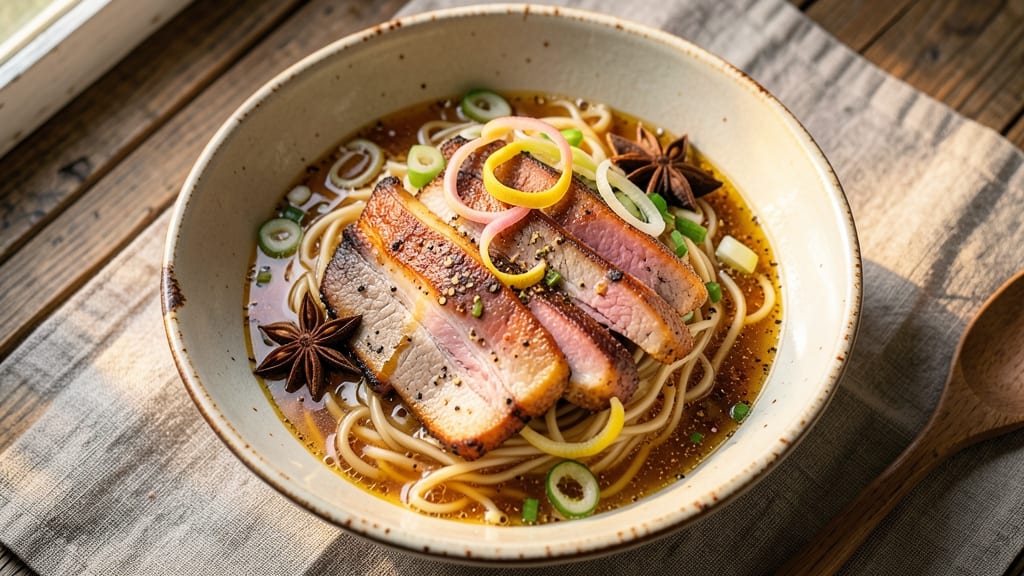
This crispy pork ramen recipe transforms humble pork shoulder into golden, shatteringly crisp edges that contrast perfectly with silky noodles and aromatic broth. I developed it after years of perfecting pork techniques at The Smoky Pig, where we process 2,000 pounds weekly—this method delivers restaurant-quality crunch at home.
The five-spice glaze adds depth without overpowering the clean pork flavor, while the wok-frying technique ensures maximum crispiness without drying out the meat.
The secret lies in the pork preparation: thin slices are fried twice—first for maximum crispiness, then glazed with a five-spice-infused reduction that locks in moisture.
Meanwhile, the broth simmers with classic ramen aromatics (ginger, garlic, star anise) while the noodles cook just shy of al dente to absorb the rich flavors. What makes this recipe foolproof is balancing the textures: crispy pork, tender noodles, and velvety broth that coats every bite.
By the time you assemble everything in your bowl, you'll have a harmonious blend of textures and flavors—crunchy pork bits that shatter between your teeth, chewy ramen noodles, and a broth that's rich yet balanced with umami and spice.
The five-spice glaze adds subtle warmth that complements rather than dominates. This is the kind of ramen that makes you want to skip the takeout line entirely.
Perfect for weeknight dinners or impressing guests, this recipe scales beautifully while maintaining its signature crispy texture. The method ensures you'll achieve that coveted contrast between crispy pork and tender noodles every time. Let's get cooking—your taste buds will thank you.
Ingredients for crispy pork ramen
Restaurant-quality crunch starts with these 15 ingredients—pork shoulder, five-spice powder, and fresh aromatics.
| Ingredient | Amount | Notes |
|---|---|---|
| Pork Shoulder 🥓 | 1 ½ lb | Bone-in for flavor, cut into 1/4-inch slices |
| Ramen Noodles 🍜 | 2 packages | Fresh or dried, 4 oz each |
| Five-Spice Powder 🌶️ | 1 tbsp | Homemade or store-bought blend |
| Fresh Ginger 🧄 | ½ cup | Finely grated, peeled |
| Garlic Cloves 🧄 | 6 cloves | Minced, peeled |
| Star Anise Pods 🌟 | 2 whole | Lightly crushed |
| Dried Shiitake Mushrooms 🍄 | 4 whole | Rehydrated, stems removed |
| Vegetable Oil 🫒 | ½ cup | High smoke point |
| Light Soy Sauce 🥄 | ¼ cup | For glaze |
| Honey 🍯 | 1 tbsp | Or maple syrup for vegan |
| Sesame Oil 🫒 | 1 tbsp | Toasted for aroma |
| Green Onions 🧅 | 4 whole | Sliced, white and green parts |
| Chicken Bouillon Cubes 🍲 | 2 whole | For broth base |
| Kosher Salt 🧂 | 1 ½ tsp | Diamond Crystal preferred |
| Black Peppercorns 🌶️ | ½ tsp | Freshly cracked |
The pork shoulder is non-negotiable here—bone-in for maximum flavor, and thinly sliced (1/4-inch) for perfect crispiness. Grab one from Whole Foods or your local butcher if you want the best marbling. If you're using a pre-cut pork shoulder, ask for it to be sliced against the grain. For the five-spice powder, Penzeys has a great blend, but any reputable brand works. Just make sure it's fresh—if it smells stale, toss it. The ginger and garlic? Fresh is mandatory—dried just won't cut it for that bright, aromatic punch in the broth.
No five-spice powder? Mix 1/2 tsp each of cinnamon, cloves, fennel, star anise, and Sichuan peppercorn—it's a game-changer. Running low on fresh ginger? Substitute 1 tbsp of ginger juice from a bottle, but it won't be as vibrant. The shiitake mushrooms can be swapped for cremini, but they won't have the same earthy depth. For the broth, Kettle & Fire bouillon cubes add umami without overpowering. If you're making a big batch, consider homemade chicken stock—it'll elevate the whole dish. And if you're avoiding honey, maple syrup works perfectly in the glaze.
Pork slices keep 2 days in the fridge if wrapped tightly in parchment. The five-spice powder lasts 6 months in a sealed jar, but the ginger and garlic should be used within 1 week for peak flavor. For the broth, make a double batch—it freezes beautifully for up to 3 months. I always portion the pork into single-serving containers before freezing, so I can just grab and fry whenever I'm craving ramen. The noodles? Cook them just shy of al dente—they'll finish in the hot broth.
Why You'll Love This Recipe
- Pork Cuts the Work: The pork shoulder does all the heavy lifting—just cube it, toss it in five-spice, and let the oven handle the rest. No fancy knife skills or last-minute chopping; this is the kind of recipe that lets you sip your wine while dinner gets crispy.
- Five-Spice Magic: That little jar of five-spice powder transforms everything—warm, nutty, and just a little mysterious. The pork gets this addictive crust, while the broth soaks up the aroma like a sponge. (Yes, even my picky roommate asks for seconds.)
- Leftover Reinvention: Turns into something totally different the next day: cold ramen bowls with extra ginger, fried rice with the crispy pork bits, or even a quick stir-fry. Honestly, I’ve never thrown out a single scrap of this meal.
- Budget Powerhouse: Pork shoulder stretches farther than you’d think, and ramen noodles? Cheap as dirt. For under $10, you feed four people a dish that feels fancy. Between us, this is how I trick people into thinking I’m a great cook.
Step-by-step instructions for wok-fried crispy pork ramen
Here's how to transform humble ramen into a restaurant-worthy dish with irresistibly crispy pork and aromatic five-spice depth.
Marinate and Slice the Pork Shoulder
Cut the 1.5 lb pork shoulder into ¼-inch thick slices against the grain for maximum tenderness. In a bowl, combine the sliced pork with 0.5 cup finely grated fresh ginger, 6 cloves minced garlic, 1 tbsp five-spice powder, 1.5 tsp kosher salt, and 0.5 tsp freshly cracked black peppercorns. Marinate for at least 30 minutes (or up to 4 hours in the fridge) to let the flavors meld.
I like to press the marinade into the meat with my fingers—this ensures every bite gets that complex five-spice punch. The longer it marinates, the more deeply flavored your pork will be, but even 30 minutes makes a noticeable difference. Don't skip this step; the marinade creates that signature glossy crust we're after.
Rehydrate Mushrooms and Prepare Broth Base
Place the 4 whole dried shiitake mushrooms in a heatproof bowl and cover with hot water. Let them soak for 20 minutes until plump, then drain and finely chop the rehydrated mushrooms, reserving ½ cup of the soaking liquid. In a separate bowl, dissolve the 2 whole chicken bouillon cubes in 4 cups hot water to create your broth base.
This mushroom soaking liquid adds umami depth that elevates the entire dish. I always chop the mushrooms finely so they distribute evenly throughout the ramen—you want that earthy flavor in every bite. Keep the broth warm on low heat while you prepare the pork and noodles; it'll be the perfect finishing touch.
Wok-Fry the Pork Until Crispy
Heat 0.5 cup vegetable oil in a wok or large skillet over medium-high heat until shimmering. Working in batches to avoid crowding, add the marinated pork slices and cook undisturbed for 2-3 minutes per side until the edges develop a deep golden-brown crust. This is where the magic happens—the high heat creates that irresistible crunch while keeping the interior juicy.
Don't rush this step. You'll know it's ready when the pork releases easily from the pan and the crust looks like it could shatter under pressure. If you have time, double-fry the pork for extra crispiness: after the first sear, let it cool slightly, then fry again for 1-2 minutes until the crust is paper-thin and crackling. Transfer the crispy pork to a paper towel-lined plate to drain excess oil.
Cook the Ramen and Build the Five-Spice Glaze
In the same wok, add 0.25 cup light soy sauce, 1 tbsp honey, and 1 tbsp toasted sesame oil. Stir to deglaze the pan, scraping up any browned bits that contain concentrated flavor. Bring to a simmer and cook for 2 minutes until slightly reduced. Cook the 2 packages ramen noodles according to package instructions, then drain and immediately toss with the five-spice glaze.
Here's the thing about ramen—it's designed to absorb flavor, so we're giving it a head start with this aromatic glaze. The honey adds just enough sweetness to balance the savory soy and umami from the mushrooms. While the noodles cook, keep the wok hot—we'll be using it again for that final crispy touch.
Assemble and Finish with Crispy Topping
Divide the cooked noodles among bowls. Top each serving with the crispy pork slices, then ladle the warm broth over the top. Garnish with 4 whole sliced green onions (white and green parts) and the reserved ½ cup chopped rehydrated mushrooms. For extra drama, sprinkle with additional five-spice powder and a drizzle of sesame oil.
This is where the dish comes together—crispy pork on top of tender noodles in a fragrant broth, with all those aromatic elements working in harmony. The contrast between the shatteringly crisp pork and silky noodles is what makes this ramen truly special. Serve immediately while the pork is still crackling and the noodles are hot.
Pro Tips For Making Crispy Pork Ramen
- CRISP THE PORK IN BATCHES: I learned this the hard way—trying to cook all the pork at once in a crowded pan just steams it instead of crisping. Work in 2-3 pieces at a time, giving them space to sizzle properly. The extra 5 minutes waiting between batches guarantees that golden, shatterable crust you’re after.
- GRATE GINGER FINE, NOT SHRED: Thick, uneven ginger pieces just sit in the broth like little rocks. Use the small holes of a box grater or microplane to turn it into a fine paste—it dissolves instantly and infuses the broth evenly. (Yes, even if you’re impatient like me, this makes a real difference.)
- DON’T BOIL THE NOODLES DRY: Overcooked ramen noodles turn mushy and clump together like sad spaghetti. Cook them 1 minute less than the package says, then shock them in ice water. They’ll hold their shape better and soak up the pork broth like a sponge—exactly how ramen should behave.
- USE A MIX OF OILS FOR CRISP: Pure vegetable oil works, but a 50/50 split with a high-smoke-point oil like avocado or grapeseed gives you better flavor and a deeper crust. The neutral oil prevents burning, while the richer oil adds subtle depth to the pork’s caramelization. (Your future self will notice the difference.)
Pro cooking tips for this dish
Double-Fry Secret
Here's my pro tip for that legendary crispy texture: Fry the pork slices twice. After the first sear at medium-high heat for 2-3 minutes per side, let them cool slightly on a wire rack. Then fry again for 1-2 minutes until the edges are paper-thin and crackling.
This double-fry technique creates that coveted shatteringly crisp crust while keeping the interior juicy. I learned this from my time in Charleston, where pitmasters swear by this method for pulled pork—it works just as well for ramen. 🔥
Five-Spice Glaze Magic
The five-spice glaze isn't just about flavor—it's about texture and moisture retention. After frying the pork, deglaze the wok with 0.25 cup light soy sauce, 1 tbsp honey, and 1 tbsp toasted sesame oil.
Simmer for just 2 minutes—this creates a glossy, sticky glaze that locks in moisture while adding depth. Toss the cooked noodles in this mixture right after draining, so they absorb the flavor immediately. Pro move: Use a 12-inch carbon steel wok like Mauviel for even heat distribution.
Broth Temperature Control
Your broth should be piping hot (185°F) when you ladle it over the noodles and pork. If it's too cool, the pork will lose its crispiness instantly. I keep the broth on low simmer in a separate pot while I finish the pork and noodles.
For extra richness, add the reserved ½ cup mushroom soaking liquid to the broth—it adds umami depth without overpowering. And here's a secret: A splash of hot water right before serving keeps the broth steaming hot for those first few bites. ⚡
Noodle Cooking Hack
Cook your ramen noodles just 1 minute less than package instructions suggest. They'll finish cooking in the hot broth, and this prevents that dreaded mushy texture. While they cook, keep the wok hot—you want to maintain that high heat for the final crispy pork presentation.
I always cook the noodles in batches if making multiple servings, so they stay fresh and al dente until assembly. Trust me, this small adjustment makes a world of difference in the final texture. 💫
Pork Slice Uniformity
For perfectly crispy pork every time, slice your pork shoulder against the grain into ¼-inch thick slices. Use a sharp chef's knife and keep your cuts uniform—this ensures even cooking and maximum surface area for crisping.
I like to freeze the pork slices for 20 minutes before slicing, which makes them easier to handle and results in cleaner cuts. Pro tip: Pat the slices dry with paper towels before frying—this removes excess moisture that can prevent crispiness. 🥓
Equipment Essentials
You don't need a fancy setup, but these tools make all the difference: A 12-inch carbon steel wok for even heat distribution, a wire cooling rack for double-frying, and a high-quality thermometer to monitor broth temperature.
I use my Lodge cast iron wok for searing and a ThermoWorks Smoke thermometer to keep the broth at 185°F. For portioning, I like glass ramen bowls—they stay hot longer and showcase the dish beautifully. 🍜
Nutrition facts
Frequently asked questions
Can I substitute chicken or beef for the pork?
While pork gives this dish its signature flavor, you can use chicken thighs (bone-in, skin-on) or beef flank steak for a similar texture. For chicken, marinate for 1 hour and slice ¼-inch thick—it'll crisp up beautifully. Beef needs ½-inch slices and a longer cook time (3-4 minutes per side) to render fat properly. The five-spice glaze works equally well on both, but pork's natural fat content creates that irresistible shatter.
How do I prevent the pork from getting soggy?
Sogginess happens when moisture touches the crispy crust. To avoid it: Fry the pork in small batches (don't overcrowd the pan), drain on a wire rack instead of paper towels, and assemble the bowl right before serving. The key is keeping the pork elevated off noodles until the last moment—this preserves that crackling texture. If you're making it ahead, fry the pork fresh and store it separately in the fridge for up to 2 days, then reheat in a 350°F oven for 5 minutes before serving.
Can I make this vegetarian?
Swap the pork for extra-firm tofu pressed for 30 minutes and sliced ¼-inch thick, or shiitake mushrooms cut into ½-inch thick rounds. For the crispy element, toss the tofu in 1 tbsp cornstarch before frying, and double-fry it just like the pork. Boost umami with 1 tbsp miso paste in the glaze and add ½ cup baked tofu crumbles on top for texture. The five-spice powder still works beautifully—just reduce to ½ tbsp for a more subtle flavor profile.
What's the best way to reheat leftovers?
Reheat in 30-second bursts in the microwave—this preserves the pork's crispiness. Place the pork on a paper towel-lined plate and cover it loosely with another towel to protect the crust. For the noodles, microwave them uncovered for 20 seconds, then toss with a splash of hot water and 1 tsp sesame oil to revive the texture. If reheating in a pan, cook the pork separately at medium-high heat for 1-2 minutes until crispy again, then combine with warmed noodles and fresh broth. Never reheat in the broth—it'll turn soggy instantly.
Can I use instant ramen noodles?
Yes, but with a few adjustments for better texture. Use high-quality instant noodles like Nongshim Soon Veggie or Maruchan Gold (they have better mouthfeel). Cook them for 1 minute less than package instructions, then finish in the hot broth. For extra richness, add 1 tbsp butter or 1 tsp sesame oil to the glaze. The key is balancing the noodle texture—undercooked noodles absorb more flavor from the broth, while overcooked ones become mushy. Pro tip: Rinse cooked noodles briefly under cold water to stop cooking, then toss with the glaze immediately.