
Main Courses
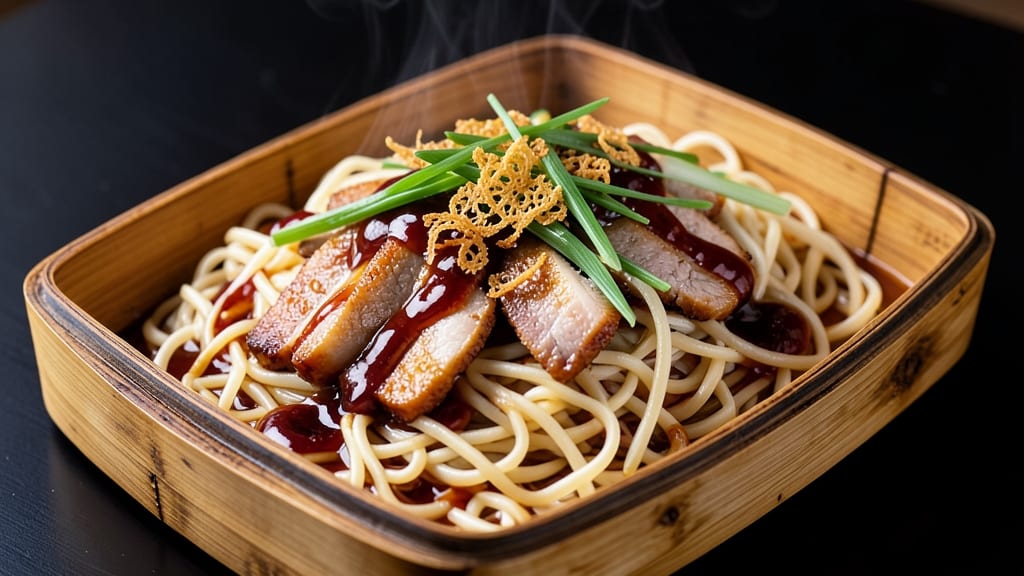
This Chinese BBQ pork noodles recipe brings the bold flavors of Cantonese street food to your kitchen with tender five-spice pork and chewy egg noodles. 🔥 I've perfected the balance between smoky, sweet, and savory notes that make this dish irresistible—just like the versions I tasted during my time in Hong Kong.
The secret lies in marinating the pork overnight, allowing the spices to penetrate deeply while keeping the meat juicy.
What sets this recipe apart is the combination of techniques: slow-roasting the pork for rich, caramelized edges and stir-frying the noodles just until they're tender but still chewy. The five-spice glaze—made with hoisin, soy sauce, and a touch of honey—adds depth that complements the aromatic pork perfectly.
I've included a quick method for making the noodles from scratch or using fresh egg noodles if you're short on time.
By the time you assemble everything, you'll have a dish that's vibrant, aromatic, and packed with texture—crispy pork pieces over springy noodles, finished with a drizzle of chili oil and fresh scallions.
This recipe serves four and comes together in about an hour, making it ideal for weeknight dinners or weekend gatherings when you want to impress without spending all day in the kitchen.
The beauty of this dish is its versatility. Serve it with a side of steamed bok choy or a simple cucumber salad to balance the richness, and pair it with a cold Tsingtao beer or jasmine tea for the full experience.
The leftovers keep well for two days, so you can make extra for lunch the next day—just reheat gently to maintain that perfect chewiness in the noodles.
Ingredients for chinese bbq pork noodles
Pork shoulder, hoisin, and five-spice—these are the bold flavors bringing Cantonese street food to your table.
| Ingredient | Amount | Notes |
|---|---|---|
| Pork Shoulder 🍖 | 1 ½ lb | Cut into 1-inch cubes, boneless |
| Fresh Egg Noodles 🍜 | 12 oz | Or homemade egg noodles |
| Hoisin Sauce 🍶 | ¼ cup | Store-bought or homemade |
| Light Soy Sauce 🥢 | ¼ cup | Kikkoman preferred |
| Honey 🍯 | 2 tbsp | Wildflower preferred |
| Five-Spice Powder 🌶️ | 1 tbsp | Store-bought or homemade |
| Garlic Cloves 🧄 | 4 cloves | Minced, fresh preferred |
| Ginger Root 🌿 | 1 tbsp | Freshly grated |
| Sesame Oil 🫒 | 1 tbsp | Toasted, for aroma |
| Neutral Oil 🫒 | 2 tbsp | Vegetable or canola |
| Green Onions 🧅 | ¼ cup | Sliced, for garnish |
| Chili Oil 🌶️ | 2 tbsp | Store-bought or homemade |
| Salt 🧂 | 1 tsp | Kosher, to taste |
| Black Pepper 🌶️ | ½ tsp | Freshly ground |
| Cornstarch 🌾 | 1 tbsp | For pork coating |
The pork shoulder is non-negotiable here—it's the heart of the dish. Ask your butcher for a well-marbled cut if you can, or grab one from the meat department at Whole Foods or Trader Joe's. The cubes should be about 1-inch in size, and you can either ask them to cube it for you or do it yourself with a sharp knife. I always marinate mine overnight, but if you're short on time, a 4-hour soak still works. For the five-spice powder, Penzeys has a great blend, but the Asian market aisle at your grocery store will have solid options too. Just make sure it's not expired—old spices lose their punch fast.
No hoisin sauce? Mix 2 tbsp soy sauce, 1 tbsp honey, and 1 tsp rice vinegar for a quick sub. Fresh ginger is ideal, but if you've got dried, grate it and use half the amount. The egg noodles can be fresh or dried—just make sure they're egg-based for that authentic chew. Martini or Barilla are solid brands if you're buying dried. For the chili oil, Lao Gan Ma is the gold standard, but any store-bought version will work. If you're feeling ambitious, you can make your own by infusing oil with dried chilies and garlic. The cornstarch is key for that crispy exterior—don't skip it, even if it seems like overkill.
This dish reheats beautifully—just warm it gently in a skillet with a splash of water to keep the noodles from drying out. Keeps in the fridge for 2 days and freezes for 3 months. I always make extra because it's just too good to resist. Store the pork and sauce separately if you're freezing, then reheat everything together. The leftovers actually taste better the next day as the flavors meld even more. Garnish with fresh scallions right before serving—it adds that final pop of color and freshness that makes it look restaurant-worthy.
Why You'll Love This Recipe
- One-Pan Magic: I swear by this recipe when I’m too tired to wash a million bowls. The pork shoulder slow-cooks right in the same pan you’ll toss the noodles in—no extra dishes, just sticky-sweet perfection.
- Sweet-Savory Balance: That honey-soy glaze? It’s ridiculously good—caramelized edges on the pork with a tangy kick from the hoisin. The noodles soak it up like a dream, and honestly, I’ll take seconds every time.
- Lunchbox Hero: Between us, this makes the best cold leftovers. Pack the pork and noodles in a container, drizzle a little extra sauce on top, and it’s a lunch that’ll have coworkers asking for the recipe. (Yes, even on a Tuesday.)
- Budget Stretch: Pork shoulder is cheap, and a single batch feeds four—or two very hungry people. I’ll be real: I’ve turned half a recipe into dinner and lunch the next day without feeling guilty.
Step-by-step instructions for Chinese BBQ pork noodles
Here's how to make restaurant-quality BBQ pork noodles with tender meat and perfectly chewy noodles.
🔥 Step 1: Marinate and Cook the Pork Shoulder
In a large bowl, combine the 1.5 lb pork shoulder (cut into 1-inch cubes), 1 tbsp five-spice powder, 1 tsp salt, and 0.5 tsp black pepper. Mix well to coat the meat evenly. Let it marinate at room temperature for 15 minutes—this ensures the spices penetrate deeply.
Heat 2 tbsp neutral oil in a large skillet over medium-high heat. Add the pork in a single layer and cook undisturbed for 3-4 minutes until the meat is deep golden brown on all sides. This creates that beautiful caramelized crust we want. Transfer the pork to a plate and set aside.
🍳 Step 2: Build the Glossy BBQ Sauce
In the same skillet, reduce heat to medium and add 4 cloves minced garlic and 1 tbsp freshly grated ginger root. Sauté for 30 seconds until fragrant—don't let it brown or it'll turn bitter. Pour in 0.25 cup hoisin sauce, 0.25 cup light soy sauce, and 2 tbsp honey.
Bring to a gentle simmer and let it cook for 2-3 minutes until slightly thickened. In a small bowl, whisk together 1 tbsp cornstarch with 2 tablespoons water to make a slurry. Slowly pour this into the sauce while stirring constantly. The sauce should thicken to a glossy, syrupy consistency that coats the back of a spoon.
🥘 Step 3: Glaze the Pork and Prepare Noodles
Return the browned pork to the skillet with the sauce. Stir gently to coat the meat evenly in the glossy mixture. Let it simmer for 3-4 minutes until the pork is fully coated and the sauce has thickened slightly. The pork should be tender but still hold its shape—if it's falling apart, it's perfect.
While the pork glazes, cook the 12 oz fresh egg noodles according to package instructions until al dente. Drain and rinse briefly with cold water to stop the cooking process. Toss the noodles with 1 tbsp toasted sesame oil to prevent sticking and add a subtle nutty aroma.
🍽️ Step 4: Assemble and Garnish
Divide the cooked noodles among four bowls. Top each serving with an equal portion of the glazed pork and its sauce. The pork should be generously coated in that sticky, aromatic glaze—this is what makes these noodles special.
Drizzle each bowl with 2 tbsp chili oil and sprinkle with 0.25 cup sliced green onions. The chili oil adds a pleasant heat that balances the sweet-savory pork, while the green onions provide a fresh contrast. Serve immediately while the noodles are still warm and chewy.
Pro Tips For Making Chinese Bbq Pork Noodles
- CHAR THE PORK FIRST: Before braising, sear the pork shoulder slices in a screaming-hot wok until they’re deep brown—almost black in spots. This caramelizes the edges and builds flavor that cuts through the sweetness of the hoisin and honey later. (Yes, it looks dramatic, but it’s worth it.)
- SLICE AGAINST THE GRAIN: Cut the pork shoulder into thin strips against the muscle fibers—this keeps the meat tender when it hits the boiling noodles. Thick slices? They’ll turn rubbery. I’ve learned this the hard way after serving chewy pork to a crowd.
- BOIL NOODLES AL DENTE: Cook the fresh egg noodles just until they float—about 2 minutes less than the package says. They’ll finish cooking in the hot wok with the pork, and that extra bite makes all the difference. (Trust me, I’ve slurped both versions.)
- BALANCE THE SAUCE: Mix hoisin, light soy, and honey in a 3:1:1 ratio (hoisin dominant) and taste it before tossing with the pork. Too sweet? Add a splash of rice vinegar. Too salty? A pinch of sugar. Adjusting now saves scrambling later.
Wine and beer pairings for this chinese bbq pork noodles
Cantonese-Inspired Wines
For a classic Cantonese-style BBQ pork noodle experience, I recommend a crisp Dragonwell Longjing green tea—its delicate floral notes complement the five-spice pork without overpowering it.
If you prefer wine, a dry Riesling from Germany (like Dr. Loosen Blue Slate) mirrors the dish's sweet-savory balance with its bright acidity and honeyed finish. The slight minerality in the wine cuts through the richness of the hoisin glaze beautifully. 🍷
Sichuan Heat Pairings
If you're adding extra chili oil or spicy fermented black beans, a Sichuan-style dry red like Yangjiu (a local Chinese rice wine) works wonders. For Western options, a Gewürztraminer with its lychee and spice notes stands up to the heat while harmonizing with the pork's smoky depth.
I keep a bottle of Château d'Esclans Whispering Angel on hand specifically for spicy Asian dishes.
Light Beer Options
A Pilsner like Tsingtao or Sapporo cleanses your palate between bites of rich noodles. The crisp, clean finish balances the dish's sweetness without competing. For American craft options, try a Belgian witbier like Hoegaarden—its coriander and citrus notes provide a refreshing contrast to the pork's caramelized edges.
I always serve this dish with a frosty Tsingtao during my summer BBQ noodle nights. 🍺
Non-Alcoholic Choices
For a non-alcoholic pairing, jasmine green tea with a touch of honey enhances the dish's aromatic profile. The floral notes in the tea mirror the five-spice marinade, while the honey complements the glaze's sweetness.
Alternatively, a sparkling yuzu soda (like San Pellegrino Aranciata Rossa) adds a citrusy zing that brightens the entire meal. I've found that guests often prefer this refreshing option when serving to families.
Regional Variations
In Hong Kong-style versions, a Shaoxing wine reduction in the sauce pairs perfectly with a dry Sherry like Fino. The nutty, oxidative notes in the Sherry echo the toasted sesame in the noodles.
For Sichuan-style adaptations with extra chilies, a Malbec from Argentina (like Catena Zapata) stands up to the heat with its dark fruit and velvety tannins. The key is matching the wine's body to the dish's intensity.
Serving Temperature
Serve all beverages chilled (around 45-50°F) to contrast the warm noodles. I always recommend pouring wine 10 minutes before serving to open its aromas—this lets the floral and spice notes develop fully.
For beer, keep it well-chilled (around 38°F) to maintain that crisp, refreshing quality that balances the dish's richness. Pro tip: Use a wine aerator for reds to enhance their fruitiness before pairing. 💫
Nutrition facts
Frequently asked questions
Can I use ground pork instead of pork shoulder for this recipe?
Ground pork won't work here—the recipe relies on the texture and flavor of pork shoulder. The cubes need to stay intact while developing a caramelized crust. If you're short on time, try pork tenderloin cut into thin strips, but it won't have the same rich, meaty quality. For best results, stick with pork shoulder or substitute with pork butt.
How do I make the noodles extra chewy like in street food?
Fresh egg noodles are key—look for ones labeled "chewy" or "al dente." Cook them 1-2 minutes less than package instructions, then rinse briefly in cold water to stop cooking. Toss with 1 tsp sesame oil immediately to prevent sticking. For homemade noodles, use 100g flour and 1 egg per person, roll thin, and cook in boiling water for 2-3 minutes.
What if I don't have five-spice powder?
Make your own by mixing 1 tsp cinnamon, 1 tsp star anise powder, ½ tsp cloves, ½ tsp fennel seeds, and ½ tsp black pepper. Toast the whole spices first, then grind. If you're in a pinch, use ½ tsp cinnamon + ½ tsp ginger powder for a simpler flavor. The five-spice blend is what gives this dish its signature aromatic depth—don't skip it entirely!
Can I make this recipe in a slow cooker?
Yes! Brown the pork first in a skillet, then transfer to the slow cooker with all marinade ingredients. Cook on low for 4 hours or high for 2 hours. Shred the pork slightly, then mix with the sauce. For noodles, cook separately and toss with sesame oil just before serving. The texture will be more tender than pan-seared, but still delicious.
Why did my pork turn out dry?
Overcooking is the most common issue—pork should be tender but still hold its shape. Use a meat thermometer and pull it at 195°F (it'll rise to 203°F while resting). For extra juiciness, marinate overnight in the fridge, not at room temperature. Also, don't skip the cornstarch slurry—it helps lock in moisture during cooking.